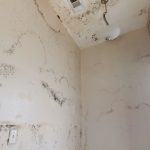
Mold can result from a sudden water damage situation that you are instantly aware of or from an ongoing problem that has remained hidden from view. At Remtech Environmental, we offer mold removal for either type of situation when a mold colony has activated and grown to the point it is posing a danger to your Durham, North Carolina home or business, as well as to your health.
Sometimes mold removal comes into the picture after water damage or flood damage that hasn’t been able to be resolved quickly enough. Since it only takes about 24 to 48 hours for mold to get started, it isn’t uncommon for it to happen if you weren’t immediately aware of the water intrusion. Since mold doesn’t need a soaking wet environment, it can get started because of a damp crawlspace or a minor plumbing leak in the wall. Even a higher than normal humidity issue can result in mold, such as an extended period of time that air conditioning hasn’t been used.
Mold removal isn’t something you should attempt to deal with on your own. Most DIY methods are completely ineffective at killing the mold and, even if your efforts are successful, dead mold can have the same adverse effects on your health as live mold. You need our comprehensive mold removal services to have complete peace of mind that the air you breathe isn’t supporting a high spore count.
If you would like to know more about our mold removal services for your home or business, don’t hesitate to reach out to us to schedule a free consultation.
At Remtech Environmental, we offer mold removal services for customers in Raleigh, Durham, Cary, Asheville, Morrisville, Wake Forest, Wendell, Winston-Salem, Apex, Chapel Hill, and Greensboro, North Carolina.
Trust our licensed and experienced technicians to expertly handle any mold damage you find. Read More →
We are certified, licensed and insured to take care of your mold remediation needs. Read More →
We have decades of experience with black mold removal, and we’ll make sure to do the job right. Read More →
Our mold inspection services are performed by skilled, trained technicians. Read More →
Durham occupies the northern Triangle on a mix of Carolina Slate Belt and Triassic basin geology, and its housing stock spans more than a century of construction practices, from the mill-village cottages around Old West Durham to mid-century ranches in Hope Valley to the new builds filling Southpoint and Brier Creek. That range matters for mold, because each era handled moisture differently and almost none of them anticipated the dew points that the Bull City now records every summer. Durham's combination of Eno River bottomland, dense tree canopy from the Duke Forest corridor, and red-clay grading produces persistent ground moisture that funnels straight into vented crawlspaces. The 1920s mill houses near American Tobacco have settled stone foundations that weep, and the 1960s Forest Hills and Hope Valley homes were built before vapor barriers became standard. Add in the tropical-system rainfall events the city absorbs every fall, and Durham generates a steady volume of mold remediation work for our crews. Remtech Environmental treats Durham properties year round.
The species we identify in Durham testing reports follow the city's housing-age and topography mix. Five genera dominate the lab results.
We see Stachybotrys most often in Durham's older housing stock, especially the early-twentieth-century homes near Trinity Park and Watts-Hillandale where original lath and plaster has stayed wet behind decades of repainting. It also turns up in finished basements in Hope Valley and Forest Hills after sump-pump failures. Stachybotrys requires sustained wetness, so its presence almost always indicates a chronic leak the homeowner has missed for weeks. Removal demands full containment, double-bagged disposal, and clearance testing before reconstruction begins.
Durham's tree canopy is among the densest of any North Carolina city, which is good for shade and bad for attic ventilation. Roof decks shaded by Duke Forest oaks dry slowly, and we routinely find Aspergillus growth on north-slope sheathing in homes from Hope Valley to Old North Durham. The genus also colonizes HVAC interiors, particularly older systems with dirty evaporator coils. Several Aspergillus species produce mycotoxins that aggravate asthma and pose serious risk to immunocompromised residents, so air-handler cleaning is often part of the remediation scope.
Penicillium dominates the lab results from Durham water-damage projects. The blue-green colonies establish on damp drywall within days of a slow leak, which is why we find it constantly under kitchen islands, behind dishwashers, and around the supply lines feeding washing machines on second floors. The newer townhome construction off NC-54 and around Southpoint is particularly prone because shared walls hide leaks until spore counts are already elevated. Penicillium spores aerosolize easily, so containment must go up before any wall is opened.
Cladosporium is the green-black streaking on north-facing exterior siding across half of Durham's neighborhoods, and the same genus moves indoors every time the HVAC pulls in outside air. Inside the home it colonizes window frames, bathroom ceilings, and the rubber seals of refrigerators and washers. Older homes in Walltown and Burch Avenue with original single-pane windows show heavy Cladosporium growth on the wood sashes during winter, when interior condensation pools at the glass. Cleaning, sealing, and improved ventilation all reduce the load.
Alternaria is the workhorse outdoor mold of the Piedmont and a top driver of allergic reactions in Durham residents who already react to oak and ragweed pollen. Indoors we find it in shower stalls, around tub valves, on the gaskets of front-load washers, and in HVAC drain pans. Bathrooms in 1950s ranches and 1990s apartments alike harbor Alternaria when exhaust fans were undersized or never installed. Removing it is straightforward, but preventing return requires upgrading ventilation and sealing grout properly.
Each Durham project moves through five carefully sequenced stages built on IICRC S520 and adapted to local building styles.
Our certified inspector arrives with thermal imaging, pin and pinless moisture meters, and borescope cameras to map the moisture history of the property. We pay particular attention to crawlspaces, behind tubs, around chimney chases, and in attic corners where Durham's ventilation problems concentrate. Air samples from each suspect zone plus an outdoor reference go to an accredited lab. The written report identifies the dominant genera, quantifies spore counts against outdoor baseline, and pinpoints the moisture source so the remediation scope is grounded in evidence rather than guesswork.
We isolate the work zone with six-mil polyethylene barriers and zippered entries before any porous material is disturbed. Negative air machines fitted with HEPA-rated final filters create a pressure differential that pulls airflow into the containment, not out of it, which keeps Penicillium and Cladosporium spores from migrating into bedrooms or HVAC returns. For two-story Durham homes with central returns, we also seal supply and return registers in unaffected rooms so the air handler cannot redistribute spores during the project.
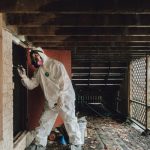
Technicians work in P100 respirators, Tyvek suits, and gloves. Saturated drywall, insulation, carpet pad, and any non-salvageable porous material is removed and double-bagged for disposal under North Carolina solid-waste rules. Salvageable wood framing and masonry are HEPA-vacuumed and treated with antimicrobial agents matched to the species identified in lab work. Heavy contamination on structural members may require dry-ice or soda blasting. Every stage is photographed and logged, producing the documentation insurance carriers and future buyers expect to see.
A Durham crawlspace project that ends without a vapor barrier and a dedicated dehumidifier is a project that will fail. Our scope routinely includes encapsulation, sump installation, downspout extension, regrading recommendations, plumbing repair coordination, roof-flashing correction, and HVAC condensate fixes. Tree-canopy homes in the Duke Forest corridor often need ridge or soffit ventilation upgrades to clear attic moisture. We coordinate with licensed trades when a repair sits outside our environmental scope and verify the fix before remediation closes.
Independent clearance testing closes every project. A third-party hygienist or our accredited lab pulls fresh air samples and surface ATP swabs, comparing post-work numbers to the outdoor control. We do not rebuild finishes until those samples show acceptable spore levels and the moisture source is confirmed dry. The homeowner receives a final documentation packet covering inspection, remediation logs, photographs, lab reports, and warranty terms, which Durham real-estate attorneys and adjusters consistently request during transactions and claims.
Durham's mold profile is shaped by three forces that almost never appear together this strongly elsewhere in the state. First, the city's tree canopy keeps roofs and yards in deep shade for most of the day during the leaf-on months, which slows evaporation and lets dew linger on north slopes well past midmorning. Second, the underlying clay-and-shale geology drains poorly, so the four-to-six-inch summer storm totals routinely measured at RDU pool against foundations rather than soaking away. Third, Durham's building stock is older on average than Cary or Apex, with thousands of homes built before 1960 still occupying Trinity Park, Old North Durham, Walltown, Forest Hills, and the Lakewood and Tuscaloosa neighborhoods south of downtown. Those homes predate continuous vapor barriers in crawlspaces, modern flashing details, and any expectation that the air conditioner would run from May to October. The result is a city where moisture intrusion has had decades to compound. Tropical-system remnants like Florence in 2018 and Helene's outer bands in 2024 dropped enough rain across Durham County to flood basements that had been dry for thirty years, and the mold work from those events keeps showing up. Modern subdivisions around Southpoint and Brier Creek face their own version of the problem, with poured-foundation moisture and aggressive HVAC use producing condensation behind exterior walls. The remediation playbook differs by neighborhood, but the underlying physics of Durham's climate stays the same.
Indoor mold exposure produces measurable health effects across a spectrum of severity. The mild end is the chronic congestion, sinus pressure, and itching eyes that Durham residents often write off as Triangle allergy season, even when pollen counts have dropped. Sustained exposure escalates to new or worsening asthma, recurrent bronchitis, eczema, and unrelenting fatigue. The CDC and NIH have documented increased risk of severe complications in infants, elderly residents, transplant recipients, chemotherapy patients, and anyone with cystic fibrosis or HIV, including invasive aspergillosis from heavy Aspergillus exposure and pulmonary hemorrhage from Stachybotrys exposure in young children. Durham's allergic burden is already among the heaviest in the country thanks to oak, pine, and ragweed seasons that overlap most of the year, and indoor mold compounds that load directly. Symptom reduction after professional remediation is usually noticeable within two to four weeks.
Durham residential projects most often fall between 2,500 and 8,000 dollars, depending on affected square footage, materials requiring removal, and whether crawlspace encapsulation or duct cleaning is part of the scope. A bathroom-only project in a Trinity Park bungalow may run 1,200 to 2,000 dollars. Whole-house contamination in a Hope Valley home with finished basement and HVAC involvement can climb past 18,000 dollars when reconstruction is included. Older homes generally cost more per square foot than new builds because plaster and lath, knob-and-tube wiring, and original framing all complicate access. Every Remtech estimate is itemized in writing.
Coverage in the Durham market mirrors the rest of North Carolina. Mold caused by a sudden covered loss, such as a burst supply line, an HVAC overflow, or storm-driven roof damage, is usually paid up to the policy mold sublimit, which most carriers set at 5,000 or 10,000 dollars without an endorsement. Mold from long-term seepage, deferred roof maintenance, or chronic crawlspace humidity is excluded by virtually every policy active in Durham County. We document moisture origin and timeline in the format adjusters require, and we have worked claims with State Farm, Allstate, USAA, Erie, Nationwide, and most regional carriers.
A typical Durham single-room remediation runs two to four working days from setup through clearance. Crawlspace remediation paired with encapsulation usually takes four to six days because the vapor-barrier installation and dehumidifier commissioning extend the timeline. Larger losses involving subfloor replacement and drywall reconstruction can push to two or three weeks, and projects driven by tropical-storm flooding take longer when the queue of affected homeowners across the Triangle stretches subcontractor availability. Drying time governs the schedule; we will not rebuild over framing that has not reached IICRC moisture targets.
Most Durham families remain in the home throughout the project. Containment, HEPA-filtered negative air, and isolation of the affected HVAC zone keep spore concentrations in the rest of the house at safe levels. We recommend that infants, asthmatics, pregnant occupants, and immunocompromised residents stay elsewhere during the demolition phase, which usually lasts a single day. Whole-house contamination, severe HVAC colonization, or chemical applications that require ventilation may require relocation for one to three nights. We discuss the call with the homeowner before mobilization and document the rationale.
Watch for the original musty odor returning, fresh staining at the same failure point, peeling paint, or a return of respiratory symptoms in family members. Keep a hygrometer in the crawlspace and basement; readings consistently above 60 percent indicate the moisture controls are not keeping up. Real regrowth almost always traces to an unaddressed moisture source rather than incomplete remediation. Remtech offers a written warranty against regrowth when our scope included the moisture repair and the homeowner has maintained the recommended controls. A six-month follow-up air sample provides documented confirmation.
Remtech Environmental covers Durham city and county comprehensively. We work in Trinity Park, Old North Durham, Watts-Hillandale, Forest Hills, Hope Valley, Hope Valley Farms, Woodcroft, Parkwood, Treyburn, Croasdaile, Duke Forest, Old West Durham, Walltown, Burch Avenue, Cleveland-Holloway, Tuscaloosa-Lakewood, Rockwood, Southpoint, Brier Creek, and the Research Triangle Park corridor. We also serve nearby municipalities, including Bahama, Rougemont, Bethesda, and Gorman, plus the western Orange County edge into Hillsborough. Both single-family homeowners and commercial property managers across the city call us first. We also serve Fuquay-Varina, NC. Learn more about mold removal in Fuquay-Varina, NC.
Contact us today to schedule an inspection or receive a free quote for our services.
Get a Free QuoteReady to get started? Fill out the form below and we'll get back to you right away.
We believe that a job done right is the only way to sleep well at night.
Contact Us Today