
Water damage doesn’t just cause structural problems — it can also open the door for mold growth, pest infestations and health risks. Protect your home or business from lasting damage.
Our certified water damage restoration specialists are available anytime, day or night in the Raleigh, North Carolina area.
Reliably Thorough Service.
Accepting all Insurances.
Fast Local Response.
For over 20 years Remtech has restored residential and commercial properties from water damage and protected them from long term water damage.
When a storm or natural disaster damages your property, call the local team you can trust to get the job done right.
There are several reasons why we recommend that you leave water damage cleanup to professionals if you’ve experienced a flood, appliance malfunction, or have another situation that has put water inside your Raleigh, NC home. Among the reasons, we believe that the typical homeowner is not equipped to handle all the potential contaminants involved. Even in the case of clean water, rather than a sewage backup or flood water situation, there is still the potential for the water to have become contaminated by building materials and other household products.
One thing that we share with our customers that they are surprised to hear is that there is the potential for water damage cleanup to involve materials with asbestos in them. It is a common misconception that asbestos has been banned in the United States. The reality is that it remains legal even though more than 60 other countries have banned it. Asbestos is, however, restricted. What that means is that before a manufacturer can use it in their product, they must go through an EPA review process. One thing that troubles most people about this is that since asbestos mining ended in this country in 2002, the asbestos used is imported.
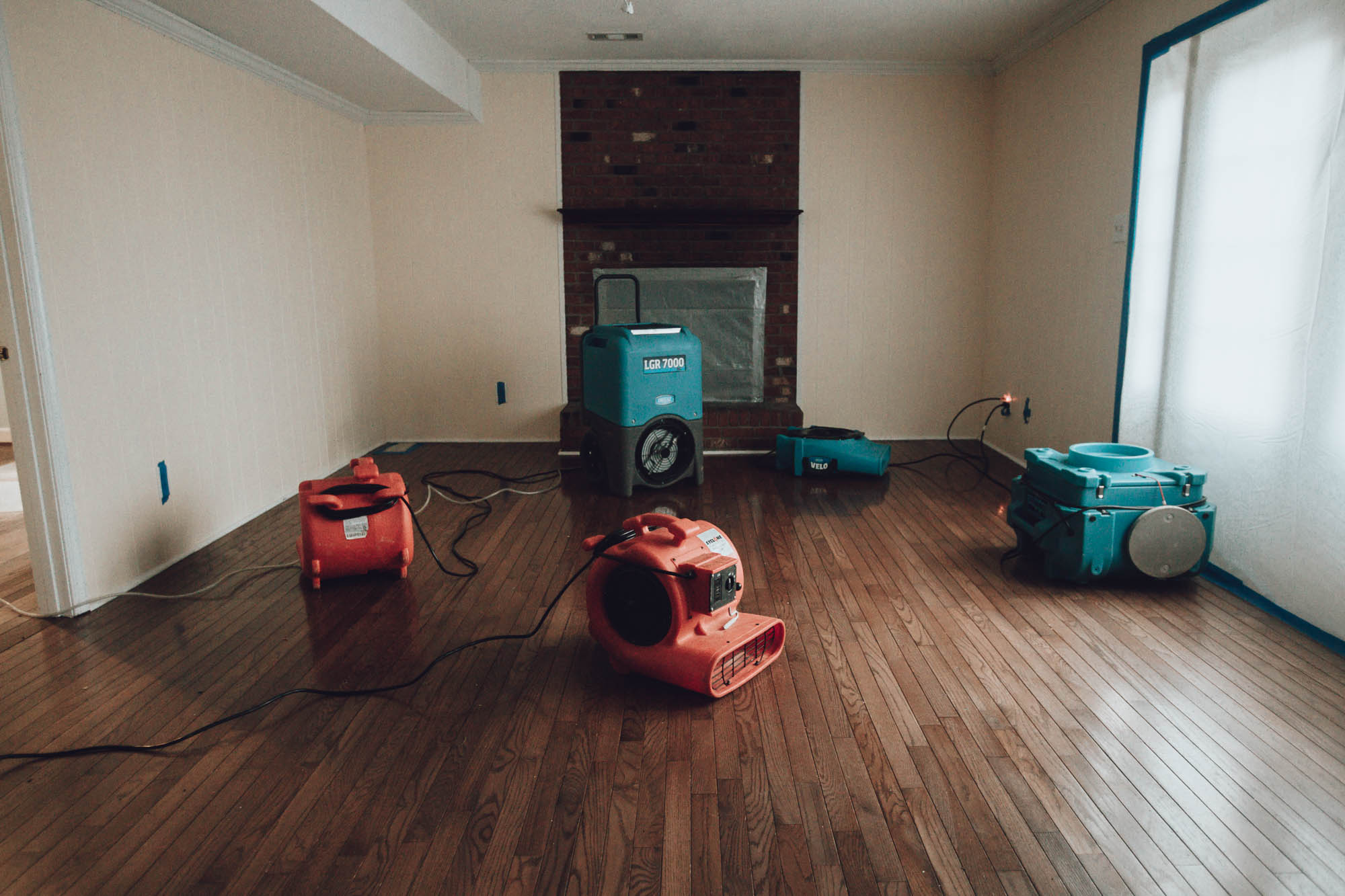
We are proud to Provide Water Damage Restoration Services All Across NC. At Remtech Environmental, our first priority is your safety — you can count on our water damage specialists for skilled service and attention to detail from start to finish.
When water invades your Raleigh home, every minute counts. Whether it's a burst supply line at 2 a.m. in a Five Points bungalow, hurricane remnants pushing rain through a North Hills roof, or a failed water heater flooding a Brier Creek basement, the damage compounds with every hour the moisture lingers. Raleigh's mix of historic homes, mid-century ranches, and newer construction in Wakefield and North Raleigh each carry their own vulnerabilities, and the Triangle's humid subtropical climate means trapped water rarely dries on its own. North Carolina has absorbed punishing weather over the last decade, from Hurricane Matthew's record flooding in 2016 and the slow-moving devastation of Hurricane Florence in 2018, to the January 2025 cold snap that burst pipes across Wake County. Remtech Environmental has restored Raleigh properties for more than 20 years, and our certified water mitigation crews are on call 24 hours a day, 7 days a week. When you call us, a real technician answers, and a truck is dispatched immediately to begin extraction, drying, and damage control before mold and structural decay have a chance to take hold.
Water damage is not a problem that politely waits until business hours. Drywall wicks moisture upward at roughly an inch per hour, hardwood flooring cups within a single afternoon, and mold colonies can begin forming on wet substrates in as little as 24 to 48 hours. That is why Remtech Environmental staffs an on-call team every night, weekend, and holiday throughout the Raleigh metro. From our Triangle dispatch base we typically reach homes inside the I-440 beltline in 30 to 45 minutes, with similar response windows for North Raleigh, Brier Creek, Wakefield, and the southeast neighborhoods around Garner Road. Our trucks roll fully stocked with truck-mounted extractors, submersible pumps, commercial-grade air movers, LGR dehumidifiers, and antimicrobial agents so we can begin mitigation the moment we arrive. We document the loss with moisture meters and thermal imaging from minute one, which gives your insurance carrier the evidence they need and gives you the fastest possible path back to normal. When you call our emergency line, a certified technician picks up the phone, not a call center, not an answering service.
Raleigh sits at the crossroads of Atlantic storm systems, Piedmont freeze-thaw cycles, and an aging housing stock, which means water damage can come from a dozen directions. These are the calls we run most often.
Raleigh dipped to single digits during the December 2022 Arctic blast and again in the January 2025 cold snap, and we ran round-the-clock burst-pipe calls both weeks. Many older Five Points, Hayes Barton, and Mordecai homes have copper supply lines that snake through unconditioned crawlspaces, attics, and exterior walls where insulation thins out. When temperatures plunge below 20 F, water in those lines freezes, expands, and ruptures the pipe. The leak often goes undetected until thaw, by which point hundreds of gallons may have already saturated subfloors, joists, and ceilings below.
North Carolina has taken direct hits from Hurricane Matthew in 2016, Hurricane Florence in 2018, and the remnants of Hurricane Helene in September 2024, which dumped tropical rainfall as far east as Wake County. Even when Raleigh sits outside the eye, tropical systems regularly push 4 to 8 inches of rain in a single day, overwhelming gutters, foundation drains, and storm sewers. We respond to wind-driven rain through compromised roofs, siding intrusion on the windward side of homes, and seepage into basements and crawlspaces across Raleigh after every major storm.
Summer thunderstorms in the Triangle routinely deliver torrential downpours, hail, and 60 mph wind gusts that rip shingles, dent flashing, and clog gutters with pine straw and oak debris. Once water finds a path past the roof envelope, it tracks along trusses and drips into ceilings far from the original entry point, which makes leaks tricky to diagnose. We see saturated insulation, stained drywall, and rotted decking on Raleigh homes whose owners had no idea a problem existed until water came through a light fixture.
Supply hoses on washing machines, dishwashers, refrigerator ice makers, and water heaters all live under constant pressure, and the rubber and braided steel inside them fatigues over a 10 to 15 year window. When a hose lets go behind a Raleigh laundry room wall or under a kitchen island, it can release 600 gallons an hour until someone shuts the main off. Water heater tank failures are especially destructive because they sit in attics, garages, and second-floor closets where the water cascades through everything below it.
Raleigh's red clay soils drain slowly and swell when saturated, which pushes hydrostatic pressure against foundations during heavy rain. We see groundwater seeping through basement walls in older homes around Cameron Park and Boylan Heights, and we see aging cast iron sewer laterals collapse and back up sewage into ground-floor bathrooms. Sewer backups in particular qualify as Category 3 black water and require full PPE, contaminated material removal, and professional sanitization to make the home safe to occupy again.
Every job is different, but our IICRC-aligned process follows the same disciplined sequence so nothing gets missed. Here is what to expect when Remtech arrives at your Raleigh home.
Our lead technician walks the loss with you, identifies the source, and stops the flow if it is still active. We use calibrated moisture meters, hygrometers, and infrared cameras to map the full extent of saturation, including hidden pockets behind drywall and under flooring. We classify the water (Category 1 clean, 2 grey, or 3 black) and the damage class (1 through 4), photograph everything for your insurance file, and walk you through the scope of work before lifting a single piece of equipment off the truck.
Standing water comes out first. Our trucks carry both portable and truck-mounted extractors capable of pulling several thousand gallons per hour, plus submersible pumps for flooded basements and crawlspaces. We extract from carpet, pad, hard surfaces, and behind baseboards using weighted extraction wands that pull bound water out of pad and subfloor in a single pass. The faster we get the bulk water out, the less material we have to demolish later, which keeps your claim and your timeline smaller.
Raleigh's humidity routinely sits north of 70 percent in summer, which means passive drying is almost never enough. We set commercial air movers to push moisture off surfaces and pair them with low-grain refrigerant or LGR dehumidifiers sized to the cubic footage of the affected area. We monitor moisture content in framing, subfloor, and drywall daily, adjust equipment placement based on the readings, and keep drying logs that document the structure returning to dry standard. Most residential losses dry in 3 to 5 days when the equipment is sized correctly.
Once the structure is dry, we apply EPA-registered antimicrobials to all affected substrates to neutralize bacteria and prevent mold from establishing on damp organic material. For Category 2 and 3 losses we go further, removing porous materials that cannot be reliably decontaminated, HEPA vacuuming framing, and air-scrubbing the workspace. If mold is already visible, we transition into containment and remediation under separate IICRC S520 protocols rather than masking the problem with paint or sealer.
With the structure dry and clean, we rebuild what had to come out: drywall, insulation, baseboards, flooring, paint, cabinetry, and trim. Our crews handle most repairs in-house and coordinate with trusted Raleigh subcontractors for plumbing, electrical, and specialty flooring. We finish-match existing materials wherever possible so the repair is invisible, and we walk the completed job with you and, when applicable, your adjuster before we consider it done. The goal is a home that looks like the loss never happened.
Most Raleigh water damage claims fall under standard homeowner's insurance, but the distinction between covered and excluded losses trips up homeowners every week. North Carolina policies almost universally cover sudden and accidental water discharge, which includes burst pipes, supply line failures, water heater ruptures, and overflowing appliances. They almost universally exclude flood, defined as rising surface water from rain, storm surge, or overflowing creeks and rivers. Flood damage requires a separate NFIP policy, and homes outside designated flood zones often do not carry it. Gradual leaks, long-term seepage, and damage attributed to deferred maintenance are also commonly excluded, which is why fast professional documentation matters. Remtech provides everything your adjuster needs to approve the claim quickly: dated photographs of the loss site, moisture mapping diagrams, daily drying logs, equipment placement records, psychrometric readings, and itemized scopes built in Xactimate, the same estimating platform most carriers use. We work directly with adjusters from State Farm, Allstate, USAA, NC Farm Bureau, Erie, Nationwide, Liberty Mutual, and Travelers, and we are happy to handle the technical conversation on your behalf. We also flag common claim issues early, including ACV versus RCV depreciation holdbacks, mold sublimits that typically cap at $5,000 to $10,000, and matching disputes for flooring and cabinetry. You always retain the right to choose your own restoration contractor in North Carolina, regardless of who your insurer recommends.
Our Raleigh emergency line is staffed 24 hours a day by an actual certified technician, not a call center. From the moment you call, we typically have a fully equipped truck on site inside 30 to 45 minutes for addresses inside the I-440 beltline and 45 to 60 minutes for North Raleigh, Brier Creek, Wakefield, and southeast Raleigh. During major events like a regional freeze or a tropical system passing through Wake County, we surge additional crews from our Triangle service area so we can hold those response windows even when the call volume spikes.
In most cases, yes, when the damage is sudden and accidental. Standard North Carolina homeowner's policies cover burst pipes, water heater failures, washing machine and dishwasher leaks, and similar internal events. They do not cover flood, which is rising surface water from heavy rain, hurricanes, or overflowing creeks, and which requires a separate NFIP flood policy. Gradual leaks, long-term seepage, and damage tied to deferred maintenance are also commonly excluded. We will help you read your declarations page and document the loss properly so the claim has the best possible chance of approval.
Mitigation, which means extraction, drying, and sanitizing, usually takes 3 to 5 days for a typical residential loss in Raleigh. Larger or contaminated losses can run 7 to 10 days. After mitigation, the rebuild phase, including drywall, paint, flooring, and trim, depends on scope and material lead times and can range from a few days for a small bathroom to several weeks for a whole-home reconstruction. We give you a realistic timeline at the assessment and update it as conditions change.
Most Raleigh homeowners stay in their home through the mitigation phase. Drying equipment is loud and warm, but it is generally safe to live around as long as the affected area is sealed off and the rest of the home is unaffected. You may want to relocate temporarily if the loss involves the only kitchen or bathroom, if the home contains Category 3 black water, or if a family member has asthma, severe allergies, or a compromised immune system. Most homeowner's policies include Additional Living Expense coverage for exactly these situations.
It is the single most important distinction in your insurance file. Water damage refers to water that originates inside the home, things like a burst supply line, a failed water heater, a leaking dishwasher, or a roof leak. That category is typically covered under standard homeowner's insurance. Flood damage refers to water that rises from outside the home, including overflowing creeks, storm surge, accumulated rainfall pooling against a foundation, and hurricane-driven inundation. Flood is excluded from every standard homeowner's policy in North Carolina and requires a separate NFIP flood insurance policy or private flood coverage.
Remtech Environmental responds to water damage emergencies across all of Raleigh, including North Hills, Cameron Village, Five Points, Hayes Barton, Mordecai, Oakwood, Boylan Heights, Brier Creek, Wakefield, North Raleigh, Falls Lake, Midtown, Downtown, Glenwood South, ITB neighborhoods inside the I-440 beltline, Southeast Raleigh, Garner Road corridor, and the communities around WakeMed and NC State University. We also serve the broader Triangle and Triad and routinely run calls in Cary, Apex, Morrisville, Durham, Chapel Hill, Wake Forest, Wendell, Holly Springs, Knightdale, and Garner.
Contact us today to schedule an inspection or receive a free quote for our services.
Get a Free QuoteReady to get started? Fill out the form below and we'll get back to you right away.
We believe that a job done right is the only way to sleep well at night.
Contact Us Today