
3 Things to Know About Asbestos in Homes
Published by Remtech Environmental Team · Last updated April 2025
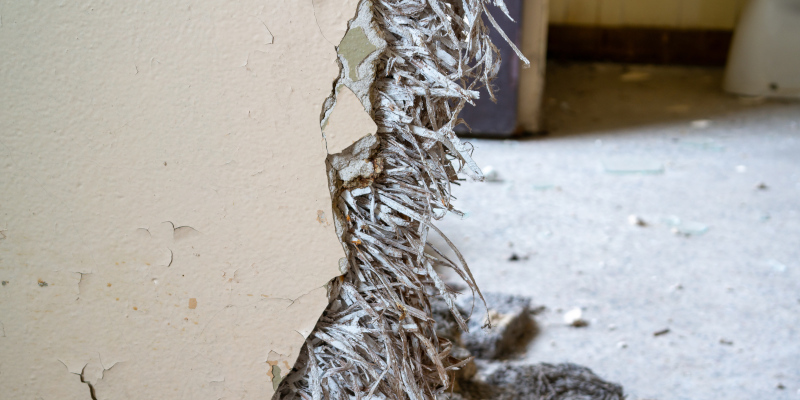
For a long time, asbestos was a common material used in building homes. While it isn’t a widely used building material now, if you have a home built before 1985, you may be more susceptible to asbestos exposure depending on the state of your property. Here are three important things that you should know about asbestos:
If you have an older home and believe there may be exposed asbestos, don’t wait to reach out to our team here at Remtech Environmental.
- Undisturbed asbestos isn’t a major concern. Breathing in asbestos is where the real health risks come from, so if any asbestos in your home is undisturbed and contained, there isn’t any cause for alarm. If walls or flooring contains asbestos and these materials become damaged, it’s important to remove them as soon as possible to avoid health and safety hazards.
- You shouldn’t wait to address an asbestos issue. If you believe your home has exposed asbestos, it’s important to act quickly to have the asbestos removed. Breathing in this material can cause serious health conditions down the road, and the longer you wait to address potential exposure, the more likely you are to develop these conditions. Contact asbestos removal technicians at the first indication that something is wrong.
- Only professionals are qualified to handle an asbestos problem. Never attempt to inspect for or remove asbestos by yourself. From initial inspection to removal and abatement, all asbestos-related services should be left to our accredited asbestos removal technicians to ensure your safety.
If your North Carolina home was built before 1985, asbestos-containing materials are not a hypothetical concern, they are a statistical likelihood. The Environmental Protection Agency (EPA) and the North Carolina Department of Health and Human Services (NC DHHS) both report that residential construction throughout the Piedmont and coastal Carolinas relied heavily on asbestos products from the post-war boom through the early 1980s. At Remtech Environmental, our NC-accredited inspectors regularly identify asbestos in popcorn ceilings, vinyl asbestos tile, transite siding, and pipe insulation across Raleigh, Durham, Greensboro, Winston-Salem, and Charlotte properties. Understanding the three most important truths about asbestos in homes, that undisturbed material is generally stable, that delays in addressing damage compound the risk, and that only accredited professionals should handle suspect materials, is the difference between a managed exposure and a costly health emergency. The information below draws on EPA NESHAP guidance, IICRC field practice, and North Carolina's own regulatory framework under 15A NCAC 19C to give homeowners a defensible foundation for the next decision they make about their property.
Where Asbestos Hides in Pre-1985 North Carolina Homes
Asbestos was prized for its tensile strength, heat resistance, and low cost, which made it a default ingredient in dozens of building products marketed to North Carolina builders between 1940 and 1985. While the EPA's 1989 ban removed many of these products from new construction, the materials installed during the prior four decades remain in place across the state's aging housing stock. Knowing what to look for, and where, is the first step in protecting your household.
Popcorn Ceilings and Textured Surface Coatings
Spray-applied acoustic ceilings, commonly called popcorn or cottage cheese ceilings, were standard in North Carolina homes built between 1955 and the early 1980s. Many of these textured coatings contain chrysotile asbestos at concentrations between one and ten percent. The danger is not the ceiling itself but its friability: the moment a homeowner scrapes, sands, or water-damages the surface, microscopic fibers release into the breathing zone. EPA guidance under the Asbestos Hazard Emergency Response Act (AHERA) is unambiguous on this point. If your home predates 1985 and has any textured ceiling, assume asbestos until laboratory analysis through Polarized Light Microscopy (PLM) proves otherwise. Never dry-scrape a popcorn ceiling without prior testing, and never assume that age alone tells you the answer. Some 1990s renovations reused stockpiled asbestos texture, so visual dating is unreliable and laboratory analysis is the only defensible path.
Vinyl Asbestos Tile (VAT) and Mastic Adhesives
Nine-inch and twelve-inch floor tiles installed in kitchens, basements, and utility rooms across North Carolina were frequently manufactured with chrysotile asbestos through 1980. Even when the tiles themselves test clean, the black cutback mastic adhesive beneath them often contains higher concentrations than the tile. Homeowners renovating older homes in Raleigh, Charlotte, or Asheville commonly disturb both layers simultaneously during demolition, generating significant fiber release. The IICRC S520 and EPA NESHAP guidelines both classify VAT removal as Category I non-friable Asbestos-Containing Material (ACM), which still requires controlled work practices, HEPA filtration, and licensed disposal under 15A NCAC 19C. Power tools, including chop saws, grinders, and orbital sanders, must never be used on suspect tile or mastic, and floor tile should never be removed by chipping or prying without prior bulk sampling and a documented work plan.
Transite Siding and Cement Board Products
Transite, a brand-name cement-asbestos composite, was widely used for exterior siding, soffits, roofing shingles, and even HVAC flues across North Carolina's mid-century housing developments. Coastal homes in Wilmington and New Bern often used transite for its hurricane resilience, while inland properties relied on it for fire resistance. Intact transite is generally stable, but weathering, drilling, power-washing, or impact damage can pulverize the matrix and release fibers. The NC DHHS Health Hazards Control Unit specifically warns homeowners against pressure-washing transite siding, a common spring maintenance task that can convert a stable material into an active exposure source within minutes. Repainting and recaulking are typically safe encapsulation strategies when the siding is intact, but any cracked or broken panel should be sampled before replacement and handled by a NC-licensed abatement contractor.
Pipe Insulation, Boiler Wraps, and Duct Tape
Mechanical systems in pre-1985 homes are among the most heavily contaminated areas. White, chalky pipe wrap, often described as looking like papier-mache, frequently contains amosite or chrysotile asbestos at high concentrations, sometimes exceeding fifty percent. Boilers, furnaces, and steam pipes in older Greensboro and Raleigh basements may still carry their original 1960s-era insulation. Even the cloth tape sealing duct joints can be asbestos-containing material. Because mechanical insulation is friable by nature, any deterioration, water damage, or rodent disturbance creates immediate airborne risk. This category requires Class I abatement procedures under federal OSHA 1926.1101 and NC asbestos regulations. Homeowners should never attempt to wrap, tape over, or repair damaged pipe insulation themselves; even the act of inspecting a deteriorated wrap with bare hands can release fibers into the basement breathing zone.
Joint Compound, Window Glazing, and Roofing Felt
Beyond the obvious culprits, asbestos appears in surprising places. Drywall joint compound manufactured before 1977 commonly contained chrysotile, meaning the seams of an entire pre-1985 home may be low-level asbestos-containing material. Window glazing putty, exterior caulk, and roofing felt also frequently contain asbestos. These secondary sources rarely cause exposure in undisturbed conditions, but renovation, weatherization upgrades, or storm repairs can release fibers in occupied living spaces. Sanding drywall seams, scraping old glazing during window replacement, or tearing off layered roofing on a 1970s home can each generate measurable fiber release. Before any pre-1985 home in North Carolina is renovated, a comprehensive asbestos survey by a NC-accredited inspector is the only defensible starting point and the documentation that follows protects both the homeowner and any contractor performing future work.
Why Professional Testing Is the Only Reliable Path
Visual identification of asbestos is impossible. Fibers measure between 0.1 and 10 micrometers in diameter, well below the resolving power of the human eye, and even seasoned contractors routinely misidentify materials by texture or appearance. The only legally and scientifically valid identification methods are Polarized Light Microscopy (PLM) for bulk samples and Transmission Electron Microscopy (TEM) for air clearance, both performed by laboratories accredited under the National Voluntary Laboratory Accreditation Program (NVLAP). North Carolina's regulatory framework reinforces this reality. Under 15A NCAC 19C .0600, only accredited asbestos inspectors may collect bulk samples for regulatory purposes, and only licensed abatement contractors may disturb known or assumed ACM during renovation. Home test kits sold at big-box stores cannot satisfy NC DHHS or EPA documentation requirements, and DIY sampling routinely creates exposure incidents that would otherwise have been avoided. The act of cutting into a popcorn ceiling or breaking off a piece of pipe wrap to mail to a lab is itself a fiber release event. When Remtech Environmental conducts a residential asbestos survey, the protocol follows AHERA inspector training: representative bulk sampling of every suspect homogeneous area, chain-of-custody documentation, photographic logs, and a written report identifying ACM by location, condition, and recommended response action. This document becomes the compliance foundation for any future renovation, real estate transaction, or insurance claim involving the property, and it gives lenders, contractors, and prospective buyers the defensible record they increasingly require.
What to Do If You Suspect Asbestos in Your Home
If you live in a North Carolina home built before 1985 and you have not had an asbestos survey performed, the most important rule is also the simplest: do not disturb anything. Stop any planned renovation, demolition, or DIY work in suspect areas. Avoid sweeping, vacuuming with a standard household vacuum, sanding, scraping, or cutting any material you cannot positively identify. If you notice damaged pipe insulation, crumbling ceiling texture, broken transite siding, or deteriorated floor tile, isolate the area by closing doors and turning off forced-air HVAC systems that could circulate fibers throughout the home. Photograph the condition for documentation, but do not collect samples yourself. Next, contact a NC-accredited asbestos inspection firm to schedule a survey. Remtech Environmental serves the entire Triangle, Triad, Charlotte metro, and surrounding counties with IICRC-aligned and EPA-compliant inspection protocols. A typical residential survey takes two to four hours on-site, with laboratory results returned within three to five business days. If ACM is confirmed and disturbance is unavoidable, our licensed abatement crews handle containment, negative-air filtration, encapsulation or removal, and final clearance air sampling under the supervision of a NC-licensed project designer. Acting quickly when damage is identified prevents both health exposure and the regulatory complications that follow improper handling.
Related Asbestos Resources from Remtech Environmental
For homeowners who want to dig deeper into the science, regulation, and practical management of asbestos, our blog and service pages cover the topic from multiple angles. Read our companion piece, 4 Interesting Facts About Asbestos, for the historical and mineralogical background that informs modern abatement practice. Our Asbestos Removal service page details the full inspection-through-clearance workflow we use for North Carolina residential and commercial projects. If you are buying or selling a pre-1985 property, our pre-purchase asbestos survey service provides the documentation lenders and insurers increasingly request. For renovation contractors, we offer expedited limited surveys timed to your demolition schedule.
Key Takeaways
- Homes built in North Carolina before 1985 should be presumed to contain asbestos until a NC-accredited inspector documents otherwise.
- The five most common residential ACM categories are popcorn ceilings, vinyl asbestos tile and mastic, transite siding, pipe and boiler insulation, and joint compound or roofing felt.
- Undisturbed asbestos in stable condition poses minimal risk, but any damage, renovation, or weathering converts it into an active exposure source within minutes.
- Visual identification is unreliable; only NVLAP-accredited laboratory analysis through PLM or TEM provides legally and scientifically valid results.
- North Carolina regulation 15A NCAC 19C requires accredited inspectors for sampling and licensed contractors for abatement, making DIY handling both unsafe and non-compliant.
Need Help with Environmental Services?
If you have concerns about mold, asbestos, or water damage in your property, contact Remtech Environmental today for a free consultation.
Get a Free Quote