
Mold can result from a sudden water damage situation that you are instantly aware of or from an ongoing problem that has remained hidden from view. At Remtech Environmental, we offer mold removal for either type of situation when a mold colony has activated and grown to the point it is posing a danger to your Cary, North Carolina home or business, as well as to your health.
Sometimes mold removal comes into the picture after water damage or flood damage that hasn’t been able to be resolved quickly enough. Since it only takes about 24 to 48 hours for mold to get started, it isn’t uncommon for it to happen if you weren’t immediately aware of the water intrusion. Since mold doesn’t need a soaking wet environment, it can get started because of a damp crawlspace or a minor plumbing leak in the wall. Even a higher than normal humidity issue can result in mold, such as an extended period of time that air conditioning hasn’t been used.
Mold removal isn’t something you should attempt to deal with on your own. Most DIY methods are completely ineffective at killing the mold and, even if your efforts are successful, dead mold can have the same adverse effects on your health as live mold. You need our comprehensive mold removal services to have complete peace of mind that the air you breathe isn’t supporting a high spore count.
If you would like to know more about our mold removal services for your home or business, don’t hesitate to reach out to us to schedule a free consultation.
At Remtech Environmental, we offer mold removal services for customers in Raleigh, Durham, Cary, Asheville, Morrisville, Wake Forest, Wendell, Winston-Salem, Apex, Chapel Hill, and Greensboro, North Carolina.
We start with an extensive mold inspection that allows us to plan the remediation strategy. Read More →
Mold damage is one of the most common problems we address at homes and businesses in the Cary area. Read More →
Our mold remediation services are handled by skilled and certified technicians who will resolve this concerning issue. Read More →
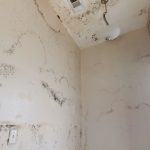
Cary's housing market is dominated by post-1985 construction, with most homes in Preston, Lochmere, MacGregor Downs, Carpenter Village, and the Amberly and Highcroft master-planned communities built between the late 1980s and the mid-2010s. That construction era favored fast framing, fiberglass-batt insulation in vented crawlspaces, and tightly sealed envelopes that trap interior humidity. The combination has produced a distinct Cary mold profile: less catastrophic structural failure than older Durham or Raleigh homes, more chronic indoor humidity, condensation in wall cavities behind exterior cladding, and crawlspace mold driven by undersized vents and missing vapor barriers. Cary also sits on the Cape Fear-Neuse divide, with neighborhoods sloping toward both watersheds, so heavy Triangle thunderstorm runoff and the remnants of late-summer tropical systems regularly overwhelm subdivision stormwater systems. Wake County's growth pace means many Cary homeowners are second or third owners of properties whose original moisture problems were papered over, only to surface during routine inspections years later. Remtech Environmental remediates dozens of Cary properties annually.
Cary's newer construction and tightly sealed envelopes shape which mold genera we encounter most often during remediation projects in the town.
Stachybotrys in Cary almost always traces to a specific event we can date: a pinhole leak in PEX or copper, a slow drip from a second-floor laundry, an undetected dishwasher supply failure, or a roof valley that leaked unnoticed for a winter. Because Cary homes are newer and cellulose-rich drywall paper is everywhere, once water reaches a wall cavity Stachybotrys gets a foothold quickly. We see it most in finished basements in Lochmere and Preston, and behind vinyl wallpaper in original-construction master baths.
Aspergillus turns up regularly in Cary attics where original ridge-and-soffit ventilation never quite balanced. The dense pine canopy across Carpenter Village, Amberly, and the Apex-adjacent western neighborhoods shades roof decks well into late morning, so condensation lingers on north-slope sheathing. Aspergillus also colonizes HVAC evaporator coils when systems run hard through Cary summers without coil cleanings. Several Aspergillus species are mycotoxin producers and pose elevated risk to immunocompromised residents, so HVAC sanitization is frequently part of our scope.
Penicillium is the genus that defines the Cary remediation case mix. The blue-green colonies establish quickly on damp drywall and on the cardboard packaging that homeowners store in unconditioned garages and bonus rooms. We find it constantly behind kitchen islands where ice-maker lines have leaked, around water heaters in upstairs closets, and in the wall cavities that share construction with master-bath shower pans. Penicillium spores aerosolize easily and elevate counts faster than most genera, making prompt containment critical.
Cladosporium colonizes the cool surfaces in Cary's air-conditioned homes: window frames during humid summers, the rubber gaskets of front-load washers, and the painted ceilings of bathrooms with undersized exhaust fans. The black-green streaking on north-facing siding throughout Cary subdivisions is the outdoor reservoir that constantly reseeds the indoor environment. Cladosporium is one of the most common allergen-producing molds, and reducing indoor sources usually requires both cleaning and ventilation upgrades to keep humidity below the threshold the genus needs.
Alternaria is a leading allergen for Cary residents who already battle pine and oak pollen seasons each spring. Indoors, we identify it on shower-stall grout, around tub-spout escutcheons, on the rubber boots of washing machines, and in HVAC drain pans that have not been cleared in years. Master-bath fans in 1990s Cary homes are often undersized for the room volume, leaving humidity high enough for Alternaria to persist year-round. Replacing or upgrading the fan is frequently part of the long-term fix.
Cary projects move through the same five-stage IICRC S520 protocol Remtech runs across the Triangle, with attention to the construction quirks of the town's housing stock.
We arrive with thermal imaging, moisture meters, and borescopes calibrated for the typical Cary wall assembly: half-inch drywall, kraft-faced batt insulation, OSB sheathing, and brick or fiber-cement cladding. Air samples are pulled from each affected zone, with an outdoor control sample from the same property, and shipped to an accredited lab. The resulting report names the dominant genera, compares indoor to outdoor counts, and points to the moisture source the remediation scope will need to address. Cary HOA inspections often request this documentation.
Polyethylene barriers and zippered entries seal the work zone before any porous material is disturbed. Negative air machines with HEPA final filters establish a pressure differential that pulls airflow inward, preventing migration into adjacent rooms. Cary's prevalent open-floor-plan design means we often need larger containment than older sectioned homes would require. We seal HVAC supply and return registers in unaffected rooms so the air handler does not redistribute spores during the project.
Technicians in P100 respirators, full Tyvek suits, and gloves remove non-salvageable porous material and double-bag it for disposal. Drywall, batt insulation, carpet pad, and affected subfloor are removed back to clean substrate. Wood framing and masonry are HEPA-vacuumed, wire-brushed where appropriate, and treated with antimicrobials matched to the lab-identified species. We log every stage with photography and remediation notes, generating the documentation that Cary real-estate transactions and insurance claims consistently require.
Without a sealed moisture fix, Cary mold returns within a single humid season. Our scope routinely covers crawlspace encapsulation, dehumidifier installation, downspout extensions away from clay-soil foundations, regrading recommendations, plumbing-leak coordination, HVAC condensate corrections, and exhaust-fan upgrades for moist-load rooms. Master-planned community covenants often dictate exterior approach, and we coordinate with HOA architectural review when modifications are visible from common areas.
An independent industrial hygienist or our accredited lab clears the project. New air samples and ATP swabs are compared against the outdoor control and against pre-remediation counts. Reconstruction does not begin until clearance numbers are at or below outdoor baseline and visible mold is gone. The homeowner receives the full documentation set, including the lab clearance report. Cary buyers and sellers cite this packet directly during home inspection negotiations, and adjusters use it to release insurance funds.
Cary's growth from a town of fifty thousand in the early 1990s to one of the largest municipalities in North Carolina happened during a construction era that prioritized tightness over breathability. Modern Cary homes are wrapped in housewrap, sealed with caulk at every joint, and conditioned by high-efficiency HVAC systems that move large volumes of air across cold coils. Tight homes hold humidity that older houses would simply leak away, so when an internal moisture source exists the load has nowhere to go. Cary also sits in a stormwater zone where the sandy-clay surface soils drain reasonably well at first, then hit denser subsoils that hold water around foundation footings. Crawlspaces vented to outdoor air on a 90-degree, 80-percent-humidity July afternoon receive saturated air that condenses immediately on cooler floor framing, and the National Weather Service climate normals for the Triangle confirm those conditions hold for most of June through September. The neighborhoods drained by Crabtree Creek tributaries, parts of older Preston, and the Apex-adjacent western edge near Lake Pine see the additional pressure of urban runoff after summer thunderstorm cells. Hurricane and tropical-storm remnants regularly drop more rain than Cary's stormwater system was sized for, with Helene's outer bands in 2024 producing flash flooding in subdivisions near Higgins Greenway. The cumulative result is a town where mold is a normal, expected risk that requires active management rather than a rare event.
The medical literature on indoor mold exposure documents a clear progression from mild upper-respiratory symptoms to serious systemic illness as exposure intensifies and lengthens. Cary residents typically present with sinus pressure, post-nasal drip, recurrent sore throat, and itching eyes, often misattributed to the Triangle's brutal pollen calendar. Continued exposure produces new-onset asthma, eczema flare-ups, persistent cough, and the unrelenting fatigue that mold-driven illness is known for. Children, pregnant women, elderly residents, and anyone immunocompromised through transplant medication, autoimmune therapy, or active cancer treatment face significantly higher risk, including invasive Aspergillus infection. Remediation typically produces measurable symptom reduction within two to six weeks, an improvement Cary pediatricians and allergists routinely confirm in follow-up visits.
Cary residential projects usually fall between 2,800 and 7,500 dollars. Bathroom-only remediation in a 1990s Preston home may run 1,500 to 2,500 dollars. Crawlspace encapsulation paired with mold removal typically lands between 5,500 and 9,500 dollars depending on square footage. Whole-house contamination after a sustained leak, complete with HVAC sanitization and reconstruction, can exceed 17,000 dollars. Cary's newer construction generally costs less per square foot than Durham's older inventory because access is easier and material salvage rates are higher. Remtech provides written itemized estimates after the inspection.
North Carolina policies cover mold remediation when it follows a sudden, accidental, covered water loss, such as a burst supply line, ice-maker failure, or storm-driven roof damage. Long-term seepage, neglected maintenance, and chronic crawlspace humidity are universally excluded. Most carriers active in Wake County cap mold coverage at 5,000 or 10,000 dollars unless the homeowner purchased a higher endorsement. Cary HOA master policies typically do not cover unit-interior mold in townhome and condo communities. We document moisture origin in the format adjusters expect and have worked successfully with the major regional carriers.
Typical Cary single-room remediation runs two to four days from containment setup through clearance. Crawlspace projects with encapsulation usually take four to six days because of vapor-barrier installation and dehumidifier commissioning. Whole-house remediation following a major leak can extend to two or three weeks once reconstruction is included. Drying time controls the schedule. North Carolina humidity actually lengthens summer projects compared to winter ones because materials reach IICRC moisture targets more slowly when ambient dew points are high.
Most Cary families stay home through the project. Sealed containment, HEPA-filtered negative air, and HVAC-zone isolation keep spore concentrations safe in unaffected areas. We recommend that infants, asthmatics, pregnant residents, and immunocompromised occupants stay elsewhere during active demolition, which usually lasts one or two days. Open-plan Cary homes occasionally require larger containment that interrupts kitchen or main-floor use, and in those cases short-term relocation is more comfortable than managing around the work zone. We discuss the call during the scoping visit.
Watch the same failure point for new staining, peeling paint, or returning musty odor. Track crawlspace humidity with a digital hygrometer; sustained readings above 60 percent indicate the moisture controls are slipping. Recurring respiratory symptoms in family members are a behavioral warning sign that often precedes visible regrowth. Remtech provides a written warranty against regrowth when our scope addressed the moisture source and the homeowner has maintained the recommended dehumidification or repair. A six-month post-remediation air sample is the most rigorous way to confirm long-term success.
Remtech Environmental works the entire town of Cary and adjacent communities. We regularly remediate properties in Preston, Lochmere, MacGregor Downs, Carpenter Village, Amberly, Highcroft, Stonewater, Cary Park, Park Village, Cameron Pond, Greenwood Forest, Wessex, Kildaire Farms, Regency, Walnut Hills, and the older central-Cary neighborhoods near downtown. We also cover western Cary near Green Hope, the Morrisville and Apex border subdivisions, and commercial properties along NC-54, US-1, and the I-40 corridor. Cary HOA boards, property management firms, and homeowners all rely on our certified team. We also serve Fuquay-Varina, NC. Learn more about mold removal in Fuquay-Varina, NC.
Contact us today to schedule an inspection or receive a free quote for our services.
Get a Free QuoteReady to get started? Fill out the form below and we'll get back to you right away.
We believe that a job done right is the only way to sleep well at night.
Contact Us Today