
Almost everyone has heard of asbestos and knows that it can cause health issues, but you may not really understand what it is, when it was primarily used or what materials may contain it. Asbestos is a naturally occurring mineral that has been used in thousands of different materials, including many building materials. The use of asbestos was drastically reduced in the 1980s, so most modern building materials and buildings rarely contain asbestos. If your home or business was built before 1985, it is more likely that it may contain materials with asbestos.
“Remtech Environmental is a highly professional and very responsive company. I would recommend them to those who are looking for a skilled company to handle asbestos remediation.”
★★★★★ 22th August 2018 -Derek H.
Here at Remtech Environment, we can take samples of various materials in your building and have them evaluated for asbestos. If asbestos is present, we can help with the safe removal and disposal of the problem material. Once the removal is complete, we will complete secondary testing to make sure all asbestos is gone. We have been helping property owners with asbestos in the Wake Forest, North Carolina area for over 20 years. Give us a call today.
Asbestos is a naturally occurring mineral that was extensively used in construction and manufacturing during the twentieth century due to its heat resistance, strength, and insulating characteristics. However, it is now understood to cause major health concerns if its fibers become airborne and ingested. Our team at Remtech Environmental is well-versed in asbestos and offers a wide range of services to help identify, remove, and dispose of it properly. Some of the common questions we get about asbestos and our services are answered below.
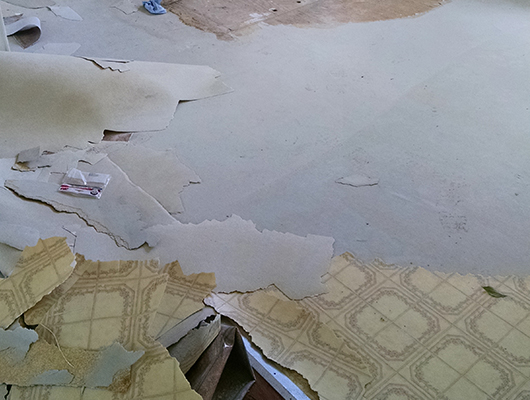
Insulation, roofing shingles, floor tiles, cement, siding, and HVAC duct tape or duct insulation are all places where asbestos might be found on your property.
Asbestos-containing products can discharge microscopic fibers into the air when disturbed. When breathed, these fibers can lodge in the lungs, causing inflammation, scarring, and deadly diseases such as mesothelioma, asbestosis, and lung cancer.
Asbestos is invisible to the human eye. The only way to establish its presence is to have a team, such as us, take samples of various materials in your house and have them tested. If you suspect asbestos on your property, it is important to contact us right away and not disturb it.
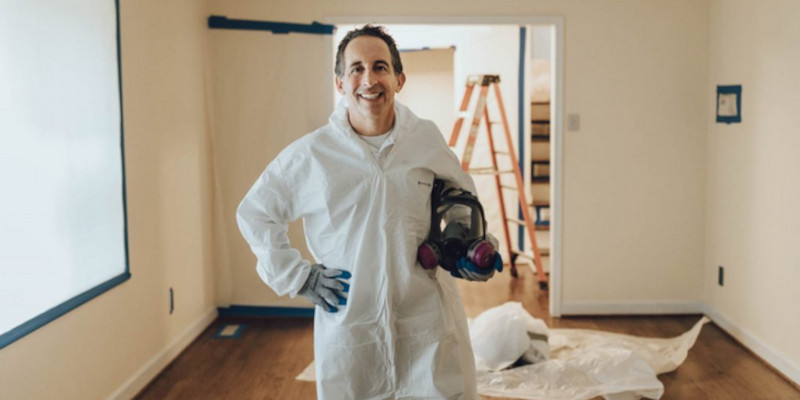
Once we complete the removal process, we will do secondary testing to make sure it has all been removed.
You can rely on us for testing, removal, abatement, and inspection.
At Remtech Environmental, we offer a range of services to help handle asbestos present in buildings throughout Raleigh, Durham, Cary, Asheville, Morrisville, Wake Forest, Wendell, Winston-Salem, Apex, Chapel Hill, and Greensboro, North Carolina.
Before we perform asbestos abatement, we begin by taking samples from the building for assessment. Read More →
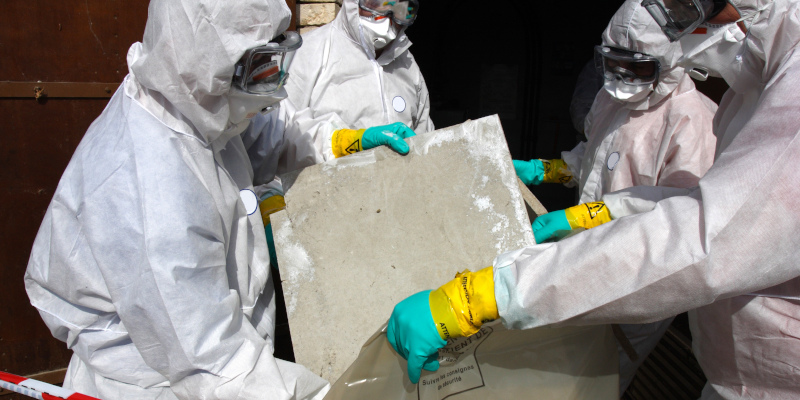
If your ceiling has an asbestos problem, you can count on us to remove it. Read More →
Asbestos in your flooring should be removed as soon as possible. Read More →
An asbestos inspection can protect your health and offer peace of mind. Read More →
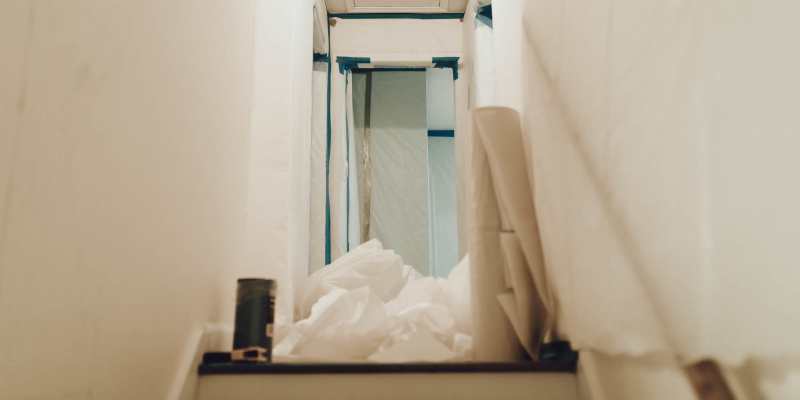
We are proud to provide professional asbestos removal services. Read More →
Asbestos testing can tell you the facts, so you can move forward. Read More →
Every Wake Forest project follows a documented five-step protocol designed around EPA NESHAP standards and North Carolina's asbestos hazard management rules.
Wake Forest's housing inventory ranges from pre-1900 homes near the original Wake Forest College campus along North Main and South Main, through 1950s and 1960s ranches on Stadium Drive, into newer Heritage, Traditions, and Hasentree subdivisions where pre-2000 outbuildings still occasionally hide asbestos. Our NC-accredited asbestos building inspector documents every suspect homogeneous area, collects bulk samples through wet methods, and ships them under chain-of-custody to an NVLAP-accredited laboratory for Polarized Light Microscopy under EPA 600/R-93/116. Standard turnaround is 24 to 72 hours, with same-day rush available for fast-moving Wake County real-estate transactions. The written report identifies friability, percentage by volume, and recommended response action, providing defensible documentation for Wake County Environmental Health permitting and lender review.
Containment in Wake Forest's older Forestville and downtown homes requires careful planning around original plaster walls and narrow stair runs. Newer construction in Heritage and Traditions allows more straightforward setup. Crews install two layers of 6-mil polyethylene on floors and one layer on walls, with critical barriers at every doorway and window. HEPA-filtered negative-air machines maintain at least four air changes per hour and minimum -0.02 inches water column negative pressure, logged hourly by manometer. The HVAC system is shut down and registers are sealed. A three-chamber decontamination unit, dirty room, shower, clean room, is installed at every access point. OSHA-compliant warning signage is posted at every entrance to the regulated zone.
Wake Forest housing built between 1900 and 1980 commonly contains chrysotile asbestos in popcorn ceilings, vinyl floor tile, mastic adhesive, transite siding, and pipe lagging. Pre-war homes near the historic North Main corridor frequently include plaster skim coats with asbestos, and Stadium Drive ranches often have asbestos HVAC duct wrap. Each abatement worker enters containment in disposable Tyvek coveralls, full-face P100 respirators, and nitrile gloves taped to suit cuffs. Amended water is applied through airless sprayers to fully wet materials before disturbance. Popcorn ceilings are scraped wet, vinyl tile is heat-released and lifted in sections, pipe lagging is glove-bagged, and transite siding is removed intact wherever possible. All waste is double-bagged in 6-mil printed asbestos bags and staged inside the regulated zone.
Final clearance in Wake Forest is performed by an independent third-party industrial hygienist with no financial relationship to our abatement crew, which satisfies Wake County Public School System institutional requirements, mortgage lender conditions, and homeowner peace of mind. Phase Contrast Microscopy per NIOSH 7400 covers routine residential clearance, with Transmission Electron Microscopy under AHERA reserved for schools, daycare centers, and any project where TEM is contractually required. The clearance threshold is 0.01 fibers per cubic centimeter, established through aggressive sampling with leaf blowers and floor fans agitating settled particulates before five area samples are collected. Containment cannot be removed and the area cannot be reoccupied until written passing clearance results are issued by the third-party hygienist.
Asbestos waste from Wake Forest projects travels in a placarded, manifested transport vehicle to an NC-permitted Subtitle D landfill, typically the Wake County South Wake Landfill on Feltonsville Road or a regional Republic Services facility certified for Category I asbestos. Each load is accompanied by a chain-of-custody waste manifest signed by generator, transporter, and disposal facility, and the signed return copy is filed in the project record. NC DHHS Asbestos Hazard Management Program receives the 10-working-day pre-job notification under 15A NCAC 19C, and Wake County Environmental Health is copied for local review. The final project file delivered to the homeowner includes the inspection report, NVLAP lab analyses, daily logs, air clearance results, signed manifests, and a written closure letter.
Wake Forest's housing inventory carries an asbestos profile shaped by its long history as a college town and its current status as one of the fastest-growing suburbs in northern Wake County. The historic district along North Main and South Main, anchored by the original Wake Forest College campus that operated from 1834 until the institution's relocation to Winston-Salem in 1956, contains pre-1920 frame houses with original plaster systems, transite siding, pipe lagging, and decorative ceiling textures. The Stadium Drive corridor and the Forestville community east of US 1 added 1950s and 1960s ranches with vinyl asbestos tile, mastic, popcorn ceilings, and HVAC duct wrap. Even newer subdivisions like Heritage, Traditions, and Hasentree, built largely after 2000, occasionally include older outbuildings, garages, and renovated farmhouses on parcels acquired during land assembly. North Carolina regulates asbestos abatement under 15A NCAC 19C, administered by the NC DHHS Asbestos Hazard Management Program, with EPA NESHAP (40 CFR 61 Subpart M) and OSHA 29 CFR 1926.1101 providing federal overlay. In Wake Forest, projects route through both NC DHHS and Wake County Environmental Services for solid-waste handling, with Town of Wake Forest Inspections coordinating any related building permits. Any disturbance of regulated asbestos-containing material at or above the threshold quantity must be performed by a licensed abatement contractor under permit and after the mandatory 10-working-day notification has elapsed.
Most Wake Forest residential abatement projects fall between 1,600 dollars for a small popcorn ceiling in a Stadium Drive ranch and 11,000 dollars for full pipe-lagging removal in a pre-1920 North Main historic-district home. A 1,300-square-foot popcorn scrape in a Forestville rancher averages 2,900 to 4,400 dollars. Vinyl asbestos tile and mastic in a Heritage-area renovation kitchen runs 6 to 10 dollars per square foot. Transite siding removal on a downtown South Main bungalow can range from 8,500 to 15,000 dollars depending on linear footage. Every estimate includes inspection, NVLAP-accredited lab analysis, NC DHHS notification, third-party clearance air sampling, and Subtitle D disposal at a Wake County permitted facility, with itemized line items so homeowners can compare proposals.
Yes, occupants must vacate the regulated work area until written third-party clearance is issued. A single-room popcorn ceiling abatement in a Heritage subdivision home can sometimes proceed with the family staying in unaffected rooms if a hard critical barrier and independent HVAC zone are maintained. Whole-house removals in Forestville or pipe-lagging work in a North Main historic-district basement typically require full vacation for three to five days. Pre-listing real-estate abatement is often scheduled while the home is already vacant between owners, which is the cleanest scheduling window. We coordinate with Wake County rental property managers, Triangle-area relocation specialists, and provide the written reoccupancy clearance letter before any resident returns to the property.
North Carolina regulates asbestos abatement under 15A NCAC 19C, administered by the NC DHHS Asbestos Hazard Management Program. The program licenses every abatement role, from inspector through supervisor and worker, and requires written 10-working-day notification before any regulated project begins. EPA NESHAP (40 CFR 61 Subpart M) provides federal notification, work-practice, and disposal standards, and OSHA 29 CFR 1926.1101 sets worker exposure limits and engineering controls. In Wake Forest, Wake County Environmental Services enforces local solid-waste handling at the disposal facility, and Town of Wake Forest Inspections coordinates building permits when abatement is part of a renovation or demolition. Civil penalties for non-compliance can exceed 25,000 dollars per day per violation, with potential criminal liability for willful violations.
Wake Forest projects fit a few common durations. A single-room popcorn ceiling in a Stadium Drive ranch is a one-day scrape with overnight clearance, two days door-to-door. A whole-house popcorn project in a 2,300-square-foot Heritage subdivision home averages four to five days including containment setup, removal, encapsulation, aggressive air sampling, and teardown. Pipe insulation removal in a North Main historic-district basement typically runs three to four days. Transite siding removal on a Forestville bungalow can stretch to a full week if weather delays staging. Add 24 to 72 hours up front for the pre-abatement inspection and PLM analysis, and the mandatory 10 working-day NC DHHS notification window must elapse before regulated work can legally begin.
Abatement is the broad regulatory term covering any controlled response to asbestos-containing material, while removal is just one option. Encapsulation seals fibers in place with a bonded coating, enclosure builds an airtight barrier around intact material, and operations and maintenance programs manage the hazard in place over time. In a Wake Forest historic-district home on North Main where pipe lagging in a dry mechanical room is intact and undisturbed, encapsulation can satisfy NC DHHS work-practice standards while costing 45 to 60 percent less than removal. Conversely, when a Stadium Drive ranch is being gutted for a full kitchen-and-bath renovation, removal is the appropriate response because every adjacent surface will be cut or drilled, and any encapsulation coating would inevitably be breached during construction.
Remtech serves Wake Forest and the surrounding northern Wake County communities, including the historic North Main and South Main corridor, Forestville, Stadium Drive, Heritage, Traditions, Hasentree, Crenshaw Manor, Holding Village, Bowling Green, and Caddell Woods. Coverage extends to Rolesville, Youngsville, Franklinton, Wakefield, Falls Lake-area Raleigh, and the unincorporated stretches along Capital Boulevard north of I-540. Fast-growing northern Wake suburban developers, school facility teams, and pre-listing real-estate sellers all rely on Remtech's NC DHHS-compliant abatement protocol, with project scheduling coordinated around Wake County permitting timelines and the active construction traffic typical of the Capital Boulevard corridor.
Contact us today to schedule an inspection or receive a free quote for our services.
Get a Free QuoteReady to get started? Fill out the form below and we'll get back to you right away.
We believe that a job done right is the only way to sleep well at night.
Contact Us Today