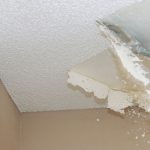
You likely already know a bit about asbestos. It is fairly common knowledge that asbestos can cause health issues and used to be a common building material. But what do you do if you have asbestos in your home or suspect it is a possibility? Here at Remtech Environmental, we are here to help your home or business with any asbestos-related problems.
On its own, asbestos is not necessarily harmful. Problems arise if the asbestos is directly disturbed, including by its natural degradation and deterioration over time. This deterioration releases the airborne fibers known to potentially cause cancerous diseases on inhalation. Having your home or business evaluated for the presence of asbestos, especially if it was built before 1980, is a great way to prevent any accidental exposure.
There are plenty of materials in a home or business that could contain asbestos. Popcorn ceilings, insulation wrappings, flooring, drywall, and more can all contain asbestos, so it’s important to test plenty of different surfaces. Any materials that are found to have dangerous levels of asbestos should be removed by trained and accredited professionals like those on our team to ensure complete and safe removal.
If you suspect asbestos in your Greensboro, North Carolina property, don’t wait. We can recommend reputable and trustworthy testing services, and our team is here to help safely remove any asbestos that is present so you can rest assured that your home or business is safe. Reach out today to learn more or to speak with our team about scheduling services.
Contact Us.
Being informed about asbestos is one of the best ways to protect yourself from its effects. As accredited asbestos removal technicians, we are highly knowledgeable about asbestos and can offer our expertise by answering your questions. Check out our frequently asked questions below and don’t hesitate to contact our team if you have any other questions about asbestos.
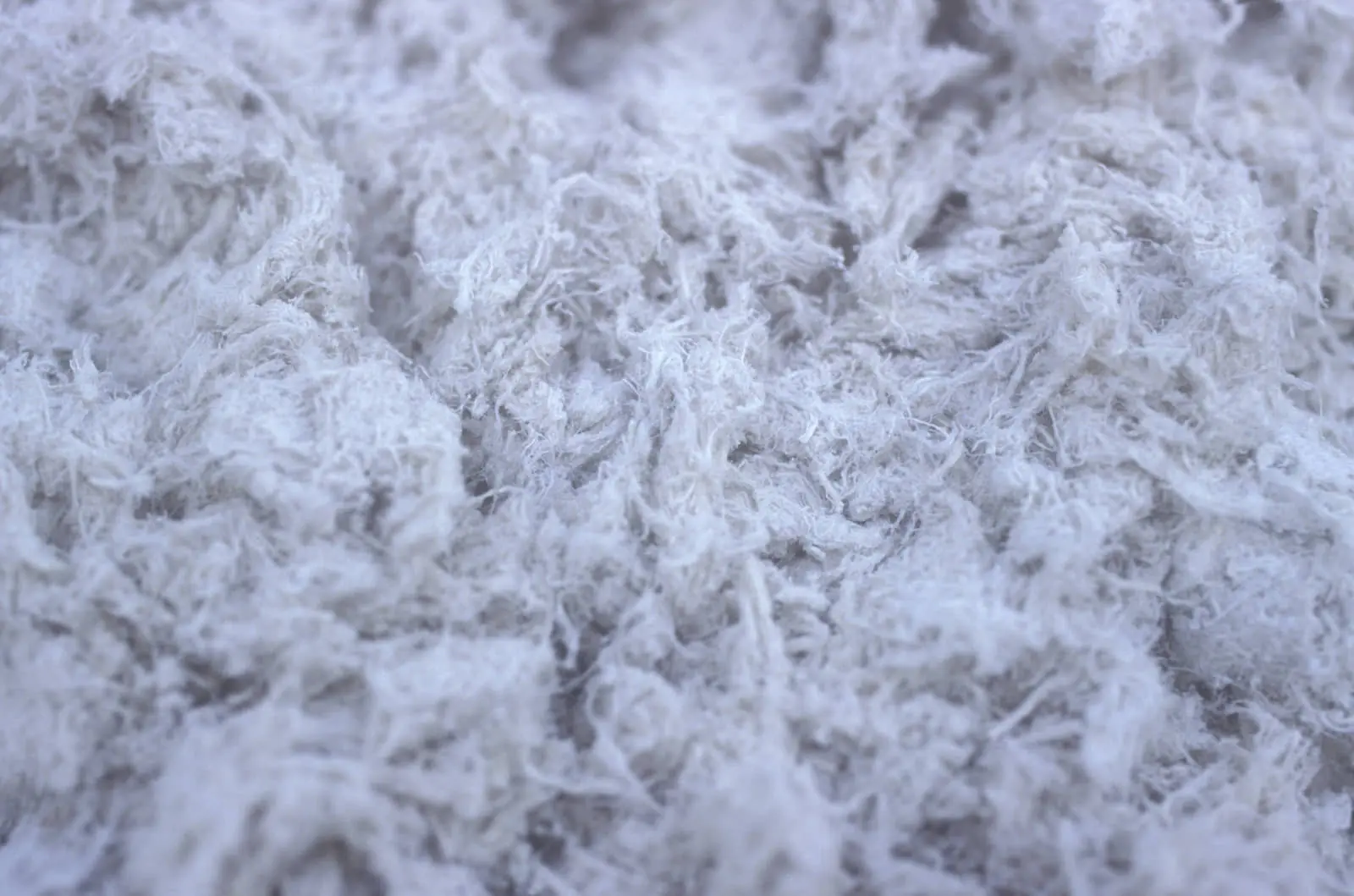
1989 was the year that the EPA issued a final rule banning most asbestos-containing products in the United States. However, the rule was vacated in 1991, and most of the original ban on asbestos-containing materials was overturned. The production and use of asbestos has significantly decreased over the years, however, so you are much less likely to have asbestos in your home if it was built after 1985.
Contact Us.
At Remtech Environmental, we offer a range of services to help handle asbestos present in buildings throughout Raleigh, Durham, Cary, Asheville, Morrisville, Wake Forest, Wendell, Winston-Salem, Apex, Chapel Hill, and Greensboro, North Carolina.
Our asbestos abatement services are thorough and professional. Read More →
Our team safely and thoroughly removes your floor’s asbestos. Your home should be your ultimate sanctuary, and nothing about it should make you feel unsafe. Read More →
Asbestos removal can help keep your family safe. Read More →
Every Greensboro project follows a documented five-step protocol designed around EPA NESHAP standards and North Carolina's asbestos hazard management rules.
Greensboro's mill-village housing around White Oak, Revolution Mill, and the Cone Mills Proximity tracts dates to the early 1900s, an era when asbestos was already common in plaster, pipe lagging, and boiler insulation. Our NC-accredited asbestos building inspector documents every suspect homogeneous area on a unit-by-unit basis, collects bulk samples through wet methods, and ships them under chain-of-custody to an NVLAP-accredited laboratory. Polarized Light Microscopy under EPA 600/R-93/116 identifies asbestos type and percentage, with results returned in 24 to 72 hours. Larger commercial inspections in the downtown historic district or along South Elm Street include Point Counting confirmation when PLM results fall under one percent. Each report identifies friability, condition, and recommended response action for Guilford County permitting.
Old Irving Park's expansive 1920s estates and the tighter Lindley Park bungalows demand different containment strategies, but both rely on the same engineering controls. Crews install two layers of 6-mil polyethylene on floors and one layer on walls, sealing every penetration with spray adhesive and duct tape rated for abatement. HEPA negative-air machines deliver a minimum of four air changes per hour and maintain negative pressure verified by a manometer logged hourly. The HVAC system is shut down and registers are sealed with poly and tape. A three-chamber decontamination unit is constructed at the access point, and warning signage is posted per OSHA 29 CFR 1926.1101 at every entrance to the regulated area.
Materials encountered in Greensboro homes vary by era. Mill-village houses near White Oak and Revolution Mill typically contain chrysotile pipe wrap, boiler insulation, and original 9x9 floor tile. Fisher Park and Aycock craftsman homes often hide asbestos in plaster skim coats and decorative ceiling textures. Sunset Hills and Westerwood mid-century ranches commonly include vinyl asbestos tile, mastic, and HVAC duct wrap. Workers wear Tyvek coveralls, hoods, and full-face P100 respirators, and apply amended water with surfactant before disturbing any material. Pipe lagging is removed in glove bags, ceilings are scraped wet, and floor tile is mechanically lifted with mastic chased afterward. All waste is double-bagged in 6-mil labeled bags and staged inside the regulated zone for manifested transport.
Greensboro clearance work is performed by an independent third-party industrial hygienist who has no financial connection to the abatement crew, satisfying lender, insurer, and Guilford County Schools institutional requirements. Phase Contrast Microscopy per NIOSH 7400 is the residential standard, with Transmission Electron Microscopy under AHERA reserved for schools, childcare facilities, and any project where TEM is contractually specified. The clearance threshold is 0.01 fibers per cubic centimeter, established by aggressive sampling with leaf blowers and floor fans agitating any settled particulates before five area samples are pulled. Containment cannot be removed and the area cannot be reoccupied until written passing results are issued. We deliver the clearance letter directly to the homeowner and the lender within one business day.
Asbestos waste from Greensboro projects is transported in a placarded vehicle to an NC-permitted Subtitle D landfill, typically the White Street Landfill or a regional Republic Services facility certified for Category I asbestos. Each load travels with a chain-of-custody waste manifest signed by generator, transporter, and disposal facility, and the signed return copy is filed with the project record. NC DHHS Asbestos Hazard Management Program receives the 10-working-day pre-job notification required under 15A NCAC 19C, and Guilford County Department of Environmental Health is copied for local jurisdictional review. The final project file given to the homeowner includes the inspection report, lab analyses, daily logs, air clearance results, manifests, and a closure letter suitable for real-estate disclosure.
Greensboro's housing inventory is anchored by its textile heritage, with thousands of mill-village homes built by Cone Mills and Proximity Manufacturing between 1900 and 1940 to house workers at White Oak, Revolution, Proximity, and Print Works. These compact frame houses were constructed when asbestos was the default insulator on steam pipes, boilers, and stove flues. Old Irving Park, developed beginning in 1911, contains Tudor and Colonial Revival estates with original plaster systems and decorative textures that frequently test positive for chrysotile. Fisher Park, Sunset Hills, Westerwood, Lindley Park, Hamilton Lakes, and College Hill collectively span the full asbestos-use window, from 1900s craftsman to 1970s ranches with vinyl asbestos tile and popcorn ceilings. The Aycock Historic District and downtown's South Elm and Davie Street commercial buildings add another layer of pre-1950 transite siding, pipe lagging, and fireproofing materials. North Carolina enforces asbestos abatement through 15A NCAC 19C, administered by NC DHHS Asbestos Hazard Management Program, with federal overlay from EPA NESHAP (40 CFR 61 Subpart M) and OSHA 29 CFR 1926.1101. In Greensboro, projects route notifications through both NC DHHS and Guilford County Department of Environmental Health, and any disturbance of regulated asbestos-containing material at or above the threshold quantity must be performed by a licensed abatement contractor under permit.
Greensboro residential abatement projects typically run between 1,500 dollars for a small popcorn ceiling in a Lindley Park bungalow and 14,000 dollars for full pipe-lagging and boiler-insulation removal in a Cone Mills mill-village home. A 1,400-square-foot popcorn scrape in a Sunset Hills ranch averages 3,000 to 4,500 dollars. Vinyl asbestos tile and mastic in a Westerwood kitchen runs 6 to 11 dollars per square foot. Transite siding removal on a Fisher Park craftsman ranges 9,000 to 16,000 dollars depending on linear footage and disposal volume. Old Irving Park estates with multiple containment zones can exceed 22,000 dollars. Every estimate includes inspection, NVLAP-accredited lab analysis, NC DHHS notification, third-party clearance, and Subtitle D disposal.
Occupants must vacate the regulated work area, and in many Greensboro projects the entire home, until written clearance is issued. A small popcorn ceiling abatement in a single Aycock bedroom can sometimes be performed with the family staying in the opposite wing if a hard critical barrier and independent HVAC zone are maintained. For full-house removals in Sunset Hills or pipe-lagging work in a White Oak mill house with shared utility chases, plan on relocating for three to five days. Old Irving Park whole-house projects routinely require a full week off-site. We coordinate timing with Guilford County rental property managers and provide the written reoccupancy clearance letter before any resident returns to the property.
North Carolina regulates asbestos under 15A NCAC 19C, administered by the NC DHHS Asbestos Hazard Management Program, which licenses every abatement role from inspector to supervisor to worker. EPA NESHAP (40 CFR 61 Subpart M) governs notifications, work practices, and disposal, and OSHA 29 CFR 1926.1101 sets worker exposure limits and required engineering controls. In Greensboro, the Guilford County Department of Environmental Health enforces local solid-waste handling rules at the disposal site, and the City of Greensboro Inspections Department coordinates building permits when abatement is part of a renovation or demolition. Projects above the threshold quantity require a 10-working-day NC DHHS notification before work begins. Civil penalties for non-compliance can reach 25,000 dollars per day, per violation.
Most Greensboro projects fit one of three durations. A single-room popcorn ceiling in a Lindley Park bungalow takes one full day for removal plus overnight clearance, two days door-to-door. A whole-house popcorn scrape in a 2,400-square-foot Hamilton Lakes home averages four to six days including containment setup, removal, encapsulation, aggressive air sampling, and teardown. Pipe insulation across a basement in a White Oak mill house runs three to four days. Transite siding on a Fisher Park bungalow is typically a five-day project, weather permitting. Add 24 to 72 hours up front for the pre-abatement inspection and PLM analysis, and the 10 working-day NC DHHS notification window must elapse before regulated work can legally begin.
Abatement is the umbrella regulatory term for any controlled response to asbestos-containing material, while removal is one option within it. Encapsulation seals fibers with a bonded coating, enclosure builds an airtight barrier around intact material, and operations and maintenance programs manage the hazard in place. In a 1925 Old Irving Park home with sound, undamaged pipe lagging in a dry mechanical room, encapsulation often costs 50 percent less than removal while still meeting NC DHHS work-practice standards. Conversely, when a Fisher Park craftsman is being gutted for renovation, removal is the appropriate response because future trades will be cutting, drilling, and tearing into the same materials, and any encapsulated coating would be breached during construction.
Remtech provides licensed asbestos abatement throughout Greensboro and surrounding Guilford County, including Old Irving Park, Fisher Park, Sunset Hills, Westerwood, Lindley Park, Hamilton Lakes, College Hill, Aycock, Glenwood, and Latham Park. We serve the textile-heritage corridors around White Oak, Revolution Mill, Proximity Mill Village, and Print Works, plus the downtown South Elm and Davie Street historic district. Coverage extends into High Point, Jamestown, Summerfield, Oak Ridge, Stokesdale, Pleasant Garden, Sedalia, Gibsonville, and Whitsett. Triad-area commercial property managers, mill-conversion developers, and Guilford County Schools projects all receive the same NC DHHS-compliant abatement protocol.
Contact us today to schedule an inspection or receive a free quote for our services.
Get a Free QuoteReady to get started? Fill out the form below and we'll get back to you right away.
We believe that a job done right is the only way to sleep well at night.
Contact Us Today