
How to Tell if You Need Water Damage Restoration
Published by Remtech Environmental Team · Last updated April 2025
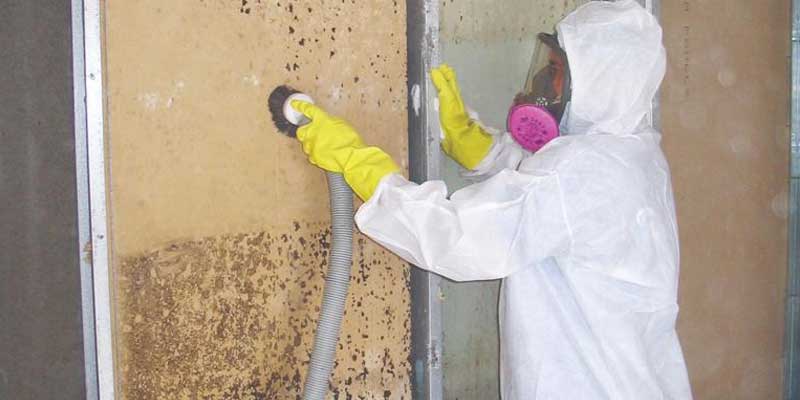
Water damage is never fun to deal with since it’s, you know, damaging. However, there are services out there that can assist you when you’re dealing with water-related problems, such as water damage restoration. Keep on the lookout for tell-tale signs that point to you needing water damage restoration, so you can get started on fixing the damages as soon as possible.
If you’re facing damage from things like water or mold, call us here at Remtech Environmental today.
- Mold: Unfortunately, leaking water and increasing condensation can become a breeding ground for mold. Left unattended, the mold can grow very quickly and cause a number of problems, like health issues, deteriorating walls, strange smells, and more.
- Water stains: Your walls and ceilings usually remain the same color. Time might make the paint fade a little bit eventually, but you shouldn’t be finding dark-colored stains unless you have water damage. If you find brown or yellow discolored spots on your ceiling or walls, then you most likely have a leak somewhere and should get it fixed.
- Warped wood: Wood doesn’t always do too well with extreme moisture. If an increase of collected moisture reaches your wooden floors or walls, you’re likely to find that water has made the floors buckle or the walls warp.
- Flooding: Obviously, if you’re finding pools or puddles of water then you need to call for professional water damage restoration. This can come from leaky or broken pipes and should fixed as soon as possible.
You walk down to the basement after a heavy Triangle thunderstorm and notice the carpet feels spongy underfoot. Or maybe you spot a faint brown ring spreading across the dining room ceiling, right below the upstairs bathroom. Perhaps the air in your laundry room has taken on a sweetish, earthy smell that no amount of Febreze will mask. These are the moments when North Carolina homeowners stop and ask the question that prompted you to find this article: do I actually need professional water damage restoration, or can I handle this with a shop vac and a couple of box fans? The honest answer depends on what kind of water you are dealing with, how long it has been sitting, and how far it has migrated into the building envelope. This guide walks through the warning signs that indicate professional intervention is required, explains why DIY drying frequently fails in our humid climate, and outlines the realistic costs Raleigh-area homeowners should expect when filing an insurance claim.
Clear Signs You Need Professional Water Damage Restoration
Water damage rarely announces itself with a flood. More often it reveals itself through a sequence of subtle clues that get progressively harder to ignore. Here are the indicators our IICRC-certified technicians look for during a residential assessment.
Persistent Musty Odors That Return After Cleaning
A musty, earthy smell that lingers in a basement, crawlspace, or behind a bathroom vanity is almost always microbial in origin. The smell comes from microbial volatile organic compounds, or mVOCs, released by mold and bacteria as they digest wet drywall paper, wood framing, and carpet padding. In North Carolina, where outdoor humidity routinely sits above 70 percent from May through September, these smells often appear days or weeks after a small leak has already saturated unseen building materials. If you have wiped surfaces with bleach, run a dehumidifier, or replaced an air filter and the odor returns within 48 hours, the moisture source is still active and the affected substrate has not been properly dried. At that point, surface cleaning is not enough. A professional moisture mapping survey using thermal imaging and pin-type meters is the only way to find the reservoir feeding the smell.
Brown, Yellow, or Rust-Colored Stains on Ceilings and Walls
Discoloration on drywall is the visual signature of a leak that has been ongoing long enough for water to wick through gypsum and deposit minerals, tannins, or rust on the painted surface. A small, perfectly circular stain directly below a second-floor bathroom usually points to a wax ring failure or a supply line drip at a toilet or sink. Long, irregular stains running along a ceiling joist often indicate a roof leak that has traveled along framing before manifesting on the finished surface. Either way, the stain you see is downstream of the actual problem. Painting over it with Kilz hides the cosmetic evidence but does nothing for the saturated insulation, the wet top plate, or the active water path. In Triangle homes built before 2000, recurring stains in the same location after heavy rain almost always trace back to flashing failures around chimneys, dormers, or pipe boots.
Buckled Hardwood Floors or Soft, Spongy Subfloor
Solid hardwood and engineered wood expand quickly when they take on moisture, and the cupping, crowning, or buckling that follows is one of the most expensive forms of damage a homeowner can encounter. If individual planks feel raised at the edges or you can hear a hollow drum sound when you walk across a section of flooring, the subfloor underneath has likely delaminated. Spongy give in a hallway or kitchen is a sign that the OSB or plywood substrate has lost structural integrity. Refinishing will not solve this. The flooring must be lifted, the subfloor inspected for rot and microbial growth, the cavity dried to an industry-standard moisture content below 16 percent, and only then can replacement materials be installed. Attempting to sand and refinish a buckled floor before resolving the moisture source guarantees a second failure within months.
Standing Water, Active Drips, or Visible Pooling
Any volume of standing water in a basement, crawlspace, or finished room requires immediate professional response. The IICRC S500 standard categorizes water by contamination level. Category 1 is clean supply line water from a broken pipe or appliance fill line. Category 2, often called gray water, includes washing machine overflow and dishwasher discharge. Category 3, or black water, includes sewage backups, toilet overflows from beyond the trap, and floodwater from rivers or storm surge. Category determines what materials can be saved versus what must be removed. Standing water also presents an electrical shock risk if outlets, baseboard heaters, or appliances are submerged. Do not enter a flooded basement until power has been killed at the main panel. Restoration crews arrive with truck-mounted extractors capable of removing thousands of gallons per hour, far beyond what any consumer wet vac can handle.
Increased Humidity, Condensation, or Sweating Walls
When the relative humidity inside a finished room climbs above 60 percent and stays there, something is contributing latent moisture to the air. Condensation forming on windows in spring and fall, on metal door frames, or on the cold-side surface of an exterior wall indicates a vapor pressure imbalance that is feeding the indoor environment from somewhere. Common sources in the Triangle include unconditioned crawlspaces venting humid air upward through floor penetrations, slow plumbing drips behind kitchen cabinets, and HVAC condensate lines that have come unglued in attic plenums. A single leaking condensate pan in a Raleigh attic can introduce three to five gallons of water per day into the building envelope during peak cooling season. If your dehumidifier runs constantly and still cannot pull the room below 55 percent relative humidity, the source is larger than ambient summer humidity and requires investigation.
When DIY Drying Falls Short
Box fans and bath towels work for a coffee spill. They do not work for a category that has soaked drywall, wicked into bottom plates, and migrated through wall cavities. The fundamental problem with DIY water damage response is that consumers cannot see where the water has gone, and what they cannot see, they cannot dry. A burst supply line under a kitchen sink can push water laterally through a cabinet kick plate, under the dishwasher, through the toe-kick of an adjacent island, and twenty feet down a hallway before a homeowner ever notices the puddle. Even after the visible water is mopped up, hundreds of square feet of saturated subfloor and insulation remain hidden behind finished surfaces. The IICRC S500 standard requires water-damaged structural materials to reach equilibrium moisture content within four days, because mold colonization on wet cellulose materials begins within 24 to 48 hours at temperatures above 70 degrees. North Carolina spends roughly seven months of the year in that range. Professional restoration crews use truck-mounted extractors, low-grain refrigerant and desiccant dehumidifiers, axial air movers, and infrared thermal cameras to locate, document, and dry every cubic foot of saturated material. Without that equipment, a homeowner is essentially racing the mold clock with a 20-dollar fan and losing.
What Water Damage Restoration Costs in North Carolina
Triangle-area water damage restoration projects typically run between 1,000 and 15,000 dollars depending on category, square footage affected, and what materials require removal. A small Category 1 event such as a supply line failure caught within hours, with extraction and drying limited to a single room, often resolves in the 1,000 to 3,500 dollar range. A Category 2 dishwasher overflow that has migrated under cabinets and into adjacent rooms commonly falls between 3,500 and 7,500 dollars once antimicrobial application and partial cabinet removal are factored in. Category 3 sewage backups or basement flooding from storm events typically begin at 7,000 dollars and routinely exceed 15,000 dollars when subfloor replacement, mold remediation, and reconstruction are included. Most North Carolina homeowner policies cover sudden and accidental water discharge but specifically exclude flood, gradual seepage, and sewer backup unless specific endorsements have been added. Document everything with photos before any cleanup begins, file the claim within 24 hours, and make sure your restoration vendor provides itemized scope-of-work documentation that adjusters can reconcile against the Xactimate estimating standard most carriers use.
Get Professional Water Damage Help in the Triangle
Remtech Environmental responds to water damage emergencies across the Triangle and surrounding counties. If you are dealing with a fresh leak or active flooding, our 24-hour response teams operate from local hubs serving Raleigh, Durham, and Cary. Visit our Raleigh water damage restoration page for service area details, our Durham water damage restoration page for response times to Duke and downtown Durham properties, or our Cary water damage restoration page for coverage across western Wake County. We provide free on-site assessments with thermal imaging, work directly with major insurance carriers, and hold IICRC certification in Water Damage Restoration, Applied Structural Drying, and Applied Microbial Remediation.
Key Takeaways
- Mold colonization on wet cellulose materials begins within 24 to 48 hours at North Carolina indoor temperatures.
- Brown or yellow ceiling stains indicate active or recent leaks; painting over them does not address the underlying water path.
- Buckled hardwood floors signal subfloor damage that requires removal, not refinishing.
- IICRC S500 categorizes water as Category 1 clean, Category 2 gray, or Category 3 black; category determines what materials can be salvaged.
- Triangle water damage restoration projects typically cost between 1,000 and 15,000 dollars depending on category and scope.
Need Help with Environmental Services?
If you have concerns about mold, asbestos, or water damage in your property, contact Remtech Environmental today for a free consultation.
Get a Free Quote