
Almost everyone has heard of asbestos and knows that it can cause health issues, but you may not really understand what it is, when it was primarily used or what materials may contain it. Asbestos is a naturally occurring mineral that has been used in thousands of different materials, including many building materials. The use of asbestos was drastically reduced in the 1980s, so most modern building materials and buildings rarely contain asbestos. If your home or business was built before 1985, it is more likely that it may contain materials with asbestos.
“Remtech Environmental is a highly professional and very responsive company. I would recommend them to those who are looking for a skilled company to handle asbestos remediation.”
★★★★★ 22th August 2018 -Derek H.
Asbestos is generally not harmful unless it is disturbed, but these materials can degrade and deteriorate over time, making it more likely that they can release airborne fibers that can cause cancerous diseases when inhaled. Exposure to these fibers can lead to symptoms decades later. You can’t see or smell asbestos, so if you aren’t sure if your home or business contains asbestos (especially if it was built before 1980), it is a good idea to get it evaluated.
Here at Remtech Environment, we can take samples of various materials in your building and have them evaluated for asbestos. If asbestos is present, we can help with the safe removal and disposal of the problem material. Once the removal is complete, we will complete secondary testing to make sure all asbestos is gone. We have been helping property owners with asbestos in the Wendell, North Carolina area for over 20 years. Give us a call today.
Asbestos is a naturally occurring mineral that was extensively used in construction and manufacturing during the twentieth century due to its heat resistance, strength, and insulating characteristics. However, it is now understood to cause major health concerns if its fibers become airborne and ingested. Our team at Remtech Environmental is well-versed in asbestos and offers a wide range of services to help identify, remove, and dispose of it properly. Some of the common questions we get about asbestos and our services are answered below.
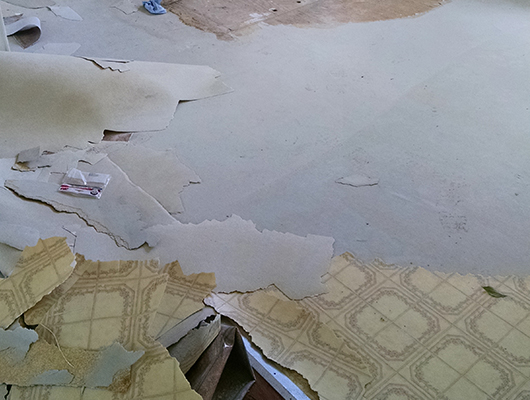
Insulation, roofing shingles, floor tiles, cement, siding, and HVAC duct tape or duct insulation are all places where asbestos might be found on your property.
Asbestos-containing products can discharge microscopic fibers into the air when disturbed. When breathed, these fibers can lodge in the lungs, causing inflammation, scarring, and deadly diseases such as mesothelioma, asbestosis, and lung cancer.
Asbestos is invisible to the human eye. The only way to establish its presence is to have a team, such as us, take samples of various materials in your house and have them tested. If you suspect asbestos on your property, it is important to contact us right away and not disturb it.
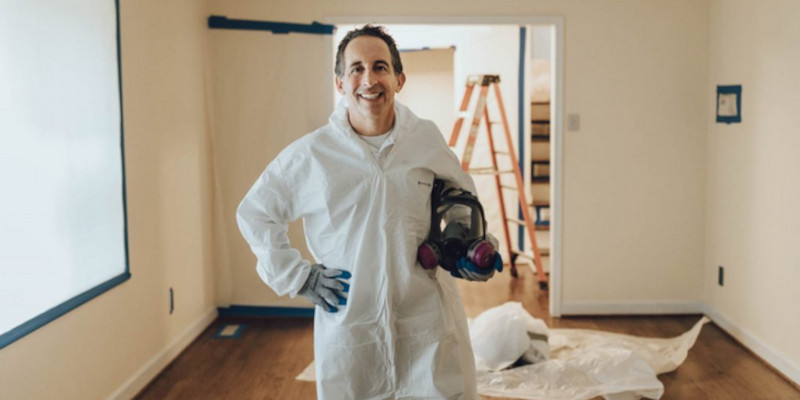
Once we complete the removal process, we will do secondary testing to make sure it has all been removed.
You can rely on us for testing, removal, abatement, and inspection.
At Remtech Environmental, we offer a range of services to help handle asbestos present in buildings throughout Raleigh, Durham, Cary, Asheville, Morrisville, Wake Forest, Wendell, Winston-Salem, Apex, Chapel Hill, and Greensboro, North Carolina.
Every Wendell project follows a documented five-step protocol designed around EPA NESHAP standards and North Carolina's asbestos hazard management rules.
Wendell's building inventory creates two distinct inspection profiles. Properties along Main Street, Third Street, and the original Wendell Boulevard corridor often date to the 1910s through 1950s, with asbestos commonly present in plaster, knob-and-tube insulation wrapping, original boiler systems, and asbestos-cement siding hidden under newer vinyl. Subdivisions built during the late-1990s and 2000s growth wave generally test clean, but vinyl floor tiles and HVAC duct mastic from earlier renovations still warrant sampling. We collect bulk samples following EPA protocol, log GPS-tagged photographs of each location, and submit chain-of-custody paperwork to an NVLAP-accredited lab. Polarized light microscopy results return in 48 to 72 hours, and we walk the homeowner through findings in plain language before any abatement scope is finalized.
Containment is sized to the structure. A small Wendell mill cottage may need only a single-room enclosure, while a Main Street commercial conversion can require multi-zone containment with separate decontamination units. We install double layers of six-mil polyethylene on all surfaces, build a three-stage decon airlock at the entry, and bring the work area to negative pressure using HEPA-filtered air machines providing at least four air changes per hour. Continuous manometer readings document the pressure differential, and we seal HVAC supplies and returns with poly and tape. For occupied homes where families remain in unaffected zones, we add a critical barrier between the work area and living spaces and run perimeter air sampling throughout the project.
Every Wendell abatement is performed by workers holding current NC DHHS accreditation, supervised on site by a licensed asbestos supervisor. We use wet methods exclusively: amended water sprayers saturate materials before disturbance, suppressing airborne fibers at the source. Friable items like deteriorated pipe insulation and damaged plaster are removed first, in small manageable sections, directly into labeled poly disposal bags. Non-friable materials such as floor tile, mastic, and intact transite siding are removed whole using pry bars, infrared heat for adhesives, and hand tools. Power tools, abrasive blasting, and compressed-air cleaning are prohibited. Bags are goose-necked, double-wrapped, and staged in a locked load-out area until the disposal trailer arrives.
Once removal and HEPA cleaning conclude, we hold the containment under negative pressure for a settling period before clearance testing begins. An independent industrial hygienist, separate from our removal crew, performs aggressive air sampling using leaf blowers and fans to challenge the cleaned environment, then collects fiber counts via phase contrast microscopy at the EPA AHERA threshold of 0.01 fibers per cubic centimeter. For high-sensitivity occupied projects we use transmission electron microscopy. Containment stays sealed until passing written results are issued. If any sample fails, we re-clean and retest at our cost. Wendell residents receive a copy of every air monitoring log, including pre-abatement, daily inside-containment, and final clearance results.
Asbestos waste from Wendell projects is hauled under a Wake County-aware manifest to a permitted Subtitle D landfill that accepts asbestos-containing material. Drivers carry placarded vehicles and signed manifests, and the homeowner receives the disposal receipt within ten business days. We file the required NESHAP notification with the NC DHHS Health Hazards Control Unit at least ten working days before any regulated project begins, and we coordinate with Wake County Environmental Services on demolition permits when applicable. Project closeout includes the original lab analysis, daily monitoring logs, supervisor and worker accreditations, transportation manifests, and final clearance reports, all bound into a single PDF that satisfies real estate disclosure, insurance, and lender documentation needs.
Wendell incorporated in 1903 as a tobacco-market town along the Norfolk Southern rail line, and the original downtown grid still contains dozens of pre-1980 structures with original or partially-renovated building materials. Frame houses on Cypress Street, Pine Street, and the blocks surrounding Wendell Falls Plantation predate most asbestos regulation and frequently contain asbestos-cement siding, plaster systems with chrysotile, and original mechanical insulation. Mill housing built for tobacco-warehouse workers in the 1920s and 30s typically used 9x9 vinyl asbestos tile, transite flue piping, and roofing felts that still test positive today. The town's growth has accelerated dramatically since 2010 with new subdivisions like Wendell Falls, Lake Glad Park, and the Edgewater communities adding thousands of homes built well after the 1989 EPA asbestos ban, but pre-existing tear-downs and renovation projects on older parcels still encounter the hazard regularly. North Carolina regulates abatement under 15A NCAC Subchapter 19C through the NC DHHS Health Hazards Control Unit, which licenses contractors, supervisors, workers, and project designers and enforces the federal NESHAP ten-working-day notification window. Wake County Environmental Services and the Wake County Inspections Division verify state notification and accreditation before issuing demolition or major renovation permits. Remtech holds active NC accreditation across every required discipline and maintains compliant disposal routes for Wendell-area projects.
Most Wendell residential abatement projects fall between $1,400 and $4,000 for a defined single-scope job such as one to two rooms of popcorn ceiling, a small basement pipe insulation removal, or a contained vinyl asbestos tile floor. Whole-house transite siding removal on an older downtown property typically ranges from $7,000 to $18,000 depending on the linear footage and access constraints. Pricing reflects state-licensed labor, mandatory third-party clearance testing, sealed transportation to a permitted Subtitle D landfill, the containment materials and air machines used, and the NESHAP notification process. Initial inspection and lab analysis is quoted separately and runs $400 to $900 for a typical pre-renovation residential survey.
For any project disturbing friable material, occupants must vacate the work zone, and most Wendell homeowners choose to leave the property entirely during the active removal phase, which usually runs one to three days for residential scopes. The work area is fully sealed under negative pressure with HEPA filtration, but containment cannot be entered until clearance testing passes. If the abatement is geographically isolated, such as a detached garage or a basement with independent HVAC, you may be able to stay in unaffected areas after the supervisor confirms airflow separation. We coordinate scheduling tightly to minimize displacement and can recommend short-term lodging options when needed.
Strictly. North Carolina enforces abatement under 15A NCAC Subchapter 19C, administered by the NC DHHS Health Hazards Control Unit, which licenses every contractor, supervisor, worker, inspector, and project designer working in the state. Federal NESHAP rules require a written notification at least ten working days before any regulated abatement begins. In Wendell, Wake County Environmental Services coordinates with state regulators, and the Wake County Inspections Division will not release demolition permits without verification of state notification and contractor accreditation. While owner-occupied single-family homeowners may technically perform their own abatement under a narrow regulatory carve-out, doing so creates significant liability, can void homeowners insurance, and complicates any future sale or refinance.
Standard Wendell residential abatement projects complete in two to five working days from initial containment to clearance pass. A single-room popcorn ceiling typically wraps in one day plus an overnight settle and morning clearance test. Pipe insulation removal in a basement or crawlspace runs two to three days. Full transite siding replacement on an older downtown home can take a full week, especially when weather impacts the wet-removal process. The state-required ten-working-day NESHAP notification window must be added to the front of any schedule, plus 48 to 72 hours for laboratory analysis on initial samples. We share daily progress reports so the homeowner always knows where the project stands.
Removal is one of four state-recognized abatement methods. Abatement is the umbrella term for any compliant control strategy, including encapsulation, where a specialized sealant locks fibers into intact material, enclosure, where a permanent barrier is built around the asbestos-containing material, operations and maintenance programs, which manage materials in place over time, and full removal. The right choice depends on the material's condition, friability, and the planned use of the structure. Intact transite siding on a Wendell Falls-area renovation might be a strong candidate for encapsulation, while damaged pipe insulation in a downtown property almost always requires removal. All four approaches must be performed or supervised by NC-licensed personnel.
Remtech serves Wendell and the eastern Wake County corridor. We work throughout downtown Wendell, the Wendell Falls master-planned community, Lake Glad Park, Edgewater, the Cypress Street and Pine Street historic blocks, Wendell Boulevard commercial corridor, and outlying parcels along Marshburn Road, Wendell Falls Parkway, and Highway 64. Adjacent communities served include Zebulon, Knightdale, Wake Forest, Rolesville, Archer Lodge, and Middlesex. Project types range from single-family pre-1980 home abatement and pre-renovation popcorn ceiling removal to commercial property conversions along the original downtown corridor. Emergency response is available for storm damage, fire restoration, and contractor stop-work events when asbestos is discovered mid-project.
Contact us today to schedule an inspection or receive a free quote for our services.
Get a Free QuoteReady to get started? Fill out the form below and we'll get back to you right away.
We believe that a job done right is the only way to sleep well at night.
Contact Us Today