
An Overview of our Typical Asbestos Abatement Process
Published by Remtech Environmental Team · Last updated April 2025
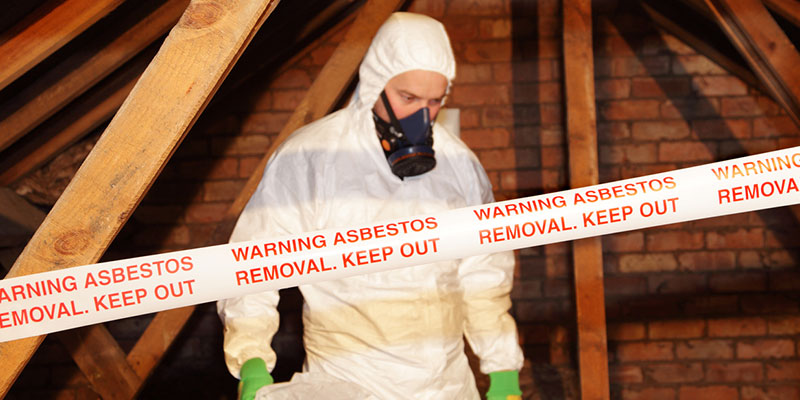
One of the challenges of asbestos abatement is that asbestos was used extensively in construction materials for decades. There are all sorts of materials that could contain asbestos, including flooring, roofing, insulation, fire-proofing, walls, ceilings and more. The danger of asbestos lies in the fibers that can be released and inhaled when these materials are disturbed. Careful planning goes into any asbestos abatement job to protect the inhabitants of the building and the technicians performing the asbestos removal.
Every asbestos abatement is different because every building and situation is unique. Here is an overview of the typical asbestos abatement process:
- Planning: Testing is performed first to determine the exact location and extent of asbestos-containing materials. Once this is established, careful planning can be conducted.
- Preparation: These crucial steps keep the asbestos fibers in a limited area during removal. The hazard area will be marked off, and the air ducts will be sealed. The HVAC system will be disabled, and the area sealed off with plastic sheeting and air pressure differentials.
- Removal: Wet methods are generally used for removal, as well as hand tools that limit the creation of dangerous airborne fibers. Technicians wear protective clothing and respirators and use a decontamination area when exiting the removal area.
- Final cleaning and retesting: Once the asbestos-containing material is removed and properly disposed of, a final cleaning with HEPA vacuuming will be completed. Testing is repeated to ensure that the area is now free of asbestos. This test must be completed before protective barriers are removed.
Asbestos abatement is one of the most heavily regulated environmental remediation activities in North Carolina, and for good reason. Microscopic fibers released from disturbed asbestos-containing materials (ACMs) can lodge permanently in lung tissue, causing mesothelioma, asbestosis, and lung cancer decades after exposure. At Remtech Environmental, every abatement project we perform across the Triangle, Triad, and surrounding counties follows a disciplined five-step protocol designed to satisfy EPA NESHAP (National Emission Standards for Hazardous Air Pollutants) requirements, OSHA worker-protection rules, and the North Carolina Department of Health and Human Services (NCDHHS) Health Hazards Control Unit standards. Whether the job is a single popcorn ceiling in a 1970s Raleigh ranch home, a vinyl floor tile removal in a Greensboro school, or a full-building abatement before demolition in Charlotte, the framework remains consistent. Skipping any phase, even on a small residential job, exposes occupants to airborne fibers and exposes the property owner to substantial legal and financial liability. This article walks through the full Remtech process so homeowners, facility managers, and general contractors understand exactly what licensed abatement should look like before, during, and after the work.
Key Takeaways
- Remtech follows a five-phase abatement protocol: inspection, design and notification, containment, wet removal, and clearance testing.
- EPA NESHAP requires a 10-working-day notification to NC DAQ before disturbing regulated quantities of ACM, with penalties exceeding $10,000 per day for violations.
- AHERA clearance air testing must show fewer than 0.01 fibers/cc by PCM, or fewer than 70 structures/mm2 by TEM in schools, before containment can be removed.
- Negative air pressure of at least -0.02 inches of water column, verified by manometer, is the engineering control that keeps fibers inside containment.
- North Carolina's pre-1981 presumption rule means any suspect material in older buildings must be tested or treated as asbestos until proven otherwise.
- Always verify a contractor's NC accreditation card, project designer plan, NESHAP notification, and independent third-party clearance firm before signing.
Need Help with Environmental Services?
If you have concerns about mold, asbestos, or water damage in your property, contact Remtech Environmental today for a free consultation.
Get a Free Quote