
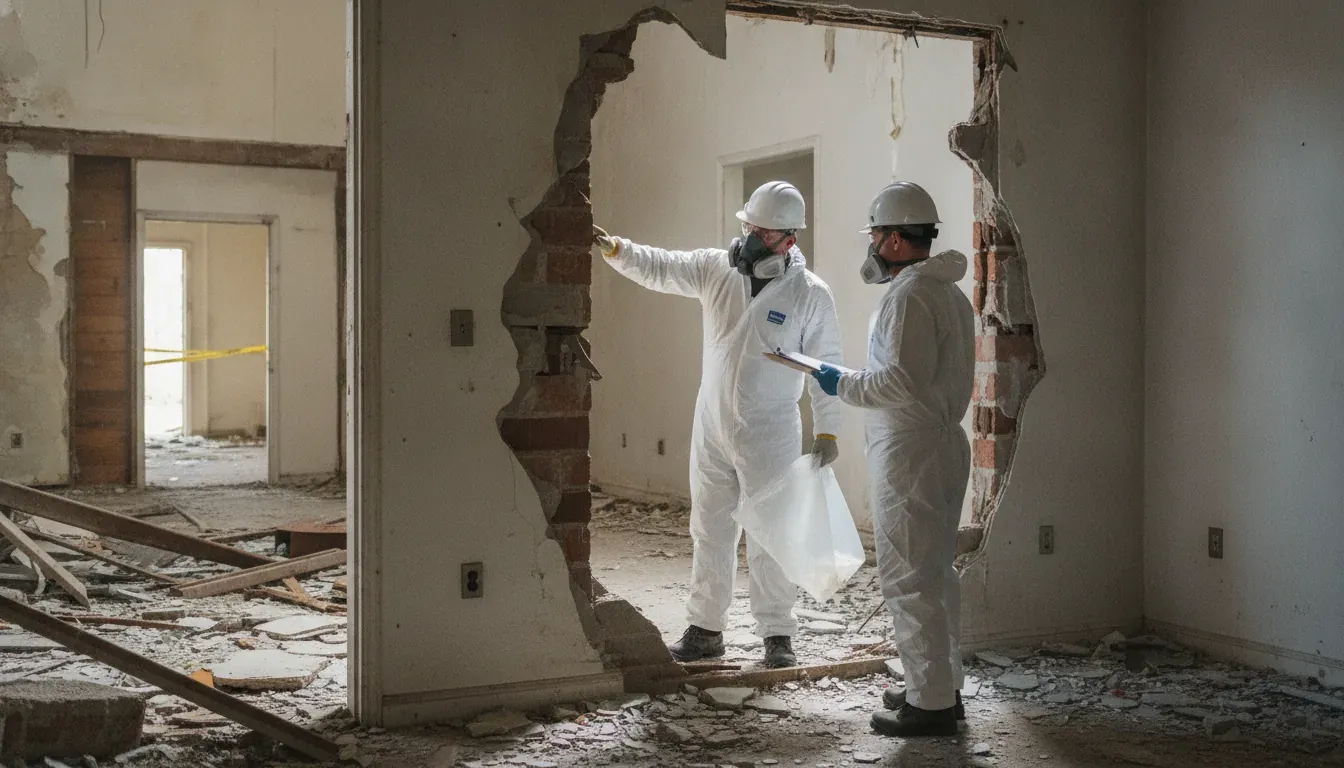
Planning an asbestos demolition survey in North Carolina involves more than choosing a demolition contractor and setting a start date. The project should begin with a defined work area, an inspection by an appropriately accredited professional, and a clear plan for notifications, removal, disposal, and documentation. This guide explains the planning sequence so owners, developers, property managers, and contractors can ask better questions before work begins.
Get a Free Quote for Asbestos Project Planning
What is an asbestos demolition survey in North Carolina?
An asbestos demolition survey is a project-focused assessment of the building or building portion that will be demolished. It is intended to identify suspect asbestos-containing materials, document where they are located, and provide information needed to plan the demolition safely. The survey is not a visual guess, a standard real-estate inspection, or a substitute for the demolition plan.
The practical purpose is to connect the planned demolition method with the materials that could be disturbed. A qualified asbestos inspector may review accessible materials, identify suspect materials, collect samples when appropriate, and coordinate laboratory analysis. The final scope should identify limitations, inaccessible areas, assumptions, and any additional assessment needed before the crew starts.
North Carolina guidance recommends inspecting buildings before demolition or renovation activity. Federal asbestos NESHAP rules also require a thorough inspection of the affected facility or area before covered demolition or renovation work begins. Read the current North Carolina demolition and renovation requirements and the current eCFR demolition and renovation standard for the governing details.
Why should demolition planning start with the affected area?
The survey should follow the actual demolition scope, not just the building address. A whole-building demolition, partial structural demolition, interior strip-out, mechanical removal, and selective demolition can expose different materials. Defining the affected area first helps the inspector look at the locations, assemblies, and building systems that the work will disturb.
Define the demolition method
Write down whether the project involves full demolition, selective demolition, interior removal, roof work, equipment removal, or another method. Include the sequence if known. A wall that will remain in place presents a different planning question from a wall that will be mechanically removed. The demolition contractor's method can also affect which materials need to be addressed before work begins.
Identify connected building systems
Older buildings can contain suspect materials in more places than the most visible flooring or ceiling finish. The assessment may need to consider pipe insulation, duct materials, adhesives, joint compound, plaster, roofing or siding products, fireproofing, and other components. The goal is not to assume every product contains asbestos. The goal is to avoid limiting the survey to one obvious surface when the planned work reaches other assemblies.
Document limits and inaccessible spaces
No survey should imply that inaccessible areas were fully evaluated when they were not. Ask how the report identifies concealed spaces, locked rooms, energized systems, occupied areas, or materials that could not be sampled. A useful report tells the project team what was examined, what was not examined, and what should happen if new suspect material appears during demolition.
How is a demolition survey different from an asbestos inspection?
A demolition survey is usually organized around the materials and areas that a planned demolition could disturb. An inspection can be broader or narrower depending on its purpose, such as evaluating known material condition, checking a defined area, supporting sampling, or documenting conditions after work. The names are not always used consistently, so the written scope matters more than the label.
Remtech's guide to asbestos building surveys and inspections explains this distinction in more detail. For a demolition project, ask the consultant to state in writing whether the service is intended to support demolition planning, what portion of the property is included, whether sampling is included, and which decisions the report is designed to support.
| Planning item | What it answers | Why it matters before demolition |
|---|---|---|
| Demolition survey | Which suspect materials may be affected by the planned demolition? | Helps define removal, controls, sequencing, and project boundaries. |
| Condition-focused inspection | What is the condition of known or suspected material in a defined area? | May support follow-up decisions but may not catalog every material. |
| Sampling and laboratory analysis | Does a submitted material sample contain asbestos? | Provides evidence for project-specific decisions; it does not replace a complete scope review. |
| Demolition plan | How will the structure be taken down and who is responsible for each step? | Coordinates the demolition contractor with inspection and abatement findings. |
These services can work together, but they are not interchangeable. A report should identify the service performed and any follow-up required. When the work involves regulated asbestos-containing material, the project may also require accredited personnel, notifications, permits, controls, air monitoring, or disposal documentation based on the facts of that project.
What should the survey report document?
A useful asbestos demolition survey report gives the project team a traceable basis for decisions. It should make the inspected area and the findings easy to understand, while clearly separating observed conditions, laboratory results, assumptions, and recommendations. The exact format varies, but owners should expect a report that can be shared with the demolition and abatement teams.
Building and project information
The report should identify the property, inspected areas, building systems, planned work, and relevant limitations. Useful context can include the building's present and prior use, renovations known to have occurred, drawings reviewed, and areas excluded from the assessment. Older records can help, but records should not be treated as complete proof when the building conditions or project scope have changed.
Material locations and descriptions
Look for clear descriptions of each suspect material, including the room or elevation, building component, approximate quantity when available, condition, and whether the material could be disturbed by the planned work. Photographs, sketches, floor plans, or other location references can make the report much more useful to the contractor than a list of material names alone.
Samples, laboratory results, and assumptions
If samples are collected, the report should connect each result to the material and location it represents. Ask whether any material was assumed to contain asbestos instead of sampled, and how that assumption affects the demolition sequence. A negative result for one sample does not automatically clear a visually different material or a different building assembly.
Recommendations and exclusions
The report should identify what must happen before demolition, what can remain undisturbed, and what needs additional review. It should not promise universal legal compliance or treat a report as permission to begin work. The owner and project team remain responsible for confirming the current requirements that apply to the building, work method, and jurisdiction.
Request a Free Consultation About Your North Carolina Building
What North Carolina notifications and permits may apply?
North Carolina demolition planning can involve more than a local demolition permit. The Health Hazards Control Unit, or HHCU, provides asbestos demolition and renovation requirements, forms, and project guidance. Depending on the activity, building, materials, and quantities, the project may involve a demolition notification, an asbestos removal permit, or other state and local steps. The responsible authority should confirm the current requirements for the specific project.
North Carolina's guidance states that demolition notification is required even when an inspection finds no asbestos. It also explains that local city or county demolition approval does not replace HHCU notification requirements. For removal of regulated asbestos-containing material above the state's stated thresholds, an asbestos removal permit may be required. The thresholds shown in current state materials are more than 35 cubic feet, 160 square feet, or 260 linear feet, but owners should verify how the rule applies to their project rather than treating a threshold as a blanket exemption.
The official North Carolina asbestos permit and notification form shows the project information that may be needed, including facility details, inspection information, demolition dates, scope of work, work practices, and waste transporter information. Remtech's guide to North Carolina asbestos notification requirements explains the difference between state notice, local approval, and project-specific permit questions. Start the review early. A form submitted late can affect the planned construction schedule, and changing the scope may require an updated filing.
How should owners sequence demolition work after the survey?
The survey is most useful when it becomes part of a written project sequence. The sequence below is a planning framework, not a universal legal checklist. Requirements vary with the building, material, work method, location, and applicable authority.
- Define the work. Mark the building, rooms, exterior components, systems, and materials that demolition will affect. Note whether the work is full, partial, selective, or mechanical demolition.
- Arrange the inspection or survey. Use an appropriately accredited asbestos inspector for the work and ask for a scope that matches the affected area. Do not rely on building age or visual appearance alone.
- Review results with the project team. Share the report with the owner, designer, demolition contractor, and abatement contractor as appropriate. Resolve gaps before the demolition schedule is final.
- Decide whether sampling or additional access is needed. Address concealed materials, assumed materials, areas that could not be entered, and materials that the planned method could disturb.
- Confirm notifications and permits. Ask the HHCU or the applicable local authority which filings, signatures, timing, and project updates are required. Keep local demolition approval separate from asbestos notification.
- Coordinate removal and demolition responsibilities. The written scope should state who handles containment, removal, air monitoring, clearance, waste packaging, transportation, disposal, and closeout records, if those services are applicable.
- Pause when conditions change. Stop and reassess if demolition exposes a material that was not addressed, the work area expands, or the demolition method changes. Do not let schedule pressure replace project-specific review.
This sequence protects the project from a common planning error: treating the survey as a one-time document that no one revisits. Remtech's asbestos abatement work plan guide offers a related checklist for connecting scope, controls, responsibilities, waste handling, and closeout. The survey, demolition plan, abatement scope, and regulatory filings should describe the same work. If they do not align, clarify the difference before the crew disturbs material.
What should you ask an asbestos professional before hiring?
Owners do not need to diagnose suspect material themselves. They do need enough information to compare scopes and understand who is responsible for each part of the project. Use these questions to make the first consultation productive:
- Is the proposed service a demolition survey, a condition inspection, sampling, laboratory coordination, abatement, or a combination?
- Which buildings, rooms, exterior areas, systems, and materials are included?
- How will inaccessible or concealed materials be handled?
- Which inspector, supervisor, or worker credentials apply, and how can the current accreditation be verified with the state?
- Will the report identify material locations, quantities, condition, assumptions, sample results, and limitations?
- Who will review the findings with the demolition contractor and designer?
- Who is responsible for notifications, permits, revisions, air monitoring, clearance, disposal, and closeout records when applicable?
- What happens if the demolition scope or method changes after the report is issued?
- What insurance and workers' compensation coverage is appropriate for the proposed work?
- Will the quote identify the project-specific scope, exclusions, schedule assumptions, and change-order rules?
A credible provider should explain the decision process without pressure. Remtech Environmental takes an education-first approach to environmental remediation, with asbestos inspection, testing, abatement, and removal services for residential and commercial properties. Learn more about Remtech's asbestos services in Raleigh and North Carolina, then compare the written scope with the actual demolition plan. If post-work verification is part of the scope, the team should also explain whether asbestos air clearance testing or another closeout step is appropriate.
What should you do if demolition is scheduled soon?
If the start date is approaching, do not skip the survey because the building appears vacant or the demolition seems straightforward. Gather the address, building plans, prior reports, proposed demolition drawings, contractor scope, target start date, and any known material concerns. Those details help a qualified professional determine what needs to be reviewed first.
Do not cut, drill, scrape, sand, break, or remove suspect materials to make the survey easier. Do not rely on a small informal sample to clear an entire building. Keep people away from active disturbance and ask the project team how the area will be controlled while the assessment is arranged.
For a detailed distinction between renovation planning and broader project preparation, read Remtech's North Carolina asbestos renovation survey guide. The demolition survey question is related, but a full demolition plan must account for the structure and components that the planned demolition could disturb, not just one renovation area.
Get a Free Quote for an Asbestos Demolition Survey
Frequently Asked Questions
Is an asbestos demolition survey required in North Carolina?
The inspection and notification requirements depend on the building, demolition activity, materials, quantities, and applicable state and federal rules. North Carolina guidance recommends an asbestos inspection before demolition or renovation, and federal NESHAP rules require a thorough inspection for covered activities. Confirm the current requirements for your project before work begins.
Does a demolition permit replace an asbestos notification?
No. A local city or county demolition permit and an asbestos notification serve different purposes. North Carolina guidance states that demolition notification to the applicable asbestos authority is separate from local demolition approval. Ask the HHCU or the applicable delegated local program what filings apply.
Does a demolition notification apply if no asbestos is found?
North Carolina guidance states that notification of a planned demolition is required even when an inspection finds no asbestos. The exact filing, timing, and authority depend on the project and location. Review the current state guidance instead of assuming a negative inspection removes every notification obligation.
How far in advance should North Carolina demolition paperwork be reviewed?
Current North Carolina materials commonly refer to submitting notifications and applicable permit applications at least 10 working days before the relevant work begins. Treat that as a planning requirement, not a guarantee that every project follows the same path. Verify the current form, signature, timing, and revision rules with the applicable authority.
Can an ordinary building inspection confirm that materials are asbestos-free?
No. A visual building inspection cannot conclusively identify asbestos. A qualified asbestos professional can determine whether sampling, laboratory analysis, or an assumption-based control approach is appropriate for the project. The assessment should match the areas and materials that demolition may disturb.
What should I do when demolition exposes an unexpected material?
Pause work in the affected area, limit access, and contact the project team's qualified asbestos professional for direction. The team should compare the new condition with the survey, demolition method, scope, and applicable requirements before disturbance continues. Document the change and update the project plan when necessary.
Plan the survey before the demolition schedule is locked
An older North Carolina building deserves a deliberate demolition plan. Start with the affected area, arrange an appropriately scoped asbestos survey, review findings with the project team, verify current notifications and permits, and define who handles removal, controls, disposal, and closeout. The right process reduces surprises and gives the owner a clearer basis for the next decision.
Remtech Environmental can explain the assessment and remediation options for your property without scare tactics or pressure. Request a free quote or consultation to discuss the building, planned work, and next steps.