
Planning a demolition or renovation in North Carolina involves more than arranging a crew and setting a start date. Before work begins, property owners and project teams need to determine whether state asbestos notification rules apply, what the building inspection reveals, and which authorities must receive documentation.
North Carolina asbestos notification requirements generally involve notifying the Health Hazards Control Unit (HHCU) before covered demolition or renovation work begins. The state guidance says notifications and applicable asbestos permit applications must be submitted with an original signature at least 10 working days before work starts. That timing is not a universal substitute for project-specific review. The inspection findings, type of work, material quantities, facility, and applicable federal or local rules can change what is required.
Starting with the state requirement itself helps clarify the practical difference between a notification, an inspection, and an asbestos removal permit. The next step is to examine what the HHCU notification covers and why an inspection should come first.
What Are North Carolina Asbestos Notification Requirements?
North Carolina asbestos notification requirements are advance notice rules that help the state identify planned demolition and renovation work before it begins. The Health Hazards Control Unit (HHCU) within the North Carolina Department of Health and Human Services must be notified of plans to demolish a building. Including a residence being demolished for commercial or industrial expansion. Importantly, demolition notification is required even when an inspection finds no asbestos in the building. North Carolina's demolition and renovation guidance provides the governing details.
Notification is part of a broader pre-work process. It is not the same as a local demolition permit, an asbestos removal permit, a contractor license, or an approval to begin work. A city or county demolition permit does not satisfy the HHCU notification requirement. The exact obligations can vary with the project type, the amount and condition of material, the facility, and applicable state or federal rules.
Inspection comes before the notice and the work
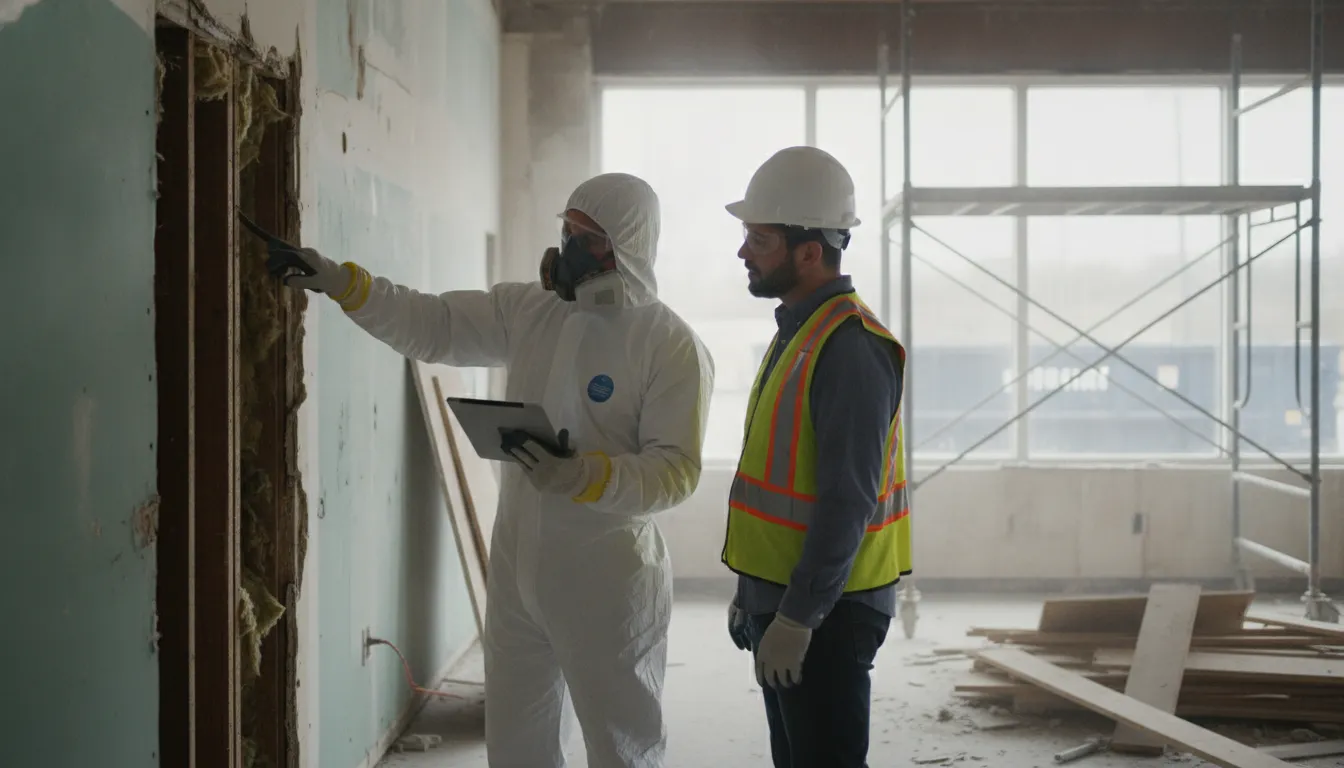
Before demolition or renovation activity begins, the building must be thoroughly inspected by a North Carolina-accredited asbestos inspector. The inspection identifies whether asbestos may be present and documents its type, location, and amount. Those findings help determine which state and federal requirements apply to the project. This sequence matters because a property owner should not schedule disturbance work based only on the building's age, prior renovations, or a visual assumption that materials are safe.
For a homeowner planning a Triangle renovation, that may mean arranging the inspection while the scope is still being developed. For a commercial owner or property manager, it may also mean coordinating the inspection with contractors, tenants, and the planned demolition or renovation schedule. If the inspection identifies regulated asbestos-containing material, additional requirements may apply beyond notification, depending on the work and project scope.
What does the 10-working-day rule mean?
North Carolina's guidance states that notifications and asbestos permit applications require an original signature and must be submitted to the HHCU 10 working days before demolition or renovation begins. This is a general timing rule stated in working days, not calendar days. It should be treated as a scheduling requirement, not a guarantee that every project has identical filing obligations or that a notice itself authorizes work.
Owners and contractors should confirm current filing instructions and any additional requirements with the applicable authority before setting a start date. When the project involves regulated work, reviewing the process with a regulated asbestos abatement professional can help keep inspection, notification, permits, and work planning aligned.
When Is Notification Required Before Demolition or Renovation?
North Carolina asbestos notification requirements depend on the type of work, the building, and what an inspection finds. Demolition notification is broader than an asbestos removal permit. A project can require notice to the state even when asbestos is not present. While a renovation project may also require a separate permit if regulated asbestos-containing material will be removed above specific thresholds. Treat these as separate compliance questions, not as one universal rule.
- Identify whether the project is demolition or renovation. Before a building is demolished, the Health Hazards Control Unit (HHCU) of the North Carolina Department of Health and Human Services must be notified of the planned demolition. This requirement applies even if the building contains no asbestos, and it can include a residence being demolished for commercial or industrial expansion. Renovation work is different: it involves disturbing or removing portions of an existing building rather than taking the entire structure down. The work description and building conditions determine which requirements apply. North Carolina guidance explains the demolition and renovation requirements.
- Arrange the inspection before any disturbance begins. The building must be thoroughly inspected by a North Carolina-accredited asbestos inspector before demolition or renovation activity starts. The inspection identifies whether asbestos is present, along with the material type, location, and amount. Those findings help determine which state and federal rules apply to the planned scope. Do not assume that a small-looking repair, a newer finish, or a clean visual appearance removes the need for an appropriate inspection. The inspection scope should match the areas that demolition or renovation could disturb.
- Check whether an asbestos removal permit is also required. For a renovation project, an HHCU asbestos removal permit is required when more than 35 cubic feet. 160 square feet, or 260 linear feet of regulated asbestos-containing material will be removed. These are removal-permit thresholds, not a universal exemption from notification, inspection, or safe work requirements. The dimensions are also not interchangeable descriptions of every project. A qualified review should determine how the affected material is measured and whether it is regulated under the applicable rules.
- Address friable material and submit on time. Materials containing asbestos that can be crumbled or reduced to powder by hand pressure must be removed before demolition or renovation activities that would disturb them. When a notification or asbestos permit application is required. North Carolina guidance states that it must be submitted to the HHCU with an original signature 10 working days before demolition or renovation begins. Ten working days is not the same as 10 calendar days, and the timeline should not be treated as a guarantee that every project has identical obligations. Confirm the current filing instructions, project scope, and applicable authority before setting a start date.
In practice, the safest sequence is inspection first, scope review second, then notification and permit confirmation before work is scheduled. A demolition notice, an asbestos removal permit, a local building permit, and occupant or worker communication serve different purposes. Keeping those requirements separate helps property owners avoid treating one approval as coverage for the entire project.
Who Files the Notice and What Information Is Needed?
The person coordinating a North Carolina demolition or renovation project should identify the owner or operator and confirm who is authorized to submit the notice to the Health Hazards Control Unit (HHCU). That does not mean one individual bears the same filing responsibility on every project. Ownership, operational control, contractor arrangements, and the work scope can affect how the submission is coordinated. When responsibilities are shared, document the filing contact and confirm the current HHCU instructions before sending anything.
North Carolina notifications and asbestos permit applications are submitted using form DHHS-3768. The state guidance also says the notification or permit application requires an original signature and must reach the HHCU 10 working days before demolition or renovation begins. Because the deadline is stated in working days, project teams should not treat it as a simple 10-calendar-day countdown. The applicable notice, permit, and timing should be verified against the current project conditions and agency instructions. Review the North Carolina demolition and renovation requirements for the source guidance.
Information to gather before completing DHHS-3768
A complete submission depends on accurate project information. Gather the building location, the owner or operator contact, the authorized signatory, the planned start date, and whether the work is demolition, renovation, or another defined activity. The filing should also reflect the areas and materials that the project may disturb, along with the planned work scope. Avoid describing the project from an early estimate if the inspection later changes the materials, quantities, or affected areas.
Inspection findings are especially important. Before demolition or renovation begins, the building must be thoroughly inspected by a North Carolina-accredited asbestos inspector. The inspection determines whether asbestos may be present, the type and location of the material, and the amount involved. Those findings help establish which state and federal rules apply to the work. So the notice should be consistent with the inspection report rather than based only on visual assumptions. A qualified asbestos abatement contractor can help coordinate inspection findings, scope documentation, and preparation for regulated work.
Keep the signed form, inspection report, scope description, schedule, and agency correspondence together. If the project changes after filing, pause to determine whether an amended notice, additional permit, or updated direction is needed. Current HHCU instructions should control, especially when the work involves multiple structures, changing dates, or uncertain material quantities.
Is a Local Demolition Permit Enough for Asbestos Work?
No. A local demolition permit and North Carolina asbestos notification are separate requirements handled by different authorities. The city or county building inspections department may approve the demolition project, but that approval does not satisfy the notification requirement of the N.C. Department of Health and Human Services Health Hazards Control Unit (HHCU). The state guidance expressly says that a local demolition permit does not meet HHCU notification requirements. Review the North Carolina demolition and renovation requirements when planning the project.
It is also important to separate the state filing from notices intended for people who may occupy or work in the building. These steps support one another, but completing one does not automatically complete the others.
| Requirement | Who or what it addresses | What to know |
|---|---|---|
| HHCU asbestos notification | North Carolina demolition or renovation plans | Submit the required notification to HHCU before work begins. The state guidance says notifications and asbestos permit applications must be submitted 10 working days before demolition or renovation, with an original signature. The exact filing obligation depends on the project scope and inspection findings. |
| Local city or county demolition permit | Local building and demolition approval | This permit is separate from HHCU notification. A local approval cannot be used as a substitute for the state filing. In Buncombe, Forsyth, and Mecklenburg counties, local environmental agencies must also be notified. |
| HHCU asbestos removal permit | Removal of regulated asbestos-containing material | An asbestos removal permit is required for renovation projects removing more than 35 cubic feet, 160 square feet, or 260 linear feet of regulated material. This permit threshold is not the same thing as the general demolition notification. |
| Worker and occupant notices | Employees, tenants, visitors, and others in or near the building | OSHA-based warning-sign and communication duties may apply in regulated areas. EPA guidance explains that occupants should be informed so they understand potential hazards and are less likely to disturb asbestos-containing material. These communications do not replace the HHCU filing. |
Before demolition or renovation, the building must be thoroughly inspected by a North Carolina-accredited asbestos inspector. The inspection identifies the presence, type, location, and amount of asbestos and helps determine which state and federal rules apply. Depending on the findings, a project may involve notification, an asbestos removal permit, local environmental notification, occupant communication, or several of these requirements together. For projects involving regulated asbestos abatement, confirm the applicable filing and notice requirements before scheduling field work.
EPA's occupant guidance is based on OSHA requirements, including warning signs at regulated areas and communication that employees can understand. It is a workplace and building-safety layer, not a state permit or approval. Treat the permit, notification, and communication tracks as separate checklist items, then verify current instructions with the responsible authority for the property's location and scope.
What Happens Before Asbestos Work Begins?
Before removal, renovation, or demolition starts, the project should move through a documented planning process. The exact requirements depend on the building, the planned disturbance, the amount and condition of asbestos-containing material, and the authorities with jurisdiction. That is why a notification should not be treated as a stand-alone approval to begin work.
Inspection and project determination
North Carolina guidance states that a building must be thoroughly inspected by a North Carolina-accredited asbestos inspector before demolition or renovation activity begins. The inspection identifies whether asbestos is present, along with its type, location, and estimated amount. Those findings help determine which state and federal rules apply to the project, whether an asbestos removal permit may be needed, and what work practices are appropriate. For example, North Carolina identifies permit thresholds for projects removing more than 35 cubic feet, 160 square feet, or 260 linear feet of regulated asbestos-containing material. These thresholds are project-specific, so an owner should not rely on a visual assumption or a previous inspection from a different scope of work.
If the work will disturb regulated material, removal must be performed by North Carolina-accredited asbestos professionals. A qualified team can coordinate the inspection findings, notification documents, permit applicability, schedule, and responsibilities before workers arrive. Property owners in the Triangle can review qualified asbestos abatement contractor considerations before selecting a company.
Work planning, communication, and closeout
A site-specific plan should address area preparation, containment where needed, warning signs, worker protection, decontamination, and methods that limit the release of airborne fibers. Remtech's abatement protocol uses wet removal methods and compliant waste handling, including appropriate containment and disposal documentation. The final process may also include clearance testing before the area is returned to normal use. Clearance is a project closeout step, not a substitute for the inspection or required notification.
Occupants, tenants, maintenance staff, and other workers who could enter or disturb the regulated area should receive clear instructions. EPA guidance explains that notification helps people recognize a potential hazard and reduces the chance that someone will disturb asbestos-containing material. The communication method and audience vary by building and project, so they should be included in the work plan rather than copied from a generic checklist.
Taking these steps before mobilization gives the owner and contractor time to confirm current requirements, prepare documentation, and resolve questions before the planned start date.
How Can North Carolina Property Owners Avoid Notification Delays?
Most scheduling problems begin before anyone submits a notification. A property owner, contractor, or project coordinator can reduce avoidable delays by confirming the scope. Inspection status, responsible authority, and filing documents before setting a demolition or renovation start date. North Carolina's published guidance states that notifications and asbestos permit applications must be submitted to the Health Hazards Control Unit (HHCU) 10 working days before demolition or renovation begins. That timing should be treated as a planning requirement, not a promise that every project follows the same path.
Use a pre-work checklist
- Confirm the inspection. Have the building thoroughly inspected by a North Carolina-accredited asbestos inspector before demolition or renovation. The inspection identifies the presence, type, location, and amount of asbestos and helps determine which state and federal rules apply. Review the current North Carolina demolition and renovation guidance when defining the project.
- Write down the scope. Identify the areas and materials that may be disturbed, the planned work, and whether the project is demolition or renovation. Do not assume that a small-looking task has no notification or permit implications.
- Confirm the authority. A local demolition permit does not satisfy HHCU notification requirements. Check whether a local environmental agency also requires notice. The state guidance specifically identifies additional local notification requirements in Buncombe, Forsyth, and Mecklenburg counties.
- Build in 10 working days. Schedule the HHCU submission at least 10 working days before the planned start when the requirement applies. Count working days carefully, and leave additional time for corrections, missing information, or authority questions.
- Use the required form and signature. North Carolina notifications and asbestos permit applications use form DHHS-3768 and require an original signature. Confirm the current filing instructions rather than relying on an old project file.
- Keep a complete record. Retain the inspection report, submitted form, signature, correspondence, permits, scope documents, and any local approvals together. A clear record helps owners, contractors, and property managers coordinate the same project information.
For commercial owners and facility managers, this preparation can be part of broader commercial asbestos compliance planning. It also helps keep notification separate from licensing, work practices, waste handling, and any clearance or occupant communication that may apply. Requirements can change with the project and authority, so confirm current details with HHCU and other applicable agencies before work is scheduled. A qualified professional can help organize the inspection findings and submission package without replacing the authority's role in determining what applies.
Frequently Asked Questions
How far in advance should an asbestos notification be submitted in North Carolina?
For covered demolition or renovation work. North Carolina guidance states that notifications and asbestos permit applications should reach the Health Hazards Control Unit (HHCU) 10 working days before work begins. Because the deadline is measured in working days, not calendar days, build in time for inspection, document preparation, signatures, and any corrections. Confirm the current filing instructions with the HHCU for your project.
Is a local demolition permit the same as an asbestos notification?
No. A city or county demolition permit does not satisfy the separate HHCU notification requirement. A project may need local building approval, state notification, and additional asbestos-related approvals depending on the work and material involved. Treat these as separate compliance steps rather than assuming one agency's approval covers the others. North Carolina guidance describes the distinction.
Does every renovation require an asbestos removal permit?
Not necessarily. The applicable requirements depend on the project scope and the material identified during inspection. North Carolina guidance states that an asbestos removal permit is required when a renovation will remove more than 35 cubic feet. 160 square feet, or 260 linear feet of regulated asbestos-containing material. Smaller work can still require notification, proper work practices, or other controls.
Who should inspect a building before demolition or renovation?
The building should be thoroughly inspected by a North Carolina-accredited asbestos inspector before demolition or renovation begins. The inspection identifies the presence, type, location, and amount of asbestos and helps determine which state and federal rules apply. Do not rely on a visual walkthrough or assume that a building is asbestos-free based only on its age.
Does an asbestos notification authorize work to begin?
No. A notification is one part of pre-work coordination. It does not replace the required inspection, an applicable asbestos removal permit, local approvals, qualified work practices, occupant communication, or any other project-specific requirement. Confirm the current requirements with the responsible authority before scheduling work.
Plan Your Asbestos Project With Clear Next Steps
Notification timing, inspection requirements, and permit decisions depend on the project scope and applicable authority. Remtech Environmental can help you organize the information needed for a responsible next step and explain what the process may involve for a North Carolina property.