
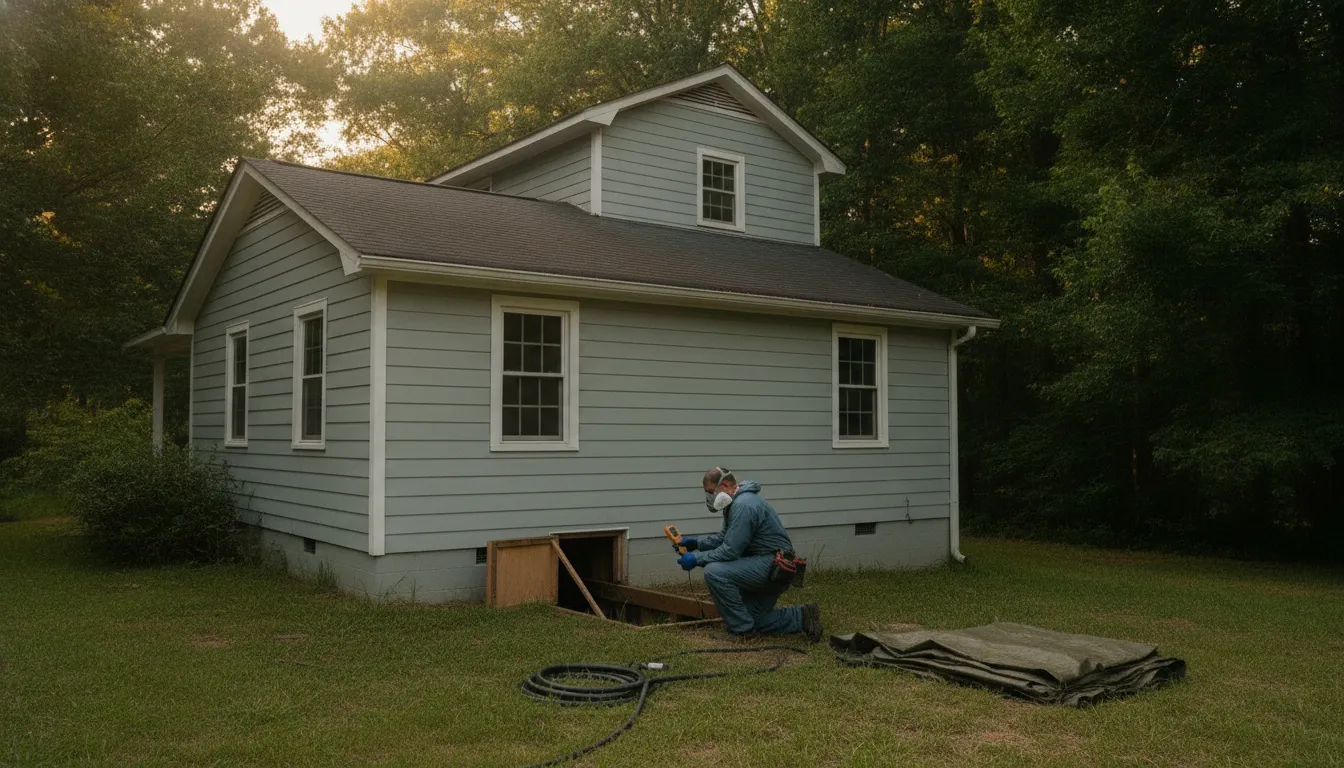
Mold remediation Garner NC searches usually start with a smell that will not leave, a stain that comes back, or a room that feels damp after a humid week. Garner sits in southern Wake County, and the U.S. Census Bureau estimates the town's population at 41,562 as of July 1, 2025. That growth means more homes, rentals, and small commercial spaces sitting in the same humid Piedmont climate. Spores are already in outdoor air. They become a project when they land on something wet.
Remtech Environmental is a Raleigh-based, family-led remediation company with more than 30 years in North Carolina. The Raleigh-Durham office serves the Triangle, including Garner. Its mold remediation services start with an assessment of visible growth, hidden moisture, and the materials involved. The plan is explained before any work starts. There is no single price for that visit. The quote follows the property, the access, and the agreed scope.
This guide is for Garner homeowners, landlords, and property managers who want to know when to book an assessment, what to gather first, and how a project is scoped. It is not a medical diagnosis and it is not a price sheet. If someone in the building is having breathing trouble, talk with a clinician. For the building itself, moisture control is the part that decides whether the growth comes back.
When Garner Homes Need Mold Remediation
A small spot on bathroom grout is not the same job as soft drywall behind a vanity. The useful question is whether moisture is still feeding growth. The EPA's mold guidance says mold needs moisture and a food source, and that a little condensation can be enough. Drywall paper, wood, carpet, and dust all count as food.
Call for an assessment when any of these keep showing up:
- A musty odor returns after you air the room out or run the fan.
- Discoloration spreads on drywall, ceiling texture, baseboards, or flooring.
- Paint peels, trim warps, or a floor feels soft near a bath, kitchen, or exterior wall.
- A crawl space, attic, or closet smells damp even when the living room looks clean.
- A leak was dried on the surface, but the odor or stain came back.
- Renters or staff report the same room every time the weather turns muggy.
Visible growth does not show the whole story. Water can sit in a wall cavity, under a slab-adjacent bath, or in a vented crawl space long after the surface looks dry. Opening that wall yourself can spread dust through the house. Leave the opening to the assessment.
Garner's housing mix makes this practical, not theoretical. Census figures for 2020-2024 put the owner-occupied rate at 63.2 percent, so plenty of owners are deciding about their own houses. Rentals still need a clear scope so a property manager can tell a tenant what will happen and when. Older homes near the original town center and newer subdivisions toward Clayton and Raleigh can fail in different places. The shared problem is moisture that never got a full explanation.
What to Check Before You Book Mold Remediation Garner NC
You do not need to name the mold or buy a kit before you call. You do need a short record of what changed. That record keeps the first conversation focused on the building instead of guesswork.
Walk the space once and write down what you see. Note the room, the material, and whether the spot is larger than a postcard. Photograph the stain, the nearby plumbing, and any peeling paint. If the smell is strongest in one closet or at a floor register, say so. If a storm, a supply line, or a slow drip came first, write the date as you remember it.
The EPA's remediation guide for buildings asks a few questions that also fit a Garner house:
- Is there a moisture problem you can already point to?
- Have materials been wet for more than 48 hours?
- Is humidity high enough to cause condensation on windows, ducts, or exterior walls?
- Are occupants reporting musty odors or irritation in one area?
- Are finishes visibly damaged, or was maintenance delayed?
- Was the space recently remodeled, closed up, or used differently?
Bring those answers to the consult. Also share access limits. A tenant schedule, a finished basement, a stored crawl space, or a business that must stay open will change the work plan. You do not need lab results in hand. Sampling, when it helps, is part of the assessment conversation, not a shopping step.
Skip bleach, paint, and fragrance sprays as a "fix." The CDC notes that mold grows on wood, paper, drywall, carpet, and upholstery wherever moisture stays. Covering a stain hides the clue and leaves the wet material in place. If you want a plain comparison of surface mildew and growth that needs more than a wipe, read how mold and mildew differ in North Carolina.
How a Garner Assessment Turns Into a Work Plan
Remtech starts with the property, not a package. Technicians look at visible conditions, affected materials, access, and the moisture that is still present. When testing or sampling belongs in the scope, that choice is explained before it is added. The goal is a plan you can read: what is affected, what will be contained, what will be removed or cleaned, and what has to change so the area can dry.
North Carolina does not license mold remediation as a trade. That is a real gap, not a slogan. Remtech's mold technicians follow IICRC training, including the ANSI/IICRC S520 standard for professional mold remediation. The S520 standard describes procedures and precautions for mold-damaged buildings and contents. It is a voluntary professional standard. It is not a state license, and it does not replace a look at your actual rooms.
On site, the sequence is straightforward. The crew reviews the area and the moisture source. Containment is planned before materials are disturbed, so dust stays in the work zone. Materials that cannot be restored are removed. Surfaces that can be cleaned are cleaned with the equipment the scope calls for, which can include HEPA vacuums and air scrubbers. Drying and moisture recommendations come with the work, not after a callback. At the end, you get an explanation of what was done and the documentation that matches the agreed scope.
Crawl spaces deserve their own sentence in Garner. Many Wake County houses still have vented crawls. The company has long taught that about half of a home's air can come from that space. If the odor is upstairs but the moisture is under the floor, the living-room wipe will not hold. Crawl space mold services from the Raleigh team are the right next page when the access hatch is part of the story.
For the regional service path, the mold remediation services page explains how the Raleigh office scopes containment, removal, and moisture correction. This Garner guide stays on the local decision: when to book, what to prepare, and what the plan should name.
What Changes the Scope on a Garner Property
People ask what a job "runs." Remtech does not publish a project price. A single figure would miss the house in front of the technician. Bryan King, the owner, has been plain about that. A number on a page becomes the wrong expectation. It is often wrong for that property. The consult is where the scope gets a quote.
These are the factors that move a scope. None of them is a price.
| Factor. | What the assessor looks at. | Why the plan changes. |
|---|---|---|
| Affected area. | Which rooms are involved. | A paint stain is smaller than wet drywall. |
| Materials. | Drywall, wood, carpet, or insulation. | Some items can be cleaned. Wet porous items often cannot. |
| Access. | Occupied rooms, crawl height, or business hours. | The schedule has to protect the rest of the building. |
| Moisture source. | Leaks, humidity, or a damp crawl. | Cleanup fails if the source remains. |
| Documentation. | Photos and a written scope. | Owners and managers need the same story. |
Insurance questions belong with your policy and your agent. A remediation plan can document what was wet and what was removed. It cannot promise a carrier will pay. If you are listing a house or buying one in Garner, say that early. Timing and access change when a closing date is real.
Commercial spaces follow the same logic with a tighter communication need. A shop, office, or small medical suite in town still needs containment and a scope limited to the affected area. Occupants should hear what is happening. The EPA's building guide treats occupant communication and moisture repair as part of the plan, not extras. Remtech's pollution-liability coverage sits alongside general liability and workers' compensation, which matters when the property is not a single-family house.
Garner Rooms Where Moisture Shows Up First
The town does not need a special mold species story. It needs a room-by-room look, because the same humid summers hit baths, kitchens, attics, and crawls differently.
Bathrooms collect the obvious clues: soft caulk, stained grout, a vanity toe-kick that smells sweet and dusty, or paint bubbling beside a shower. A fan that is loud but does not actually clear steam will not fix a wet wall. Bathroom mold prevention covers daily habits. Remediation starts when the material behind the finish is already damp.
Kitchens hide slow supply leaks under sinks and dishwashers. A musty cabinet is a reason to look, not a reason to spray and restack the cleaners. If the floor in front of the sink feels different underfoot, leave the cabinet intact for the assessment.
Attics and upstairs closets show roof or bath-fan problems. Stained decking, damp insulation, or a closet that only smells bad in July is worth a note and a photo. Do not pull insulation down to "check." Disturbed insulation is hard to put back and easy to breathe.
Crawl spaces and utility rooms are the quiet ones. Standing water, fallen insulation, or a dripping condensate line can feed growth you only notice as an odor at the returns. If the first clue is how you feel rather than a spot you can see, start with the signs of mold in a house. That checklist is calmer than a late-night search.
Color is a weak clue. Black, green, or white growth can all be mold. The EPA points out that color does not tell you how a material should be handled. "Black mold" as a scare label is less useful than a clear scope. For that distinction, see black mold versus other mold. Health worries, including irritation or asthma flare-ups in a damp room, are a reason to involve a clinician and to stop disturbing the area. The health questions property owners ask are covered separately from this local planning guide.
How the Raleigh-Durham Office Serves Garner
Garner does not have its own Remtech storefront. The Raleigh-Durham office covers the Triangle, and the town is inside that drive shed, along with Clayton, Raleigh, and Fuquay-Varina. Service-area pages list Garner among the places that office reaches. You still get a project-specific visit, not a citywide package.
What you should expect from the company is the same standard it publishes on its own pages. Education first, without scare tactics. EPA-accredited asbestos specialists where asbestos is actually in scope, and IICRC-certified technicians for mold. Professional containment, HEPA equipment when the scope calls for it, and insurance that includes environmental pollution liability. The company overview is the right place if you want the longer history before you book.
A Garner job stays local in the details that matter. Tell the office whether the building is a house, a rental, or a small business. Say whether people need to be out of one room or the whole structure. Ask what will be contained, what will be removed, and how moisture will be explained in the closeout. If you are comparing firms, compare those items, not a headline claim. A neighboring Cary article on how to choose a mold remediation professional walks through written scopes. Use it as a checklist, then bring the Garner facts back to this property.
Nearby towns are not the same page. Fuquay-Varina already has its own mold remediation page. Holly Springs and Cary have their own coverage. This article is the Garner planning guide: the decision to assess, the notes to gather, and the scope questions to ask the Raleigh-Durham team.
Timing depends on the building, not on a slogan. Occupied rooms, drying, and material orders all move a schedule. If you want a plain discussion of duration without turning it into a promise, read how long mold remediation takes and then ask the technician what this address requires.
Frequently Asked Questions
Does every Garner stain need mold remediation?
No. A mark that wipes off a hard surface and stays gone may be a cleaning issue. Remediation is the right conversation when the odor returns, the material is soft or stained through, or moisture is still present in a wall, attic, or crawl space. An assessment is how you tell those apart without opening the building yourself.
Do I need a mold test before I call?
Usually no. A lab kit does not show where water is traveling, and it does not write the work plan. If sampling would change a decision, the technician will say why and include it in the scope. Start with photos, the history of the leak or humidity, and access notes.
Can I stay in the house during the work?
Sometimes, when containment can separate the work area from the rooms you use. Large areas, sensitive occupants, or a crawl space that shares air with the house may call for a different plan. Ask that question when you book, and mention anyone with asthma or other breathing concerns so the schedule can account for them. Medical decisions stay with your clinician.
Who handles crawl-space mold in Garner?
The same Raleigh-Durham mold team can evaluate a crawl space when it is part of the concern. They look at moisture, materials, and whether encapsulation or other moisture control belongs in the recommendation. It is not assumed on every job. It is added when the space is actually involved.
How should I ask for a quote?
Use the free quote form and describe the town, the rooms, and what you have already noticed. Include photos if you have them. You will get a consultation based on the property, not a number pulled from a list. If you are a landlord or a manager, say who needs the written scope.
Plan the Garner Visit Around the Property
Mold in a Garner house or small business is a moisture problem with an address. Write down the rooms, the materials, and the leak or humidity that came first. Then let an IICRC-certified technician turn that into a scope you can approve. Remtech will explain the work before it starts, keep the plan tied to the affected area, and price it from the property rather than from a published figure.
If Garner is the building you are standing in, the next step is a consult with the Raleigh-Durham office. Bring the photos. Leave the walls closed until someone can contain the work.