
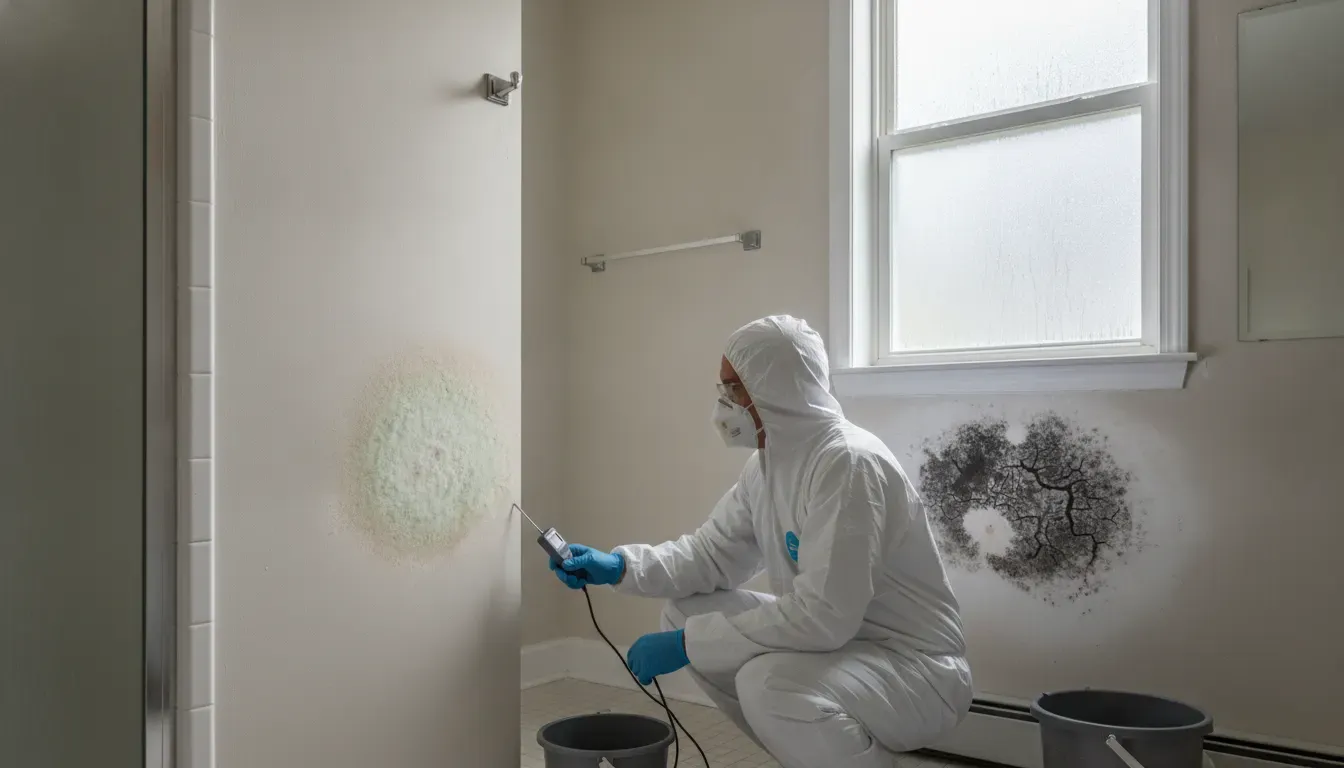
If you are searching for the mold vs. mildew difference, the most important answer is that the terms overlap. Mildew is commonly used for flatter surface growth, while mold can grow with a raised, fuzzy, slimy, or spreading texture. In either case, persistent moisture is the real problem. North Carolina's warm, humid conditions can make bathrooms, windows, exterior walls, attics, and crawl spaces good places for fungal growth to return.
Appearance can provide a useful first clue, but it cannot confirm the type of growth or show whether it extends behind a surface. Use this guide to compare common signs, understand health considerations, decide what a small surface spot may allow you to do safely, and recognize when a professional mold inspection or remediation plan is the better next step.
What is the difference between mold and mildew?
Short answer: Mold and mildew are both terms for fungal growth, and mildew is often used for a relatively flat growth pattern on damp surfaces. Mold is a broader term that includes many species and textures. The name, color, or shape alone cannot prove what is present or how far it has spread.
The U.S. Environmental Protection Agency explains that mildew refers to certain kinds of mold or fungus and is often used generically for growth with a flat habit. Molds include microscopic fungi that grow as multicellular filaments called hyphae. They can grow on organic materials such as paper, leather, clothing, wood, drywall, and other building materials when moisture is not controlled.
That distinction matters because homeowners sometimes assume that a flat spot is harmless mildew and a dark spot is dangerous mold. Neither assumption is reliable. Mildew can still signal a moisture problem, and mold can appear in many colors, including gray, green, white, yellow, orange, and black. Color is not a dependable risk rating.
| Clue | Mildew is often described as | Mold may appear as |
|---|---|---|
| Texture | Flat, powdery, or thin on the surface | Raised, fuzzy, velvety, slimy, or branching |
| Common location | Shower walls, windowsills, grout, and other damp surfaces | Wood, drywall, insulation, carpet, ceilings, crawl spaces, and hidden cavities |
| Color | Often white, gray, or pale green, but color varies | May be gray, green, white, yellow, orange, brown, or black |
| What the clue tells you | There is surface moisture or high humidity to investigate | There may be a deeper or broader moisture and material problem to assess |
Think of the table as a starting point, not a diagnosis. When growth keeps returning after cleaning, the moisture source and affected materials deserve more attention than the label used for the spot.
How can you tell if it is mold or mildew?
Short answer: Look at texture, location, spread, odor, and whether growth returns after cleaning, but do not rely on a visual label alone. Flat growth on a shower wall may be called mildew, while growth on porous materials or inside a wall can behave more like mold. A professional assessment is appropriate when the source or extent is uncertain.
These clues can help you decide how urgently to investigate:
- Surface texture: A thin, flat film on a frequently damp, non-porous surface is often described as mildew. A raised, fuzzy, velvety, or spreading patch may be called mold.
- Material: Growth on tile or glass is easier to see and clean than growth in drywall, insulation, carpet, wood framing, or other porous materials.
- Pattern: A spot that returns in the same place usually points to ongoing condensation, a leak, poor ventilation, or another moisture source.
- Odor: A persistent musty smell can be a reason to investigate nearby concealed areas, even when visible growth is limited.
- Spread: A small isolated patch is different from growth across several materials, rooms, or building levels.
Do not scrape or disturb a suspicious patch simply to determine its color. Disturbing growth can release particles and can make it harder to understand the original pattern. If you take a photo for your records, avoid touching the area and focus on the location, surrounding materials, and any signs of condensation or staining.
For homeowners who want to learn more about appearance and common misconceptions, Remtech's guide to black mold versus regular mold explains why color is not a reliable way to rank risk.
Where do mold and mildew grow in North Carolina homes?
Short answer: Mold and mildew can grow wherever indoor materials stay damp long enough. In North Carolina, common problem areas include bathrooms, window frames, exterior walls, attics, crawl spaces, closets, and rooms with limited airflow. Warm weather, high humidity, condensation, and hidden moisture can all support recurring growth.
The North Carolina Division of Public Health notes that indoor mold growth results when excessive moisture enters or accumulates in a building. It identifies elevated indoor humidity, condensation, and moisture intrusion as conditions that can leave materials damp enough for growth. This is why cleaning the visible spot without addressing the source often produces only a temporary improvement.
- Bathrooms: Steam from showers can condense on walls, ceilings, windows, grout, and caulk, especially when exhaust ventilation is limited.
- Windows and exterior walls: Condensation can create damp edges, while unaddressed seepage can affect drywall, trim, and insulation.
- Attics: Poor ventilation, roof-related moisture, or damp insulation can create conditions that are not visible from the living space.
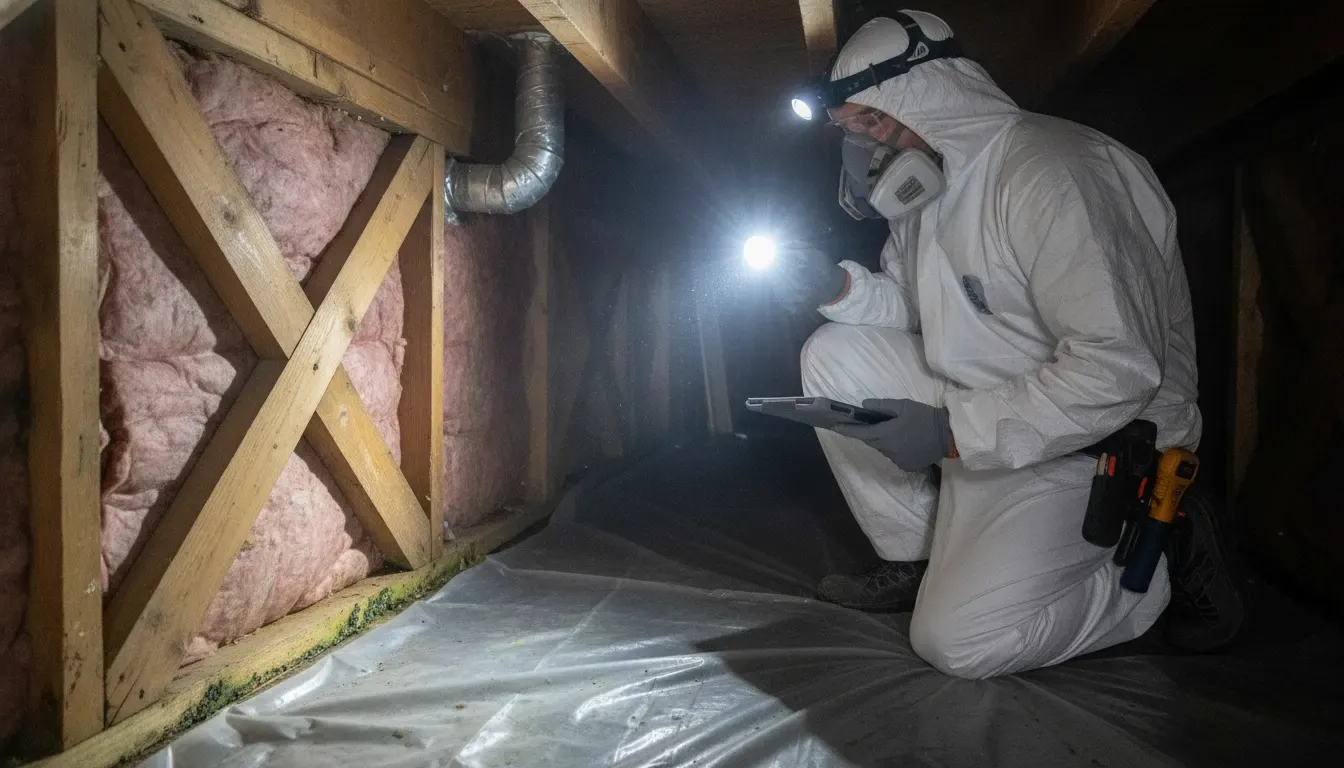
- Crawl spaces: Damp soil, condensation, plumbing leaks, or inadequate moisture control can affect wood framing and insulation.
- Closets and utility areas: Low airflow can allow humidity to linger around stored items, cold pipes, and exterior corners.
Indoor humidity is one practical thing to monitor. North Carolina guidance explains that maintaining relative humidity below 60 percent, when possible, helps reduce the moisture available for growth. A dehumidifier may help in some spaces, but it does not replace finding a leak, improving ventilation, correcting condensation, or addressing affected materials.
For bathroom-specific prevention steps, see Remtech's North Carolina bathroom mold prevention guide. If the concern is below the living area, the company's resource on crawl space moisture control and encapsulation provides additional context.
Can mold and mildew affect your health?
Short answer: Health effects vary by the person, the amount of exposure, and the conditions in the building. Mold particles can irritate the eyes, skin, nose, and airways, and can trigger symptoms in people with allergies or asthma. Mildew should not be dismissed automatically, because it also indicates damp conditions and may be part of a larger growth problem.
The Centers for Disease Control and Prevention describes possible reactions to mold exposure such as stuffy nose, sore throat, coughing, wheezing, burning eyes, or skin irritation. People with asthma or mold allergies may react more strongly, and people with weakened immune systems or chronic lung disease may have additional concerns.
These facts do not mean that every visible spot will make someone sick, and they do not identify the species present. They do mean that persistent growth should be handled thoughtfully. If someone in the home has new or worsening respiratory symptoms, talk with a qualified healthcare professional. Do not use an online article to diagnose an illness or decide whether a medical symptom came from a particular patch.
Remtech's article on whether mold can make you sick covers health questions in more detail. The practical building question here is whether moisture and growth are controlled without spreading particles or leaving affected materials in place.
When is DIY mildew cleaning reasonable?
Short answer: A homeowner may be able to clean a small amount of surface growth on a hard, non-porous material when the moisture source is understood, the area is limited, and no one at home has a heightened sensitivity. DIY cleaning is not a good substitute for professional help when growth is extensive, recurring, hidden, on porous materials, or connected to a broader building issue.
The EPA states that areas smaller than about 10 square feet can often be handled by a homeowner, depending on the circumstances. That is a general size guideline, not a guarantee that every small spot is safe to clean. Consider the material, the moisture source, ventilation, the location, and the health needs of people who will be in the space.
For a small surface spot, sensible limits include:
- Identify and correct the moisture condition before cleaning when possible.
- Follow the product label and use appropriate protective equipment.
- Avoid dry brushing, sanding, or other actions that can spread particles.
- Do not assume that a clean-looking surface means porous material underneath is unaffected.
- Stop if the growth spreads, returns quickly, or appears in additional areas.
Cleaning is not the same as remediation. A surface can look better while moisture remains behind a wall, under flooring, in insulation, above a ceiling, or in a crawl space. If you cannot identify why the area stays damp, a professional inspection can help define the scope before more materials are disturbed.
Request a Free Mold Consultation
When should you call a mold professional?
Short answer: Call a mold professional when growth covers more than a small area, returns after cleaning, affects porous materials, has a persistent odor, appears in a crawl space or attic, may involve an HVAC system, or cannot be separated from a moisture problem. Professional help is also wise when occupants have significant allergies, asthma, or other health concerns.
Professional assessment is especially useful when:
- The area is larger than about 10 square feet: The EPA recommends consulting a professional for larger areas or complex conditions.
- Growth keeps coming back: Recurrence usually means the underlying moisture source has not been corrected.
- Porous materials are affected: Drywall, insulation, carpet, and wood may hold growth below the visible surface.
- The location is difficult to access: Attics, crawl spaces, wall cavities, and ceiling assemblies can create safety and containment challenges.
- Air movement could spread particles: Suspected HVAC contamination deserves careful evaluation before the system is operated normally.
- The building has a persistent musty odor: An odor without an obvious source can justify an inspection of nearby concealed spaces.
- The project affects a business or rental property: A documented scope and controlled work plan can help property owners manage occupant and operational concerns.
North Carolina does not have a single visual test that lets a homeowner determine the extent of a mold problem from a photograph. A qualified professional can discuss the visible conditions, moisture sources, affected materials, containment needs, and the appropriate remediation steps. Testing is not automatically needed for every situation, so ask what information an inspection is intended to provide before authorizing extra work.
How does professional mold remediation work?
Short answer: Professional mold remediation starts with understanding the moisture source and the affected area. The work may include planning, containment, removal or cleaning of affected materials, source correction, drying, and a final review. The exact sequence depends on the building, materials, access, and scope found during the assessment.
Remtech Environmental approaches mold work as an education-first process. Its mold remediation services for North Carolina homes and businesses use IICRC-certified technicians, professional equipment, and a plan tailored to the property. A typical project may address:
- Where moisture is entering, condensing, or accumulating.
- How far visible and suspected growth extends.
- Which materials can be cleaned and which may need removal.
- How to separate the work area and limit spread during the project.
- How to clean, dry, and document the affected space.
- What moisture-control changes can help reduce recurrence.
The goal is not to promise that every mold spore can be removed from an indoor environment. Mold spores exist indoors and outdoors. The goal is to correct abnormal indoor growth, address the moisture condition, and return the affected area to a cleaner, more manageable condition.
Remtech serves residential and commercial properties across North Carolina, with an emphasis on clear explanations rather than scare tactics. Review the company's mold inspection and remediation services to understand how an evaluation can fit your property and situation.
Frequently Asked Questions
Is mildew less dangerous than mold?
Mildew is often used for flatter surface growth, but the label does not determine health risk. Both mold and mildew indicate moisture, and reactions vary by person and exposure. Persistent, recurring, extensive, or hidden growth should be evaluated instead of judged by color alone.
How can I tell if a spot is mold or mildew?
Texture, location, spread, odor, and recurrence can provide clues, but a visual inspection cannot confirm the type or extent of fungal growth. A professional assessment is appropriate when the spot is on porous material, keeps returning, or may extend into a wall, attic, crawl space, or HVAC system.
Can I clean a small mildew spot myself?
A homeowner may be able to clean a small amount of surface growth on a hard, non-porous material when the moisture source is addressed and the area is limited. Follow product instructions, avoid disturbing the growth, and stop if it returns, spreads, or involves porous materials.
When should I call a mold remediation company in North Carolina?
Call a professional when growth is larger than a small patch, returns after cleaning, affects porous materials, has no visible source, appears in an attic or crawl space, may involve HVAC equipment, or is a concern for people with allergies or asthma. Remtech Environmental offers mold inspection and remediation consultations.
Does mold testing always need to happen before remediation?
Not every situation requires testing. The useful next step depends on the visible growth, moisture source, materials, building conditions, and the question the property owner needs answered. Ask a qualified professional to explain what an inspection or test would add before authorizing it.
Get a clear answer about growth in your North Carolina property
You do not have to identify a fungal species from a photograph before asking for guidance. If growth keeps returning, affects a larger area, or appears in a hidden or difficult-to-access space, a professional conversation can help you understand the moisture source and the appropriate next step.