
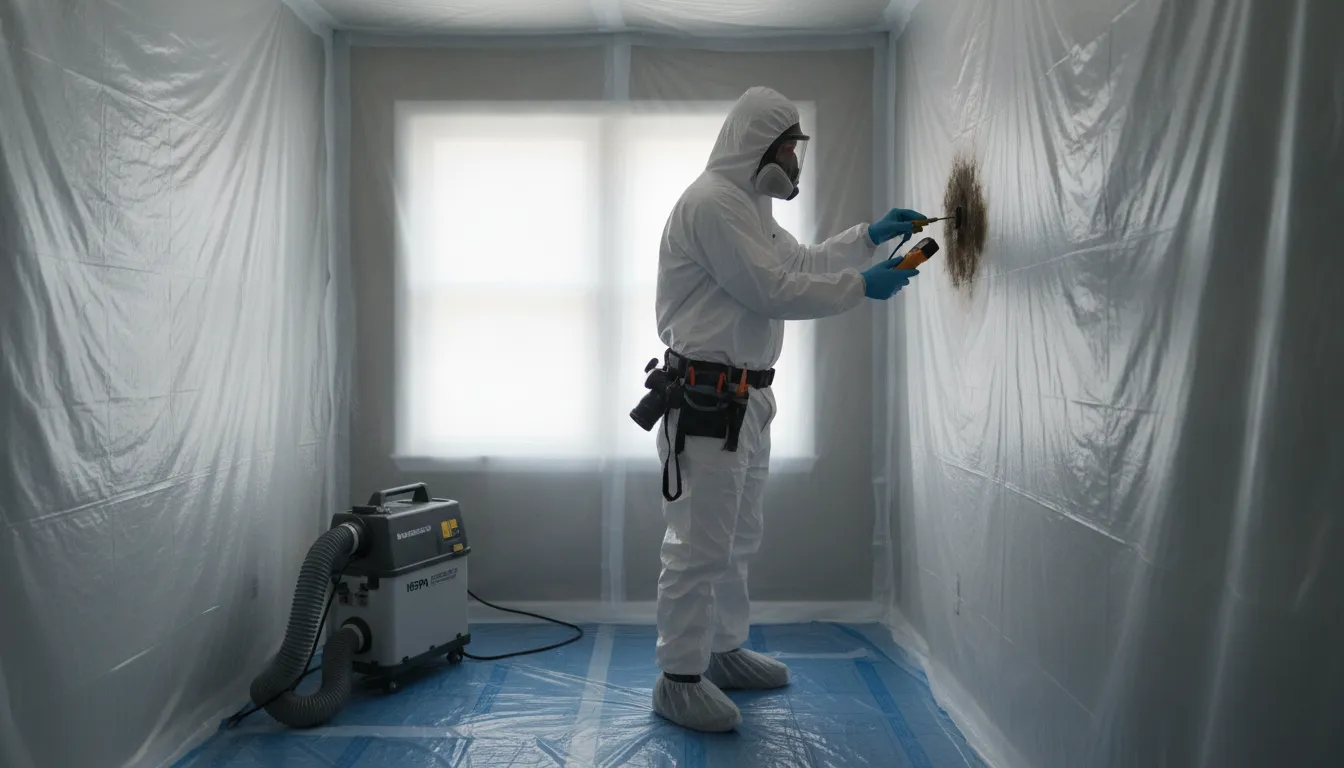
Most home mold cleanup jobs in North Carolina take three to seven days for full removal and testing. This timeline allows for proper containment setup and ensures the property is ready for final verification before the containment comes down.
Get your free mold remediation timeline estimate from Remtech Environmental.
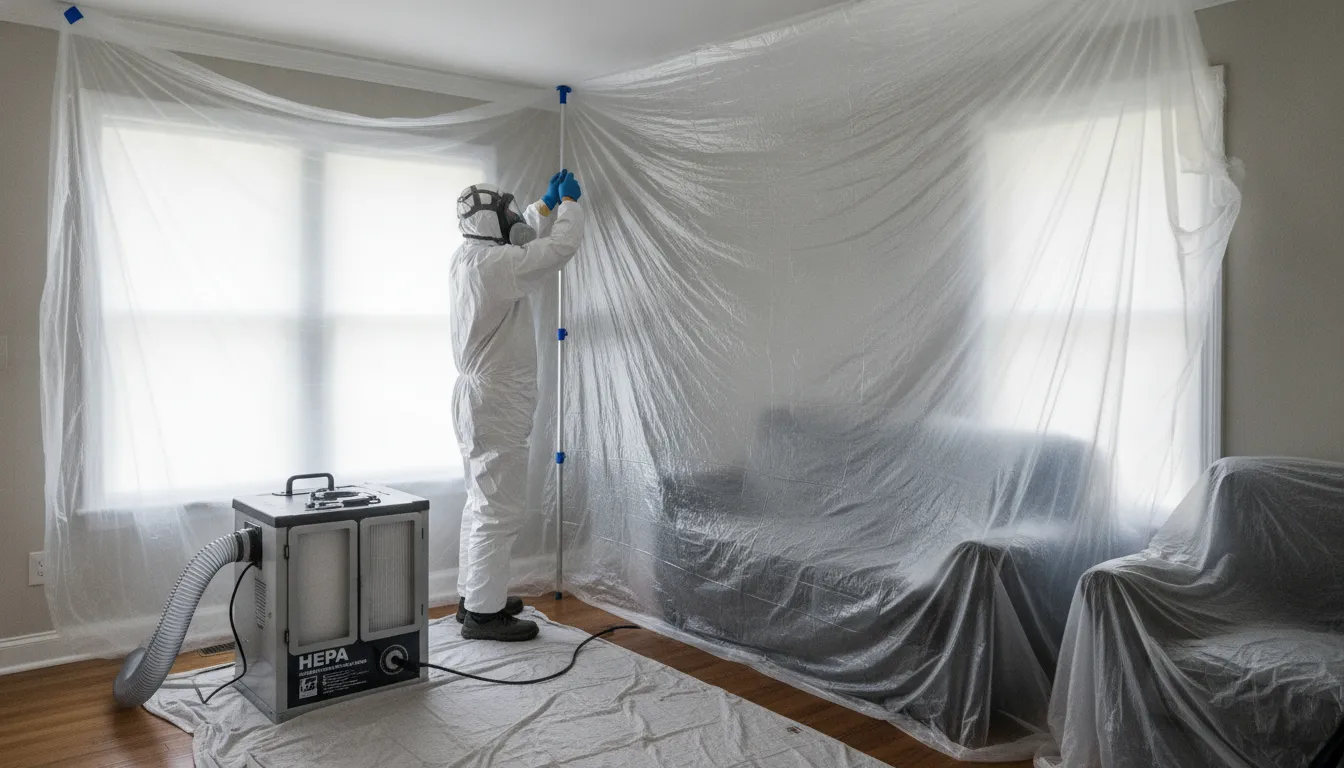
Containment and HEPA filtration help isolate the work area during mold remediation.
How long does mold remediation take is a question that depends on the size of the growth and how hard it is to reach. Most home mold removal projects need three to seven days to finish the phases of containment, active cleaning, and final moisture testing. Smaller jobs under ten square feet often finish in one or two days, while large buildings or hidden mold can take two weeks. According to WrightWay, expert teams follow strict safety steps to keep spores from spreading to clean areas during the work. This careful timeline ensures the moisture source is fixed and the home is truly dry before the containment barriers are finally removed.
Property owners often worry about the trouble a long cleanup might cause. The timeline starts with the steps below.
How long does mold remediation take in a typical property?
Most residential mold remediation projects take 3 to 7 days to finish. This timeframe covers the full process from setting up containment to final verification. While small jobs might wrap up in just a day or two, larger issues that involve hidden mold or HVAC systems can take longer. At Remtech Environmental, we focus on doing the right work the right way to ensure your home is safe and dry.
Timelines for different project sizes
The size of the mold growth is the main factor in how long the work lasts. A small area of surface mold on a bathroom wall is much faster to treat than a crawl space with widespread growth. For projects under 10 square feet, specialists can often complete the job in 1 to 2 days. These smaller tasks involve quick cleaning and drying without the need for large containment zones.
Moderate jobs usually take about a week. These often include multiple rooms or attic and basement issues. If mold has moved into your walls or air ducts, you should plan for a 10 to 14-day window. Complex projects require more time. Crews must carefully remove porous materials like insulation and drywall while keeping spores from spreading to clean areas.
| Project Type | Size of Area | Estimated Time |
|---|---|---|
| Minor remediation. | Under 10 sq. ft. | 1 to 2 days. |
| Standard residential. | Full room or area. | 3 to 7 days. |
| Complex or hidden. | Multi-room or HVAC. | 10 to 14 days. |
| Commercial scale. | Building-wide. | 2 to 4 weeks. |
Phases of the professional mold removal process
A professional project moves through several clear phases. First, experts must find the water source and fix it. Controlling moisture is the key to stopping mold for good. Once the leak is gone, the crew sets up containment using plastic barriers and HEPA-filtered air machines. This setup protects the rest of your home while the work happens.
The active cleaning phase follows. Crews remove ruined items and scrub hard surfaces with antimicrobials. After cleaning, the drying phase begins. Industrial fans and dehumidifiers must run for at least 48 hours to ensure no moisture remains. To understand each step in detail, you can view our six-step mold removal infographic. This roadmap shows how we handle every detail from start to finish.
Verification and final clearance
The last part of any project is the final check. This check ensures that mold levels have returned to natural, safe amounts. Experts look for any remaining odors or visible signs of growth. According to the CDC, visual checks are highly reliable for finding mold issues. Once the site passes this check, the containment is removed. Your home is then ready for any needed repairs.
Keep in mind that remediation is about safety and health. It is not just about a quick fix. If you see signs of growth, you may need mold remediation services to prevent structural damage. Taking the time to do it right prevents the mold from coming back in the future.
What happens during the mold remediation timeline?
When you find mold in your home, you want to know about the schedule. You need to know how long does mold remediation take so you can plan your life. Most home mold jobs take about three to seven days to finish. This time includes setting up tools, removing the mold, and checking the work. While some small jobs may end in a day, larger ones with mold behind walls can take two weeks.
The need for a clear plan
A good timeline starts with a clear plan. Experts call this a protocol. It shows where the mold is and how to fix the wet spot that caused it. Without fixing the water leak, the mold will just come back. Expert teams use this map to make sure they do the work the right way. This stage gives you a good idea of how mold remediation works in your home.
You might wonder if you can stay in the house during this time. For many jobs, you can stay if the work area is small. But for big jobs, the noise from fans and the lack of a kitchen or bath might make it hard. Your team will tell you what to expect based on the size of the damage and the items in your home.
Six steps to a mold-free home
Every project follows a set of steps to make sure the job is safe. These steps help keep spores from moving to clean rooms. Following a professional mold removal process ensures that the air in your home returns to a safe state.
- Assessment and protocol. An expert looks at the damage and finds the water source. They write a plan that lists which items to save and which to toss.
- Containment setup. Teams build walls with plastic sheets and use big fans with HEPA filters. These tools pull air out of the work zone so spores do not move to other rooms.
- Material removal. Workers bag and remove soft items like wet drywall and insulation. These items often hold too much mold to clean well.
- Detailed cleaning. Experts sand wood frames and use high-power vacuums to grab small bits. They also wipe hard surfaces with special cleaners that kill mold.
- Drying and moisture control. Big fans and drying tools run day and night to pull out wetness. The EPA notes that drying items within 48 hours is key to stopping new growth.
- Final verification. Once the area is dry and clean, an expert checks the work. This post-remediation verification proves the job is done right before you start repairs.
The time for each step can change based on how much water is in the walls. If a leak is still active, the drying phase will take more time. Once the air and surfaces are clean, your home will be ready for new paint or drywall. Keeping the area dry is the best way to keep mold away for good.
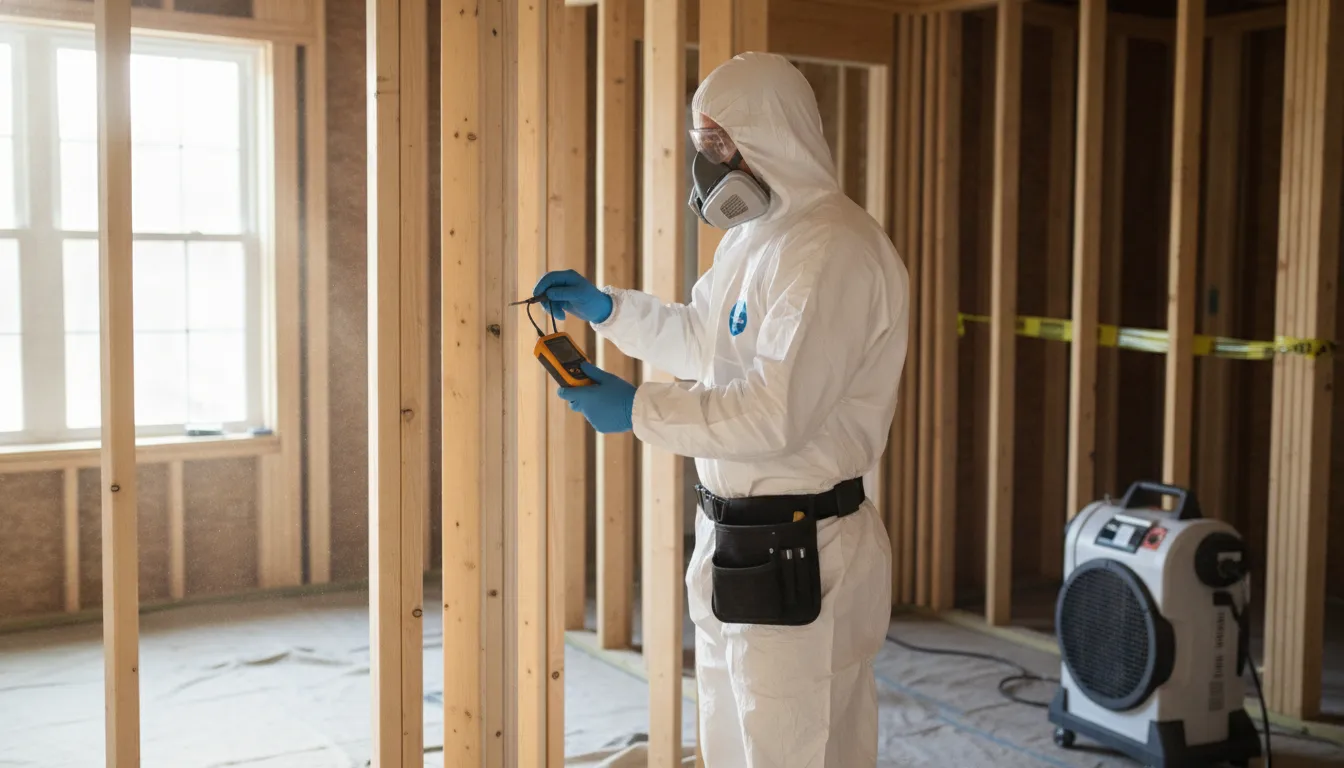
Moisture readings help the remediation team confirm when affected materials are dry.
What factors affect how long mold remediation takes?
Every home and business is unique. This means that how long does mold remediation take will vary from one property to the next. Some small jobs finish in a single day. Other larger projects may need two full weeks to complete. Experts must look at several things before they can give you a firm timeline. These factors include the size of the area, where the growth hides, and the types of materials involved.
Extent of growth and hidden mold
The total size of the mold growth is the biggest factor for your timeline. Small jobs that cover less than ten square feet can often finish in one or two days. These quick projects usually involve a single spot on a wall or a small leak under a sink. But larger areas of growth will take much more work and time to clean. When growth covers a large room or a crawl space, the crew needs more days to set up gear and scrub every surface.
Hidden mold can also slow down a project. Often, the mold you see on a wall is only part of the problem. Spores may hide behind drywall, under floors, or inside wall cavities. Finding this hidden growth requires a careful how mold remediation works check. Experts must use tools like moisture meters to find wet spots that are out of sight. If the crew finds more mold during the work, the project will take longer as they open walls and remove more debris.
Building materials and HVAC systems
The type of material that is wet or moldy matters a lot. Porous materials like drywall, carpet, and insulation hold onto mold spores deeply. These items usually cannot be saved and must be bagged and removed. Taking out large amounts of debris adds time to the job. Non-porous items like metal or glass are easier to clean. They just need a deep wipe with an EPA-registered spray. The more porous items you have, the more time the crew needs for safe removal and disposal.
The HVAC system is another big factor for the timeline. If mold spores get into your air ducts, the cleanup becomes much more complex. A professional mold removal process must then include duct cleaning and system checks. This ensures that the system does not spread spores back into the house once the job is done. Dealing with vents and air handlers can add several days to the total schedule. It is a vital step for keeping your air clean and safe for everyone in the building.
Moisture control and final testing
You cannot finish a mold job until you fix the water source. This is a key rule because mold needs wet areas to grow. According to the EPA, you must dry all wet items within 48 hours to stop new growth. If a pipe is still leaking or a roof still has a hole, the crew must wait for repairs. Fixing these leaks first may add time to the start of the job, but it prevents the mold from coming back next month.
The drying phase itself also takes time. Once the mold is gone, experts use big fans and dehumidifiers to pull moisture out of the air and wood. This part usually takes two to three days. After the area is dry and clean, a final check is needed. This is called post-remediation verification. An expert looks at the area to make sure all mold is gone and the air is clear. Waiting for these test results can take a day or two, but it gives you peace of mind. Only then is the job truly done and the area safe to use again.
Other small things can change the timeline too. If the crew has trouble getting into a tight crawl space, the work slows down. If you stay in the house while they work, they must set up more barriers to keep you safe. These plastic walls and air machines keep spores from moving to clean rooms. Following these steps carefully is what makes a safe mold clean up well done. Taking the right amount of time ensures the job is done well the first time.
Service area and team access
Where you live in North Carolina can also play a role. A crew may need more time to reach a remote cabin in the mountains than a home in Raleigh. The weather can also slow down the work. High humidity can make it harder to dry out a building after a leak. Remtech works through hubs in Asheville and Raleigh to help reach homes across the Triangle and western North Carolina quickly. Having a local team means less time spent on the road and more time spent on the job site.
The CDC notes that no home can be fully free of all mold spores. Experts aim for safe levels that match the outside air.
The speed of the work also depends on how much you help. Clearing out furniture and personal items before the crew arrives can save a few hours. Providing clear paths to the work area also helps the team move gear faster. When everyone works together, the project stays on track. This helps ensure that the total time for your clean up stays as short as possible without cutting any corners on safety or quality.
How can you help keep remediation on schedule?
When you find mold in your home, your first question is often about how long mold remediation takes. While most house projects take three to seven days, certain delays can push that date back. You play a key role in how long the work takes. By taking a few steps before the crew arrives, you can help the team start and finish on time. Here is how you can help the project stay on track and prevent common holdups.
Clear the way for the crew
The crew needs full access to the area with mold to work well. You should clear a path from the door to the work site before they get there. Move any furniture, rugs, or boxes that might block their tools. If the mold is in a closet or attic, take out all items first. This saves the team from doing it, which keeps the professional mold removal process moving fast.
You must also plan for pets and people. Mold work often uses loud tools and creates dust. It is best to keep kids and pets in a different part of the house. You might also stay somewhere else for a few days. This keeps everyone safe and lets the workers move through the space without stopping. When the area is clear and quiet, the team can focus on the job at hand.
Prepare your paperwork and plans
Delays often happen because of missing facts or slow paperwork. If you are using insurance, make sure the claim is ready. Give the team all the info they need about the leak or water source. Experts from the EPA note that controlling moisture is the only way to stop mold for good. If the leak is not fixed yet, the work may have to pause. This adds time to the job.
Read the work plan and sign all forms early. If you have questions about the scope of the work, ask them before the crew starts. Changes to the plan once work has begun can lead to big delays. Knowing what to expect helps you avoid surprises that could slow things down. When the team has the green light and all the facts, they can work through the steps with ease.
Keep the lines open
Good talk between you and the project manager is a must. Pick one person to be the main contact for your home. This person should be easy to reach by phone or text. If the crew finds more mold behind a wall, they will need your okay to keep going. A quick answer can save hours of wait time. If the team has to stop to wait for a call, it can throw off the whole day's plan.
Be clear about when the crew can be in your home. If they have to wait for you to get home to unlock the door, it wastes time. Give them a key or a code if you can. Also, try not to add new tasks to the list once the job starts. Sticking to the first plan is the best way to make sure the work ends on time. With clear goals and fast talk, your home can get back to normal soon.
Can you stay in the property during mold remediation?
Deciding to stay in your home during mold removal depends on the size of the job. Many people want to stay put to save money and keep their daily routine. For small jobs, this can often be done. If the mold covers less than 10 square feet, the work may only take a day or two. But for larger issues, you must think about your health and how you will feel.
How the mold spot affects your stay
The spot with the mold is just as big as the size of the area. If the mold is in a crawl space or a spare attic, you can likely stay in the main living rooms. But if the work is in your only kitchen or bathroom, living there becomes very hard. You should also ask your pro how mold remediation works for your own home. They can tell you which parts of the house will be off-limits.
You may also ask yourself, how long does mold remediation take? Most home projects take between three and seven days from start to finish. If the mold is hidden behind walls or inside your vents, it could take up to two weeks. In these cases, the dust and noise may make it better to stay with a friend or in a hotel.
Safety and containment walls
When pros work on mold, they set up strong walls made of thick plastic. These walls seal off the mold so it does not spread. They also use special fans to pull air out of the room. This keeps mold spores from moving into clean parts of your home. The CDC explains that mold spores are in all indoor spaces, but cleanup keeps them at safe levels.
These walls will block paths through your home. You might lose access to a hall or a door for a few days. If you have kids or pets, keeping them away from these zones is needed. While the plastic walls are tough, they do not block all sound. You will still hear the work and the crew moving around each day.
Managing noise and drying tools
The drying phase is a big part of the process. Pros use large fans and machines to remove moisture. These tools are very loud and must run all day and night. The EPA notes that drying wet items fast is the best way to stop mold from growing back. If you do not like loud noise, you may find it hard to sleep or relax while the tools are on.
You should also plan for the crew to visit your home each day. They need to check moisture levels and move the tools around. This means you will have people coming in and out of your house often. If you need peace and quiet, leaving the house might be the best choice. Talking with your team early will help you set a plan that works for your family.
How do you know when mold remediation is complete?
A finished mold job does not mean every spore is gone. No indoor space is free from mold spores because they are everywhere in the air. Expert work aims to bring mold back to safe levels. Success means the area is safe for you to use again without worry.
You can learn more about how mold remediation works from top health groups. Experts also use a formal step called post-remediation verification. A third party often checks the work to ensure the team followed all the rules.
This step gives you proof that the mold levels in your home match the air outside. It is the best way to be sure that the cleanup was done the right way. Once this test passes, you can return to your normal life at home.
Clear signs of success
You can tell a job is done by looking and smelling. There should be no visible mold growth and no musty odors in the room. You might wonder how long does mold remediation take when you start.
Most home projects take about 3 to 7 days to finish all the steps. The exact time depends on how big the problem is and where the mold is hiding. This timeline includes setting up walls and removing the waste. It also covers the time needed to dry the space and check the results.
If the damage is in a small area under 10 square feet, the work may only take a day or two. Larger jobs or mold inside walls can take up to two weeks to clear fully. Our team stays on site until every part of the plan is finished.
Remediation vs rebuilding
It is helpful to know the difference between cleaning and rebuilding. Remediation is the act of removing mold and cleaning surfaces. This part involves taking out wet drywall or insulation that mold has ruined.
Experts then clean other hard surfaces with special soaps. We use a clear process to see that each stage is done well. Rebuilding is the next phase where new parts go back in.
This might include new paint, floors, or walls. Remtech focuses on doing the cleanup work the right way first. We ensure the hazard is gone before any rebuilding starts. This prevents new mold from growing under your new floors or behind new walls.
Solving the moisture problem
Mold cannot grow without water. The most vital part of finishing a job is fixing the water source. If a leak or damp air stays, the mold will come back fast.
This is why moisture control is the key to mold control in any building. We check that the area is fully dry before we pack up our tools. Fixing the leak is the only way to stop the mold for good.
Parts that got wet should be dried within 24 to 48 hours to stop new growth. Our team uses big fans and machines to pull dampness from the air. We use special tools to map the water in your walls and floors.
We do not call a job done until the water levels are back to normal. A dry home is a healthy home, and we make sure yours stays that way. We test every surface to ensure no hidden damp spots remain.
Frequently Asked Questions
How long does black mold remediation take?
The color of mold does not change the time needed for cleanup. Most home projects take about three to seven days. This time includes setting up tools, removing bad items, and drying the space. According to the CDC, the color of mold does not tell you if it is more or less dangerous. Pros look at the size of the area and the building materials when they plan the work.
Can you stay in your home during mold remediation?
You can often stay in your home if the mold is in a small, closed-off area. Workers use plastic walls and fans to keep spores from moving to other rooms. However, large jobs or work on your air ducts might make it hard to live there. If the noise from the tools or the lack of a kitchen is a problem, you may want to leave for a few days. Remtech focuses on safety to keep your home clean.
How long should you stay out of the house after mold remediation?
You can usually go back into the work area once the job is done and the space is dry. Most jobs end with a final check to make sure the air is clean. This check often happens about one or two days after the cleaning. To stop new growth, the EPA says you must dry all wet items within 48 hours. Keeping the area dry is the best way to control mold.
How long does mold remediation take to work?
Professional mold cleanup works as soon as the water leak is fixed and the mold is gone. The goal is to return mold to a natural and safe level for your home. This process usually takes three to seven days for most houses. No home can be free of all spores, but the work stops the mold from growing. Once the area is dry and clean, the cleanup is done. Expert work ensures the job lasts.
Ready to get a timeline for your mold removal project?
Leaving mold alone in your home lets it grow and spread every day, which means the damage to your walls and floors will get worse. Waiting to act will often cost more to fix later and makes the job take longer to finish. By starting our mold removal services now, you can stop the spread and get your house back to normal much faster. Our team will look at your home and tell you clearly how long the work will take so you have a plan from a pro.
Ready to get a free quote today? Contact our team to get a free quote today and start the process to fix your North Carolina home.