
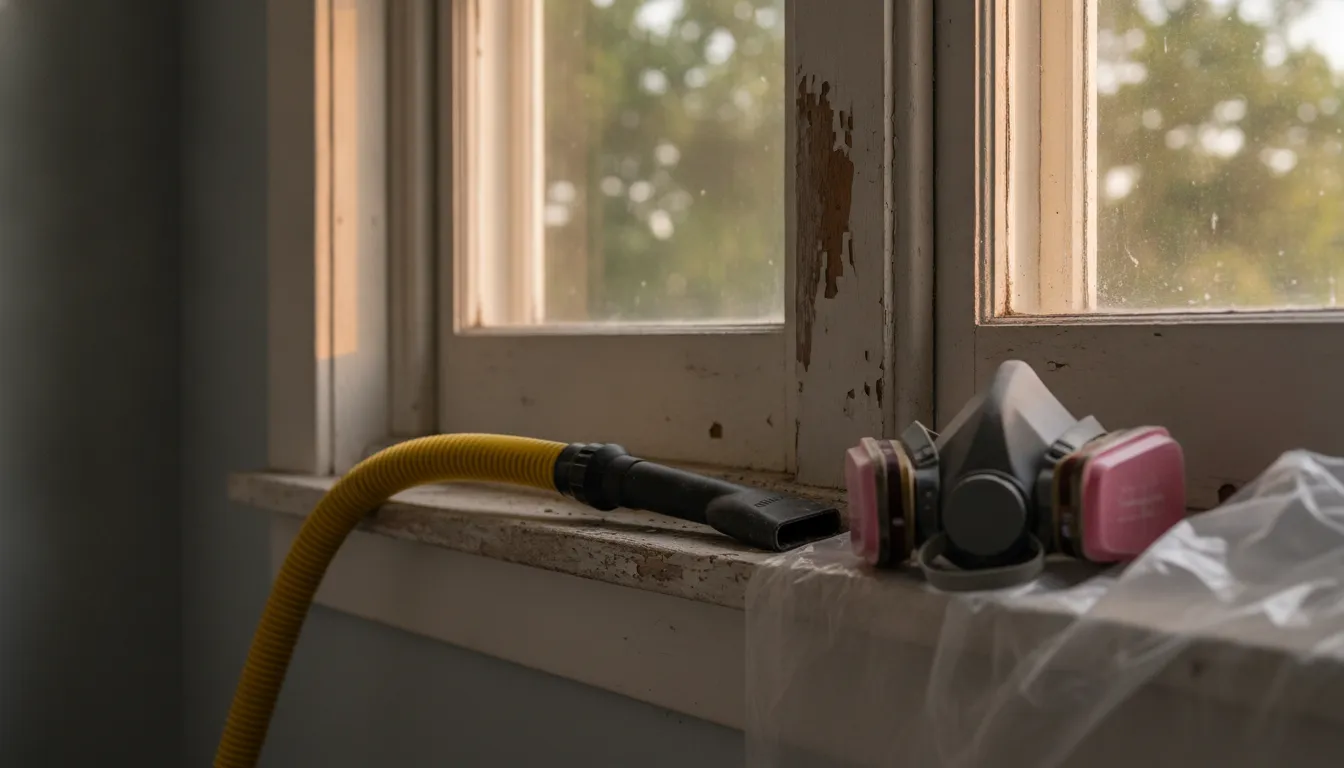
Confirm the EPA RRP certified renovator Raleigh firms must name before paint is disturbed. That person is the trained renovator a certified firm assigns when repair or painting may disturb lead paint in a pre-1978 home or a child-occupied facility. The firm and the renovator are two different checks. One proves the company may take the covered job. The other proves a named person will run lead-safe practices on that site. Remtech Environmental does this work as EPA Renovation, Repair, and Painting (RRP) renovation from its Raleigh base. It does not offer abatement.
What an EPA RRP certified renovator in Raleigh handles
People often search for one credential and assume it covers every lead-paint job. Under the EPA RRP Rule, a covered project needs both a certified firm and a certified renovator. The U.S. Environmental Protection Agency requires certified firms and certified renovators when work disturbs lead paint in pre-1978 homes, child-care facilities, and kindergartens. Those firms must follow specific work practices. The requirements became fully effective on April 22, 2010.
A certified renovator is an individual who completed training from an EPA-accredited training provider. On a covered job, that person directs the lead-safe work. The renovator also trains other workers in their tasks and prepares the records showing the required practices were followed. The renovator is not a substitute for the firm. The firm is the business that applied to EPA, paid the fee, and holds the certification that lets it offer the renovation.
That split matters in Raleigh, where painted windows, doors, trim, and siding in older homes are common renovation targets. A business card that says "lead specialist" does not tell you which role the person holds. Ask for the firm certification and the renovator's course certificate as two separate documents. If only one exists, the covered project is not set up the way the rule describes.
Remtech's lead work stays inside that renovation frame. The company is family-led, based in Raleigh, and has spent more than 30 years on environmental work across North Carolina. Its EPA-accredited specialists and IICRC-certified technicians are part of how it approaches asbestos and mold. Those credentials do not replace an RRP renovator certificate. Remtech does not describe them as a license for permanent lead hazard removal. When a project needs lead-paint renovation, the conversation is about RRP scope, not a different EPA program.
Which Raleigh projects need this check
The check belongs at the start of a project, before anyone sands, scrapes, cuts, or replaces a painted component. The rule covers renovation, repair, and painting that disturbs lead paint in target housing and child-occupied facilities built before 1978. It includes outside contractors and in-house maintenance staff. It is not limited to a full interior remodel.
Write down the building and the activity before you ask for credentials. Note the year built, if you know it, and whether children under six occupy the space or a portion of it. List the rooms and the components: windows, doors, trim, walls, cabinets, or exterior siding. Say whether occupants will stay during the work and whether other trades will be on site. Those facts tell a provider whether the RRP framework is the right starting point.
A worn window stool in a 1950s Raleigh bungalow is a typical trigger. So is a property manager replacing doors in a pre-1978 rental, or a kindergarten repainting a classroom built before that year. Intact paint can still create dust once it is disturbed. Visual condition alone does not prove the paint is lead-based, and it does not prove the work is exempt.
Some projects fall outside this article's question. A lead inspection or a lead risk assessment answers whether hazards are present. Seller and landlord disclosure answers what must be shared in a transaction. Those are different jobs. This page is about who may disturb the paint during renovation and what that person is supposed to do on site. For the broader service context, see Raleigh lead-paint renovation. A lead risk assessment in Raleigh answers a different question: whether hazards are already present.
How to confirm the renovator and the firm
Treat the paperwork as a short checklist, not a formality. You are looking for a match between the company that will invoice you, the person who will be on site, and the building you described. Ask for copies you can read before work is scheduled.
- Ask for the firm's EPA RRP certification and confirm the business name matches the company on the proposal.
- Ask for the certified renovator's initial course certificate and the most recent refresher certificate from an EPA-accredited trainer.
- Confirm that this renovator, not a different trade, is the person assigned to your job site.
- Ask which workers are not certified and how the renovator will train them for the tasks they will perform.
- Ask the firm to say, in writing, whether it believes the RRP Rule applies to the activity you described, and why.
EPA's recordkeeping guidance says certified renovators must have the initial course certificate and the latest refresher certificate at the work site. A photo of a certificate from a different person, or a certificate with no refresher when one is due, is not the same thing. Renovators who take online refresher training are certified for three years. Renovators who take the hands-on refresher are certified for five years. Ask which path the certificate reflects and when it expires.
Also separate this role from other lead credentials. A lead inspector or risk assessor is trained to sample and report. A contractor hired for permanent hazard removal works under a different, more burdensome EPA framework. Remtech does not offer that service. If your scope is repair, replacement, or repainting of painted components, you are in RRP territory, and the renovator is the on-site role to verify.
If the names do not match, pause. A certified renovator employed by one firm does not automatically qualify a different company on the bid. The firm that will perform the renovation needs its own certification. Subcontractors can share recordkeeping duties, but someone still has to be the certified firm and someone still has to be the assigned renovator.
What to expect the renovator to do on site
Credentials answer who is allowed to direct the work. The site plan answers how lead dust will be kept from spreading. Ask the renovator to walk through that plan in plain language before the first painted surface is opened.
On a covered job, expect a contained work area, controlled dust, and a cleaning step that is part of the job rather than an afterthought. The renovator should be able to point to how non-certified workers were trained for their specific tasks. Training records are the firm's responsibility to keep. They do not all have to sit on the job site, but the renovator's own certificates do.
Occupants and other trades change the plan. A family staying in a Raleigh home during window replacement needs a clear boundary around the work area and a simple explanation of what is off limits. A commercial tenant improvement with several contractors needs the same boundary so another trade does not pull down containment or track dust into finished rooms. Remtech's education-first approach is built for that conversation: explain the scope, explain the controls, and skip scare tactics. Owners planning work outside Raleigh can start with the Raleigh service area to see how the Triangle coverage is described.
You should also hear what the renovator will not decide from the curb. Whether paint is lead-based, whether a child-occupied facility rule applies, and whether a particular activity is covered are project facts. A careful provider will say what it still needs from you: age of the building, a component list, occupancy, and any prior testing. That is more useful than a blanket promise that every older building is handled the same way.
| Document | What it confirms | What it does not prove |
|---|---|---|
| Firm RRP certification. | The business is certified for covered renovation. | A trained person will be on your site. |
| Renovator course and refresher certificates. | A named person finished accredited training and is current. | Another crew member holds the same card. |
| Written scope for your rooms and components. | The firm tied the credential to the work you described. | The paint was tested, or hazard removal is included. |
| On-site work practices and cleanup notes. | Containment, dust control, and cleaning are in the plan. | A guaranteed result or a fixed project price. |
| Record list you can request later. | The firm knows the three-year record duty. | Those records already exist before the job. |
Use the table in the proposal meeting. If a line is missing, ask for it before you compare that proposal with another. The goal is a readable match between credential, person, and scope.
Which records to ask for before and after the work
The firm, not the property owner, is responsible for keeping the compliance file. EPA's recordkeeping questions state that the renovation firm must retain and make available all records needed to show compliance for three years after the renovation is complete. The certified renovator prepares the records that show the work followed the work-practice standards.
Before work starts, ask what will be in that file when the job is done. A practical list includes the firm certification and the renovator's certificates. It should also include the work-area description, training proof for non-certified crew, and the renovator's work-practice notes. You do not need to store EPA's copy yourself. You do want to know the firm can produce the file if you, a buyer, or a property manager asks later.
Timing matters. Some record duties attach when the final invoice is delivered or within a short window after the job, depending on the record. Ask the firm when you can request the project file and who will answer. If a subcontractor employs the renovator, the firms may keep one shared set of records. Each firm must still produce them when EPA asks. "Our sub has the paperwork" only works if your contractor can get that file promptly.
Keep your own simpler set: the proposal, the component list you agreed to, photos of the contained area if the firm shares them, and the invoice. That homeowner file is not a substitute for the firm's three-year compliance records. It does make later questions easier, especially if you sell or plan another repair in the same rooms. Seller questions belong on the North Carolina lead-paint disclosure guide, not in the renovator's job file. Remtech's project guidance for homeowners, property managers, and real estate professionals is built around a clear scope and the records that belong with the job. The company background explains that education-first approach.
How RRP renovation differs from lead hazard removal
Renovation and permanent hazard removal are easy to mix up. Both involve older paint, and both use the word "certified." They are not the same EPA program. RRP covers renovation, repair, and painting that disturbs lead paint. A certified firm and a certified renovator use lead-safe practices. Permanent hazard removal is a separate, heavier framework. Remtech does not offer that service.
If a proposal uses permanent-removal language for a window replacement or a repaint, ask the provider to restate the scope in RRP terms. You want to know whether the work is component replacement, stabilization, or another renovation activity, and whether a certified renovator will direct it. You do not want a label that implies a service the company does not perform.
Pricing follows the same plain rule. Remtech does not publish a project price, a range, or a typical figure, because the number changes with the components, access, occupancy, and how the work has to be contained. A consultation is the right place to turn those factors into a project-specific quote. Bring the building year, the component list, and any testing you already have.
The same boundary protects you from credential stacking. Asbestos accreditation, mold certification, and an RRP renovator card answer different questions. Ask which credential covers the activity in front of you. The North Carolina lead-paint regulations guide is the wider legal overview. For lead-paint renovation in the Triangle, the on-site question is still the EPA RRP certified renovator assigned by a certified firm. If the work is a coating left in place rather than a repair that opens the surface, the encapsulation overview is the closer read.
Frequently Asked Questions
Who is an EPA RRP certified renovator?
An EPA RRP certified renovator is an individual who completed training from an EPA-accredited training provider and is assigned by a certified firm to direct lead-safe renovation practices. The renovator is a person. The certified firm is the business. A covered pre-1978 project needs both.
Does every older home in Raleigh require a certified renovator?
No. The RRP Rule applies to renovation, repair, and painting that disturbs lead paint in target housing and child-occupied facilities built before 1978. Tell the firm the building's age, the components involved, and who occupies the space so it can explain whether the rule fits your project.
What should the renovator carry on the job site?
EPA says the certified renovator must have copies of the initial course completion certificate and the most recent refresher certificate at the work site. The firm keeps the broader compliance file, including worker training records, and must be able to produce it for three years after the renovation.
Does Remtech offer abatement, or only RRP renovation?
Remtech performs lead-paint renovation under the EPA RRP Rule only. It does not offer abatement. If your project is repair, replacement, or repainting that may disturb painted surfaces, ask for a consultation about that RRP scope.
What should I bring to a consultation?
Bring the property address and the year built, if you know it. Also bring the rooms, the painted components, who will be in the building, and any prior testing. Those details let the firm match a certified renovator and a written scope to the job.
Talk through the renovator assigned to your project
If you are planning repair or repainting in a pre-1978 Raleigh property, ask two questions. Which certified firm will do the work? Which EPA RRP certified renovator will be on site? Remtech can walk through that RRP renovation scope and the paperwork it should include. The conversation stays on renovation. The quote stays specific to your building.