
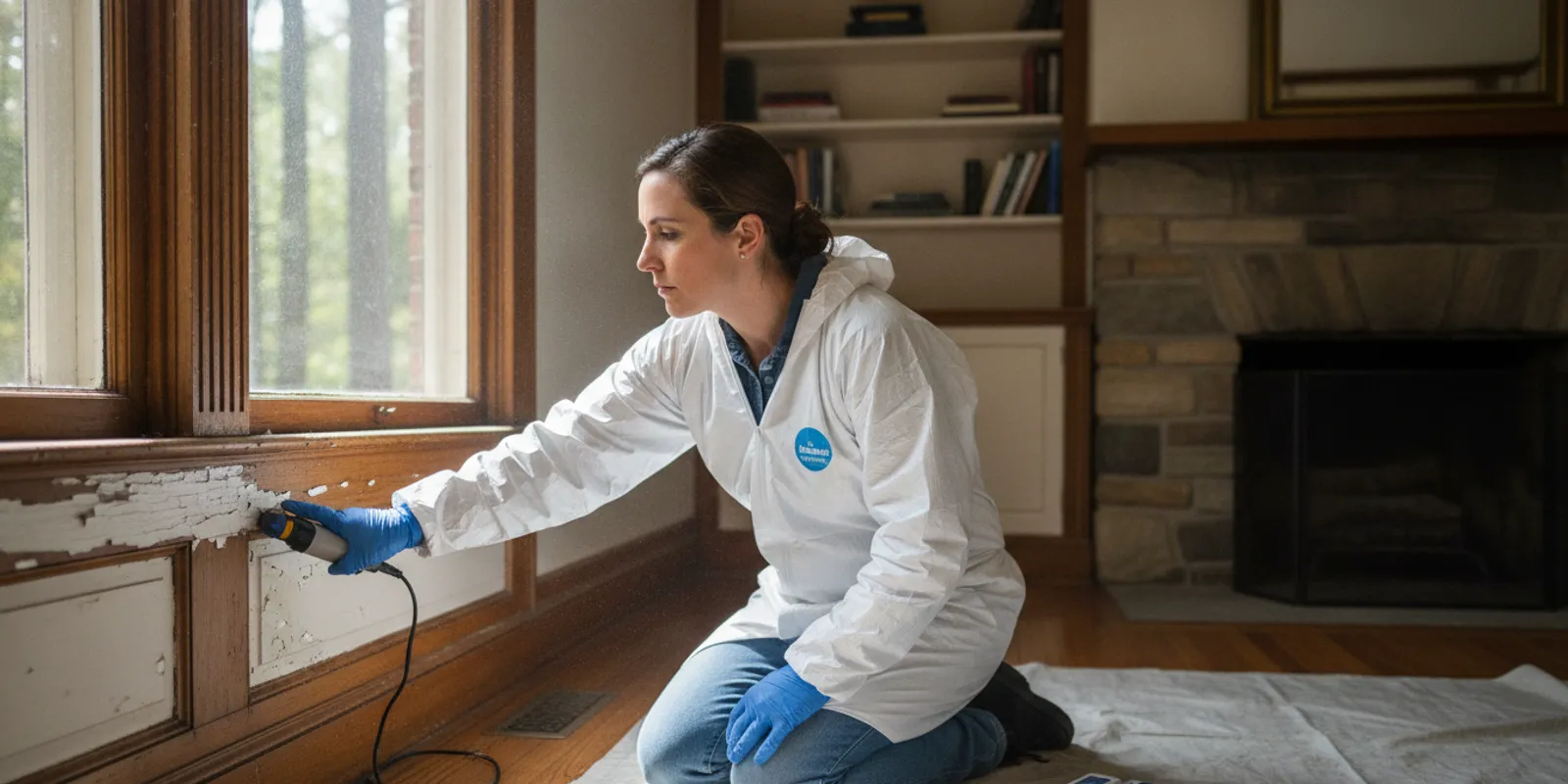
If you are asking how to encapsulate lead paint in a Chapel Hill home, start by identifying the affected surfaces and what work you plan to do around them. Encapsulation can be an option for a suitable, stable surface, but it is not simply a fresh coat of ordinary paint and it is not the right answer for every condition. A property-specific evaluation can clarify whether encapsulation, removal, or another plan fits the material and the renovation.
Why should you plan before painted surfaces are disturbed?
Paint color and appearance do not confirm whether a coating contains lead. In an older home, a renovation may involve painted window trim, doors, walls, porch components, or other surfaces. Sanding, scraping, drilling, cutting, or taking a component apart can disturb the coating and create dust or debris. Before work starts, identify what could be affected and ask whether testing or a professional evaluation is appropriate for the project.
Begin with a written inventory rather than a hands-on inspection. Walk through the planned work with your renovation notes and list each room, exterior area, and building component involved. Record visible peeling, impact damage, previous patching, or areas where paint appears loose. Take photographs from a safe distance if they help describe the concern. Do not scrape, sand, or chip a suspected coating just to see what is underneath.
The U.S. Environmental Protection Agency provides general information about lead through its public resources. General background is not a property-specific determination, so keep questions about an individual surface tied to an appropriate evaluation. Remtech’s lead paint removal information provides additional context for discussing this type of work.
Include the whole work sequence in your notes. Replacing a window may affect the sash, frame, trim, and nearby wall; repainting a room may involve a different set of surfaces. A contractor may also need to pass through an area or move materials near a surface that is not itself being treated. Those details can affect how the project is assessed and planned.
What should a professional assessment explain?
A useful assessment connects the observed condition to the proposed work. Ask which surfaces were evaluated, what the assessment can and cannot establish, and which information is still uncertain. If several rooms or components are part of the renovation, make sure the discussion covers the full planned scope rather than just the easiest area to see.
Share the renovation plan before a method is selected. A stable painted surface that will remain in place presents a different planning question from a damaged component scheduled to be removed. A window replacement, wall repair, and trim repainting can each affect materials in a different way. The evaluator should understand whether the household intends to keep the component, alter it, or remove it, as well as whether other trades will work nearby.
Useful questions to raise include:
- Which rooms, components, and painted surfaces are included in the evaluation?
- Is testing included in the proposed scope, and who will explain any results?
- What are the limits of the evaluation, including any areas that could not be reached?
- What should happen if additional suspect material appears after work begins?
- What information should be shared with the renovation contractor before their work starts?
- Does the proposed approach account for the surface’s condition and future use?
Ask for clear answers in writing. A written explanation makes it easier to compare an evaluation with the proposed work and gives the renovation team a useful handoff. If a separate contractor will perform later repairs, decide who will share project details and who should be contacted if the work area changes.
How are encapsulation and removal different?
Encapsulation generally means applying a coating system intended to cover or seal a suitable painted surface that remains in place. Removal means taking paint or affected material away as part of a defined work process. These approaches have different purposes and work steps. Neither should be chosen based only on a label or a quick look at a photograph.
Encapsulation is a question to discuss when the underlying surface is appropriate for the system, the coating can be prepared as required, and the component is expected to remain in place. The proposal should identify the system and its limits, describe preparation, and explain what care or future observation may be needed. Ordinary paint should not be casually described as a specialized encapsulation system.
Removal may be considered when the project requires a component or coating to be taken away, when the surface condition is not suitable for a proposed coating, or when planned renovation would disturb the material. The work plan should define what is being removed and how the area, debris, cleanup, and closeout will be managed. Removal is not automatically needed for every painted surface, just as covering a surface is not automatically appropriate for every condition.
| Planning point | Encapsulation approach | Removal approach |
|---|---|---|
| Basic intent | Keep a suitable surface in place and cover or seal it with a system intended for that purpose. | Take identified paint or affected material away under a defined work scope. |
| Questions about condition | Is the surface stable, compatible with the proposed system, and appropriate for its intended use? | What material is included, how extensive is the work, and what access is needed? |
| Proposal details to review | Preparation, system limits, expected use, and future care or observation. | Work-area protection, sequence, debris handling, cleanup, and closeout. |
| Reason to revisit the plan | The coating fails, the surface changes, or later work may disturb it. | The renovation scope changes, new material is found, or access differs from expectations. |
Use the comparison as a way to ask informed questions, not as a diagnosis of your home. Have the professional explain why the selected approach fits the specific component and what conditions would change the recommendation. If the scope involves several surfaces, ask whether different areas may need different plans.
How can you define a clear project scope?
A project scope should name the work areas and tasks in plain language. “Lead paint work” does not tell a homeowner or a later contractor whether the plan includes one window, every window in a room, nearby trim, or an entire exterior section. A precise scope makes it easier to understand what is included, what is excluded, and when the plan needs to be reviewed again.
For example, imagine a Chapel Hill renovation that includes replacing two windows, repairing a section of wall, and repainting a hallway. Compare those three tasks against the proposal one by one. Does it address both openings and the related trim? Is the wall repair included, or does it require a separate evaluation? Does the hallway paint fall within the planned work, or is it outside the listed area? Clear answers are more useful than assuming that a broad project label covers every surface.
Before approving a proposal, check that it addresses these items:
- Rooms, exterior areas, components, and surfaces included in the work.
- Whether evaluation or testing is included and how new findings could affect the plan.
- Preparation, protection, access limits, and expected work sequence.
- Tasks included for encapsulation or removal, as applicable.
- Debris handling, cleanup, and the records or other closeout information to be provided.
- Exclusions, assumptions, and the process for reviewing a change in scope.
- How the dates fit with other contractors and the household’s schedule.
Remtech’s Chapel Hill service-area information and broader North Carolina service-area overview can help you begin a location-specific conversation. Local context does not replace evaluation of the actual surfaces; the property and planned tasks still determine what should be included.
What should containment and access planning cover?
Containment is intended to limit the movement of dust and debris beyond the defined work area. The plan should say how that area will be separated, how entry will be controlled, and how tools or materials will move in and out. The precise approach depends on the work, the surfaces, and the setting. A written description is more useful than a general promise to keep the surrounding home clean.
Ask which rooms, hallways, doorways, or exterior pathways may be unavailable during work. In an occupied home, discuss how belongings will be protected, whether residents should stay out of the work zone, and how the sequence affects daily routines. If a rental or multi-unit property is involved, decide who will notify occupants and coordinate access. If a shared route is affected, make a practical plan for how people will move through the building while the work is underway.
Agree on responsibilities before the start date. Confirm who will move furniture or personal items, who will provide access, and what preparation is expected from the property owner. Ask what the crew needs left untouched. Do not start scraping or sanding while waiting for the scheduled work. If a surface changes or a new area becomes exposed, contact the project lead and ask whether the scope should be reviewed before anyone proceeds.
These conversations also help avoid a common scheduling mismatch: one contractor may assume a room is available, while the remediation plan requires that area to remain closed for a defined period or until specified steps are complete. Put access expectations and sequencing in writing so that the household and each trade can plan around the same information.
What should removal, cleanup, and closeout include?
A removal proposal should explain the work steps and identify the materials included. Ask how the work area will be managed, how debris will be collected and handled, and what cleanup is part of the agreed scope. If the proposal uses terms that are unfamiliar, ask for a plain-language explanation rather than relying on assumptions about what a word such as “clean” or “complete” means.
Closeout is a chance to confirm what work was completed and what records will help with future maintenance. Ask what checks or review steps are included, what documentation will be provided, and whether anything falls outside the scope. The exact closeout process can vary by project; the important point is to know what the proposal promises and what it does not promise before work starts.
Keep the project information together. Save the written scope, any available evaluation information, approvals for changes, and the closeout documents. If you later hire someone to repair or renovate an affected component, share relevant records before that work begins. A simple file can help prevent a future contractor from relying on memory or treating an unexamined area as though it were included in prior work.
For additional context about Remtech, review its company information and its description of abatement services. Use service information as a starting point for a discussion, then ask how the proposed scope relates to the specific rooms and components at your property.
How should Chapel Hill homeowners compare proposals?
Compare the work described rather than comparing method names or bottom-line figures alone. One proposal may cover only a small set of trim surfaces, while another may include evaluation, preparation, protection, cleanup, and additional rooms. Project pricing is specific to the property and agreed scope; a generic rate cannot tell you whether two proposals include the same work.
Use the same checklist with each provider. If an item is missing, ask whether it is excluded or simply not described. If one proposal includes an evaluation and another does not, clarify what each evaluation covers. Request that meaningful changes or clarifications be recorded in the revised scope, so your decision is based on comparable information rather than a verbal summary.
- Do the proposals name the same rooms, components, and surfaces?
- Are evaluation, preparation, and work-area protection explained?
- Do they describe access restrictions, work sequence, debris handling, and cleanup?
- What documentation or closeout information is included?
- What experience and relevant qualifications will the project team bring?
- Which assumptions could change the scope, schedule, or project-specific price?
Remtech’s company overview and contact page offer ways to learn more and ask about a project. Request a lead-focused explanation of the work. A procedure used for a different material or property condition should not be assumed to apply to lead paint.
What should renovation planners and property managers coordinate?
When multiple people are involved, assign responsibilities before work begins. A homeowner may be coordinating the renovation contractor, a property manager may be arranging access, and a remediation professional may be defining the work area and tasks. Each person should know which materials are within scope and whom to contact if conditions differ from what was expected.
For a rental or multi-unit property, plan how and when occupants will receive information about the schedule and temporary access limits. Keep the notice specific: identify the area involved, the expected dates if known, any access restrictions, and the person to contact with questions. Avoid assurances that go beyond what the written plan says. If work affects a shared space, coordinate the sequence so residents and contractors know which routes remain open.
For a renovation, put the lead-related work into the overall schedule rather than treating it as an afterthought. Ask whether other trades should wait until specified work and closeout steps are complete. If a change adds a surface, opens a new area, or alters the sequence, pause to confirm whether the original plan still applies. A brief scope review can prevent one contractor from moving ahead on the basis of an outdated assumption.
Owners can make coordination easier by keeping a one-page project summary with the affected areas, key contacts, planned work sequence, and approved changes. Share the same version with the people who need it. Remtech’s Triangle-area service information can also be a starting point for regional context, while the quote request page provides a route to discuss a project-specific consultation.
What should you ask before choosing an approach?
Before moving from evaluation to work, make sure you can explain the plan back in your own words. Which surfaces are included? Why is encapsulation or removal being considered? What happens before, during, and after the work? Which areas will be restricted, and what should happen if the scope changes? If you cannot answer these questions, ask the project contact to walk through the proposal with you.
A useful conversation should make uncertainty visible rather than hide it. For example, if a proposal covers only visible trim but the renovation may disturb material behind it, clarify whether that concealed area has been assessed or is outside the current scope. If the project dates depend on access or preparation, identify those dependencies. If a coating system is proposed, ask how its use and future maintenance will be explained. These are practical scope questions, not a substitute for technical advice about a particular surface.
Remtech’s free quote information can help you start a consultation-based discussion. Provide a clear description of the property, the work planned, and the areas of concern. This allows the conversation to focus on what needs to be evaluated rather than on an assumed one-size-fits-all solution.
Frequently Asked Questions
Can I encapsulate lead paint myself?
Whether a surface is suitable for an encapsulation system depends on its condition, the system’s intended use, and the project. Do not disturb suspected paint to investigate it. Ask for guidance specific to the material and follow the applicable product directions and professional advice before proceeding.
Does every lead-paint project require removal?
No single method fits every surface. Encapsulation may be discussed for an appropriate surface that will remain in place, while condition or planned renovation may call for a different approach. Ask the professional to explain the reasoning, limits, and any follow-up that may be needed.
How long does lead paint removal take?
Timing depends on the work area, the materials, access, the work method, and the agreed scope. Ask for a schedule that accounts for preparation and closeout, and ask which conditions could affect the dates. A project-specific schedule is more useful than assuming every home takes the same amount of time.
How much does lead paint removal cost in Chapel Hill?
There is no single price for every property. The surfaces, work area, evaluation needs, preparation, protection, and cleanup all affect the scope. Request a consultation and a written proposal for the actual project instead of relying on a generic rate.
What should I do if more painted material is uncovered?
Tell the project contact and ask whether the agreed scope needs review before work continues in that area. Documenting the change and getting clear direction helps keep the renovation team and the remediation plan aligned. Do not assume that a newly exposed surface was included in the original work.
Plan the next step around your property
Discuss Your Chapel Hill Project
Lead paint planning is most useful when it begins with the actual surfaces and the work you intend to do. Ask for a transparent explanation of evaluation, the chosen approach, work-area protection, cleanup, and closeout, then keep the written scope with your property records. A consultation can help you discuss the project and practical next steps for your Chapel Hill home.