
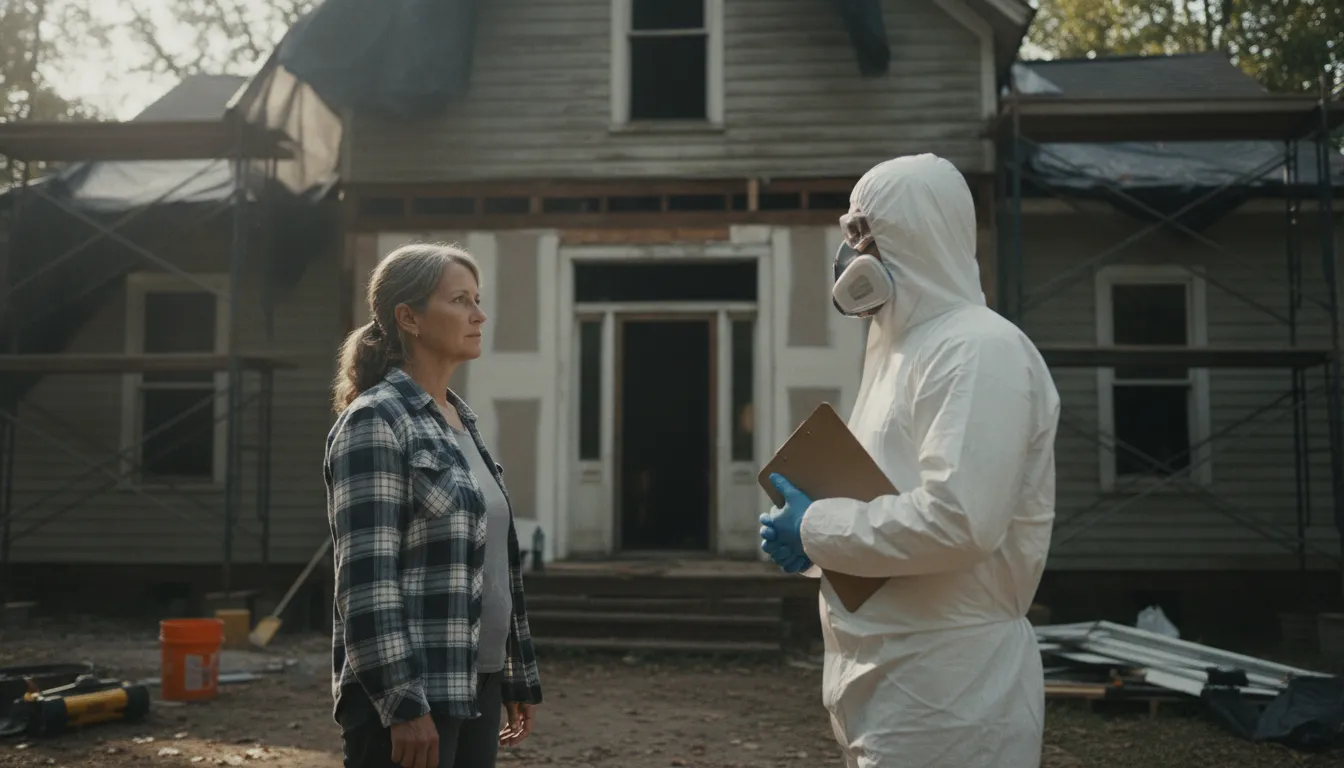
Before renovation or demolition begins, property owners should ask what materials will be disturbed, who will inspect them, and which agency requirements apply. A permit is not a one-size-fits-all answer, so the project scope and the material quantities matter.
For an asbestos removal permit north carolina project, start with an inspection by an accredited asbestos professional. The inspection identifies the material, location, and amount, then helps determine the state and federal rules, notifications, and approvals that may apply: North Carolina HHCU guidance.
That early review gives owners a clearer basis for questions about surveys, permit thresholds, notice timing, and contractor responsibilities. It also helps separate requirements that may apply to the work from planning steps that simply make the project easier to document and manage.
What Should You Know About an Asbestos Removal Permit in North Carolina?
An asbestos removal permit in North Carolina is a project-specific state requirement that may apply when regulated asbestos material reaches certain thresholds. It is not the same as a local building permit, and it does not replace required notifications. Whether the state permit process applies depends on the material, its quantity, the building, and the planned work.
Start with an inspection before demolition or renovation. North Carolina guidance says an accredited asbestos professional must inspect a building before either type of work begins. The inspection identifies whether asbestos is present, as well as its type, location, and amount. It also helps determine which state and federal rules apply to the project. Read the North Carolina Health Hazards Control Unit guidance for the current process.
When can the state asbestos permit threshold matter?
The state guide identifies thresholds above 35 cubic feet, 160 square feet, or 260 linear feet of regulated material. These measurements are not a substitute for a professional determination. The applicable measurement depends on how the material is encountered and what the project will disturb. So an owner should not assume that a small-looking area automatically falls outside the rules.
North Carolina also calls for notification to the Health Hazards Control Unit for building demolition even when no asbestos is present. Where the state asbestos permit process applies, the guidance says to submit the materials with an original signature at least 10 working days before work begins.
How is this different from a local building permit?
A local building department may have its own permit requirements for the construction or demolition work. That local review is a separate planning question from the state asbestos process. Before scheduling work, ask both the local building department and the Health Hazards Control Unit what applies to the specific property and scope. This approach helps keep an asbestos removal permit north carolina question grounded in the actual project rather than a universal legal conclusion.
Which Agency Handles Asbestos Permits in North Carolina?
There is not one universal office for every asbestos project. The agency involved depends on the building, the material, the planned renovation or demolition, and the location. Start by separating state asbestos oversight, local air-program requirements, local building permits, and federal air-emissions rules.
North Carolina HHCU
The North Carolina Department of Health and Human Services Health Hazards Control Unit (HHCU) administers the state's asbestos program. Its guidance explains the state inspection, notification, and permit process, including when a state asbestos removal permit may apply. An accredited asbestos professional also uses the inspection findings to help determine which state and federal requirements fit the project. Review HHCU's renovation and demolition guidance before setting a start date.
Local air programs and building inspections
Some counties have their own local air-pollution control programs with asbestos-related requirements. North Carolina specifically identifies Buncombe, Forsyth, and Mecklenburg counties in this context. Local details can vary, so an owner in one of those areas should check the applicable local air program as well as HHCU.
Separately, the county or municipal building inspections department may require a local building or demolition permit. That local review is not a substitute for state asbestos notification or a state asbestos permit. North Carolina states that any required local permits are separate, and obtaining a local permit alone does not satisfy state asbestos requirements. Confirm local requirements with the relevant building inspections department.
EPA NESHAP
The EPA's Asbestos National Emission Standards for Hazardous Air Pollutants, or NESHAP, establishes federal work-practice and notification requirements for covered demolition and renovation activities. It generally applies to facilities, with a stated exception for residential buildings containing four or fewer dwelling units. But that federal scope does not decide every state or local obligation. EPA explains that the owner or operator may need to notify the appropriate delegated entity before covered work begins. Read EPA's NESHAP overview. Confirm the complete project path with HHCU, the applicable local program, and building inspections office rather than treating one approval as a complete answer.
What Questions Should Property Owners Ask Before Work Begins?
- What did the inspection find? Ask for the inspection report and confirm whether it identifies asbestos, the material type, its location, and the estimated amount. North Carolina guidance recommends an inspection by an accredited asbestos professional before demolition or renovation. If you are planning work in the Triangle, you can review these Raleigh asbestos inspection services.
- Which materials and areas are included? Ask whether the scope covers every area that the planned work could disturb, including materials that may crumble during removal, cutting, sanding, or demolition. Ask what assumptions were made and what happens if concealed material is found.
- Which state, federal, or local requirements apply? The inspection should help determine the rules that fit this project, but the owner should still ask which agency must be contacted. Confirm whether HHCU, a local air program, or the local building inspections department has a role. North Carolina HHCU advises owners to check local building requirements because local permits are separate from state asbestos requirements: review the state guidance.
- Is this a permit, a notification, or both? Ask the contractor to identify the specific submission required, who prepares it, who signs it, and who submits it. A local building permit alone may not satisfy state asbestos notification or permit requirements.
- What is the schedule, and has the timing been confirmed? If a state submission applies, ask whether it was submitted at least ten working days before the planned start. Confirm the proposed start and completion dates, inspection milestones, and the process for delays.
- Who is responsible for notifying the agency if details change? Ask how changes to the start or completion date, removal method, or scope of work will be documented and reported before work proceeds.
- Are the people performing the work North Carolina accredited asbestos professionals? Request current credentials and clarify who will inspect, supervise, remove, contain, and clear the work area. The owner can also read about asbestos during North Carolina renovations.
- What work methods and records will be provided? Ask for the written work plan, containment approach, waste-handling process, daily or progress documentation, clearance records when applicable, and final notification or disposal records. Agree in writing on how unexpected conditions will pause or change the work.
How Are Surveys, Notifications, and Permits Different?
These steps work together, but they answer different questions. A survey or inspection identifies what is present. A notification tells the appropriate agency what work is planned. A state asbestos permit addresses certain regulated removal projects, while a local building permit covers local construction or demolition approval. One does not automatically replace another.
Have Questions About Your Project? Request a Free Consultation
| Item | Purpose | When to confirm | Evidence to request |
|---|---|---|---|
| Survey or inspection | Identifies asbestos presence, type, location, and amount, helping determine which rules apply. | Before demolition or renovation that could disturb building materials. North Carolina guidance recommends an inspection by an accredited asbestos professional. | A signed inspection report showing the areas assessed, materials evaluated, findings, and limitations. Read NC HHCU guidance. |
| Notification | Provides the responsible authority with project and owner or operator information before covered demolition or renovation. | After the scope is defined and before the scheduled work. The required filing can depend on the project and applicable state or federal rules. | A copy of the submitted form, original signature, project details, and any agency confirmation. EPA guidance distinguishes original notices, revisions, and cancellations. Review EPA form guidance. |
| State asbestos permit | Addresses removal of regulated asbestos-containing material when the project meets North Carolina permit criteria, including applicable quantity thresholds. | During scope review, once the inspection identifies the material, quantity, and planned removal method. Confirm current applicability with HHCU. | The applicable permit or permit application, signed submission, approved scope, and related waste documentation. NC HHCU lists an asbestos waste shipment record among its forms. |
| Local building permit | Covers requirements administered by the county or municipality for building, alteration, or demolition work. | Before scheduling construction or demolition, by checking the local building inspections department. Local requirements vary by jurisdiction. | The local permit number, approved plans or scope, and any conditions from the building inspections department. A local permit does not satisfy separate state asbestos notification or permit requirements. |
For a related explanation of the state filing process, see North Carolina asbestos notification requirements. Keep that resource separate from the inspection report, state asbestos paperwork, and local permit file so the project team can verify each requirement on its own.
What Should a Qualified Asbestos Contractor Show You?
A qualified contractor should be able to explain the project in terms you can verify, not ask you to rely on a broad promise of safety or compliance. Start by asking for evidence that the professionals assigned to regulated asbestos activities hold current North Carolina accreditation. The state says only North Carolina accredited asbestos professionals can perform those activities. You can also review the state's guidance before work begins: North Carolina asbestos requirements and renovation guidance.
The contractor's proposed scope should match the inspection or survey findings. Ask which materials will be disturbed, how the work area will be separated from occupied or unaffected areas. And what changes would require a new discussion before work proceeds. Regulated material may include material that can crumble by hand, has been subjected to sanding, abrading. Grinding, or cutting, or is likely to crumble into powder because of demolition or renovation forces. Materials that will be disturbed should be addressed before that work starts.
Ask how the work will be controlled
For applicable work, the plan should describe handling methods rather than simply state that materials will be removed. EPA identifies wetting regulated asbestos-containing material, sealing it in leak-tight containers, and disposing of the waste as soon as practicable as common work practices. Ask how wetting, containment, worker access, and cleanup will apply to your particular space. If the building remains occupied, review the practical safeguards in this guide to asbestos containment in occupied properties.
Ask for the project record
Ask who is coordinating any required notifications and what documentation you will receive. Depending on the project, that record may include notification details, work scope, waste shipment or disposal documentation, and explanations for material or schedule changes. EPA and state or local air-program inspectors review notification documents and may inspect job sites for compliance. A contractor who can clearly explain the sequence can also help you understand how the asbestos abatement process works and compare your questions when choosing an asbestos contractor in North Carolina.
Do Permit Questions Change for Homes, Rentals, and Commercial Buildings?
Yes, the building type is one part of the project review, but it does not create a simple home-versus-commercial rule. The number of dwelling units, whether the work is renovation or demolition, the amount and type of regulated asbestos-containing material. And the planned scope can all affect what the owner or operator must confirm.
For example, EPA's asbestos NESHAP covers demolitions and renovations of facilities, with an exception described for residential buildings with four or fewer dwelling units. Covered projects require a thorough inspection where the work will occur, and notification may be required before demolition or renovations involving a threshold amount of regulated material. Those federal requirements should be evaluated alongside North Carolina requirements, not treated as a substitute for them. EPA's NESHAP overview explains the federal framework.
Rental properties deserve careful review because the dwelling count and the planned work may change the analysis. A single-family rental, a duplex, and a larger apartment property should not automatically be handled the same way. In a commercial building, the owner or operator may also need to coordinate a broader renovation or demolition scope, facility inspection, and applicable notifications. See our guide to commercial asbestos abatement in Raleigh for project-planning context.
Location adds another layer. North Carolina advises owners to check with the county or local building inspections department, and local permits are separate from state asbestos permits. Mecklenburg, Buncombe, and Forsyth counties have local air-program requirements, but those requirements do not replace state notification or permit requirements. In the Raleigh-Triangle area, confirm the applicable local office and project process rather than assuming another county's procedure applies. North Carolina's asbestos guidance is a useful starting point.
Finally, allow the confirmed scope and agency process to shape the schedule. Our guide to asbestos removal project timelines covers practical coordination after the required review is understood.
What Is the Next Step for a North Carolina Property Owner?
If asbestos may be present, pause work that could disturb the material. Do not rely on appearance or a local building permit to decide whether work can proceed. North Carolina advises property owners to arrange an inspection by an accredited asbestos professional before renovation or demolition. The inspection identifies the material's presence, type, location, and amount, and helps determine which state and federal requirements apply. Review HHCU's pre-renovation guidance as you plan.
- Define the scope. Ask for the inspected materials, affected areas, planned removal method, and work boundaries in writing. If the scope, removal method, start date, or completion date changes, confirm whether HHCU needs a revised notification.
- Confirm the authorities. Ask HHCU and your county or local building inspections department what applies to the property and project. Local permits are separate from state asbestos permits, and a local permit alone does not satisfy state notification or permit requirements. Use the state's asbestos forms to verify current submission requirements, including the original-signature and timing instructions.
- Choose qualified professionals. Use North Carolina accredited asbestos professionals for regulated activities. You can review asbestos abatement services in Raleigh and learn how the asbestos abatement process works before selecting a contractor.
- Document the plan. Obtain written responsibility, work dates, disposal arrangements, and records. Regulated material must be managed and buried in an approved landfill. Keep the permit or notification, inspection, work records, and waste shipment record. For scheduling context, see asbestos removal project timelines.
When the project is complete, retain the records with the property file. If you are unsure which requirement applies, ask HHCU for guidance rather than guessing.
Frequently Asked Questions
Does every asbestos project need a permit in North Carolina?
Not necessarily. The answer depends on the material, quantity, building, and planned work. North Carolina guidance identifies state permit thresholds above 35 cubic feet, 160 square feet. Or 260 linear feet of regulated material, while demolition notifications and other requirements may still apply below those amounts. An accredited inspection should determine which rules fit the project. Review NC HHCU guidance.
Can a property owner remove asbestos themselves?
Do not assume that owner-led work is allowed. If the activity involves regulated asbestos-containing material, North Carolina says only North Carolina accredited asbestos professionals can perform those activities. Have an accredited professional inspect the property and explain the permitted scope before disturbing any suspect material.
What does the 10-working-day timing apply to?
For applicable North Carolina asbestos submissions, the state guide says to submit with an original signature at least 10 working days before work begins. That timing is not a universal waiting period for every project. Confirm the correct submission, start date, and any changes with the Health Hazards Control Unit or the applicable local air program.
Who confirms or submits the required asbestos documents?
The owner or operator may have notification responsibilities under federal asbestos rules, and the accredited inspector determines which state and federal requirements apply. In practice, the owner should assign responsibility in writing and ask the contractor or consultant to identify the forms, signatures, submission destination, and proof of acceptance. EPA explains the NESHAP framework.
Is a local building permit separate from an asbestos permit?
Yes. North Carolina advises owners to check with their county or local building inspections department, and any local permit is separate from a state asbestos permit. A local building permit alone does not satisfy state asbestos notification or permit requirements. Local air-program rules may also apply, so confirm each requirement for the property and scope.
When you are unsure which requirements apply, a project-specific review can help you organize the next questions before work begins.