
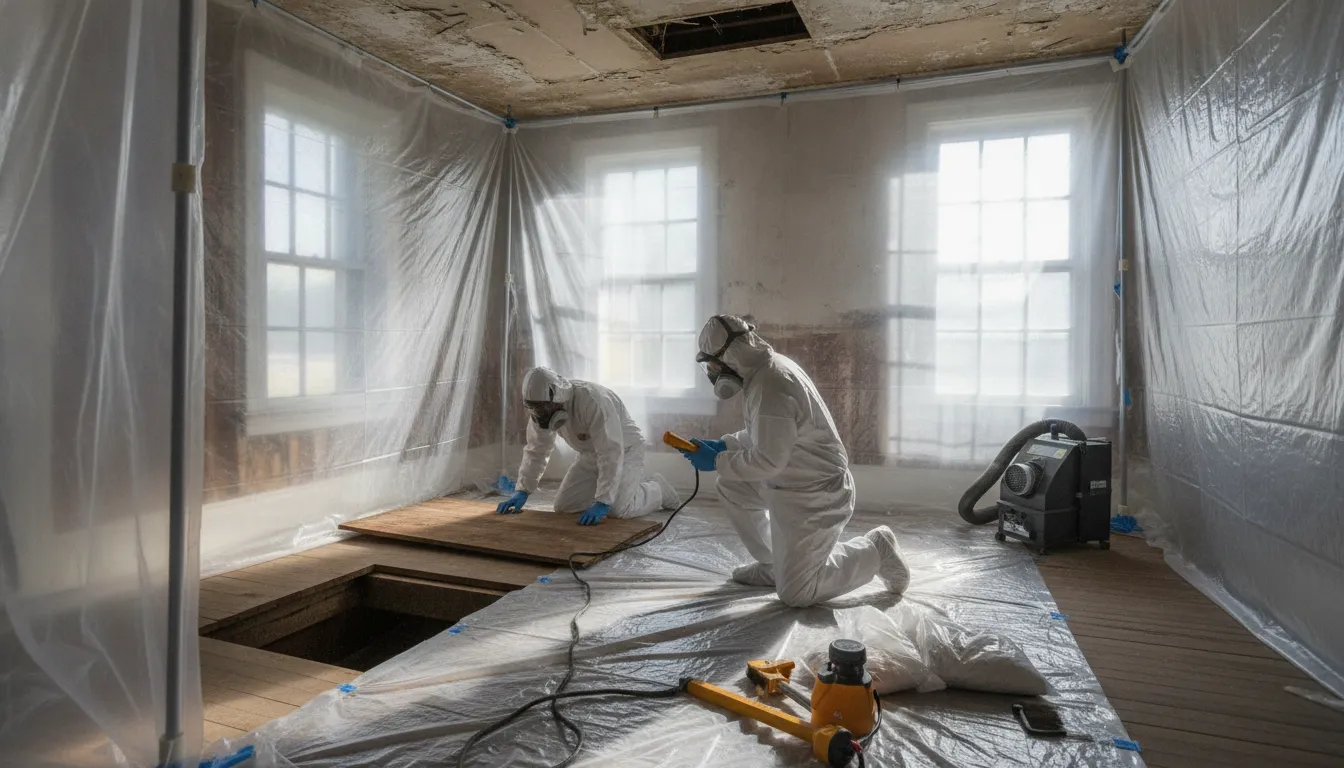
Planning a renovation in North Carolina means looking beyond the visible walls, floors, and ceilings. Some older building materials may contain asbestos, but age or appearance alone cannot confirm it. The safest approach is to identify materials that the project could disturb, pause work on anything questionable, and plan qualified testing before demolition or remodeling begins.
Asbestos during home renovation North Carolina should be handled as a project-planning issue: have suspect materials sampled by a trained and accredited professional before work disturbs them, then use the results to determine the appropriate next steps.
Intact material that remains undisturbed generally does not release fibers. Cutting, sanding, drilling, scraping, or improper removal can change that, which is why renovation plans should account for both the material and the work methods. Understanding how ordinary remodeling activities create disturbance is the first step toward a careful, well-documented project.
Why Can Renovation Disturb Asbestos in a North Carolina Home?
Renovation changes the condition of a home. Materials that remain stable during normal occupancy may be cut, drilled, sanded, scraped, removed, or broken as walls, ceilings, floors, and utility systems are opened. The U.S. Environmental Protection Agency notes that remodeling can disturb building materials and recommends having suspect materials sampled by a properly trained and accredited asbestos professional before work that may disturb them. See this guide to where asbestos is found for examples of locations homeowners may encounter during planning.
Appearance alone cannot confirm whether a building material contains asbestos. A material may look ordinary, and its age may raise a planning question, but neither observation proves its contents. Flooring, adhesives, textured ceilings, insulation, siding, and other construction products require appropriate assessment and, when indicated, sampling and laboratory analysis. The EPA recommends using a qualified laboratory for that analysis rather than relying on a visual guess.
Intact material is different from disturbed material
Asbestos-containing material in good condition that will remain undisturbed generally does not release fibers. That distinction matters for a Raleigh or Triangle homeowner deciding whether a planned project needs an asbestos evaluation. Leaving a stable material in place is not the same situation as removing a wall, replacing flooring, enlarging a doorway, or accessing a ceiling cavity.
Once renovation begins, common activities can change the risk. Cutting or drilling may create dust at a specific work point. Sanding and scraping can break down a surface. Demolition can tear, crush, or remove materials across a larger area. Improper removal can also release fibers. These activities do not prove that exposure has occurred, but they are reasons to pause and resolve the material question before work continues.
Why disturbance planning matters
People may be exposed by breathing tiny asbestos fibers in the air. The amount released depends on factors that include the intensity of the activity, the amount of asbestos in the air, and how often and how long exposure occurs. In practical terms, a short visual inspection of a room is not equivalent to repeated cutting or demolition involving a suspect material. It is also why do-it-yourself sampling is not recommended: incorrect sampling can be more hazardous than leaving the material alone.
For a North Carolina renovation, the careful approach is straightforward: identify which materials the project will disturb. Avoid cutting or removing suspect materials until they are assessed, and coordinate qualified sampling with the renovation schedule. That gives the homeowner and contractor information before demolition changes the work area, while keeping the decision focused on the actual scope of the Raleigh-area project.
Which Materials Should You Check Before Demolition or Remodeling?
Before demolition begins, look beyond the most obvious surfaces. Flooring, ceilings, walls, insulation, and exterior materials can all deserve attention when a renovation may disturb them. The examples below are common places to ask questions, not proof that asbestos is present. The EPA explains that you cannot determine whether a material contains asbestos simply by looking at it, and age alone does not settle the question. If planned work will cut, sand, drill, scrape, remove, or otherwise disturb a material, arrange qualified sampling before that work begins.
Flooring and mastic
Older vinyl floor tiles, sheet flooring, and the adhesive beneath them may be suspect materials. Removing a floor can involve scraping, grinding, or pulling up layers that are not visible from the finished surface. Do not sand adhesive or pry up flooring to investigate it. A professional can evaluate the flooring system and determine whether samples should be sent to a qualified laboratory. The where asbestos is found guide offers additional room-by-room context.
Ceilings and wall finishes
Popcorn or textured ceilings are often raised during remodeling, especially when homeowners plan to smooth a ceiling, install recessed lighting, or repair water-stained areas. Plaster, drywall joint compound, and some patching materials may also need consideration before walls are opened or refinished. A textured appearance may prompt an inspection, but it cannot confirm asbestos. Likewise, a smooth finish cannot rule it out. Keep the surface intact until the renovation plan accounts for any necessary assessment.
Insulation around pipes and in attics
Pipe insulation can be disturbed when plumbing, heating, or electrical work requires access to a mechanical area. Loose-fill vermiculite insulation in an attic or wall cavity is another reason to pause before moving, bagging, or vacuuming insulation. Because vermiculite can be mixed with other materials and may be difficult to identify visually, avoid disturbing it. Read more about vermiculite insulation asbestos risks before planning work in an affected area.
Siding and exterior materials
Exterior siding, roofing-related materials, and other products may become relevant when a project includes additions, window replacement, exterior repairs, or demolition. Cutting or breaking these materials can create a different exposure-control challenge than leaving them undisturbed. A professional inspection can help connect the suspect material to the actual renovation scope. For a clear explanation of the inspection process, see what an asbestos inspection includes.
The practical rule is simple: treat appearance and age as reasons to investigate, not as test results. Until a qualified professional evaluates material that renovation will disturb, keep demolition and sampling out of the hands of untrained workers.
When Should You Test for Asbestos During Home Renovation in North Carolina?
Planning for asbestos during home renovation North Carolina projects starts before demolition day. The right timing gives you room to identify materials, obtain reliable results, adjust the work plan. And address project-specific requirements without forcing a contractor to pause after work has begun.
- Pause any work that could disturb suspect material. Do not cut, sand, drill, scrape, tear, or remove a material simply because it appears old or because it is in the way. You cannot confirm asbestos by appearance, and intact material that will not be disturbed generally does not need testing. However, renovation can change that assessment. If the planned work will disturb a suspect material, EPA recommends sampling by a properly trained and accredited asbestos professional. See EPA guidance for remodeling homeowners for the distinction.
- Define the renovation scope before the inspection. Give the inspector your drawings, room list, demolition plan, and contractor notes when available. Identify walls, ceilings, flooring, insulation, siding, pipe coverings, or other materials that may be cut, removed, enclosed, or otherwise affected. A clear scope helps the professional select representative sampling locations and helps you avoid testing only the most visible surface while overlooking material hidden in the work area.
- Arrange a qualified inspection and sampling visit. Schedule the assessment early enough for the professional to review the property, collect samples safely. And document the findings before the renovation crew is committed to a start date. EPA says do-it-yourself sampling is not recommended because incorrect sampling can be more hazardous than leaving the material alone. An inspection may identify materials that can remain undisturbed, as well as areas that need a separate abatement plan. For more detail, read what an asbestos inspection includes.
- Confirm that a qualified laboratory will analyze the samples. The professional should use a qualified laboratory for asbestos analysis. Keep the written results with the project records, and ask what each result means for the specific renovation scope. A negative result for one material or location does not automatically establish that every other material in the home is asbestos-free.
- Coordinate the findings with the schedule and applicable authorities. Share the report with your renovation contractor before demolition, pricing, and sequencing are finalized. If asbestos is identified, determine whether the material can remain in place, must be managed, or needs professional abatement before other trades enter the area. Some North Carolina renovation and demolition projects also involve licensing, accreditation, notifications, or other requirements that depend on the project. Verify current requirements for your property and coordinate any needed agency steps before disturbance begins.
Testing is most useful when it informs the work plan, not when it is treated as paperwork after demolition starts. Early coordination supports a measured decision about what happens next and gives everyone a shared record of the renovation conditions.
What North Carolina Rules May Apply to a Renovation Project?
North Carolina asbestos requirements depend on the building, the materials involved, the amount of material, and the planned renovation or demolition activities. A small owner-occupied project may not follow the same process as work in a commercial property or a larger residential structure. That is why renovation planning should begin with a project-specific assessment rather than an assumption based only on the home's age or the material's appearance.
Licensing and qualified professionals
When asbestos inspection, project design, supervision, or abatement is needed, North Carolina rules address the licensing and accreditation of the people and companies performing that work. The North Carolina Department of Health and Human Services asbestos rules explain the applicable licensing and accreditation framework. Depending on the scope, the project may also involve approved training, permits, or coordination with the appropriate state program.
Homeowners should ask who will inspect or sample suspect materials, who will prepare the work plan, and whether the professionals have the credentials required for that role. Sampling should not be treated as a casual do-it-yourself step. The EPA recommends using a properly trained and accredited asbestos professional when planned work may disturb suspect material, with analysis performed by a qualified laboratory. Requirements and project responsibilities can change with the facts, so confirm the current rules before work begins.
Notifications and NESHAP work practices
Some renovation and demolition projects require advance notification to a state agency before work starts. The notification question is project-dependent, particularly when commercial buildings or larger quantities of asbestos-containing material are involved. Your contractor or asbestos professional should determine whether a notification applies and identify the correct agency and timing.
Federal NESHAP, or the National Emission Standards for Hazardous Air Pollutants, may also apply to qualifying renovation and demolition work. EPA asbestos guidance covers requirements and work practices related to regulated projects. Depending on the scope, planning may address notification, wet methods to control dust, preventing visible emissions, secure and labeled waste containers, approved disposal, and project records. These are not details to improvise after demolition starts.
Keep the project record together
Save the inspection findings, laboratory results, project design or work plan, agency correspondence, contractor credentials, waste documentation, and clearance or closeout records that apply to your project. A complete record helps the homeowner, contractor, and future property professionals understand what was assessed and what work occurred. Before scheduling demolition or remodeling in the Raleigh-Durham area, ask a qualified professional to review the current federal, North Carolina, and local requirements for the specific scope. That is the practical way to do the right work the right way.
How Does Professional Asbestos Abatement Protect the Home?
Professional abatement is a controlled process designed around the material, the renovation scope, and the people who may be nearby. It begins with an assessment of the suspected material and the planned work area. If testing confirms asbestos, the contractor explains the findings, documents the affected locations, and develops a project-specific plan. That plan may call for removal, or another appropriate abatement approach, depending on the material's condition and the renovation requirements. Remtech describes this process as education, documentation, and planning rather than a one-size-fits-all recommendation.
| Stage | Purpose |
|---|---|
| Assessment and planning | Connect suspected materials to the renovation scope and document the work approach. |
| Containment and work practices | Isolate the area, limit disturbance, and use planned PPE, decontamination, and wet methods where applicable. |
| Cleanup and clearance | Handle waste through the project process and verify the area before reoccupancy or the next trade. |
Assessment and containment come first
Before work begins, the crew establishes how the work area will be isolated from occupied parts of the home. Preparation can include sealing openings, setting up containment, and posting warning signs so occupants and other workers do not enter unintentionally. These controls matter during renovation because cutting, sanding, drilling, scraping, or improper removal can disturb asbestos-containing material and release fibers into the air. A qualified team plans the work to limit that disturbance rather than relying on appearance or assumptions about a material.
Remtech's documented protocol includes area preparation, sealing, warning signs, worker personal protective equipment, and decontamination. Decontamination procedures help keep fibers from being carried out of the contained area on clothing, equipment, or other surfaces. The specific setup depends on the project, so a homeowner should ask how the contractor will protect adjacent rooms, shared air, and access routes.
Wet methods, removal, and controlled waste handling
When removal is the selected response, professional crews use wet methods to help suppress fiber release. They do not treat the work like ordinary demolition, and dry sweeping or uncontrolled breakage are not appropriate approaches. Workers use the planned protective equipment and follow the containment and decontamination procedures established for the project. Read more about how asbestos abatement works to see how preparation, removal, cleanup, and verification fit together.
Removed material is handled as regulated waste. The knowledge base for Remtech's protocol specifies contained and labeled waste, regulated disposal, and project records. Those steps create a traceable path from the work area to an approved disposal destination. Homeowners should not place suspect debris in ordinary household trash or ask a remodeling crew to handle it as routine construction waste.
Air monitoring and final clearance
Cleanup does not automatically mean the area is ready for the next phase of renovation. Air monitoring and final clearance testing provide a separate check of the completed work. Remtech's documented process includes final air-clearance testing, with results and project documentation supporting the closeout decision. The timing and testing approach depend on the scope and applicable requirements, but the basic principle is consistent: verify the work area before normal occupancy or construction resumes.
For homeowners weighing a shortcut, Remtech also explains why professional asbestos removal is different from attempting the work with household tools and protective gear. The goal is not to make renovation more complicated. It is to manage a known or suspected hazard with a documented plan, controlled work practices, and verification at the end.
What Should Homeowners Expect During Cleanup and Reoccupancy?
Once asbestos-related work is complete, cleanup and verification are still part of the project, not an afterthought. The work area is cleaned using the methods defined in the project plan, waste is contained and routed for regulated disposal. And the team checks that containment and surrounding surfaces are ready for the next phase of renovation.
Air monitoring and final clearance help determine whether the area can be returned to normal use. Remtech's documented protocol includes final air-clearance testing after preparation, containment, wet removal methods, and waste handling. Clearance is not based only on how the room looks. It is a separate verification step that supports a careful decision about reoccupancy and the handoff to the renovation team.
Homeowners should also expect closeout documentation. Depending on the project, records may include sampling or assessment findings, the scope of work, monitoring results, waste-disposal documentation, and clearance records. The exact package varies with the material, project type, and applicable requirements. North Carolina asbestos requirements are project-dependent, so the contractor or qualified asbestos professional should explain which notices, records, and approvals apply to the property.
Scheduling should be coordinated before demolition or remodeling begins. Your general contractor may need to sequence framing, electrical, plumbing, flooring, or painting around the controlled work area. If clearance testing or required notifications are part of the project, those steps can affect when another trade enters the space. Building this review into the renovation schedule reduces the chance that work starts before the area is ready.
There is no universal cleanup timeline. The schedule can change based on the amount and type of material, the size of the work area. Containment requirements, disposal arrangements, air-monitoring needs, and whether additional cleaning or clearance work is needed. A project-specific assessment is the most reliable way to establish realistic milestones. Homeowners planning work in the Triangle can review asbestos services in Raleigh, NC to understand the local inspection, testing, air-monitoring, and abatement support available for renovation planning.
Frequently Asked Questions
Can home renovation expose me to asbestos?
Yes, renovation can disturb asbestos-containing materials when they are cut, sanded, drilled, scraped, damaged, or removed improperly. Intact material that remains in good condition and will not be disturbed generally does not release fibers. If renovation will affect a suspect material, pause the work and arrange qualified sampling before disturbing it. EPA guidance explains these disturbance risks.
How should I test materials before remodeling?
Do not collect samples yourself. A trained and accredited asbestos professional should identify materials affected by the renovation, collect appropriate samples, and use a qualified laboratory for analysis. Appearance alone cannot confirm whether a material contains asbestos, and incorrect DIY sampling can create additional disturbance. EPA recommends professional sampling when planned work may disturb suspect materials.
Who is licensed to perform asbestos work in North Carolina?
North Carolina requires professionals and companies performing asbestos inspection, project design, supervision, and abatement work to meet state licensing and accreditation requirements. The exact requirements depend on the building, material, and project scope. Confirm the qualifications that apply to your renovation with the North Carolina Asbestos Hazard Management Program before work begins.
Is asbestos abatement the same as asbestos removal?
No. Abatement is the broader term for managing an asbestos hazard. It can include removal, but may also involve encapsulation, enclosure, or an operations-and-maintenance approach when the material can remain safely managed. The appropriate response depends on the material's condition, location, and how the renovation will affect it.
Do I have to leave my home during asbestos work?
That depends on the work area, containment plan, material, and project scope. Ask the contractor to explain whether occupants must leave, how access will be controlled, and what clearance steps must be completed before reoccupancy. Air monitoring and final clearance testing may be part of the closeout process when the project requires them.
Get a Free Consultation for Your Renovation Plan
Renovating an older North Carolina home is easier to manage when you understand what may be present before work begins. Remtech Environmental can help you plan the next step with project-specific asbestos inspection, testing, and abatement guidance for homes in the Raleigh-Durham and surrounding Triangle area.
A consultation can help clarify the suspected materials, the renovation scope, and the safest path forward. Remtech's team takes an education-first approach and explains the work without scare tactics or pressure.