
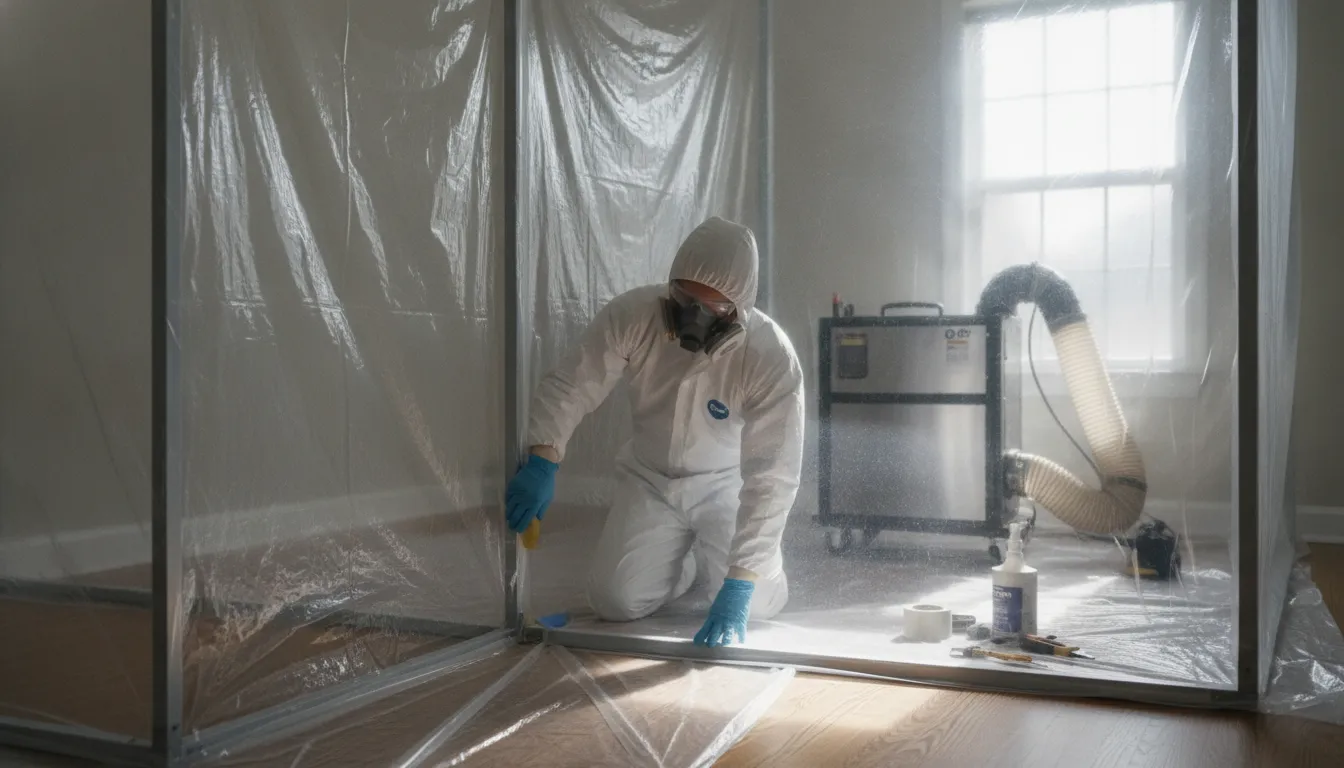
If you are asking how long does asbestos removal take, you probably need a practical schedule before a renovation, property transaction, or move. A small, clearly defined project may take a few active workdays. Larger scopes can take a week or more. Raleigh-area homeowners should plan for assessment, containment, removal, cleanup, clearance testing, and safe re-entry, not just the visible removal work.
How Long Does Asbestos Removal Take in a Typical Home?
How long does asbestos removal take? A small residential project may require one to three active workdays, while larger scopes can take one to two weeks or more. The full calendar schedule may be longer because assessment, containment, cleaning, clearance testing, and waste handling happen before the space is released for normal use.
For a typical home, hands-on removal may take about one to five working days. The complete calendar schedule can extend beyond active work because it may include a site review. Material assessment, work planning, setup, controlled removal, detailed cleaning, clearance testing, and waste handling. A short removal phase is not the same as a short overall project.
A small, clearly defined job is usually at the shorter end of the range. One accessible room or a limited flooring area may require roughly one to three active workdays, depending on the material and site conditions. Larger residential work, such as extensive attic insulation, several rooms, or major duct remediation, may take one to two weeks or more. These are planning ranges, not a schedule for every Raleigh property.
General asbestos abatement timeline guidance also shows why setup, removal, cleanup, and clearance should be treated as separate phases. The most reliable schedule comes after the work area and suspected material have been evaluated.
Active removal days are only part of the schedule
Before removal begins, the project may require a site review, material assessment, work planning, and preparation of the area. Setting up containment, negative-pressure equipment, and HEPA filtration can take substantial time. These controls isolate the work area and help limit the movement of asbestos fibers into occupied parts of the home.
After the material is removed, the team must clean the work area thoroughly. HEPA-filtered vacuuming and detailed surface cleaning are part of closeout, not optional extras. The area then needs final clearance testing before containment is dismantled and the space is returned to normal use. Laboratory processing for clearance samples may add time, and turnaround depends on the testing process and laboratory.
Why the same material can take different amounts of time
Accessibility is one of the biggest variables. Material in a confined or hard-to-reach location may require more preparation and careful access than material in an open area that can be isolated easily. Flooring can be more straightforward to reach than overhead pipe insulation, which may require access equipment or additional containment planning.
The amount of material, its condition, the size of the work area, and the need to protect nearby surfaces can also change the calendar. Unexpected findings may extend the schedule. Additional asbestos-containing material, structural issues, or site-preparation needs can require a revised scope before work continues. A property-specific review is the only reliable way to turn a broad range into a practical schedule.
What Factors Affect an Asbestos Removal Timeline?
Remtech Environmental cannot assign a reliable asbestos removal timeline from a photograph alone. The schedule depends on the material, quantity, condition, accessibility, work-area size, containment needs, cleanup, testing, and any required coordination. A site-specific scope helps separate active workdays from the full calendar time needed before re-entry.
There is no dependable one-size-fits-all answer to how long asbestos removal takes. The schedule is shaped by the material, work area, quantity involved, and controls needed to keep the project contained. A careful assessment turns those variables into a practical plan without promising a fixed completion date before the site is understood.
Scope and quantity of material
A small, clearly defined area may require less active work than a project involving several rooms, multiple layers of flooring, attic insulation, or extensive ductwork. The condition of the material matters as well. Work may take longer when materials are damaged, bonded tightly to a surface, or spread across multiple building components.
If the initial inspection or sampling identifies additional asbestos-containing material, the scope may need to be revised before work continues. That is one reason a professional schedule should include room for findings that cannot be confirmed from photographs or a brief phone description.
Material type and accessibility
Different materials call for different removal techniques and access arrangements. Floor tile in an open room may be more straightforward to reach than insulation around overhead pipes. Pipe insulation can require platforms or carefully configured access and containment. Confined crawlspaces, wall cavities, mechanical areas, and other hard-to-reach locations may require extra preparation.
Some materials are attached to surfaces in ways that require deliberate removal. The crew may also need to protect fixtures, furnishings, finishes, and adjacent areas that remain outside the work boundary. A larger room is not automatically a longer project if access and containment are simpler.
Containment, preparation, and cleanup
The removal phase is only one part of the work. The team may need to isolate the area, protect nearby surfaces, manage utilities, establish negative pressure, and set up specialized equipment before disturbing the material. The NIOSH asbestos work-practice guidance describes containment and controlled work practices that help limit fiber migration.
Cleanup also affects the schedule. The work area must be cleaned methodically, debris must be packaged and handled appropriately, and the project may require air monitoring or final clearance testing. Rushing these steps can create safety and quality problems, so a responsible schedule allows enough time to complete them properly.
Unexpected findings and the appropriate method
Opening walls, floors, or ceilings can reveal concealed material or structural conditions that were not visible during the initial review. Those findings may require additional evaluation, revised controls, or a pause while the scope is documented. In some situations, a management approach other than full removal may be considered. The appropriate method depends on material condition, location, future plans, and site-specific requirements.
For Raleigh-area properties, the most useful schedule is a property-specific plan that accounts for these factors and clearly identifies what is included. It should distinguish confirmed work from assumptions so that a homeowner can understand what could change the completion date.
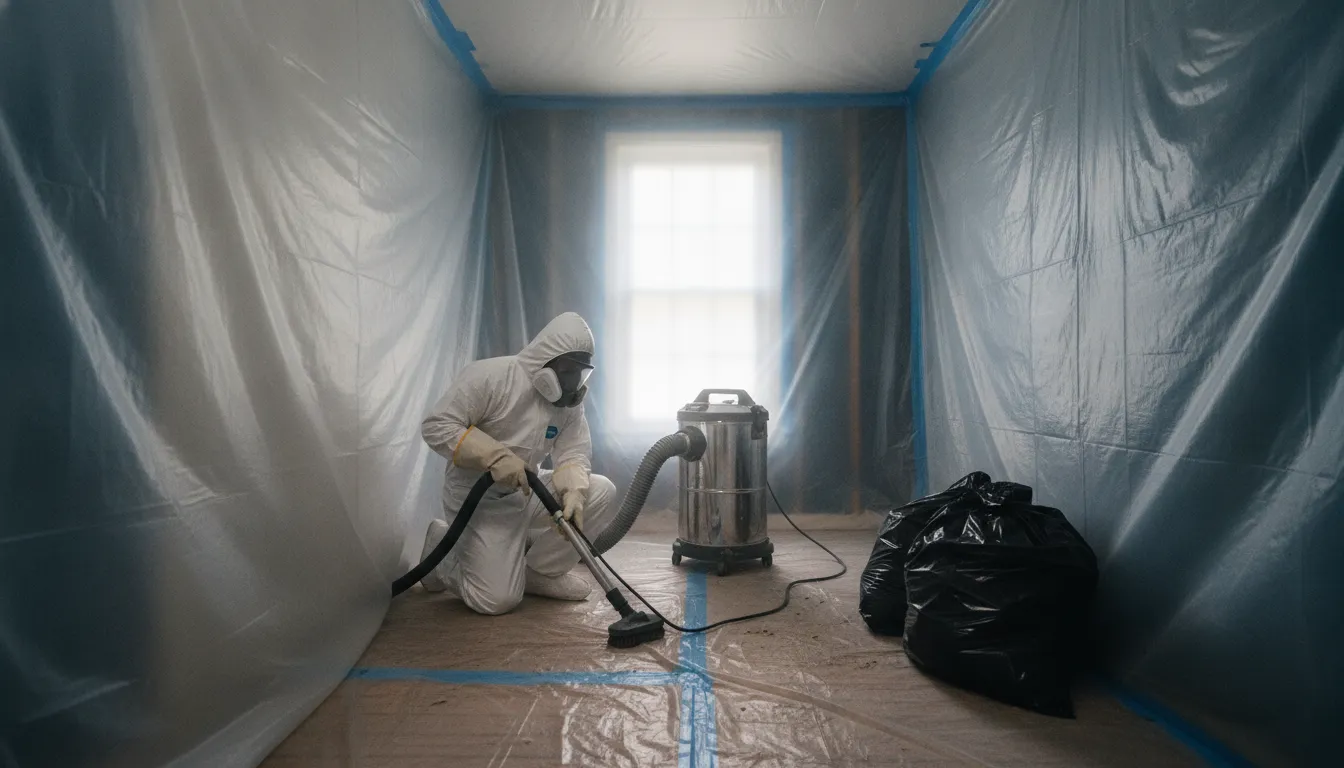
Containment and controlled work practices are part of the project timeline, not separate from removal.
How Long Do Common Asbestos Removal Projects Take?
Common residential asbestos projects may require about one to four active workdays when the scope is limited and accessible. Pipe insulation, extensive ceiling work, multiple rooms, or a whole-house scope may take longer. These ranges describe active project planning only, while assessment, laboratory processing, and final clearance can extend the overall schedule.
Project examples can make the ranges easier to understand, but they should not be treated as quotes or guarantees. The actual schedule depends on the scope confirmed during assessment, the condition of the material, access, containment, cleanup, and final clearance.
| Project example | Active work planning range | Why the schedule varies |
|---|---|---|
| Limited floor tile area | About 1 to 3 workdays | Room size, layers, adhesive, access, and clearance requirements |
| Popcorn ceiling in one room | About 1 to 4 workdays | Ceiling area, height, containment, fixtures, and surface condition |
| Pipe insulation in an accessible area | About 2 to 5 workdays | Access equipment, insulation condition, containment, and waste handling |
| One-room abatement | About 2 to 5 workdays | Setup, removal, cleaning, air monitoring, and clearance testing |
| Several rooms or whole-house scope | About 1 to 2 weeks or more | Multiple work zones, sequencing, occupant planning, and additional findings |
Popcorn ceiling removal may be relatively contained when the ceiling is accessible and the work area is clearly defined. A room with tall ceilings, built-in fixtures, extensive contents, or adjoining surfaces may require more preparation. Pipe insulation can take longer than a comparable floor area because the material may be fragile, elevated, wrapped around fittings, or located in a confined mechanical space.
A full-house project is not necessarily completed by treating every room at once. The work may be sequenced into zones so the crew can maintain containment and occupants can understand which parts of the property are restricted. This approach can make the overall calendar longer while creating a clearer and more controlled plan.
Remtech's Raleigh asbestos removal services page provides additional context about assessment and professional abatement. The Raleigh service-area page explains the local coverage angle. You can also review Remtech's company background when evaluating a contractor. The practical next step is to identify suspected materials, affected areas, access conditions, and any renovation deadline before asking for a final schedule.
What Happens During the Asbestos Removal Process?
The asbestos removal process usually moves from scope definition and material assessment to containment, controlled work, cleaning, waste handling, and final clearance. Remtech's process information emphasizes planning the work before removal begins. The space is not ready for normal use merely because visible material is gone; closeout and clearance steps still matter.
A clear process helps explain why a project may require more calendar time than the visible removal itself. The stages below are commonly coordinated as one controlled project.
- Initial review and scope definition. The property and suspected materials are reviewed so the work area, access conditions, and project objectives can be identified.
- Material assessment and planning. Sampling or another assessment may be needed to confirm the scope. The professional should explain the work boundary, controls, responsibilities, and expected sequence.
- Area preparation and containment. The work area is isolated, nearby surfaces are protected, and the equipment needed for controlled work is installed.
- Removal or approved management work. The material is handled using the method selected for its condition and location. Work practices should limit disturbance and keep the project controlled.
- Cleaning and waste handling. The area is cleaned carefully, debris is packaged and transported according to applicable requirements, and the work zone remains controlled until closeout steps are complete.
- Clearance and release. Final visual checks and any required air or clearance testing are completed. The area is released only after the applicable closeout criteria are satisfied.
The overview of Remtech's asbestos abatement process can help homeowners see how planning, containment, removal, cleanup, and closeout fit together. Asking for this sequence in writing makes it easier to compare a proposed schedule with the work that must actually be completed.
How Should Raleigh Homeowners Prepare for Abatement?
Raleigh homeowners can help avoid preventable delays by gathering prior inspection reports, renovation plans, and information about the property. Remtech can then discuss the work boundary, restricted areas, preparation responsibilities, and expected closeout steps. Do not disturb suspected asbestos-containing material while preparing the home or moving items near it.
Good preparation can reduce avoidable delays, although it cannot eliminate changes caused by concealed conditions or required testing. Start by gathering any prior inspection reports, renovation plans, floor plans, and information about the property's age and past remodeling.
Coordinate abatement with your renovation plan
If asbestos work is connected to a renovation, share the planned start date and the work that will follow. The abatement schedule may need to account for design decisions, material ordering, utility coordination, and the point at which another contractor can safely enter the area. Do not schedule demolition or disturb suspected material while waiting for professional direction.
Ask which rooms or zones will be restricted and whether occupants, pets, or valuable items need to be relocated. Keep belongings out of the work boundary when the professional recommends doing so. Clarify when the area may be used again, because completion of visible removal does not always mean the space is ready for re-entry.
Confirm responsibilities before work begins
Ask for a written explanation of who handles assessment, containment, air monitoring, waste packaging and transportation, final cleaning, clearance testing, and documentation. Depending on the scope and building type, applicable rules may require the owner or operator to notify the appropriate state agency before qualifying renovation or demolition. The EPA guidance for building owners and managers provides background, but the professional should confirm what applies to your specific project.
Ask how schedule changes will be communicated. Keep the conversation calm and specific before mobilization. This gives you a practical schedule and clarifies what must happen before the space returns to normal use.
For preparation before a renovation, homeowners can also review Remtech's guide to signs of asbestos in older homes. That article is useful for recognizing why professional evaluation should come before disturbing older building materials.
How Can a Professional Give You a More Reliable Schedule?
A reliable schedule starts with a defined scope, not a generic promise. Remtech Environmental can use the suspected material, affected locations, quantity, condition, access, containment needs, cleanup, and testing requirements to build a practical sequence. The plan should state what is confirmed, what remains uncertain, and what controls the re-entry date.
The strongest schedule is based on a defined scope rather than a generic promise. A professional should be able to explain what is known, what still needs to be confirmed, and which steps control the return-to-use date.
Scope and sampling come first
Before assigning a firm sequence, the professional should identify the suspected material, affected locations, quantity, condition, and access. If testing or sampling is appropriate, the results can help narrow the work plan. The schedule should say whether it covers one room, a group of rooms, a specific material, or a larger building scope.
The work plan connects safety steps to your calendar
A useful plan connects each major safety step with an expected time window. That includes preparation, containment, active work, cleaning, clearance, laboratory processing, and documentation. It should also identify dependencies. For example, clearance results may be needed before containment is removed or another phase of renovation begins.
Communication prevents avoidable delays
Ask how you will receive updates, what happens if additional material is found, and who approves a changed scope. You should also know what areas are included, which are outside the work boundary, and whether an alternative management approach is appropriate for a specific material. That decision depends on site conditions and should not be made remotely.
Remtech Environmental has served North Carolina property owners for over 20 years. Its asbestos service information explains its inspection and abatement offering for Raleigh-area properties. A property-specific review can turn the question of how long does asbestos removal take into a practical schedule without relying on pressure or unsupported certainty.
Frequently Asked Questions
How long does asbestos removal take?
A small residential project may require 1 to 3 active workdays. Larger projects can take 1 to 2 weeks or more. The complete schedule may be longer because it can include inspection, planning, containment, cleanup, clearance testing, and regulated waste handling. A reliable timeline requires a property-specific scope.
Can asbestos abatement be completed in one day?
Sometimes, a limited removal project can fit into one day of active work. That does not necessarily mean the property is ready for normal use that evening. Containment, detailed cleaning, final clearance testing, and review of results still need to be completed before the work area is released.
What can make an asbestos removal project take longer?
The amount and type of material, its condition, and how easily the crew can reach it all affect the schedule. Confined spaces, overhead pipe insulation, extensive containment, utility coordination, or protective measures for items that cannot be moved may add time. Additional material or structural issues discovered during the work can also require a revised scope.
Do homeowners have to leave during asbestos removal?
Occupants may need to leave while significant abatement work is underway, especially when the project involves substantial containment or renovation activity. The contractor should explain which areas are restricted, how access will be controlled, and when re-entry is appropriate. Do not disturb suspected asbestos-containing material while preparing the home.
Plan Your Asbestos Removal Timeline
A property-specific review is the best way to understand what your project may involve, how the work can be sequenced, and which steps may affect your schedule. Remtech Environmental can explain the process clearly and help you plan around your home or renovation needs. For related preparation guidance, read what to watch for before renovating an older home and review the Raleigh asbestos service information.