
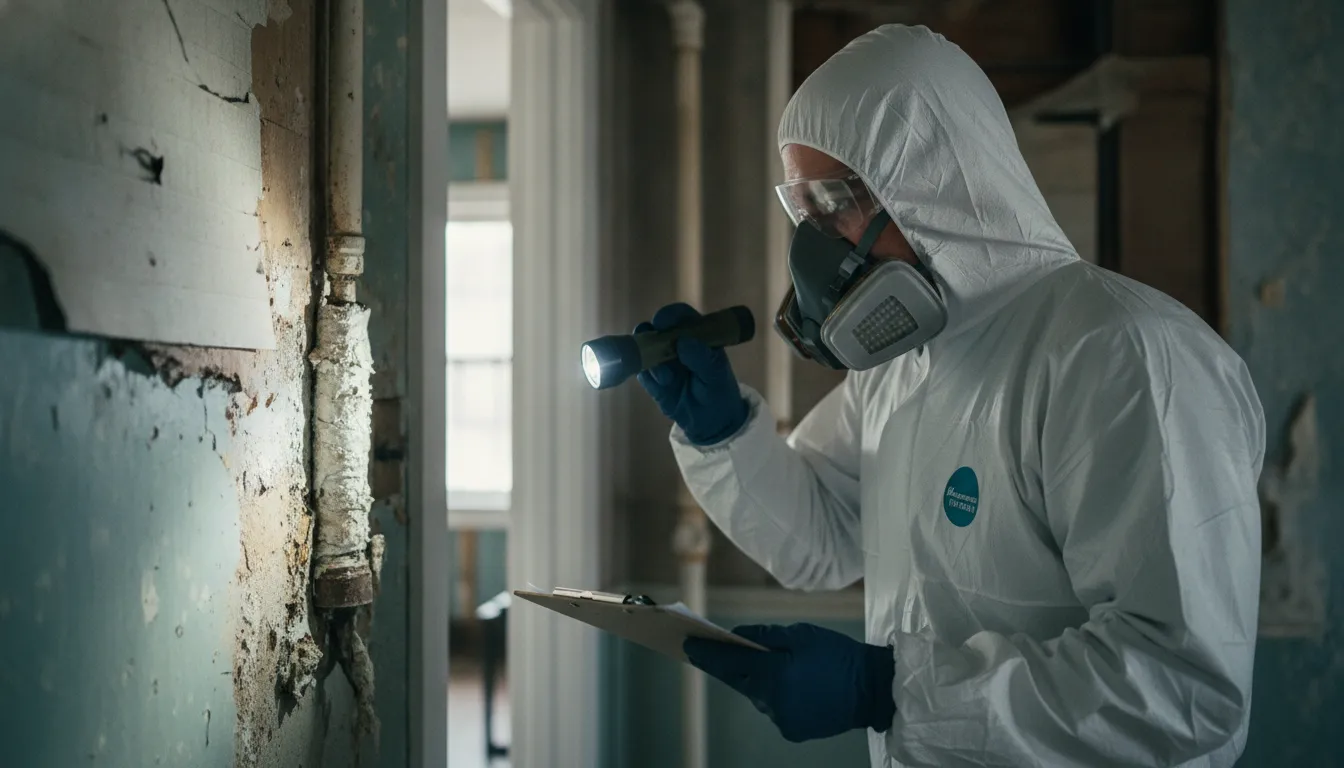
If you are asking where does asbestos come from, there are two parts to the answer. Asbestos is a naturally occurring mineral fiber found in rock and soil, but it became a familiar concern in homes and commercial buildings because manufacturers incorporated it into insulation, flooring, roofing, cement products, and other materials. Its heat resistance and strength made it useful. Those same products can require careful planning today, especially when an older property is being repaired or renovated.
Call (919) 554-2800 to discuss a suspect material
What does asbestos come from in the first place?
Asbestos is not something that a house creates. It is a group of naturally occurring mineral fibers formed in certain rock deposits. The fibers are thin, durable, and resistant to heat. They can be separated and incorporated into other products, which is why asbestos may appear in materials that look very different from one another.
The U.S. Environmental Protection Agency explains that asbestos occurs in rock and soil and was used in many manufactured goods because of its fiber strength and heat resistance. The mineral source and the finished product are therefore different things: the mineral began in a deposit, while the building material was produced later by mixing, binding, layering, or weaving asbestos into a product.
That distinction matters when you find an unfamiliar material. A homeowner usually encounters a manufactured product, not a visible piece of raw asbestos mineral. The product may contain asbestos as one ingredient, or it may be an older component installed behind a surface. Appearance alone cannot establish what it contains.
If a planned repair may disturb an older product, start with our asbestos removal information and use it to frame questions about inspection, testing, containment, and closeout.
Why was asbestos added to building materials?
Before modern product formulations changed, asbestos offered a combination of properties that was difficult to match. It could reinforce a material, tolerate heat, resist wear, and help a product stand up to friction or moisture. Depending on the product, asbestos fibers could be woven into fabric, pressed into a board, mixed with cement, or added to adhesives and coatings.
Those uses made asbestos common in several product families:
- Thermal insulation: fibers could be added to pipe wrap, boiler insulation, furnace components, and other heat-related materials.
- Fire-resistant products: paper, millboard, cement sheets, and fabrics could be used where heat resistance was important.
- Durable surfaces: floor tiles, sheet-flooring backing, roofing, siding, and cement products could benefit from reinforcement.
- Friction and sealing products: gaskets, brake and clutch components, and some industrial products used asbestos for wear or heat resistance.
- Finishing materials: some textured coatings, patching compounds, and adhesives used asbestos as part of an older formulation.
The presence of one of these product types does not prove that it contains asbestos. Products changed over time, and visually similar materials may have different compositions. Treat the list as a reason to ask better questions, not as a substitute for an evaluation or laboratory analysis.
Which building materials may contain asbestos?
The following table groups common examples by the job the material performed. It is meant to explain why asbestos appeared in so many parts of a building, not to identify a product from a photograph.
| Material family | Where it may appear | Why asbestos was used | Practical question |
|---|---|---|---|
| Pipe and boiler insulation | Hot-water or steam pipes, elbows, boilers, and mechanical rooms | Heat resistance and insulation support | Will planned work cut, scrape, remove, or open the insulation? |
| Flooring and adhesives | Vinyl tiles, sheet-flooring backing, mastics, and underlayment areas | Durability, reinforcement, and product performance | Will flooring removal disturb the surface or adhesive below it? |
| Roofing and siding | Shingles, siding, flashing-related components, and cement panels | Weather resistance and strength | Will replacement involve breaking, cutting, drilling, or sanding? |
| Ceiling and wall products | Textured coatings, ceiling tiles, patching compounds, and some boards | Texture, fire resistance, or reinforcement | Will a repair create dust or remove a finished layer? |
| Furnace and stove components | Door gaskets, insulation, and protective sheets near heat sources | Heat tolerance and sealing | Can the component be left in place while the appliance is serviced? |
| Industrial and mechanical products | Gaskets, packing, friction parts, and specialized equipment | Wear resistance and heat performance | Does the project involve disassembly or replacement of an older part? |
For an additional list of locations and product examples, see the EPA's learn-about-asbestos guidance. The agency notes that fibers may be released when asbestos-containing material is disturbed or damaged. That is why a planned repair can be more important than the material's location alone.
Where might a property owner encounter asbestos?
Older homes and buildings can contain materials from more than one product family. A flooring project may involve a tile, an adhesive, and an underlayment. A mechanical-room project may involve pipe covering, fittings, and a gasket. Exterior work may affect siding, roofing, or cement panels. Looking only at the most obvious surface can miss the layers below it.
Some examples include:
- Basements and mechanical rooms: pipe wrap, boiler insulation, furnace components, and gaskets may be present around heat-producing equipment.
- Kitchens, halls, and other finished rooms: older floor tiles, sheet-flooring backing, and adhesive may be hidden under later flooring.
- Attics and wall cavities: insulation products and protective boards may be installed out of everyday view.
- Ceilings and walls: textured finishes, ceiling tiles, patching compounds, or boards may be encountered during remodeling.
- Exterior surfaces: roofing and siding products may be affected by replacement, drilling, or storm-related repairs.
Our related room-by-room guide to where asbestos may be found in homes covers locations in more detail. This article takes a different angle: it explains the mineral's origin, the performance reasons it was put into products, and the decision points that matter before a project disturbs one.
Can you tell whether a material contains asbestos by looking at it?
Usually, no. Color, texture, age, and a manufacturer's appearance may raise a question, but none can confirm asbestos content. Some products that look alike were made with different ingredients, and asbestos may be hidden inside a backing, adhesive, wrap, or layered assembly. A label or renovation record can provide useful context, but records may be incomplete or refer only to the visible product.
Professional asbestos inspection planning and testing services can help determine what information is needed before work begins. Sampling should be handled by an appropriately qualified professional who can plan the work and arrange analysis. Do not scrape, break, sand, drill, or collect a sample simply to satisfy curiosity.
What happens when suspect material is disturbed?
The concern is not that every intact older product immediately creates a hazard. The concern is that cutting, sanding, scraping, breaking, drilling, or removing a suspect product can release fibers into the air. The EPA's asbestos laws and regulations resources provide federal context for certain asbestos activities. The appropriate response depends on the material, its condition, the planned task, and the people who may be nearby.
If a repair has already exposed an unfamiliar layer, take a calm, practical approach:
- Pause the work. Stop the activity that is disturbing the material and avoid making additional dust.
- Keep people away. Limit access to the work area, especially for children, pets, and anyone not involved in the evaluation.
- Do not sweep or use a household vacuum. Avoid actions that could spread dust beyond the immediate area.
- Record what happened. Note the room, material, work performed, visible condition, and approximate date without touching or disturbing more of it.
- Arrange professional guidance. Ask what inspection, sampling, containment, or cleanup steps are appropriate for the project.
This is general educational guidance, not a diagnosis of a particular property. If anyone has a health concern after a possible exposure, contact a healthcare professional and explain the circumstances. For project decisions, use current guidance from the relevant authorities and a qualified environmental professional.
How should you plan a renovation in an older building?
Start with the scope of work rather than guessing from the building's age. A small repair and a full demolition can affect different materials. A flooring replacement may disturb adhesive; a plumbing change may affect pipe insulation; an exterior project may cut or break siding. The earlier the suspect material is considered, the more options a property owner has for sequencing and controlling the work.
Before approving a proposal, ask:
- Which materials will be disturbed, removed, or left in place?
- What information supports the conclusion about each material?
- Who will perform the inspection, sampling, removal, containment, or clearance work?
- How will the work area, occupants, tools, and waste be managed?
- What documentation will be provided at closeout?
North Carolina projects can involve federal, state, local, building-owner, and project-specific requirements. Requirements may vary by the property type and the planned work, so avoid relying on a generic checklist as the final decision. A written scope should explain what is known, what still needs to be confirmed, and how the work will be sequenced.
Review our asbestos removal information before disturbing a suspect building material.
When should you seek asbestos removal information?
Seek project-specific guidance when a suspect material is damaged, when renovation will disturb it, when a building component must be opened for repair, or when you need to compare proposals for assessment and removal. Professional help is also useful when several layers or rooms are involved and it is unclear what should be tested first.
Remtech's asbestos abatement planning and related asbestos flooring, asbestos ceiling, and asbestos siding resources can help you frame questions around the affected material. If you are still at the information-gathering stage, our guide to whether owners can remove asbestos themselves explains why the safest next step is usually to pause and evaluate the project before choosing a method.
For background on older products and dates, read when asbestos was outlawed. A product's age can provide context, but it does not replace a material-specific evaluation. Likewise, the presence of an older tape or wrap is a reason to ask questions, not proof of its contents; our article on asbestos tape in older properties covers that distinction.
Get clear asbestos removal information for your project before work begins.
Frequently Asked Questions
Is asbestos naturally occurring?
Yes. Asbestos refers to naturally occurring mineral fibers found in rock and soil. The concern in buildings comes from manufactured products that incorporated those fibers for strength, heat resistance, insulation, or durability.
Why is asbestos found in so many different materials?
Manufacturers could use asbestos in several forms, including mixed into cement, pressed into boards or tiles, added to coatings and adhesives, or woven into fabric. Its combination of fiber strength and heat resistance made it useful across many product categories.
Does an older building automatically contain asbestos?
No. Age can increase the reason to investigate, but it cannot confirm what a product contains. Similar-looking materials may have different compositions, and asbestos may be hidden in a backing or adhesive. A qualified evaluation and laboratory analysis may be needed before disturbance.
What should I do if I uncover a suspect material during repairs?
Pause the work, keep people away from the area, and avoid actions that create or spread dust. Document what happened without disturbing more material, then request project-specific guidance from a qualified environmental professional.
Can I identify asbestos from a photograph?
A photograph may help a professional understand the context, but it cannot establish asbestos content. Product appearance is not a reliable substitute for an appropriate inspection, sample, and laboratory analysis when those steps are needed.
Talk with Remtech before your project disturbs an older material
Knowing where asbestos comes from helps explain why it may appear in flooring, insulation, roofing, siding, ceilings, and mechanical components. It does not tell you whether a specific product contains asbestos or which response is appropriate. If a repair or renovation may disturb a suspect material, get the scope evaluated before work continues.
Call (919) 554-2800 for a consultation about your suspect material, or request a free quote online.