
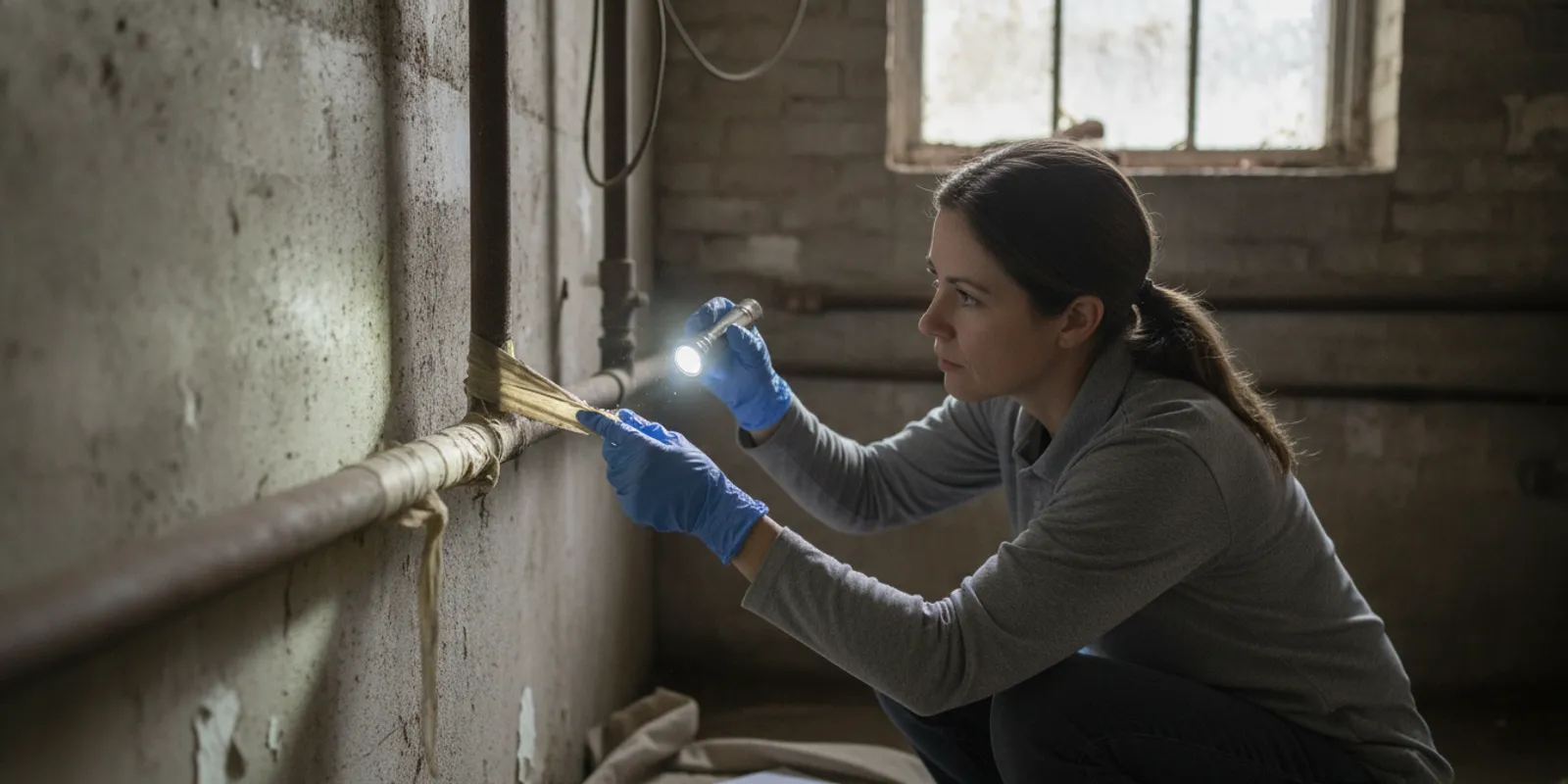
Asbestos tape can be a concern when you find aging tape around pipes, ducts, or other building components in an older property. Its appearance alone cannot confirm whether it contains asbestos, and disturbing a suspect material may create avoidable risk. A calm first step is to leave it undisturbed and find out whether the material needs assessment before any repair or renovation.
Where might asbestos tape be found?
Older buildings can contain a range of materials that were manufactured or installed at different times. Tape-like materials may be used around heating pipes, ducts, joints, or equipment. In some settings, tape served as part of insulation or as a seal around a connection. The exact location and appearance vary with the building, its systems, and any past repairs.
People often notice the material in a basement, utility room, mechanical space, attic, or behind an access panel. It may look like cloth, paper, a flat wrapping, or a layered strip around a pipe or fitting. Some tape may be painted over or partly concealed by other materials. These observations can help describe what you see, but they do not establish what the material contains.
Not every old-looking tape product contains asbestos, and asbestos-containing materials do not all look the same. Color, texture, age, and location are not reliable substitutes for qualified assessment or appropriate sampling. If you are evaluating an older home or commercial property, avoid treating a visual guess as a test result. For a broader overview, see what property owners should know about asbestos.
Why does the condition of the material matter?
Asbestos risk is associated with fibers becoming airborne and being inhaled. A material that is intact and left alone may present a different situation from one that is crumbling, torn, scraped, or disturbed during construction. The condition, accessibility, and planned work all matter when deciding what to do next.
Do not pull at loose edges, peel tape from a pipe, brush debris away, sand a surface, or cut through a wrapped section to see what is underneath. Avoid dry sweeping or using an ordinary household vacuum on debris that could be related to a suspect material. These actions can spread dust and make it harder to assess what happened. If the material appears damaged, keep people from contacting the immediate area and seek professional guidance about appropriate precautions.
There is no need to panic based on appearance alone. The useful distinction is between observing a material and disturbing it. Note its location and visible condition from a safe distance, consider whether planned work could affect it, and ask what assessment is warranted. If people use the space regularly, consider how to keep routine activity away from the material until the question is resolved. Do not move objects stored against it or shift nearby equipment merely to get a closer view.
Can you identify asbestos tape by sight?
No visual checklist can reliably confirm asbestos content. A photograph may help a qualified professional understand the location, but it does not establish composition. Similar-looking products can have different contents, and an older building may have materials installed or repaired at different times.
When identification matters for a repair, renovation, sale, or maintenance decision, ask a qualified professional whether sampling or another form of assessment is appropriate. Sampling itself can disturb material, so it should not be attempted casually. Discuss how the assessment will be performed, what areas it covers, and how the findings will be communicated before work begins. Learn more about asbestos testing and assessment.
The available guidance on materials to consider before renovating reinforces a practical principle: older building materials deserve attention before renovation disturbs them. Treat that as a reason to plan ahead, not as proof that a specific strip of tape contains asbestos.
When you contact an assessor, make the question specific. Explain whether the tape is on a visible pipe, inside a wall or ceiling, or near equipment that must be serviced. Tell them whether a contractor has already opened the area and whether the material appears intact or damaged. These details help the professional consider the right scope rather than assuming the question is limited to a single visible strip.
What should you do if you find suspect tape?
- Do not disturb it. Do not remove, scrape, cut, drill, or handle the tape or nearby debris. Avoid testing a piece yourself.
- Keep the area from being disturbed. If practical, prevent routine access and tell household members, maintenance workers, or contractors not to touch the material until it has been evaluated.
- Record what you can observe safely. Note the room or system, approximate location, visible condition, and whether work is planned nearby. A photo taken from a safe distance may help you explain the situation.
- Pause work that could affect it. Tell the contractor or property manager about the concern before cutting, opening, or removing nearby building materials. Ask whether the work plan needs to wait for an assessment.
- Seek qualified guidance. Ask what assessment is appropriate and who will perform it. If removal is recommended, request a clear description of the planned scope and safeguards.
If the tape has already been damaged, do not try to clean the area yourself. Avoid tracking debris through the property, and ask a qualified professional what next steps are appropriate for the specific condition. Explain what work took place, when it happened, and what material was disturbed, without guessing at its contents. If a contractor caused the disturbance, record the sequence of work and communicate the concern promptly so that others do not continue in the same area.
For project planning, Remtech also explains the basics of asbestos abatement.
How do assessment and removal differ?
Assessment is about determining whether a material contains asbestos and understanding its condition or location in relation to planned work. Removal is a separate project decision. The right response depends on the findings, the condition of the material, and what the owner intends to do with the building. Not every suspect material automatically needs removal.
Ask the professional to explain the basis for the recommendation in plain language. If the advice is to leave a material in place, clarify how it should be protected from future disturbance and whether the condition should be monitored. If removal or other corrective work is proposed, ask what material and area the proposal covers. See how asbestos abatement works for additional context.
| Situation | Practical next step | Questions to ask |
|---|---|---|
| Tape appears intact and no nearby work is planned | Leave it undisturbed and ask whether assessment is needed | What information would help determine whether assessment is appropriate? |
| Renovation or repair may affect the tape | Tell the contractor and arrange appropriate assessment before disturbance | Which materials and work areas are included in the assessment? |
| Tape is torn, crumbling, or has nearby debris | Keep people from disturbing the area and seek qualified guidance | What precautions should apply while the condition is evaluated? |
| Assessment indicates removal should be considered | Review the written scope and work plan before authorizing a project | How are containment, handling, disposal, and closeout addressed? |
A useful way to use this comparison is to separate urgency from certainty. A damaged-looking material deserves prompt attention to prevent further disturbance, but appearance still does not prove what it contains. Conversely, intact tape may not need immediate work, yet it could become relevant when a planned repair reaches that area. The next step follows from both the condition and the work being considered.
What questions help clarify the recommendation?
Before approving work, ask the professional to walk through the finding and explain how it relates to your plans. If the recommendation is based on an assessment, ask which locations were examined and whether any areas were inaccessible. Find out whether the proposed work addresses only the specific tape or includes adjacent materials as well. Clear boundaries make it easier to understand both the proposal and any limits in its conclusions.
It can also help to ask what would change the recommendation. Would a planned repair require a different approach than leaving the material in place? Is there a reason to address it now, or can the decision be coordinated with a later project? Ask whether the conclusion applies only to the material sampled or to a broader area, and what additional review would be needed if the renovation scope changes. These questions help you understand the options without substituting for professional advice.
Keep copies of written assessment results, proposals, and completion documents with property records. If ownership or management changes, those records can help future decision-makers understand what was reviewed and what work was completed. Be precise about what a record says: an assessment of one room or pipe run does not necessarily describe every similar-looking material elsewhere.
For a larger property, a simple location list can make those records more useful. Identify each reviewed room or system, note the date and purpose of the assessment, and distinguish confirmed findings from untested suspect materials. If a project covers only one portion of a building, mark the boundary in the record and in communications with maintenance staff. This avoids treating a limited review as a building-wide conclusion.
What should a removal proposal explain?
A useful proposal should identify the material and work area it addresses. It should make clear what is included, what is excluded, and whether the recommendation is based on assessment findings or another project-specific consideration. If several pipe runs or rooms are involved, ask for enough detail to understand which sections are covered.
Discuss how the work area will be managed and what the owner or occupants need to do before and during the project. Ask how the contractor will address containment and work practices appropriate to the scope, and how removed material will be handled and disposed of. The details should be explained for the actual site rather than assumed to be identical for every building.
Also ask what project records or closeout information will be provided. Confirm how any areas outside the agreed scope will be handled if additional suspect material is observed. A clear conversation at the outset helps owners compare proposals on the work being performed, not just on a bottom-line figure.
For example, two proposals may both refer to tape on a heating system but describe different boundaries. One may address a short, accessible run, while another includes several fittings and adjacent areas. Ask each provider to identify the exact locations, explain assumptions about access, and state how a change in scope would be discussed before extra work proceeds. Comparing matching scopes makes the differences easier to evaluate.
How can you compare contractors fairly?
Compare the scope, work practices, qualifications, insurance, and communication—not just the estimate total. A lower figure may describe less work or leave important questions unanswered. A higher figure is not meaningful without a clear explanation of the work and its assumptions.
- Ask whether the proposal names the material and specific locations involved.
- Check that the plan describes how the work area will be controlled and how material will be handled.
- Ask what training, credentials, and relevant experience the people performing and overseeing the work have.
- Confirm the contractor’s insurance coverage and ask for documentation as appropriate.
- Request an explanation of disposal arrangements and the records provided at project completion.
- Ask what is not included, what could change the scope, and how added work would be discussed and approved.
Remtech Environmental serves residential and commercial properties across North Carolina, with an education-first approach focused on explaining the work and its purpose. Its team includes EPA-accredited specialists and IICRC-certified technicians. Review the company’s asbestos services in Raleigh as you prepare questions for a project discussion.
During a proposal discussion, note the answers in comparable categories rather than relying on memory. For instance, record the location covered, preparation expected from the owner, work-area controls described, disposal approach, closeout documents, and stated exclusions. If a provider has not answered one of these points, ask for clarification in writing. A direct explanation is useful even when the proposal is revised after a site visit.
What if you are planning a renovation?
Bring up suspect tape before a contractor opens a wall, replaces a pipe, or removes insulation near it. Share the location and any information you have about previous repairs. If you have a property inspection, renovation plan, or earlier assessment, ask whether those documents help define the next step. Do not assume that an earlier review covered every material or area in the current work zone.
For owners of rental or commercial properties, communicate the concern to the people coordinating maintenance and contractors. Make sure the work plan accounts for the location before routine repairs proceed. If you manage a building with multiple systems or phases of renovation, keep notes about which areas have been assessed and which remain outside the reviewed scope.
North Carolina projects can involve different building ages, renovation histories, and site conditions. That is why an explanation tied to the particular material and task is more useful than a one-size-fits-all answer. A professional can help you understand the available options without relying on alarm or assumptions.
For geographic context, property owners can review Remtech’s North Carolina service areas.
Frequently Asked Questions
Does all old pipe tape contain asbestos?
No. Age and appearance alone cannot confirm whether a particular tape contains asbestos. If the answer matters before repair or renovation, ask a qualified professional whether assessment is appropriate.
Should I remove a small piece to have it tested?
No. Removing a piece can disturb the material and is not a safe way to establish its contents. Ask a qualified professional about appropriate assessment and sampling for the specific situation.
What if the tape is intact?
Leave it undisturbed. Whether further assessment is useful depends on the material, its location, and whether planned work could affect it. Ask for advice tailored to the property rather than assuming that intact appearance proves what it contains.
What if a contractor needs to work near it?
Tell the contractor before work starts and explain where the tape is located. Ask whether the work could disturb it and whether assessment should happen before the area is opened or repaired.
Does finding suspect tape mean the whole property needs removal work?
Not necessarily. The appropriate response depends on assessment, condition, location, and planned work. A defined scope helps distinguish the material that needs attention from other parts of the property.
Plan the next step around the material and the work
Whether the tape is intact, damaged, or in the path of a planned project, start by avoiding disturbance and getting clear, site-specific guidance. A careful assessment and a well-explained scope can help you decide what to do next with confidence.