
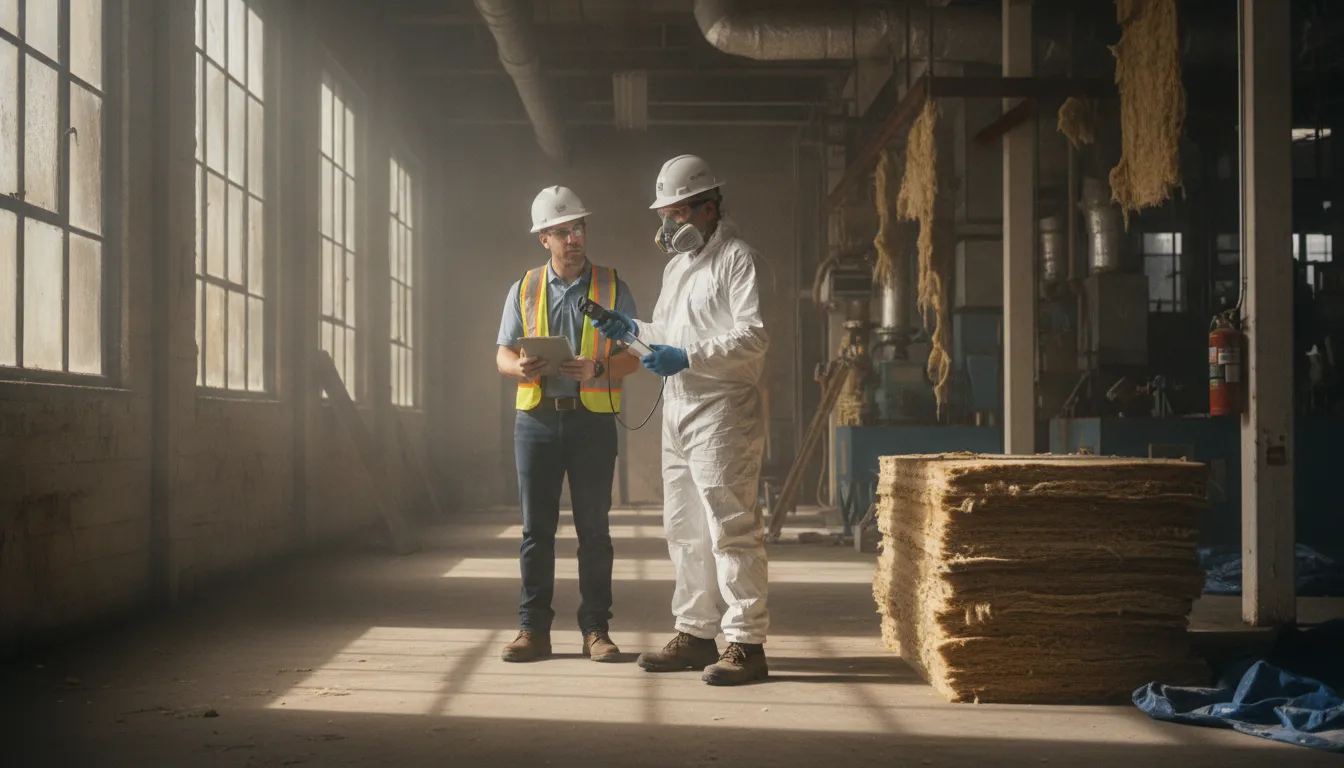
When an older commercial building contains materials that may be asbestos, property owners and facility managers need a clear process. PACM asbestos means presumed asbestos-containing material. The term helps guide planning when records are incomplete or work could disturb insulation or surfacing materials.
PACM is not a visual confirmation that a material contains asbestos. It is a regulatory presumption that should be addressed before renovation, demolition, maintenance, or contractor activity affects the area. The responsible next step is to document what is known, communicate the concern, and arrange qualified assessment when the project requires it.
What Does PACM Asbestos Mean in an Older Commercial Building?
PACM stands for presumed asbestos-containing material. In practical terms, it is a regulatory designation for certain materials that should be managed as though they contain asbestos unless the presumption is properly rebutted. PACM is not a visual diagnosis, and the label does not mean that every older building or every suspect material has been confirmed to contain asbestos.
Which materials and buildings fall under the PACM definition?
Under OSHA's general industry asbestos standard, PACM means thermal system insulation and surfacing material found in buildings constructed no later than 1980. Thermal system insulation can include insulation associated with pipes, boilers, ducts, or other building systems. Surfacing material can include material applied to structural surfaces, ceilings, or other areas. The building's construction date and the material's use both matter, so an age-based assumption alone does not classify every material in the facility as PACM.
OSHA also cautions that buildings constructed in 1980 may contain PACM. That makes the exact construction history, renovation records, prior surveys, and material locations important when an owner or facility manager is planning maintenance or renovation. Flooring and other materials may raise separate asbestos questions. But they should not be automatically folded into the PACM definition without evaluating the applicable standard and the building-specific facts.
PACM is presumed, while ACM is confirmed by an applicable determination
OSHA defines asbestos-containing material, or ACM, as material containing more than 1 percent asbestos. PACM is different because it begins with a presumption based on the material type and building context. The designation may be rebutted through the inspection or other determination process allowed by the applicable OSHA requirements. In other words, a PACM label signals that the material must be treated seriously for planning and communication. It does not replace a qualified assessment when a project decision depends on knowing what is actually present.
For an owner, the safest distinction is straightforward: a suspect material is a concern that needs evaluation. PACM is a regulated presumption; ACM is material determined to contain asbestos under the applicable definition. Until the status is clarified, avoid disturbing the material and do not ask ordinary maintenance staff or contractors to remove it as routine debris.
OSHA's asbestos standard provides the definitions and explains how occupational asbestos requirements apply. For construction, renovation, removal, or repair work, the construction asbestos standard may apply instead. A building-specific review helps connect the definition to the right work plan, notifications, and qualified professionals without assuming that one rule or response fits every commercial property.
Why Does PACM Matter in Older Commercial Buildings?
PACM matters because a building's maintenance and construction decisions can affect materials that have not yet been confirmed as asbestos-containing. For commercial owners and managers, the practical issue is not to assume that every older material contains asbestos. It is to make sure the uncertainty is documented, communicated, and addressed before work could disturb it.
Maintenance and renovation can change the decision
Routine work may involve drilling, cutting, removing ceilings, opening walls, accessing mechanical rooms, or repairing piping and equipment. Renovation and demolition can disturb a much larger area. OSHA's construction standard covers work involving structures or portions of structures that contain asbestos, including demolition, removal, encapsulation, repair, maintenance, and renovation. It also classifies removal of thermal system insulation and surfacing ACM or PACM as Class I asbestos work. The specific standard and controls depend on the work and the material involved. So a property owner should not use a general assumption as a substitute for project-specific evaluation.
This is especially relevant where records are incomplete. Under OSHA's general industry standard, the building or facility owner is the legal entity, including a lessee, that controls management and record-keeping functions for a covered facility. That definition does not mean every owner has identical duties for every building or project. It does mean the party controlling those functions has an important role in keeping reliable information available to the people who may work in the facility.
Communication protects the project and the people doing the work
Information about suspected or confirmed materials should reach the people who need it before they begin affected work. OSHA identifies owner responsibilities that can include determining the presence, location, and quantity of ACM or PACM, maintaining records. Informing other employers and relevant housekeeping employees, and posting signs at accessible mechanical rooms or areas containing these materials. Apply those requirements based on the facility, work activity, and applicable standard, rather than treating this paragraph as a universal legal checklist.
Clear communication also helps coordinate tenants, general contractors, maintenance teams, architects, and specialty contractors. A contractor who knows where PACM is documented can plan the scope, ask better questions, and avoid proceeding on an incomplete assumption. For North Carolina renovation or demolition projects, state and federal requirements may include inspection and notification steps. The North Carolina Department of Health and Human Services advises owners to inspect and notify before demolition or renovation, with applicability determined by the project details.
For a broader discussion of planning commercial projects, see this commercial asbestos abatement guidance. PACM management is not automatically the same as abatement. The goal is a documented, coordinated decision about what is present, what work is planned, and which qualified professionals or controls are needed.
How Should North Carolina Property Owners Manage PACM?
A practical management checklist
Managing presumed asbestos-containing material (PACM) is a documentation and coordination process, not a one-size-fits-all instruction to remove every suspect material. The appropriate steps depend on the building, the material, the planned work, and the requirements that apply to that project. Use this checklist to organize decisions before maintenance, renovation, or demolition begins.
- Gather existing records. Look for prior asbestos surveys, inspection reports, renovation drawings, material specifications, abatement records, waste documentation, and maintenance notes. Include records held by the owner, property manager, prior contractors, or building engineer. OSHA identifies building and facility owners as responsible for management and record-keeping functions in covered facilities, which makes a reliable central file important. Do not assume that an old report covers areas that were added, remodeled, or previously inaccessible.
- Arrange a qualified inspection or testing review. Before disturbing suspect materials, determine whether the existing information is sufficient for the proposed work. A North Carolina inspection is used to determine the presence, type, location, and amount of asbestos that may be present. When sampling is appropriate, use professional asbestos testing rather than collecting or disturbing samples yourself. In some operations and maintenance situations, an owner may manage suspect material as asbestos without bulk sampling, but that approach requires consistent treatment and disclosure. It does not eliminate the need for project-specific assessment when renovation or demolition could disturb the material.
- Document locations and condition. Create a building-specific inventory or update the existing one. Record the room or area, material description, approximate quantity, accessibility, condition, and any restrictions on disturbance. Mark relevant mechanical rooms or controlled areas in a way that communicates the information to people who may enter. Keep the inventory current when materials are repaired, enclosed, removed, or newly identified.
- Coordinate contractors before work starts. Give contractors and affected employees the available PACM or ACM information before they plan work. Explain which areas and materials are outside the work scope and which require additional review. Construction, alteration, repair, maintenance, renovation, removal, and encapsulation can involve asbestos-specific requirements, so the contractor's method statement should match the confirmed or presumed material and the actual scope. Do not allow a general maintenance crew to improvise removal or cleanup.
- Confirm North Carolina notifications, licenses, and permits where applicable. The N.C. Department of Health and Human Services Health Hazards Control Unit administers state asbestos rules. North Carolina guidance emphasizes inspecting and notifying before applicable demolition or renovation. Requirements can vary with the project, building, material, location, and scope, so verify current notification, permitting, licensing, training, and disposal requirements with the appropriate state or local authority. Do not rely on a deadline or threshold from an outdated checklist.
- Preserve the complete project record. Retain inspection findings, laboratory reports when used, work plans, contractor credentials, notifications, permits, daily records, waste manifests, and closeout or clearance documentation when applicable. Update the building inventory after the work and make the records available to future owners, managers, contractors, and workers who need them. A clear record reduces repeated uncertainty and helps the next project begin with better information.
This process supports informed decisions while keeping the distinction between presumed material and confirmed asbestos clear. When the scope is uncertain, pause planning for the affected area and obtain project-specific guidance before work proceeds.
What Should You Do If PACM Is Damaged or Disturbed?
If presumed asbestos-containing material (PACM) is cracked, scraped, cut, pulled down, or otherwise disturbed, stop the affected work and shift from production to documentation and assessment. Do not assume the material is harmless because the damage looks small, and do not assume it is confirmed asbestos based only on its appearance. The right response depends on the material, the extent of disturbance, the building, and the work being performed.
Pause work and protect the area
Ask workers to stop activities that could disturb the material further. Keep occupants, visitors, and unassigned workers away from the immediate area. Avoid sweeping, dry brushing, drilling, cutting, sanding, scraping, vacuuming with ordinary equipment, or handling fallen pieces. Do not move debris to another room or place it in a regular trash container. These actions can spread dust and make the condition harder to evaluate.
Follow your facility's emergency and communication procedures, and notify the building or facility manager. OSHA defines a building or facility owner to include a lessee who controls management and record-keeping functions for a covered facility. That makes clear communication and accurate records important parts of a responsible response, although the exact duties depend on the facility and applicable work standard.
Document what happened without disturbing the material
Record the date and time, room or area, work underway, people present, visible condition, and how the disturbance occurred. If it can be done safely from outside the affected area, take a general photograph without touching or repositioning material. Note whether work involved renovation, maintenance, demolition, or an accidental impact. Preserve work orders, contractor information, and any existing asbestos survey or management-plan records.
Do not collect a sample yourself unless the person performing the assessment is qualified and the sampling is part of an appropriate professional process. A visual inspection alone cannot reliably determine asbestos content. North Carolina explains that an asbestos inspection is used to determine the presence, type, location, and amount of asbestos that may be present. You can review professional asbestos testing to understand why building-specific assessment matters.
Arrange qualified assessment before work resumes
Contact a qualified asbestos professional to evaluate the condition and recommend next steps. Depending on the findings, the response may involve controlled inspection, sampling, repair, abatement, clearance documentation, or continued management in place. Do not treat this section as a DIY cleanup or removal guide. Professional asbestos work can involve regulated work areas, exposure controls, project planning, and waste handling. EPA guidance also explains that professionals working with asbestos-containing building materials in public or commercial buildings may need accreditation under a training program at least as stringent as the EPA Model Accreditation Plan. Review the EPA guidance for owners and managers, then confirm North Carolina requirements for the specific project before restarting work.
When Should You Arrange Testing or Professional Asbestos Help?
Arrange qualified asbestos help before a project reaches the point where workers must cut, drill, remove, demolish, or otherwise disturb suspect building materials. This is especially important when a commercial building has limited records, when renovation plans involve walls or ceilings. Or when maintenance work could affect thermal system insulation, surfacing materials, flooring, or other materials that may be presumed asbestos-containing.
Common decision points for owners and managers
- Before renovation or demolition: North Carolina guidance follows the practical principle to inspect and notify before demolishing or renovating. An inspection helps determine the presence, type, location, and amount of asbestos that may be present. Federal requirements may also apply to certain renovation or demolition projects, so confirm the scope and current requirements with the appropriate authorities and qualified professionals.
- When records are missing or incomplete: Do not assume that a missing asbestos survey means the building is clear. Arrange an assessment when construction history, prior surveys, material locations, or maintenance records cannot be verified. A professional can help distinguish documented information from assumptions and create a usable record for future contractors.
- When suspect material is damaged: Peeling, crumbling, water-stained, or accidentally disturbed material warrants a careful response. Pause work affecting the area, limit unnecessary access, and avoid sweeping, drilling, scraping, or attempting cleanup. A qualified professional can evaluate the condition and recommend an appropriate next step without treating every visual concern as confirmed asbestos.
- When contractors need reliable information: Invite qualified asbestos professionals into the planning process before a contractor prices or schedules intrusive work. Owners and facility managers need a clear way to communicate the location and status of known or presumed materials. OSHA places emphasis on identifying and communicating information about ACM and PACM to appropriate parties where its standards apply.
- When the building plan is incomplete: A partial renovation drawing may not show concealed materials, service chases, mechanical rooms, or areas affected by later phases. If the work limits are uncertain, a building-specific assessment can help define what needs review before the project expands.
Testing is one possible part of that process, not an automatic substitute for planning. OSHA recognizes that PACM may be managed as ACM for operations, maintenance, and disclosure, while the applicable presumption may also be rebutted through specified inspection and testing. The right path depends on the building, the material, the planned work, and the information needed by the people who will perform or manage it.
For background on what an assessment can establish, see this guide to professional asbestos testing. If the project may require controlled removal, containment, disposal, or clearance documentation, review how asbestos abatement works before work begins. Owners in the Triangle can also review professional asbestos services for project-specific support.
What Should a PACM Asbestos Plan Include?
A useful plan separates the building's ongoing management needs from the controls required for one defined renovation, maintenance, or demolition project. Those documents may overlap, but they answer different questions: What does the owner know about materials in the building. And how will this specific scope of work be performed? The right level of detail depends on the building, its records, the material's condition, the planned work, and applicable federal, state, and local requirements.
Management plan versus project-specific work plan
| Plan element | Ongoing PACM management plan | Project-specific asbestos work plan |
|---|---|---|
| Records and scope | Maintains surveys, inspection reports, and laboratory results when available. It also retains prior abatement records, drawings, and updates showing what is known and what remains presumed. | Defines the work area, activities, schedule, and materials affected. It names responsible parties and the documents incorporated into the job package. |
| Material locations and condition | Identifies the locations, types, quantities, and condition of ACM or PACM. OSHA training materials state that owners must determine presence, location, and quantity and keep records: OSHA asbestos guidance. | Uses a project-appropriate assessment to identify materials that could be disturbed by the planned work, including access limitations and areas requiring additional evaluation. |
| Responsible contacts | Names the owner or manager responsible for records, updates, access decisions, and communication with occupants, employees, and contractors. | Names the project manager, competent or designated safety personnel, qualified asbestos professionals, building representative, and emergency contacts. |
| Contractor communication | Provides relevant information before maintenance, housekeeping, tenant work, or other activities that could affect identified or presumed materials. | Documents the pre-work briefing, material information, worker qualifications, boundaries, access rules, coordination requirements, and stop-work process. |
| Controls and work practices | Sets expectations for protecting materials in place, reporting damage, updating records, and preventing unplanned disturbance during routine operations. | Specifies regulated areas, containment or isolation, exposure controls, required protective practices, waste handling, and work sequencing. Construction activities involving asbestos are addressed under OSHA 29 CFR 1926.1101, rather than the general-industry standard. |
| Notifications and permits | Tracks which agencies, permits, licenses, and recurring requirements may apply to the facility or its planned work. | Confirms project-specific applicability before work begins. North Carolina advises owners to inspect and notify before demolition or renovation and identifies the Health Hazards Control Unit as the state asbestos authority: NC asbestos project requirements. |
| Disposal and clearance documentation | Retains prior waste, shipment, disposal, inspection, and closeout records as part of the property's environmental file. | Collects waste profiles and shipment records, disposal receipts, daily or work records, inspection results, and any required clearance or project closeout documentation. North Carolina states that asbestos-containing materials must go to an approved landfill. |
A management plan is not a substitute for project planning when renovation or demolition could disturb PACM. Likewise, a project work plan should not become the building's only record. Keeping both documents current helps property owners communicate known conditions and identify gaps before work starts. It also supports the selection of qualified professionals for assessment and controls when the building or project requires them.
Frequently Asked Questions
What does PACM mean in an older commercial building?
PACM means presumed asbestos containing material. Under OSHA's definition, it generally refers to thermal system insulation and surfacing material in a building constructed no later than 1980. The designation is a prudent starting point for planning, not a visual confirmation that every suspect material contains asbestos. See the OSHA asbestos standard.
Is PACM the same as confirmed asbestos?
No. PACM is a regulatory presumption. A qualified inspection and appropriate testing may determine whether the material is asbestos-containing. An owner may also manage suspect material as though it were asbestos for operations, maintenance, and disclosure. The right approach depends on the building, the planned work, and the applicable requirements.
When should a North Carolina property owner arrange an asbestos inspection?
Arrange an inspection before renovation, demolition, or maintenance that could disturb suspect materials, especially when records are incomplete or the material's location and condition are unclear. North Carolina guidance says inspection and notification should occur before applicable demolition or renovation. An inspection helps determine asbestos presence, type, location, and amount. Review current requirements with the North Carolina Health Hazards Control Unit.
What should we do if PACM is accidentally disturbed?
Pause the affected work, keep people away from the area, and avoid sweeping, drilling, cutting, or attempting cleanup. Document what happened and contact a qualified asbestos professional for an assessment and work plan. Construction work involving asbestos is covered by OSHA's construction standard, 29 CFR 1926.1101, rather than the general-industry standard.
Who can assess PACM and plan the next step?
Use a qualified asbestos inspector or other appropriately accredited professional with experience in commercial buildings. The assessment should connect the material's condition and location to the planned work, documentation, worker communication, and any North Carolina notifications or project controls that apply.
Get a Free Consultation for Your Commercial Building
PACM questions are best handled with a building-specific review, especially before renovation, demolition, or work that could disturb suspect materials. Remtech Environmental can help North Carolina property owners and managers understand the next step. The team can help organize an evaluation and plan appropriate professional services without guesswork.