
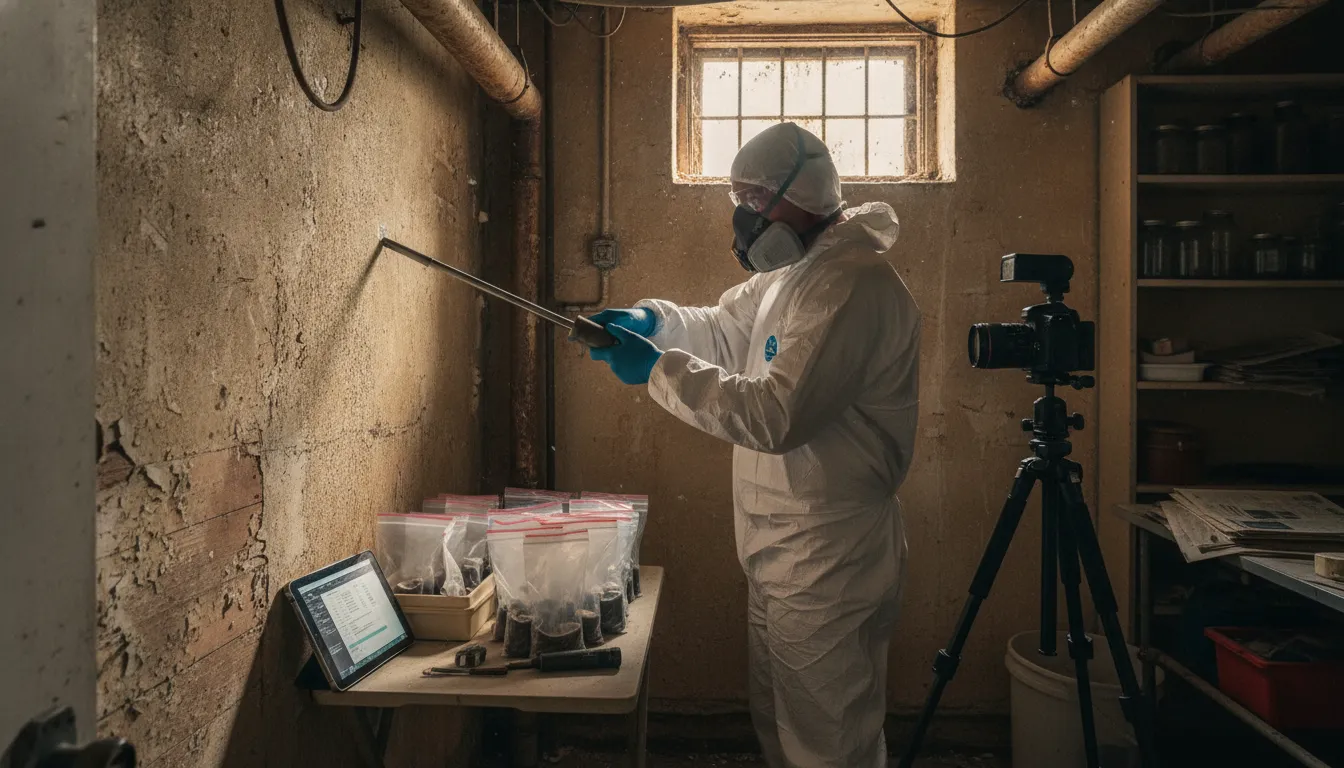
You cannot reliably identify asbestos just by looking at a building material. That is why asbestos testing is an important planning step before renovating, demolishing, or disturbing materials that may contain asbestos. A properly collected sample and laboratory analysis can confirm whether asbestos is present, helping property owners make informed decisions without guesswork or unnecessary alarm.
Testing is not a reason to panic, and a positive result does not automatically mean every asbestos-containing material must be removed immediately. The right response depends on the material's condition, location, and whether planned work could disturb it. This guide explains when to test, how professional sampling works, and what to do with the results.
What asbestos testing can tell you
Asbestos testing determines whether a sampled building material contains asbestos fibers. A qualified professional first identifies materials that may warrant sampling, then sends representative samples to a laboratory for analysis. The report provides evidence that can guide renovation planning, property management, and any necessary asbestos abatement.
Testing confirms what appearance cannot
Many asbestos-containing and asbestos-free materials look alike. Age, texture, color, and product type may help an inspector decide what should be sampled, but those clues cannot confirm asbestos content. Laboratory analysis is the reliable way to determine whether the specific sampled material contains asbestos.
Testing answers a focused question
A result applies to the material and locations represented by the samples. It does not automatically describe every similar-looking material throughout a property. Buildings may have several installation periods, product batches, or repaired areas. A thoughtful sampling plan matters because it connects each laboratory result to the area where work will occur.
Testing also does not decide the response on its own. A professional should consider whether the material is intact or damaged, whether it is likely to be disturbed, and what regulations apply to the planned project. If removal becomes appropriate, learn more about Remtech's asbestos removal services.
When should you test a property for asbestos?
The best time to test is before a decision or project could disturb a suspect material. Testing early gives contractors and property owners time to understand the result, define the work area, and choose an appropriate plan. It also helps prevent a routine project from beginning with an unanswered environmental question.
Before renovation or demolition
Plan testing before cutting, sanding, drilling, scraping, pulling up, or demolishing materials that could contain asbestos. Renovations often expose layers hidden beneath newer finishes, including older flooring, adhesives, insulation, and wall materials. An inspection that matches the renovation scope can identify which materials need analysis before work begins.
Before disturbing damaged suspect material
Damage does not prove that a material contains asbestos. However, crumbling, torn, water-stained, or deteriorated suspect material should not be handled casually. Avoid sweeping, sanding, or breaking it apart to investigate. Restrict activity near the area and ask a qualified professional to evaluate whether testing is appropriate.
During property planning or a transaction
Owners, property managers, and buyers may seek testing when planning major improvements or evaluating an older commercial or residential property. The goal should be clear before sampling begins. A defined scope helps produce useful documentation instead of a collection of disconnected results.
If intact suspect material will remain undisturbed, immediate sampling may not always be the best first step. An experienced professional can explain whether monitoring, management in place, or testing fits the situation. Education-first guidance keeps the response proportionate to the actual project.
Which building materials may need testing?
Asbestos was used in many building products, so no short checklist can identify every possible material. The presence of one common product also does not prove that asbestos exists elsewhere. A qualified inspector evaluates the property, the material, and the planned work together.
Materials commonly considered during an inspection
- Some resilient floor tiles, sheet flooring, and flooring adhesives
- Certain pipe, boiler, duct, and mechanical-system insulation
- Some sprayed or textured ceiling and wall finishes
- Certain cement panels, siding, roofing, and related products
- Some joint compounds, plasters, mastics, and sealants
- Certain fireproofing and heat-resistant materials
This list is not a visual identification guide. Products with these descriptions can be asbestos-free, while other materials may contain asbestos. Do not break off a piece simply because a material appears on a list. Sampling itself disturbs the material and should be planned carefully.
Why the project scope matters
A kitchen update, whole-building demolition, flooring replacement, and mechanical repair affect different materials. The inspection and sampling plan should match what contractors will disturb. A narrow scope may leave unanswered questions if the project later expands, while an overly broad scope may create testing that does not help the immediate decision.
Share drawings, contractor plans, and known renovation history when available. Point out repaired or differently colored areas because they may represent separate materials. Clear information helps the inspector select representative locations and document them accurately.
How professional asbestos testing works
Professional testing is more than sending a small piece of material to a laboratory. The process begins with defining the question and ends with interpreting the report in the context of the property. Although the details vary by project, a well-managed process generally follows these steps.
- Define the purpose and scope. The property owner explains the planned work, affected rooms, schedule, and any known building history.
- Inspect the relevant areas. A qualified professional identifies suspect materials and notes differences that may require separate samples.
- Develop a sampling plan. The inspector chooses representative locations and documents where each sample originates.
- Collect samples carefully. Appropriate procedures and controls help limit unnecessary disturbance during collection.
- Send samples for laboratory analysis. The laboratory analyzes the submitted material and reports its findings.
- Review results in context. The owner and appropriate professionals use the report, material condition, project scope, and applicable requirements to plan next steps.
Why representative sampling matters
Similar-looking materials are not always identical. A floor installed in one room may differ from flooring added later in another. A repaired ceiling patch may have a different composition than the surrounding finish. Sampling decisions must account for these variations so that results answer the project's real questions.
Why documentation matters
A useful report connects sample identifiers with specific locations and materials. Clear records help owners explain results to contractors and keep information available for future work. Ask what the report will include and how results should be interpreted before the inspection starts.
Professional asbestos testing vs. DIY kits
Mail-in kits may appear simple because the laboratory portion is only one part of the process. The harder questions often come before and after analysis: which materials should be sampled. Where representative samples should come from, how to avoid unnecessary disturbance, and how to apply each result to the project.
| Consideration | Professional testing | DIY kit |
|---|---|---|
| Material selection | An inspector evaluates the project area and identifies distinct suspect materials. | The property owner decides what to sample and may overlook hidden or separate materials. |
| Sample collection | Collection follows a planned process intended to limit disturbance and document locations. | The owner must disturb the material and follow the kit's directions correctly. |
| Documentation | Results can be connected to inspected areas and a defined project scope. | Documentation depends on the owner's notes, photos, and labeling. |
| Interpretation | A professional can explain how findings relate to condition and planned work. | A laboratory result may leave questions about what the finding means elsewhere. |
| Best fit | Renovations, demolition, damaged material, larger properties, or decisions needing clear records. | Situations where the owner understands the limitations and can safely follow all directions. |
A DIY kit does not remove the need to make good sampling decisions. If you are unsure what material to sample, if the area is damaged. Or if the result will affect a major project, professional help can provide a clearer and more defensible path. Avoid collecting a sample merely to satisfy curiosity when no safe plan exists for handling the material.
What happens after you receive the results?
Start by confirming which sample and location each result describes. Then compare the findings with the project scope. A result showing asbestos in a material scheduled for disturbance requires a different planning conversation than the same finding in intact material that will remain untouched.
If asbestos is not detected
A result that does not detect asbestos in the submitted sample is useful, but it should be interpreted within the sampling plan. Confirm that all relevant and distinct suspect materials were represented. If a renovation uncovers a new or different material, pause and ask whether additional evaluation is needed before disturbing it.
If asbestos is detected
Do not disturb the material while deciding what comes next. A positive result does not automatically mean the entire property is unsafe or that every asbestos-containing material must be removed immediately. Condition, accessibility, planned work, and applicable requirements guide the appropriate response.
Options may include leaving intact material in place under a management plan, changing the project scope, or arranging professional abatement before work proceeds. Remtech specializes in asbestos removal for North Carolina residential and commercial properties. The team explains the work clearly and focuses on doing the right work the right way.
Questions to ask before moving forward
- Which exact materials and areas do the results represent?
- Will the planned project disturb any material where asbestos was detected?
- Are there untested materials that the revised project may affect?
- What containment, removal, documentation, or clearance steps apply?
- Who should receive the report before work starts?
Why testing first supports a better project plan
Testing replaces uncertainty with information. It helps owners avoid unnecessary removal when a suspect material is asbestos-free and supports proper planning when asbestos is present. Contractors can sequence work appropriately, owners can understand the scope, and everyone involved can discuss the same documented findings.
The most useful approach is calm and project-specific. Do not assume an older building contains asbestos everywhere, and do not assume a familiar-looking material is safe. Define what will be disturbed, have the relevant materials evaluated, and use the results to choose the next step.
When testing identifies a need for abatement, Remtech Environmental provides education-first guidance and comprehensive asbestos removal services across North Carolina. Our experienced team serves residential and commercial properties from the Triangle to Western North Carolina and coastal and eastern markets. We focus on transparent explanations rather than scare tactics or high-pressure sales.
You can also learn about Remtech's broader environmental remediation services or review the company's experience and approach.
Frequently asked questions about asbestos testing
Can you identify asbestos by looking at it?
No. Visual clues can help a qualified professional identify suspect materials, but appearance alone cannot confirm asbestos content. Laboratory analysis of a properly collected sample provides the answer for that material.
Should I test before renovating an older property?
Testing should be considered before renovation work disturbs suspect materials. Share the planned scope with a qualified professional so the inspection and sampling plan covers the materials the project will affect.
Does a positive asbestos test mean immediate removal is required?
Not necessarily. The appropriate response depends on the material's condition, location, likelihood of disturbance, project plans, and applicable requirements. Avoid disturbing it and seek project-specific guidance.
Can I collect an asbestos sample myself?
Sampling disturbs the material and requires decisions about representative locations, safe collection, labeling, and interpretation. A professional is the prudent choice when material is damaged, a large project is planned, or clear documentation is important.
What should I do if renovation uncovers a new suspect material?
Pause work in that area and avoid disturbing the newly exposed material. Ask a qualified professional whether it needs evaluation or testing before the project continues.
Get a clear plan for asbestos removal
If asbestos testing shows that your North Carolina property needs abatement, Remtech Environmental can explain the removal process and develop a project-specific scope. We bring an experienced team, professional certifications, and an education-first approach to every conversation.
Get a free quote today and take the next step with a team committed to doing the right work the right way.