
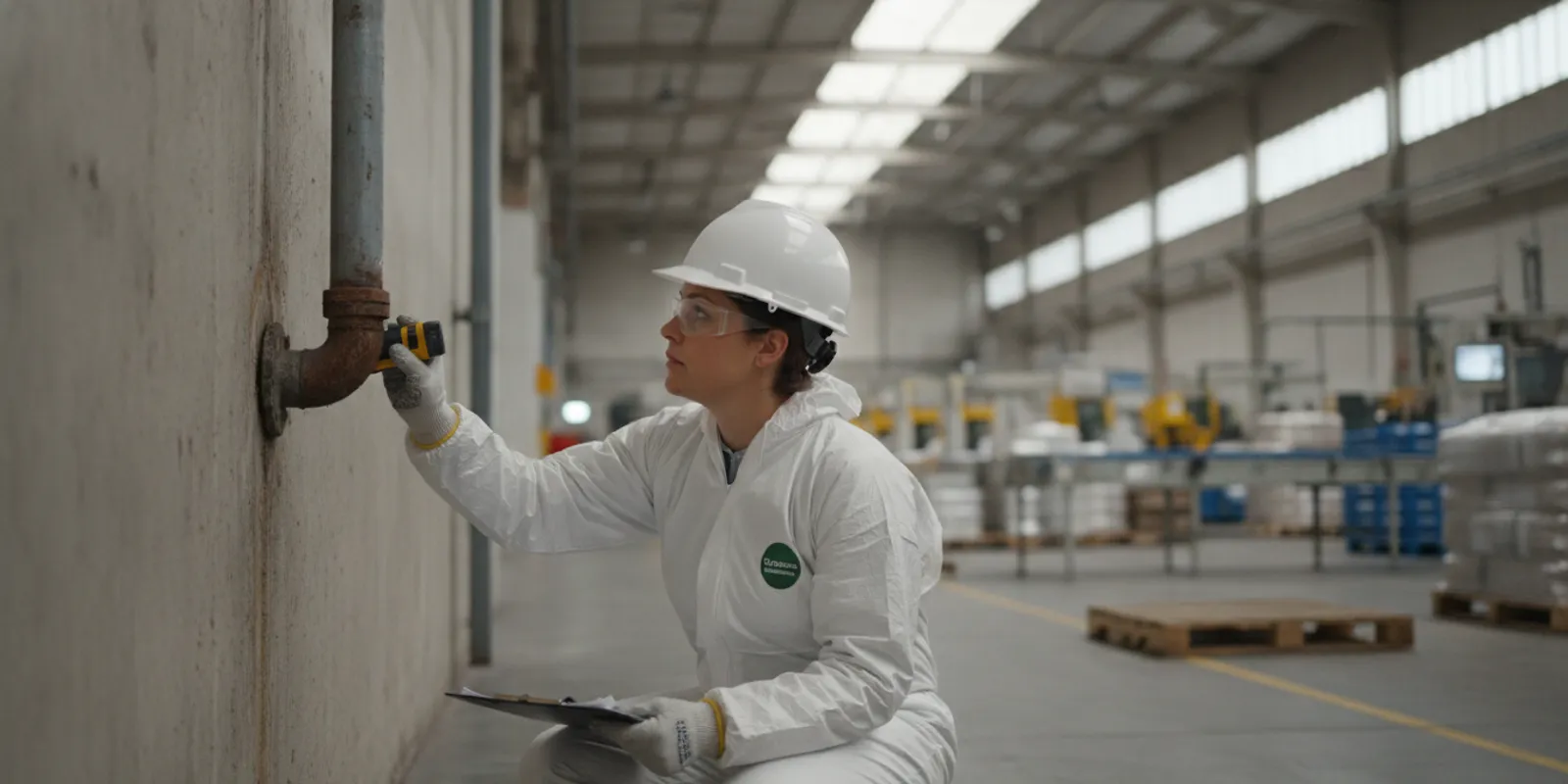
How much is an asbestos survey for an industrial facility? There is no dependable one-price answer. The fee depends on the buildings and materials in scope, access and operating conditions, the amount of sampling or laboratory analysis needed, and the purpose of the survey. A clear scope is the best way to understand what a proposal includes and compare it fairly.
Industrial property owners and facility managers often need an assessment before renovation, demolition, a purchase, or maintenance that could disturb building materials. This guide explains the variables that shape survey cost, what to request in a written scope, and how to plan the work without treating a building’s age or appearance as proof that a material does—or does not—contain asbestos.
Why does an industrial asbestos survey have no single set price?
A survey is a project, not a uniform product. A small, vacant outbuilding with accessible materials presents a different scope from an operating facility with several structures, repeated process areas, restricted rooms, and phased construction. The professional must understand the property, the reason for the assessment, and the materials that could be affected before defining the work.
One proposal may cover a specific renovation area. Another may address an entire building or multiple structures. The word “survey” can therefore describe different levels of effort. Two prices are not directly comparable unless the proposals address similar areas, materials, access, sampling assumptions, and reporting needs.
For background on the material and why it requires careful handling, see Remtech’s overview of what property owners should know about asbestos. A survey is meant to support a decision; it is not an automatic instruction to remove every suspect material.
What factors affect the cost of a facility survey?
How much of the property is included?
The surveyed area is often the first major cost driver. A defined suite, mechanical room, or planned construction zone may be assessed separately from a full-building survey. Large facilities can contain additions from different periods, multiple uses, and distinct material systems. Outbuildings, utility spaces, mezzanines, and inaccessible voids may also change the scope.
Ask the assessor to identify buildings, floors, rooms, and specific project areas included. If a site map or renovation drawing is available, use it to mark boundaries. This helps prevent a proposal for one work zone from being mistaken for a property-wide assessment.
What materials and systems need review?
Industrial facilities can contain many different building materials and systems. The assessment scope may include accessible suspect materials in areas such as flooring, ceiling systems, insulation, roofing, wall finishes, or mechanical spaces, depending on what is present and what the project may disturb. These are examples, not a checklist that proves a material contains asbestos.
Different materials can require separate inspection and sampling decisions. The number of distinct materials, their condition, location, and accessibility can affect the time needed on site and the number of samples submitted for analysis. Repeated materials across rooms may be grouped only when the professional determines that the grouping is appropriate for the scope.
Will the facility remain operational?
Occupied or active sites require coordination. Production schedules, tenant access, security procedures, controlled areas, equipment, and the need to avoid interrupting operations can affect how a survey is staged. A facility with clear access and a designated site contact may be simpler to assess than one where each room requires separate arrangements.
Tell the assessor about operating hours, restricted areas, safety orientation requirements, and any processes that cannot be paused. Do not assume that every area can be inspected during a single visit. If some spaces cannot be entered, the written report should make that limitation clear.
How much sampling and analysis is needed?
Visual review and laboratory analysis are different parts of an assessment. When sampling is appropriate, the number and type of materials selected for analysis affect the project. The right approach depends on the purpose and scope, not on a desire to produce a particular result. Ask how sampling is planned, whether laboratory charges are included, and how additional samples would be handled if the scope changes.
Do not treat an informal look at a material as confirmation of its composition. Appearance alone cannot establish whether a suspect material contains asbestos. The survey report should identify the areas and materials assessed and explain any limits on conclusions.
What deliverables and timing are requested?
A written report, material inventory, location notes, sample results where applicable, and project-specific recommendations take time to prepare. If the survey is connected to a purchase, renovation bid, maintenance window, or capital project, the requested schedule may affect availability and coordination. A tight deadline should be discussed before the work is booked, rather than assumed in a proposal.
For a useful overview of what abatement work involves after an assessment identifies a concern, read how asbestos abatement works. Survey and abatement are distinct services; a survey provides information for planning, while later work depends on the materials, their condition, and the project.
What should a written survey proposal explain?
Request a proposal that makes its assumptions visible. A short quote can still be clear, but it should let you see what the professional intends to inspect and what you will receive. When details are missing, ask for clarification before comparing totals.
- Property and areas: List the buildings, floors, rooms, and project boundaries covered.
- Purpose: State whether the assessment supports a planned renovation, demolition, maintenance task, due diligence, or another defined need.
- Inspection approach: Explain the anticipated visual review and how suspect materials will be selected for sampling, if sampling is part of the scope.
- Analysis: Clarify whether laboratory analysis is included, what assumptions apply to sample counts, and how additional analysis is priced.
- Access assumptions: Identify what the facility must arrange, such as keys, escorts, shutdown windows, or access to restricted spaces.
- Deliverables: Describe the report or other documentation, including how locations and limitations will be recorded.
- Schedule: Identify the expected site visit and delivery timing, subject to access and analysis needs.
- Exclusions and changes: State what is outside the scope and how a requested expansion or unexpected access issue would be handled.
For a broader explanation of abatement terms, Remtech also describes the basics of asbestos abatement. Clear language matters because a survey proposal should not imply that removal is automatically required or included.
How can you compare survey proposals fairly?
Compare scope first and total second. Ask each provider to respond to the same property boundaries and project description. If one proposal covers a defined work area and another covers the whole facility, the lower number does not represent the same service. Likewise, a quote that excludes analysis or leaves access assumptions unstated may not be less expensive once the full project is understood.
| Proposal detail | What to compare | Question to ask |
|---|---|---|
| Areas included | Buildings, rooms, floors, and project boundaries | Does this cover every area related to the planned work? |
| Materials and sampling | Inspection approach, sampling assumptions, and analysis | What is included, and how are extra samples handled? |
| Site access | Operating hours, escorts, restrictions, and inaccessible spaces | What must our facility arrange before the visit? |
| Report | Locations documented, results, limitations, and delivery format | Will the report support the decision we need to make? |
| Schedule and changes | Visit timing, report timing, exclusions, and scope changes | What could change the fee or completion date? |
Ask the provider to explain any difference in scope in plain language. A well-defined proposal should help you understand the work, not rely on urgency or alarming claims. Remtech’s approach is to explain findings and options so property decision-makers can choose a suitable next step.
How does the reason for the survey shape the scope?
Renovation or equipment work
For renovation, focus the discussion on the exact work area and materials that may be disturbed. Share drawings, demolition plans, or contractor descriptions if available. A survey planned around a particular scope of work can give the project team more relevant information than a broad request that does not explain what will change.
If the design changes, check whether the existing survey still covers the revised work. A report for one room or system may not address a newly added area. Do not let a schedule assumption substitute for confirming that the survey boundary matches the construction scope.
Demolition or major redevelopment
A project that affects a whole structure may require a different assessment boundary from a limited renovation. Share which buildings are involved, what work is contemplated, and whether the site contains additions or separate structures. Applicable federal, state, and local requirements can depend on the project and circumstances. For general federal asbestos information, consult the U.S. Environmental Protection Agency and confirm which current requirements apply to the specific work with qualified professionals and the relevant authorities.
Do not assume a past survey automatically answers a new project question. Confirm when it was performed, what areas it covered, what methods and limitations it records, and whether conditions or planned work have changed.
Property purchase or facility planning
For due diligence or long-range facility planning, identify the decision the survey needs to inform. A buyer may need to understand known materials and documentation, while a facility manager may be organizing records for future maintenance. Agree on the information needed before choosing the scope; a survey should not be described as exhaustive if some areas or systems are excluded.
Keep reports and related project records where the people planning future work can find them. If contractors, property managers, or new owners may rely on the findings, communicate the report’s scope and limits rather than forwarding a price or summary without context.
What should North Carolina facility managers prepare?
Preparation makes an assessment more focused and helps the professional understand the site before setting or finalizing a scope. Gather information that is available, but do not delay asking for advice because some records are missing.
- Define the decision. Write down whether the survey is for renovation planning, demolition, maintenance, a transaction, or another purpose.
- Mark the boundary. Provide a site plan, floor plans, photographs, or a plain-language list of buildings and spaces to be considered.
- Share known records. Locate prior assessments, renovation records, material inventories, and construction information, if available. Identify which documents relate to which areas.
- Explain site conditions. Flag access controls, active operations, sensitive areas, tenants, and scheduling limits.
- Coordinate the people involved. Identify a facility contact and include the renovation planner or contractor when their work defines the survey area.
- Ask for scope and fee clarity. Confirm the included areas, analysis assumptions, deliverables, exclusions, and procedure for changes in writing.
- Preserve the findings. Store the final report with property records and share relevant information with people planning work that could disturb the assessed materials.
Remtech serves North Carolina property owners and businesses, with information about its Raleigh-area service coverage and other service areas online. Its company background provides more information about the team and its education-first approach.
How do you know whether a survey quote is useful?
A useful quote answers practical questions: which areas will be examined, what work is included, what the report will contain, and what conditions could change the scope. It should also make clear what is not included. This gives facility managers a sound basis for coordinating with owners, contractors, occupants, and project planners.
Look for a provider who can explain why the proposed boundary fits the intended decision. Ask what additional information would help refine the scope. If the answer is unclear, or the proposal uses broad language without describing coverage, request a revised written explanation rather than guessing what the number means.
For local context, property teams can review Remtech’s pages for asbestos services in Raleigh, Durham, and Greensboro. Contact the team to discuss whether the service area and project scope fit your facility.
Ultimately, the best way to answer “how much is an asbestos survey?” is to request a project-specific scope and consultation. Pricing is based on the work involved, so compare written proposals on equivalent terms rather than relying on a generic rate or an assumption about how large the job will be.
Frequently Asked Questions
Can I get a price without an on-site visit?
A provider may be able to discuss likely scope after reviewing plans and project details, but the information available can affect how specific a proposal can be. Share the building areas, intended work, access conditions, and any existing records. Ask which assumptions the estimate depends on and whether a site visit is needed to finalize scope.
Does a larger facility always mean a higher survey fee?
Size is one factor, but it does not tell the whole story. The number of distinct areas and materials, access requirements, operating conditions, sampling needs, and reporting purpose all matter. Two facilities of similar size can require different effort, so the written scope is more useful than square footage alone.
Does an asbestos survey mean the material must be removed?
No. A survey gathers information about the assessed materials and supports planning. The appropriate next step depends on the findings, condition, location, and planned work. The report should explain its scope and limitations so owners can make an informed decision rather than treating assessment and removal as the same thing.
How long does an industrial survey take?
Timing depends on the size and complexity of the property, access, site coordination, the assessment scope, and any analysis and reporting needed. Tell the provider about project deadlines when requesting a proposal. Ask separately about the site visit and final report timing so the project team can plan responsibly.
What if previous survey documents exist?
Provide them to the assessor for review and explain what work is now planned. The documents may be useful, but verify the areas they covered, the date, and any stated limitations. A prior assessment may not answer a question about a different area or a changed renovation plan.
Plan the next step around your facility
Start with the decision your team needs to make, define the facility areas involved, and ask for a written scope that explains the work and its limits. Remtech Environmental provides consultation-based, project-specific guidance for North Carolina properties; a clear discussion can help you determine what information your industrial facility needs next.
A clearly scoped assessment helps your team plan work with better information and fewer avoidable surprises.