
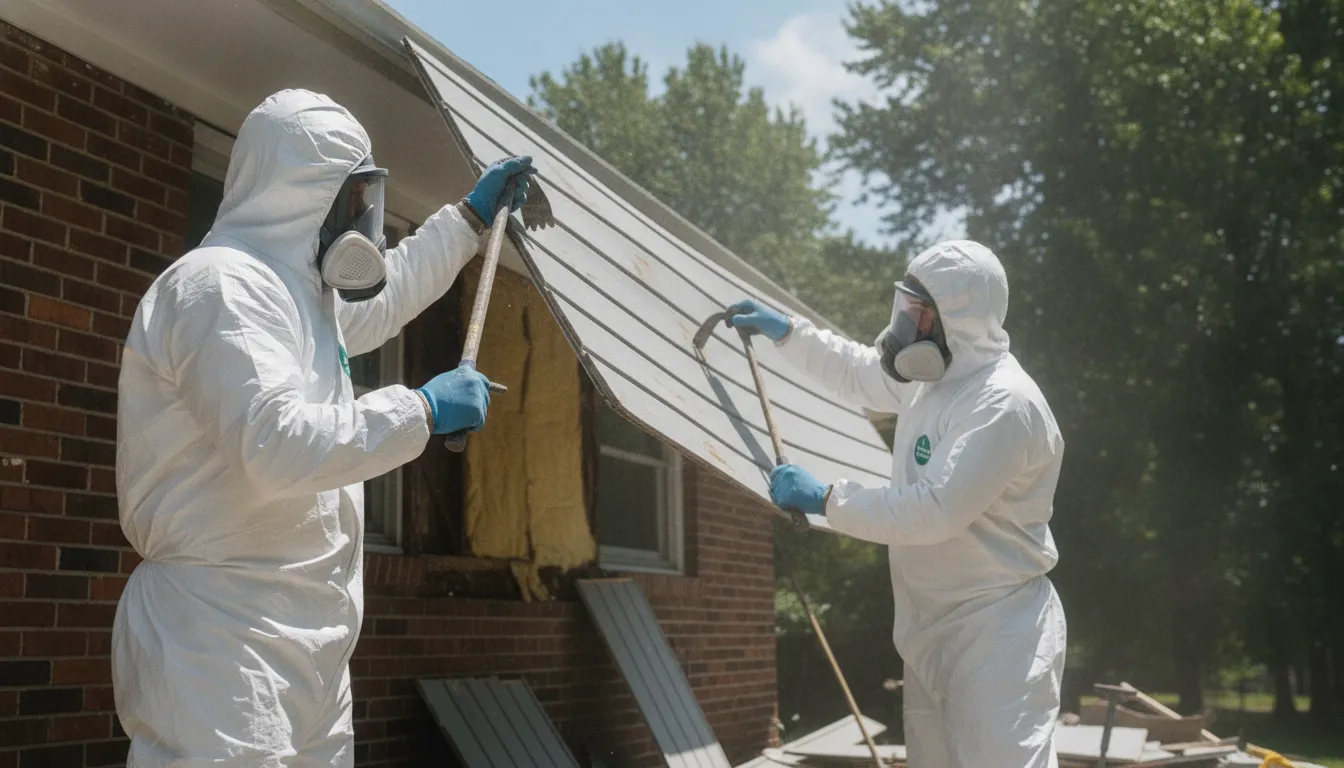
Older Raleigh homes often have siding that looks like textured cement board, but appearance alone cannot tell you whether it contains asbestos. That uncertainty matters most when panels are cracked, drilled, cut, or removed during an exterior renovation.
For homeowners considering asbestos siding removal Raleigh NC, the safest path is to pause work. Arrange professional sampling, and use an experienced abatement team that can plan containment, careful removal, and compliant disposal. Materials in good condition and left undisturbed are generally unlikely to pose a health risk, according to the EPA.
Remtech Environmental brings more than 25 years of North Carolina experience to asbestos abatement for homes across Raleigh and the Triangle. Before deciding whether siding should be removed, it helps to understand what these panels may look like and why only proper testing can confirm their contents.
How to Identify Asbestos Siding on a Raleigh Home
Older siding can provide useful clues, but appearance alone cannot establish what a panel contains. On Raleigh and Triangle homes built before about 1985, asbestos-cement siding may appear as rectangular panels, commonly around 4 by 9 inches or 12 by 24 inches. Some panels have a wood-grain finish that resembles wood shingles, while others have a corrugated, cement-like transite texture.
Look at how the siding is installed as well as its surface. These panels are often laid in rows with staggered seams, creating an overlapping pattern across the exterior. They may be rigid and relatively uniform, with edges that look more like cement board than modern vinyl or fiber-cement products. Weathering, paint, repairs, and replacement sections can make the original material harder to recognize.
What visual clues can and cannot tell you
Panel size, texture, age, and installation pattern can help identify siding that deserves closer attention. They cannot confirm asbestos. The EPA explains that you generally cannot tell whether a material contains asbestos simply by looking at it. Only professional sampling followed by laboratory analysis can provide a reliable answer. Review the EPA's guidance on asbestos in homes for more context about common materials and safe decision-making.
If you are unsure, do not drill, cut, scrape, sand, pressure-wash, break, or remove the panels to inspect them. Treat the siding as though it contains asbestos and leave it undisturbed until a qualified professional can assess the material and arrange sampling. This approach is especially important before painting, replacing windows, repairing trim, or planning exterior renovations.
When to request an assessment
Consider an assessment when panels are cracked, damaged, deteriorating, or scheduled for renovation. Asbestos-containing materials that remain in good condition and are not disturbed are not likely to pose a health risk. And the EPA generally recommends leaving them alone when they are sound. A professional can help distinguish routine maintenance from work that may disturb the siding and explain appropriate next steps.
For homeowners planning a project, Remtech's asbestos removal services can provide a more informed path from sampling through project planning. The goal is not to assume every older panel contains asbestos. It is to replace guesswork with testing and a controlled, properly documented decision.
Health Risks of Disturbing Asbestos Siding
Asbestos siding is not automatically an immediate hazard simply because it is present on a Raleigh home. The condition of the material and what happens to it matter. The EPA explains that asbestos-containing materials in good condition and left undisturbed are not likely to pose a health risk. Intact siding that is firmly attached and not deteriorating can often remain in place while a homeowner plans the next step.
Why intact siding is usually low risk
Older siding can remain stable for many years when panels are not damaged. Avoiding unnecessary work helps preserve that stability. Homeowners should not drill into panels to install fixtures, cut them for wiring, or remove pieces to investigate what is behind them. Asbestos cannot be confirmed by appearance alone, so suspected material should be left alone until it can be evaluated properly.
For more background, see these asbestos-containing materials and how they may be managed in a home.
How disturbance can release fibers
The concern changes when siding is broken, cut, sanded, or aggressively cleaned. Drilling and sawing can create dust at the point of contact. Pressure-washing may damage weathered panels or force debris from cracks and edges. Removal can also break panels if they are pried off, dropped, or handled without controls. When asbestos-containing material is disturbed, fibers may become airborne and can be inhaled by people nearby.
That does not mean every damaged panel creates the same level of exposure, or that a homeowner should panic after noticing a crack. It does mean the work deserves a measured response. Stop activities that may create additional dust, keep people away from the immediate area, and avoid sweeping or blowing debris. A qualified professional can assess the material and recommend the appropriate next step.
Professional handling matters because the goal is to prevent unnecessary fiber release from the first inspection through removal and cleanup. For Raleigh homeowners considering asbestos siding removal in Raleigh, a consultation can clarify whether the siding should remain undisturbed, be repaired under controlled conditions, or be removed using a planned process.
Why Do-It-Yourself Asbestos Siding Removal Is Dangerous
Asbestos siding can look solid and manageable, but removing it is not the same as taking down ordinary exterior panels. Drilling, sawing, snapping, or crushing brittle siding can release fibers into the air. Once released, those fibers can spread beyond the immediate work area and settle on clothing, tools, soil, vehicles, or nearby surfaces.
The risk increases when a homeowner works without a controlled plan. A professional abatement setup may include containment, controlled access, appropriate respiratory protection, negative air where the project requires it, and procedures for keeping debris from spreading. A do-it-yourself project often has none of these safeguards. Family members, neighbors, pets, or other workers may be exposed without realizing that the work is taking place.
Federal rules do not remove the need for caution
The U.S. Environmental Protection Agency explains that federal asbestos renovation rules generally do not apply when a homeowner renovates their own home. That does not mean every DIY project is exempt from oversight. State or local requirements may still apply, and the homeowner remains responsible for handling and disposing of the material appropriately. Review the EPA guidance on homeowner asbestos renovation work before disturbing suspected siding.
North Carolina requirements should be checked before demolition or renovation begins. Disposal is another important concern. Asbestos-containing debris cannot simply be placed in a household bin, left at the curb, or hauled to an ordinary construction dumpster. Improper handling can spread contamination and create additional compliance problems.
Professional removal controls the details
Qualified asbestos professionals bring the training, certification, containment practices, and waste-handling procedures needed for the specific project.
| Aspect | DIY Removal | Professional Abatement |
|---|---|---|
| Material confirmation | Guessed from appearance | Bulk sampling and laboratory analysis |
| Fiber control | Little or no containment | Planned containment and controlled work practices |
| Panel handling | Panels often broken or crushed | Whole-panel removal with wet methods as needed |
| Waste handling | Household trash or dumpster risk | Leak-tight packaging and approved disposal |
| Verification | None | Post-removal cleaning and secondary testing |
Because asbestos cannot be identified reliably by appearance alone, suspected siding should be treated as asbestos-containing until appropriate sampling says otherwise.
For homeowners planning exterior work in the Triangle, Remtech outlines its compliant removal process, including the planning and controls that help keep the work area, occupants, and surrounding property protected.
How Professional Asbestos Siding Removal Works in Raleigh, NC
A professional project follows a planned sequence that protects occupants, workers, neighbors, and the surrounding property. The exact scope depends on the siding's condition, the home's layout, and laboratory results, but a qualified team should explain each stage before work begins. Remtech's abatement process is built around documented planning, controlled work practices, proper disposal, and verification after removal.
-
Inspect the siding and confirm the material
The first step is a visual inspection of the siding, adjacent materials, and areas that could be affected by the work. If asbestos content is uncertain, a trained professional collects bulk samples for laboratory analysis. Appearance and building age can suggest that testing is appropriate, but only laboratory confirmation can identify asbestos with confidence. This initial review also helps define the work area and the precautions required for the project.
-
Prepare the site and establish containment
Before panels are disturbed, the crew prepares the work zone. Plastic sheeting and other controls can protect nearby surfaces, landscaping, and soil. Access is limited, and the work area is sealed or otherwise contained according to the project's needs. The team also plans how occupants, tools, debris, and waste will move through the site without spreading contamination. These controls are part of a broader plan designed to follow applicable EPA and OSHA requirements.
-
Remove panels with controlled methods
Workers use careful removal techniques rather than breaking, crushing, or grinding the siding. Wet methods may be used where needed to reduce airborne fiber release. Panels are handled as whole as practical, with tools and procedures selected to limit damage. The crew monitors the work area and adjusts its controls if conditions change. This measured approach is especially important around windows, trim, utility penetrations, and other locations where siding may be difficult to separate cleanly.
-
Package and transport asbestos waste properly
Removed materials are packaged, labeled, and secured for transport under the applicable waste-handling requirements. Debris is not placed in ordinary household trash or left loose on the property. Proper packaging and disposal preserve the containment effort made during removal and create a clear record of how the material was managed.
-
Clean the area and verify the result
After the siding and related debris are removed, the crew performs a detailed cleanup of the work area and equipment. Post-removal secondary testing may be available to check surfaces or air conditions and confirm that the planned work is complete. The project is not treated as finished simply because the visible panels are gone. Documentation, cleanup, and verification provide homeowners with a clearer understanding of the final condition of the property.
For Raleigh homeowners, this sequence provides a practical way to address older siding without guessing about its composition or taking unnecessary risks. A consultation can clarify whether sampling, removal, or another management option is appropriate for the specific home.
North Carolina Disposal Regulations for Asbestos Siding
Asbestos siding removal in Raleigh, NC is not complete when the panels come off the wall. The material must be handled, packaged, transported, and disposed of in a way that prevents asbestos-containing waste from becoming a hazard. North Carolina regulates demolition and renovation work involving asbestos-containing materials, so the project requirements can depend on the material, its condition, and the scope of work.
Many older cement siding products are known as transite. The U.S. Environmental Protection Agency classifies transite siding as a Category II non-friable asbestos material under the federal Asbestos NESHAP. The national emissions standard for hazardous air pollutants. "Non-friable" means the material is not easily crumbled by hand while it remains intact. It does not mean the siding can be removed or discarded without precautions. Cutting, breaking, drilling, sanding, or crushing panels can change how fibers are released and can create contaminated debris.
Before starting a demolition or renovation project, review the North Carolina demolition and renovation requirements. The North Carolina Division of Public Health also publishes NC asbestos rules and regulations. These resources help clarify notification, inspection, licensing, and work-practice obligations that may apply to a specific project.
How asbestos siding waste must be prepared
Asbestos-containing siding waste should be kept from breaking apart and releasing dust. Panels and debris are wetted during handling, then placed in leak-tight containers or packaging. The waste is commonly double-wrapped and sealed so fibers cannot escape during movement or storage. Workers should not sweep dry debris, use compressed air, or place asbestos siding in household trash, construction dumpsters, or curbside recycling.
After packaging, the waste must go to an approved disposal facility that accepts asbestos-containing material. Transportation and disposal records may also be part of a compliant project process. The correct destination should be confirmed before work begins, because not every landfill or transfer station is authorized to receive asbestos waste.
Why disposal planning matters in Raleigh
Disposal requirements protect workers, occupants, neighbors, and landfill personnel from exposure to fibers released during cleanup or transport. They also help prevent a siding project from becoming a larger contamination issue. If panels are intact and not interfering with planned work, leaving them undisturbed may be the safer option. The EPA explains that asbestos-containing materials in good condition and left undisturbed are not likely to pose a health risk. If removal is necessary, a qualified professional can assess the material, plan containment, and coordinate compliant disposal for the Raleigh or Triangle property.
For more detail on what to expect, review Remtech's compliant removal process before scheduling the work.
Frequently Asked Questions
Is asbestos siding removal mandatory in Raleigh, NC?
Not necessarily. Siding that is intact and left undisturbed may be safer to manage in place, while damaged material or planned renovation can require a professional evaluation. North Carolina requirements can apply to asbestos-related demolition or renovation work, so confirm the project scope and handling requirements before starting. NC Department of Health and Human Services guidance explains what homeowners should review.
How can I identify asbestos siding on my home?
Visual clues such as older construction, textured panels, or corrugated cement siding may raise a question, but appearance cannot confirm asbestos. The EPA recommends treating uncertain material as asbestos and leaving it alone until qualified professionals arrange appropriate sampling. Do not cut, drill, sand, break, or remove a panel just to examine it. EPA guidance explains why identification should not rely on looking alone.
Do I need a professional for asbestos siding removal?
Professional help is the prudent choice when siding must be disturbed. A qualified abatement team can plan containment, limit breakage and fiber migration, coordinate compliant removal and disposal, and document the work. Although federal renovation rules may not apply to a homeowner working on their own home, state or local requirements may still apply. EPA homeowner guidance addresses that distinction.
Can asbestos siding be encapsulated instead of removed?
Sometimes. If panels are stable and the proposed covering will not damage them, encapsulation or another management-in-place approach may be considered. The right option depends on the siding's condition, the planned renovation, and future maintenance needs. A professional assessment can compare leaving, covering, or removing the material without assuming that one solution fits every Raleigh home.
Ready to Plan Your Next Step?
If asbestos siding is part of your Raleigh or Triangle home, a project-specific conversation can help you understand the appropriate path for safe, compliant removal. Schedule a consultation with Remtech Environmental to discuss your siding and receive clear guidance based on your property. Get a Free Quote to begin.