
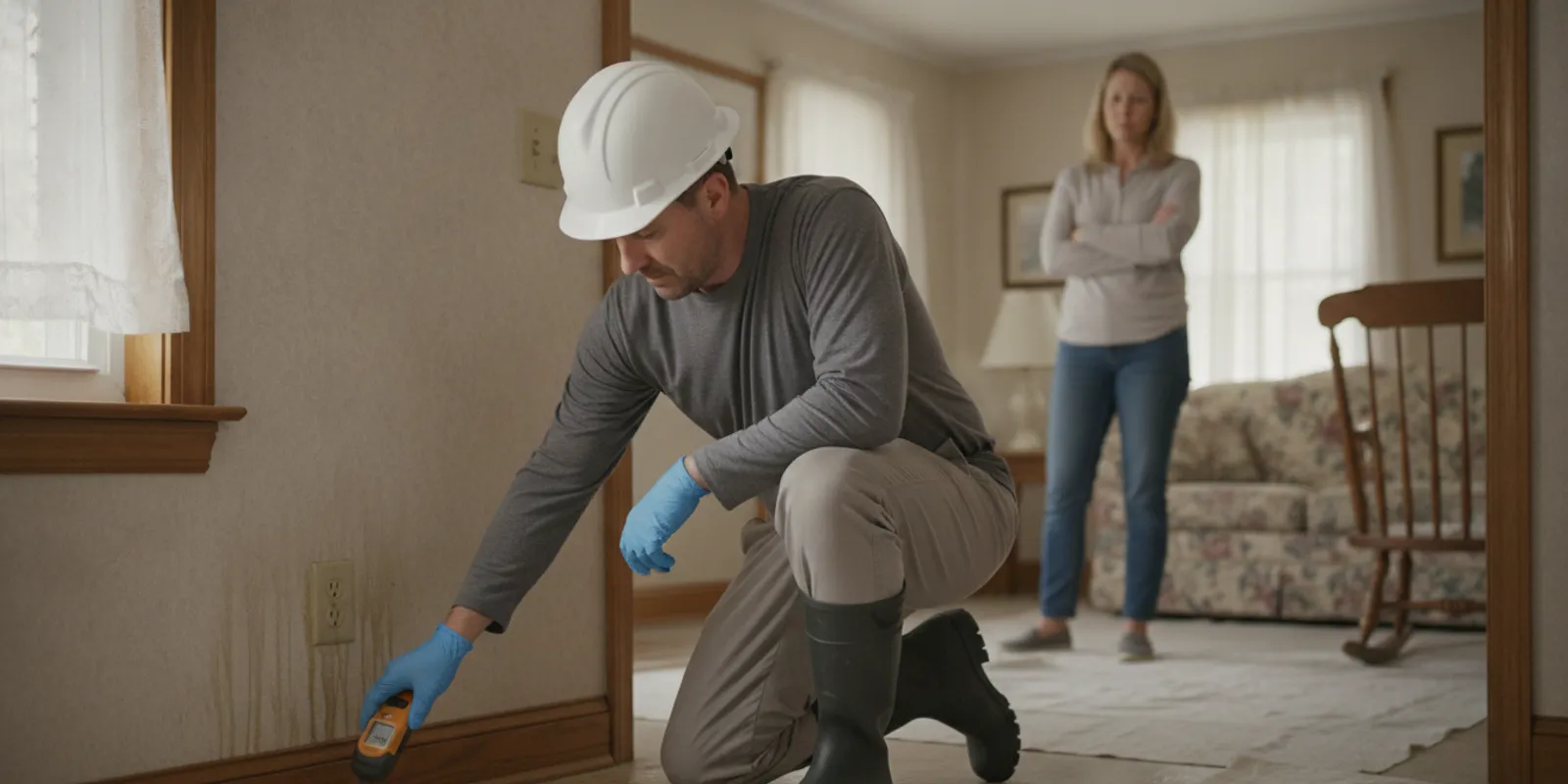
When water enters a home or business, choosing a provider calls for clear information. A search for a water extraction company North Carolina property owners can trust should lead to clear answers about what the company does, what it does not do, and how its work fits the rest of the recovery. Use the checklist below to compare providers without assuming every contractor offers the same service.
Ask Remtech about mold, asbestos, or lead-based paint concerns
What does a water extraction company do?
A water extraction provider generally focuses on removing standing water from affected areas. Depending on the provider and the project, related work may include moisture assessment, moving or protecting contents, drying building materials, and monitoring conditions as drying proceeds. These tasks are not interchangeable: one company may pump or vacuum water but not handle structural drying, repairs, or environmental remediation.
Before you hire anyone, ask for a plain-language description of the exact work included. Does the company only remove visible water? Does it assess moisture in flooring, walls, or other materials? Does it provide drying equipment and check conditions over time? Is cleaning or removal of affected materials included, or handled by another contractor? Answers should be specific to the property and written down.
Ask how the company distinguishes an initial visit from follow-up work. An initial visit may document visible conditions and identify the immediate work area. Follow-up visits, if offered, may check whether conditions are changing and whether the original plan remains appropriate. Find out how often the provider expects to return, who will review the findings, and how the company will tell you when a task is complete. A general assurance that everything will be handled is less useful than a sequence of defined tasks.
Also separate water extraction from other specialties. A provider that removes water is not automatically qualified for every issue that may be uncovered later. If an inspection identifies a possible mold, asbestos, or lead-based paint concern, ask who is responsible for that distinct scope and what qualifications apply. For information about Remtech Environmental’s verified environmental remediation focus, see the company’s overview of environmental services.
What should you do before comparing providers?
Start with immediate safety, not a contractor search. If water is still entering the building, there is a risk from electricity, or the structure seems unsafe, stay clear of the affected area and contact the appropriate utility, emergency service, property manager, or mitigation provider. Do not enter standing water if you cannot confirm it is safe. For an active event, seek a provider equipped for that specific response; Remtech should not be treated as a water-extraction or emergency-response provider.
Once people are safe and the immediate source is being addressed, record what you can without putting yourself at risk. Note when the issue was discovered, which rooms or floors are affected, and whether the water source is known. Take photographs from a safe location, and keep relevant messages, receipts, and claim information together. These notes help you explain the situation consistently to a provider, landlord, insurer, or building representative.
Keep a simple event log rather than relying on memory. Write down the time you noticed the issue, whom you notified, the areas that appeared affected, and any instructions you received. If conditions change, add the date and a brief description. This is not a technical assessment, and you should not put yourself at risk to collect details. It is a practical way to make sure that the next conversation starts with the same basic facts.
If you rent, manage a shared building, or operate a business, notify the responsible owner or property contact promptly and follow the property’s incident process. Ask who has authority to approve work and who will coordinate access. In a commercial building, confirm how the work area will be separated from occupied space and how operations, tenants, or customers will be informed.
Before a visit, gather the details a provider is likely to ask for: the property type, affected rooms, approximate time the issue began, whether the source has stopped, and any access limits. You do not need to diagnose the materials or decide the full scope yourself. If you do not know an answer, say so. Clear uncertainty is more useful than a guess, especially when the provider must determine what can safely be inspected.
How can you check a provider’s scope and qualifications?
Ask the provider to describe the work in stages. A useful answer identifies the areas they will inspect, the equipment or methods they may use, how progress will be checked, and what conditions would require a change in plan. Do not rely on a broad label such as “complete restoration” without a written explanation of the tasks it covers.
- Confirm service boundaries. Ask whether the proposal covers extraction only, drying, cleaning, removal of materials, repairs, or some combination. Identify any exclusions and subcontracted work.
- Ask who will assess moisture. Find out what areas and materials will be checked, how findings will be recorded, and whether follow-up checks are part of the plan.
- Verify relevant training and authorization. Ask for credentials or qualifications applicable to the work being offered, and confirm who will supervise the crew. Requirements can vary by activity and project; do not assume one credential covers every task.
- Discuss safety and access. Ask how workers will protect occupants, contents, and unaffected areas, and what you should do before work begins.
- Clarify who is responsible for each handoff. If multiple firms are involved, ask who coordinates the transition from extraction to drying, repairs, or a separate environmental assessment.
Follow up with questions about the people who will actually perform and supervise the work. Who will be on site? Who can explain the proposed methods? Who should you contact if you have a concern during the workday? If a subcontractor is involved, ask what part of the plan that firm will handle and who remains accountable for communicating with you. You are not testing a provider with technical questions; you are making sure there is a reachable person responsible for each stage.
Ask what the company means by completion. Does completion refer to removing visible water, finishing its own drying work, cleaning a designated area, or handing the site to a repair contractor? Have the provider identify any work that remains outside its contract. For instance, a company may finish its own equipment and monitoring tasks while drywall replacement, flooring installation, or a separate environmental assessment is still pending. Knowing the endpoint helps avoid mistaken assumptions about the property being ready for normal use.
For a separate environmental issue, match the qualification to that issue rather than relying on a general water-service credential. Remtech’s North Carolina work includes specialized services such as asbestos abatement, mold removal, and lead-based paint removal. The company’s pages on asbestos services in Raleigh, mold services in Raleigh, and lead-based paint removal in Raleigh describe those distinct scopes. These services are not a substitute for water extraction or structural drying.
How do you compare proposals fairly?
Compare proposals by the work they specify, not just by the headline total or the number of machines listed. A meaningful proposal should explain what the company observed, what it plans to do, what remains uncertain, how progress will be evaluated, and what events could change the scope. If a detail cannot be confirmed before work starts, the provider should identify how and when it will be resolved.
| Comparison point | Questions to ask | What a clear answer includes |
|---|---|---|
| Work included | Is the scope extraction, drying, cleaning, removal, repair, or a combination? | Tasks are listed separately, with exclusions and handoffs identified. |
| Assessment | Which rooms and materials will be checked, and how will results be documented? | The provider explains the inspection approach and planned follow-up. |
| Schedule and access | When can work begin, how long might each stage take, and what access is needed? | The schedule is presented as a project plan, with dependencies and updates explained. |
| Cost basis | What is included in the written estimate, and what could cause a change? | Charges are tied to described work; possible added work requires discussion and approval. |
| Other specialists | Will another contractor be needed for a separate issue or repair? | Each party’s role and the point of transition are clear. |
| Closeout | What records will I receive when the work is finished? | The provider identifies available work notes, findings, and completion records. |
Use the table as a side-by-side worksheet. Copy each company’s answer into the same row, and mark anything that is not stated. If one proposal describes two visits and another describes ongoing monitoring, do not treat those as equivalent until you know what each visit includes. Ask whether equipment rental, site protection, contents handling, disposal, or work by a second firm is included or billed separately. The purpose is not to assume that the longest scope is best; it is to make the differences visible before you approve a plan.
When one proposal is much shorter than another, ask what has been left out before deciding that it is the simpler option. A detailed estimate is not automatically the best fit, either; the provider should be able to explain why each proposed task relates to what was observed. Ask for revisions if the scope uses terms you cannot distinguish or if it assumes work that has not been discussed.
Keep project-specific costs in writing and avoid relying on a generic price range as a substitute for an assessment. The area affected, materials, access, equipment, time, and additional work can differ from property to property. Request an explanation of the cost basis and how any scope change will be communicated before it is authorized.
If you are comparing providers under time pressure, separate decisions that must be made now from decisions that can wait for additional information. Ask each provider to state what authorization it needs to begin the proposed first step and what later tasks require a separate approval. If you are uncertain about a line item, ask for a plain description rather than approving an undefined allowance. Keep a copy of any revised estimate so that the version you approve is clear to everyone involved.
Contact Remtech about a separate environmental concern
What records and coordination should you expect?
Good communication makes it easier to understand what happened at the property and what remains to be done. Ask the provider how it will share observations, work performed, follow-up findings, and any change to the plan. Keep copies of the proposal, approvals, photographs, invoices, and communications together. If an insurer or property owner is involved, ask what documentation they need and share information through the process they specify.
For a building with several decision-makers, choose one contact to receive updates and confirm approvals. Record when the provider reports a change in conditions or recommends additional work. If the proposed scope changes, ask what prompted the change, what new task is proposed, how it affects timing and cost, and whether another specialist needs to be consulted.
A concise update can cover four points: what was done since the last update, what the provider observed, what is planned next, and what decision or access is needed from you. For example, if a provider reports that one area needs additional work, ask which observation led to the recommendation and whether the revised plan affects other rooms or the schedule. Request the answer in writing when it changes the scope, cost, or expected handoff.
Do not assume that finishing one contractor’s work means the whole property is repaired or ready for use. Extraction and drying, repairs, cleaning, and environmental remediation may be separate stages handled by different providers. Confirm who is expected to assess readiness for the next stage and what evidence or records will be provided.
For owners, managers, or business operators, a basic handoff note can prevent gaps. It can identify the provider’s last completed task, open questions, areas that were not included, any scheduled follow-up, and the person authorized to approve the next phase. Share that note with the next contractor only through the appropriate property contact. A new contractor should still make its own assessment instead of treating another provider’s observations as a substitute for its work.
When might a separate environmental assessment be relevant?
Water-related work and environmental remediation are different scopes, but a property owner may need to consider both at different points. For example, a concern about visible microbial growth, suspect asbestos-containing material, or older paint should be assessed as its own issue. Do not assume that removing water resolves those concerns or that every extraction provider performs that work.
For mold questions, focus on the location, extent, affected materials, and how the moisture source is being addressed by the appropriate party. The U.S. Environmental Protection Agency provides general environmental information at its official website; consult applicable guidance and qualified professionals for the specifics of a property. Remtech also offers educational information on types of mold in a home and on what property owners should know about asbestos.
For asbestos questions, avoid disturbing a material simply to identify it. Ask a qualified professional what assessment is appropriate for the building and planned work. Remtech’s guide to how asbestos abatement works can help explain that separate process. The right next step depends on the material, its condition, and the proposed project, so avoid making assumptions based only on age or appearance.
Remtech Environmental serves residential and commercial properties in North Carolina with environmental remediation services. Its service-area information and company background help readers understand its scope and regional presence. For water extraction, drying, or an active emergency, contact a provider whose current service offering explicitly includes the work required.
When an unrelated environmental concern becomes part of a project, make the transition deliberate. Tell the relevant specialist what was observed, where it was found, and whether any work has already been done nearby. Ask what information they need before assessing it, and keep the water-extraction provider’s work separate from decisions about a distinct environmental scope. This helps prevent one contractor’s general observations from being mistaken for a formal evaluation by another.
For a home, the owner may coordinate the work directly; for a rental or commercial property, the responsible manager or owner may need to authorize access and decide how occupants are notified. In either case, identify one person to receive questions and relay decisions. If people use the space during work, ask each provider what areas are restricted and what instructions apply. Do not infer that a room is ready for normal use merely because equipment has been removed.
Ask Remtech about mold, asbestos, or lead-based paint services
Frequently Asked Questions
Is water extraction the same as structural drying?
No. Extraction removes standing water, while structural drying involves addressing moisture in building materials and monitoring conditions as they change. A company may offer both, but ask what its proposal includes rather than assuming one service includes the other.
Should I choose a provider before the water source is addressed?
If water is actively entering the property or anyone may be at risk, prioritize safety and contact the appropriate emergency, utility, property, or mitigation resource. The provider handling extraction may not be responsible for identifying or repairing the source. Clarify which party handles each task.
Does every water extraction provider handle mold or asbestos?
No. Water extraction, mold remediation, and asbestos abatement are distinct scopes. Ask each provider which tasks it performs and what qualifications apply. If a separate environmental concern is identified, have it assessed by a professional whose services and qualifications match that concern.
What should I have in writing before work begins?
Keep a written scope, estimate, exclusions, expected schedule, access plan, approval process for added work, and a description of the records you will receive. For a multi-provider project, document who coordinates each handoff and who will answer questions about progress.
How should I compare two different work plans?
List each proposed task beside the area it addresses, then note who performs it, when it happens, and whether it is included in the estimate. Ask each provider to explain important differences and identify any unknowns. If the scopes do not match, compare the work rather than relying on the total alone.
Plan the next step around the work your property needs
Choose a provider whose stated services match the immediate task, whose proposal explains how the work will be assessed and documented, and whose boundaries are clear. For a distinct mold, asbestos, or lead-based paint concern in Remtech’s service scope, contact Remtech Environmental to discuss the environmental issue; for extraction or active mitigation, speak with an appropriate provider for that work.
Discuss mold, asbestos, or lead-based paint concerns with Remtech
A clear division of responsibilities helps you choose the right professional for each part of the project and keep the next steps understandable.