
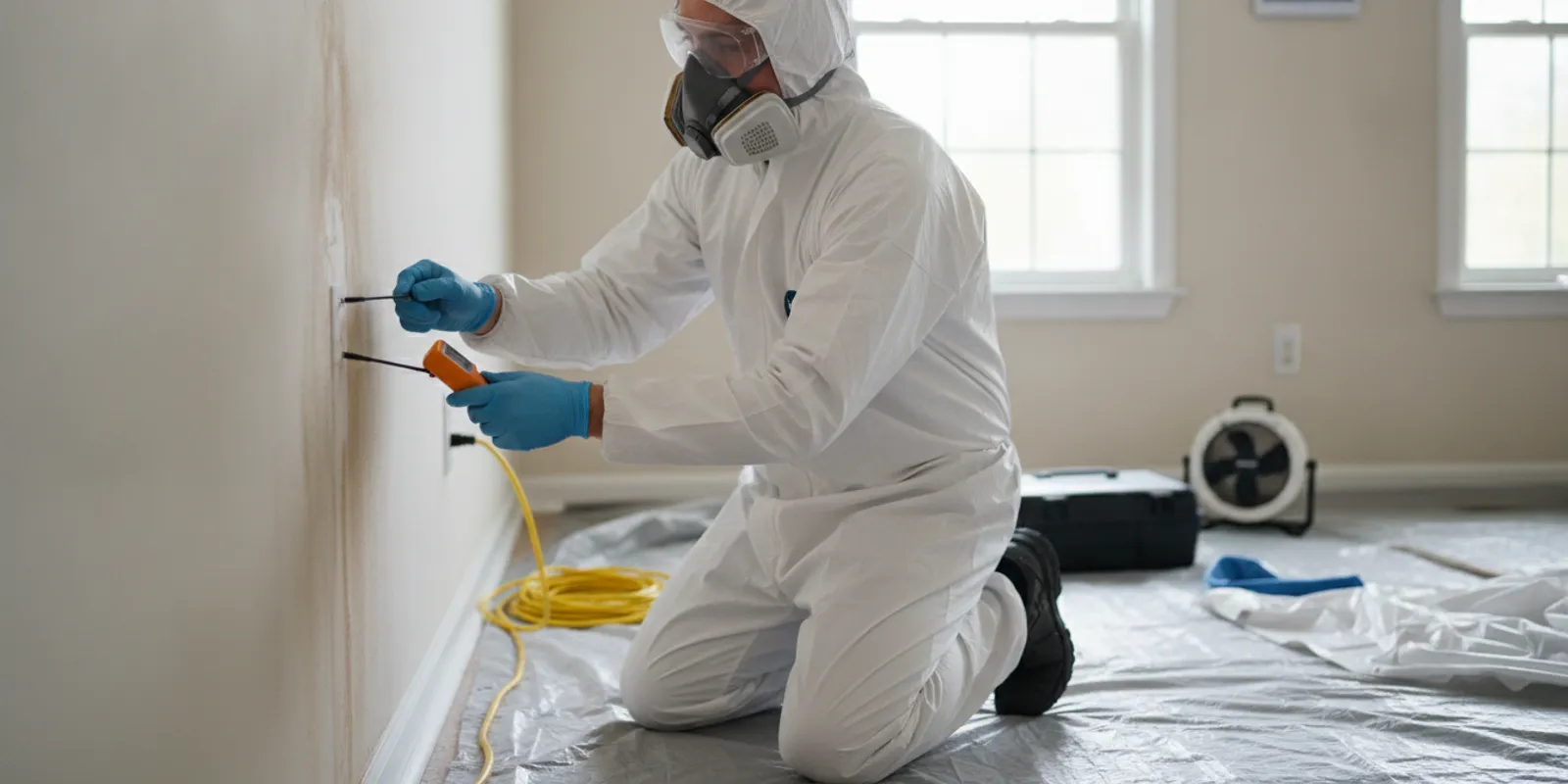
Understanding north carolina mold remediation laws can help property owners ask informed questions before work begins. The information available for this guide says the state does not require a state license specifically for mold remediation. That narrow point is useful, but it is not a complete answer about every permit, contract, property rule, or project condition.
What does the available information say about North Carolina licensing?
The verified mold-specific information for this article says North Carolina does not require state licensing for mold remediation. It does not identify a single state license that every mold-remediation company or worker must hold. This should not be stretched into a broader legal conclusion about all work in a building.
Licensing is only one question an owner might have. A project may also involve property agreements, a planned renovation, local review, building conditions, or insurance procedures. The information available here does not confirm a universal state rule for permits, inspections, landlord responsibilities, disclosures, testing, notifications, disposal, or post-work verification. Treat those as matters to check for the specific property rather than assume a one-size-fits-all answer.
For a decision that depends on a legal duty, check with the authority responsible for that matter or a qualified legal professional. A general article can help organize the questions, but it cannot determine how a contract, a particular building, or a current local requirement applies.
Which questions should owners keep separate?
It helps to sort questions into three groups before seeking proposals. The first is the general state licensing point described above. The second concerns the qualifications and work practices a contractor brings. The third concerns property-specific duties or approvals. Keeping these separate prevents a voluntary credential or a contractor’s preferred process from being mistaken for a legal requirement.
| Question area | What this guide can say | What to check for the project |
|---|---|---|
| State mold-remediation license | The available information says North Carolina does not require state licensing specifically for mold remediation. | Confirm whether any other type of work in the planned scope triggers a separate requirement. |
| Contractor qualifications | Training, experience, and voluntary professional certifications can help explain a contractor’s approach. | Ask what qualifications apply to the people assigned and what standards guide the proposed work. |
| Permits or inspection | This guide does not establish a universal mold-project requirement. | Ask the relevant local authority or project professional when a permit or inspection question affects the plan. |
| Property duties and records | No universal disclosure or record-retention duty is established here. | Review applicable agreements and ask the responsible property or facility contact what documentation is needed. |
| Scope and price | Work and pricing should be tied to the observed conditions and agreed scope. | Request a written, project-specific proposal that explains assumptions, access, materials, and exclusions. |
This comparison is a planning aid, not a substitute for an agency determination. If a question falls outside the limited licensing information, write it down and ask the responsible party before authorizing work.
How can an owner evaluate a contractor without a state mold license?
When a specific state license is not required, it is still reasonable to ask how the company approaches assessment and remediation. A careful conversation should make the proposed work understandable without relying on pressure or vague assurances. The answers also help owners compare proposals that may use different terms or divide tasks differently.
- Ask who will assess the area. Find out what rooms, building materials, and visible conditions the assessment covers. Ask whether the visit is intended to inform a work plan and what it does not determine.
- Ask about relevant training. Request a plain-language explanation of the training and certifications held by the people expected to perform or supervise the work. Clarify whether a credential is voluntary or legally required; do not assume one when the other has not been established.
- Ask how the scope is defined. A proposal should identify the area addressed, the work planned, access needs, and assumptions or exclusions. Ask how additional findings would be discussed before any change to the agreed plan.
- Ask how moisture is considered. The contractor should explain how the suspected moisture source will be investigated and how the proposed work relates to it. Surface treatment alone may not resolve a condition if moisture continues.
- Ask about protection and cleanup. Have the contractor describe how the work area, nearby contents, removed materials, and affected surfaces will be managed.
- Ask what records you will receive. Clarify what the company documents, how completion is described, and whether any follow-up review is included or would need to be arranged separately.
These are sensible screening questions, not a list of state-mandated steps. The point is to understand a company’s process and decide whether its explanation fits your building and priorities. Remtech Environmental describes an education-first approach and says it aims to explain problems and solutions without scare tactics. The company has served North Carolina for over 25 years.
Learn more about mold removal services in North Carolina or review the company’s background and approach.
What might a written mold work plan cover?
A useful plan connects the observed conditions to the work being proposed. Remtech’s described process can include containment planning, mold removal, moisture-source correction, cleaning and drying, and disposal of items that cannot be cleaned. The steps and the area involved depend on the project; not every property calls for the same response.
Ask the contractor to walk through the sequence. For example, if a proposal includes removing a section of building material, ask what observation led to that recommendation, how the work area will be managed, and how the boundary of the work will be determined. If cleaning is proposed instead, ask which surfaces or contents are included and what limitations apply. If a moisture source is suspected, ask how that concern is incorporated into the scope and who is responsible for any related repair that falls outside it.
A written description can also prevent misunderstandings about what is not included. It may state that certain rooms were not assessed, that contents handling is outside the planned work, or that concealed conditions could change the next step. Owners should ask questions before approving those assumptions, especially when several people share responsibility for a property.
For a property with tenants, employees, a renovation schedule, or shared building management, decide who can authorize access and who should receive updates. This is a coordination practice, not a claim about a statewide notice requirement. A clear contact person can help avoid confusion about access, work boundaries, and decisions if conditions differ from what was first observed.
How should owners handle documentation and project-specific rules?
Keep the observations, proposals, approvals, and completion information together. A basic project folder might include dated photographs of visible conditions, notes about where and when they were noticed, the written scope, messages about changes, and any documents provided at completion. Do not disturb suspect material just to take a closer photograph.
There is no universal record-retention period confirmed in the information available for this guide. A lease, sale, facility policy, insurance process, or other agreement may call for documents or communication, but the applicable details must be checked in that context. Ask the property owner, manager, insurer, or other responsible party which records are relevant. For legal interpretation, seek advice from a qualified professional rather than treating a general checklist as a ruling.
Owners can also distinguish a contractor’s work documentation from a formal inspection or independent verification. Ask what the document means, who prepared it, what area it covers, and whether it answers the question you need answered. A report about completed work should not be described as a broader guarantee about every concealed part of a building unless its scope actually supports that conclusion.
It can help to make a short decision log as the project develops. Record the question asked, the answer received, who approved a change, and which version of the scope was accepted. This is not a claim that state law requires a particular format. It is a practical way for owners, managers, and contractors to stay aligned when multiple rooms, stakeholders, or stages are involved. If a new observation changes the plan, ask for the change and its effect on the work to be explained in writing before proceeding.
For a home sale, lease transition, or planned improvement, timing also matters. Tell the contractor about any upcoming access limits or work milestones, and ask whether the proposed sequence needs coordination with another professional. Do not assume that a general remediation summary settles a separate contractual or transaction question; direct that question to the person responsible for the agreement.
The North Carolina State University mold remediation guidelines describe cleanup guidance for facilities at that university. They can serve as an example of written process guidance, but the document is not a statewide regulation and should not be treated as a universal legal requirement for every property owner.
The North Carolina Department of Health and Human Services document Managing Inquiries about Dampness and Mold Growth includes questions about whether property owners have been notified of maintenance or repair needs. It can help frame a conversation about observations and follow-up, but it does not by itself establish every owner’s legal obligations.
Why should mold and asbestos requirements not be confused?
Mold and asbestos are different subjects, and a rule for one should not be assumed to apply to the other. The available information for this guide distinguishes the state licensing requirements associated with asbestos work from the absence of a state mold-remediation license requirement. If a project involves suspected asbestos-containing material, ask a qualified professional to address that separate concern and verify applicable requirements.
Remtech’s mold technicians are described as IICRC-certified, and the company says it follows IICRC practices voluntarily. That is a company practice, not a state-required mold credential. The distinction matters: voluntary standards may tell an owner something about the process a company chooses to follow, while a legal requirement comes from an applicable authority.
Owners planning work in older buildings can read about asbestos services in North Carolina as a separate topic. If your concern is mold, use the mold remediation information to understand the service discussion without blending it with another material’s rules.
What can affect the scope and consultation?
Project scope depends on the conditions observed, the materials involved, how the affected area can be accessed, the extent of the work, and what is included in the owner’s priorities. This is why a generic description cannot tell every owner exactly what their property needs. A consultation is a chance to discuss the conditions and clarify the work being proposed; it is not a promise that every project will use the same steps.
Before the conversation, write down where the concern is, when it was first noticed, whether it has changed, and whether you know of recurring moisture or earlier repairs. Note which rooms are occupied and any access constraints. If you have photographs or prior documents, keep them available. Do not open walls, scrape growth, or move material simply to prepare for the visit.
During the consultation, ask whether testing is being proposed and what decision it would inform. Ask what the assessment does and does not cover, when you will receive a written scope, and what might cause that scope to change. If the quote is based on project conditions rather than a standard rate, ask which conditions and tasks drive the proposal. Remtech offers free consultations and project quotes; the proposed scope and pricing are specific to the project.
Remtech serves residential and commercial properties across North Carolina. Owners can review the company’s service areas, find general information in its resource library, or use its contact page to start a conversation.
For a commercial building or managed property, bring the person responsible for approving work into the discussion early. That person can confirm access procedures, internal documentation needs, and any review process set by the organization. This is especially helpful when the remediation scope interacts with a renovation schedule or occupant plans, because the contractor may need decisions from someone with authority over the property.
Frequently Asked Questions
Does North Carolina require a state mold-remediation license?
The information available for this guide says North Carolina does not require state licensing specifically for mold remediation. This limited answer does not prove that no other rule applies to a particular project or to other work included in its scope.
Does a mold contractor need an IICRC certification under state law?
This guide does not establish an IICRC certification as a state legal requirement for mold remediation. Remtech says its mold technicians are IICRC-certified and that it follows the practices voluntarily. Ask any contractor what credentials and procedures apply to the people doing the work.
Are permits or inspections required for every mold project?
The information summarized here does not confirm a universal permit or inspection requirement for every mold project in North Carolina. The work, property, and other applicable requirements may matter. Check with the relevant authority or project professional when the answer affects your plans.
Do owners have to keep specific mold records or notify occupants?
This guide does not establish one statewide record-retention or notification rule for every situation. Agreements, facility procedures, and project circumstances may be relevant. Ask the responsible property contact what documentation or communication is appropriate for your case.
Does a voluntary standard mean the same thing as a legal requirement?
No. A contractor may choose to follow a professional standard or hold a voluntary credential. That can help explain its process, but it should not be presented as a state mandate unless an applicable authority has established that requirement.
Plan the next step around the property
North Carolina’s lack of a state mold-remediation licensing requirement is a starting point, not a complete answer to every legal or practical question. Ask for a clear assessment and written scope, distinguish voluntary credentials from legal requirements, and verify property-specific issues with the responsible source. Remtech’s education-first team can discuss the conditions and explain the proposed work without pressure. To talk through your situation, begin with the North Carolina mold remediation information and request a consultation.