
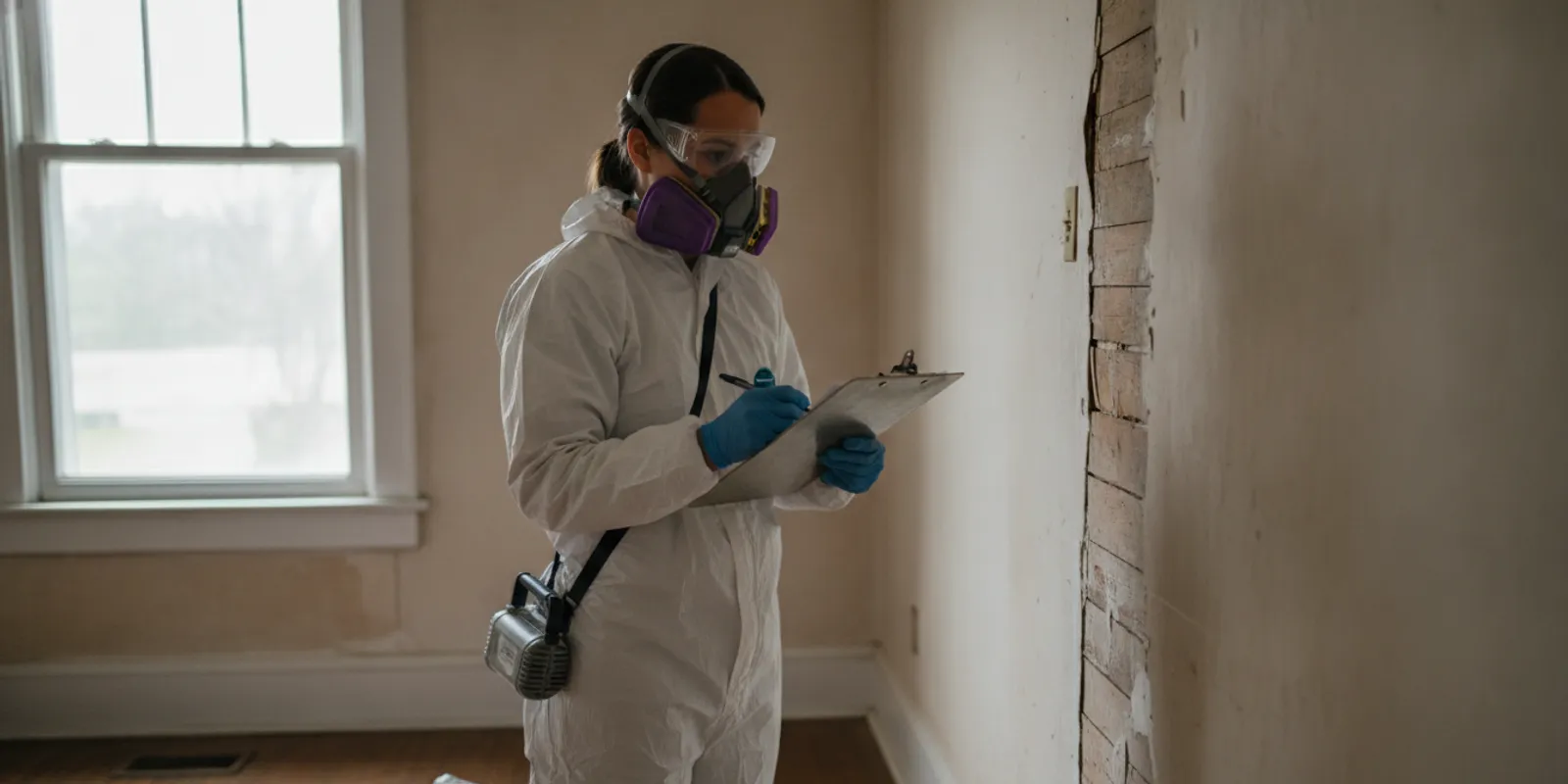
How long are asbestos surveys valid for? There is no single calendar period that makes every report current or expired. A survey describes a defined property, set of accessible areas, materials, and purpose at a particular time. Its practical value depends on whether those details still match the building and the work now planned.
Why is there no universal expiration date?
A survey is a record of assessment, not a permanent certificate covering every part of a building. Its findings have boundaries: the address and structures assessed, the rooms or systems included, the materials examined, the inspection methods and access available, and any limitations written into the report. A conclusion about one room or material cannot automatically be extended to a different room or a concealed space.
For that reason, the number of years since the site visit is only one piece of context. A report prepared recently may not answer a question about a new work area that was never inspected. An older report may still be useful for understanding a previously assessed area if the building and relevant conditions have not changed, but it still needs to be checked against current project needs.
Requirements can also depend on the building, the type of work, and the rules that apply to a particular project. Do not assume that one report automatically satisfies every future owner, contractor, agency, or project requirement. Confirm those requirements with the responsible project lead or applicable authority. For general background, start with Remtech's asbestos information guide and the U.S. Environmental Protection Agency's official information site.
What question was the survey intended to answer?
Before judging whether a report remains useful, identify why it was commissioned. A survey intended to help manage materials during ordinary building use may not have the same scope as an assessment prepared for renovation or demolition. The report should make its purpose and limitations understandable. If the purpose is not clear, request clarification rather than guessing.
Look for terms describing a management survey, a refurbishment survey, or a demolition survey. These terms are commonly used to distinguish survey purposes, but the label alone does not prove the report covers your current project. Read the scope, diagrams, findings, and exclusions. A planned kitchen update, for example, might affect ceilings, flooring, wall finishes, and service routes. A report limited to another floor or only visible materials may not resolve questions about that work.
Ask whether the inspection was designed to address the work now proposed, including any areas that may be opened or disturbed. Where an earlier report does not match the new scope, a qualified professional can explain whether a targeted review or additional assessment is appropriate. Remtech's pages on how asbestos abatement works and the basics of asbestos abatement provide further context for planning conversations.
What parts of the report should you review?
Gather the full report, not just a summary page or an email that quotes one finding. Review these elements together:
- Property identification: Confirm that the address, building, and any relevant additions or outbuildings correspond to the job.
- Survey purpose and scope: Note what the assessor was asked to inspect and what areas, systems, or materials were included.
- Plans and sample locations: Match marked-up floor plans, photographs, and location descriptions to the actual work area.
- Findings: Understand which materials were sampled, which were presumed, and what the report says about materials not identified.
- Access limitations: Look for locked rooms, inaccessible voids, occupied areas, finishes that were not opened, or other exclusions.
- Results and recommendations: Check that laboratory information, recommendations, and any follow-up steps are present when relevant to the report.
- Date and author details: Record when the inspection occurred and who prepared it, then confirm how the document relates to the upcoming work.
Words such as “none identified” should be read within the stated scope. They do not necessarily mean that every material throughout the property was assessed. Similarly, a material listed as presumed has not necessarily been confirmed by sampling; the report's instructions and the project's requirements should guide how that finding is handled.
Keep the complete report with its appendices, drawings, and any later updates. If pages are missing or the report cannot be matched confidently to the building, contact the original provider if possible or ask a qualified professional to review the available record. The goal is to resolve uncertainty before work reaches a material the report does not address.
Which changes can affect whether an older report still fits?
A change does not prove asbestos is present. It means the previous report may no longer answer the new question. Revisit the report when any of the following applies:
- The work has expanded to a room, floor, wing, or building component that was outside the earlier inspection.
- The project will penetrate or remove finishes, ceilings, flooring, insulation, or building systems that were not assessed.
- Repairs, remodeling, additions, or other work have changed the building after the survey.
- A previously inaccessible area is now open, or a previously visible material has become concealed behind later work.
- Materials have deteriorated, been damaged, or become exposed since the survey took place.
- The report has unclear property details, missing locations, vague conclusions, or limitations that overlap the planned work.
- The owner, contractor, project designer, or authority identifies a current documentation need that the existing report may not meet.
Consider a homeowner with a report for a first-floor living area who later plans to replace a bathroom ceiling. The report's age alone does not determine whether it answers the bathroom question. The practical check is whether the bathroom and the materials to be disturbed were included, whether relevant conditions have changed, and whether the report's purpose matches the renovation.
For a commercial property, a tenant improvement may cross several suites, service areas, and shared building systems. A report for one tenant's earlier fit-out should not be treated as a complete record for the entire property without checking its boundaries. A property manager can compare proposed plans with the survey drawings and identify gaps for the project team.
How can you compare a survey with the planned work?
Use a written comparison rather than relying on memory or a quick glance at the report cover. The following sequence helps owners, managers, and contractors identify questions that need resolution:
- Describe the work precisely. List the rooms, surfaces, building systems, and tasks involved. “Renovate the suite” is too broad; note whether the job includes flooring, wall openings, ceiling work, or mechanical changes.
- Mark the work area on a plan. Use the same floor or site plan included with the survey when available. Mark the boundaries of the new work so differences are visible.
- Match each activity to a finding. For every material likely to be disturbed, locate the corresponding report entry, sample location, presumption, or exclusion. Do not substitute a nearby sample for a match without professional guidance.
- Check what happened after inspection. Ask the owner or building manager about renovations, repairs, exposure, damage, or changes in access since the survey date.
- List unresolved areas and questions. State exactly which rooms or materials are not covered, rather than describing the whole report as simply “good” or “bad.”
- Confirm project and jurisdictional requirements. Ask the responsible project lead or relevant authority what current documentation and steps apply to the work.
- Record the decision and distribute it. Keep the comparison with the project file and share the current report and any updates with the people who need them before work starts.
This process is a document review, not a substitute for an assessment where one is needed. If work reaches an unassessed or uncertain material, pause that activity and ask an appropriately qualified professional to advise on the next step. Avoid drawing conclusions from the age of the document alone or from a photograph that does not show the full material and location.
How do common survey situations compare?
| Situation | What to compare | Useful next step |
|---|---|---|
| Same area and apparently unchanged scope | Property identity, purpose, findings, limitations, and current project requirements | Have the project lead confirm that the report answers the present work question |
| Renovation now includes another room | Whether the added room and affected materials appear in the survey documents | Resolve any scope gap before work reaches those materials |
| Building work occurred after the visit | What was altered, removed, covered, exposed, or repaired | Ask a qualified professional whether the change calls for review or additional assessment |
| Report lists inaccessible or excluded spaces | Whether the new work will enter or disturb those spaces | Clarify how the exclusions affect the planned scope |
| Report is missing pages or location detail | Whether results can be matched to the property and materials | Request the complete record or a documented professional review |
The table is a planning aid, not a determination that any one situation is safe or compliant. The project team should use the actual report and the requirements that apply to the specific building and work.
How should owners and project teams handle different scenarios?
When there has been no known change: Start by verifying the exact scope. “No known change” is useful only if someone familiar with the property can confirm what has happened since the inspection. Check that the planned work remains within the surveyed areas and materials, then ask the project lead whether the report meets present requirements. This is more reliable than applying a guessed age limit.
When plans have expanded: Make a side-by-side list of original areas and new areas. For example, if a planned repair grows from one room to a connected hallway, check whether the hallway, its finishes, and any affected systems are documented. A small-looking change in plan can create a distinct assessment question. Have the professional evaluating the project define whether the added scope needs more review.
When the building has been remodeled: Identify which work was done and where. Keep permits, contractor records, or renovation plans if available, but do not assume those records establish the status of every remaining material. Later construction can change visibility and access. Compare the changes with the report and ask for a professional interpretation of any overlap.
When buying, selling, or managing property: Treat the survey as one part of the building record, not as a universal guarantee for future work. Share it with the appropriate parties and explain its known limitations. A future project may have different boundaries or requirements. A property manager can maintain a simple index of reports by building, date, purpose, and areas covered so the next project team can find the complete documents.
When the report is unclear: Avoid relying on a summary that cannot be checked against plans, material descriptions, and limitations. Ask for the full record or written clarification. If the original assessor is unavailable, a qualified professional can review what exists and identify the unanswered questions. Record the question, the answer, and any follow-up needed so the decision is clear to everyone involved.
How should you handle conflicting or incomplete information?
Sometimes the building, the report, and the project documents do not line up neatly. A floor plan may show a room name that has changed, a material description may be too general to identify the exact surface, or a contractor may find a layer that is not visible in the report photographs. Treat these as questions to resolve, not as proof that the report is wrong or that a material contains asbestos.
Start by describing the discrepancy in concrete terms. Note the report page or drawing, the current room or component, and the planned work that creates the question. Photos can help identify location and appearance, but they do not establish composition. Do not disturb the material simply to obtain a better look. Share the relevant documents and observations with the project lead or a qualified professional, and ask what additional information is needed to make a decision.
If two records appear to conflict, keep both and identify their dates and purposes. A later document may address a different scope rather than replace the earlier one. Ask the preparer or reviewer to explain how the records relate and whether the current work area is covered. When clarification changes the project understanding, preserve it in writing with the report so the next person does not have to repeat the same review.
What might a practical review look like?
Suppose a property manager has a survey prepared several years ago for common areas. A new tenant plans work inside a suite and asks whether the older survey is enough. The manager can begin by finding the full report and identifying exactly which common areas it covered. Next, the manager and project lead compare the tenant's drawings with the report's plans and material locations. If the suite was excluded, the fact that the common areas were assessed does not answer the suite-specific question.
The team then checks whether any work since the original visit altered the relevant surfaces and asks which project requirements apply now. If the scope remains outside the report or the records do not resolve a material question, the manager asks a qualified professional to recommend the appropriate next step. The decision, its basis, and any follow-up are recorded and shared with the owner and contractor before work proceeds in the affected area.
This example does not establish a universal rule for every tenant project. It shows how to separate three issues that are often mixed together: the age of a report, the areas it actually covers, and the requirements of the work being planned. That separation helps a team avoid both unnecessary assumptions and unsupported confidence.
What records are useful to keep?
Store the complete report in a location that property owners and authorized project personnel can find. Include attachments, laboratory results when provided, diagrams, photographs, correspondence that clarifies the scope, and any later assessments. Use a consistent file name or index that identifies the property, date, and purpose. This small administrative step can prevent a future project from relying on an incomplete excerpt.
A short project note can record the planned work areas, the report reviewed, the reviewer, identified exclusions, and unresolved questions. If a new assessment or update is obtained, keep it with the earlier document rather than replacing the history. That lets future owners or managers understand which records were prepared for which purpose. It also helps contractors and other professionals work from the same version of the project information.
Remtech provides environmental remediation guidance for residential and commercial properties in North Carolina. Learn about asbestos services in Raleigh, the broader Raleigh-area service coverage, or the company's approach and background. For a general starting point, see the asbestos survey help available through Remtech.
Discuss your project with Remtech
What should you confirm before relying on the report?
Before the project moves forward, make sure the people responsible can answer a few practical questions:
- Does the report identify the correct property and the exact areas involved?
- Does its purpose relate to this type of work?
- Are the materials likely to be disturbed represented in its findings or clearly identified as gaps?
- Have repairs, renovations, or newly accessible areas changed the context since the assessment?
- Are limitations and outstanding questions understood by the owner and project team?
- Has the responsible party confirmed current project requirements?
- Do the contractor and property representative have access to the same complete, current set of records?
If an answer is uncertain, write down the specific issue and ask the appropriate professional or authority to resolve it. This is a measured way to proceed: it neither assumes a report is invalid simply because it is old nor treats an old conclusion as proof about unassessed parts of a building.
Frequently Asked Questions
Does an asbestos survey expire after a set number of years?
There is no single calendar period that applies to every report and project. Review its purpose, boundaries, findings, limitations, and the property's changes, then confirm the requirements for the work being planned.
Can I use an older survey for a renovation?
Possibly, if the survey covers the exact areas and materials affected, the report still reflects relevant conditions, and it meets the project's current requirements. If the renovation reaches an unassessed area, get professional guidance before disturbing materials there.
Does a survey cover concealed materials?
Not automatically. The report should describe its scope and any access restrictions or exclusions. Do not assume that an area or material was assessed if it is not addressed in the documents.
What if the report says no asbestos was identified?
Read that finding in context. It applies to the inspected areas and materials described by the report, not necessarily to every part of the property. Compare its documented scope with the work before relying on the conclusion.
Should I arrange another survey whenever I plan work?
Not necessarily. First compare the planned work with the existing report and check for changes and project-specific requirements. If there is a gap or uncertainty, ask a qualified professional whether a review or further assessment is appropriate.
Plan the next step around your property
The useful question is not only how old the survey is, but whether it answers the question this project raises. Compare the report with the work, document any changes or exclusions, and resolve gaps before work reaches uncertain materials. Remtech's project planning information and asbestos guidance for Apex can help you prepare a clear conversation about your property's needs.
Request a project consultation
With a careful scope check and clear records, owners and project teams can make a better-informed decision about what the existing survey does—and does not—answer.