
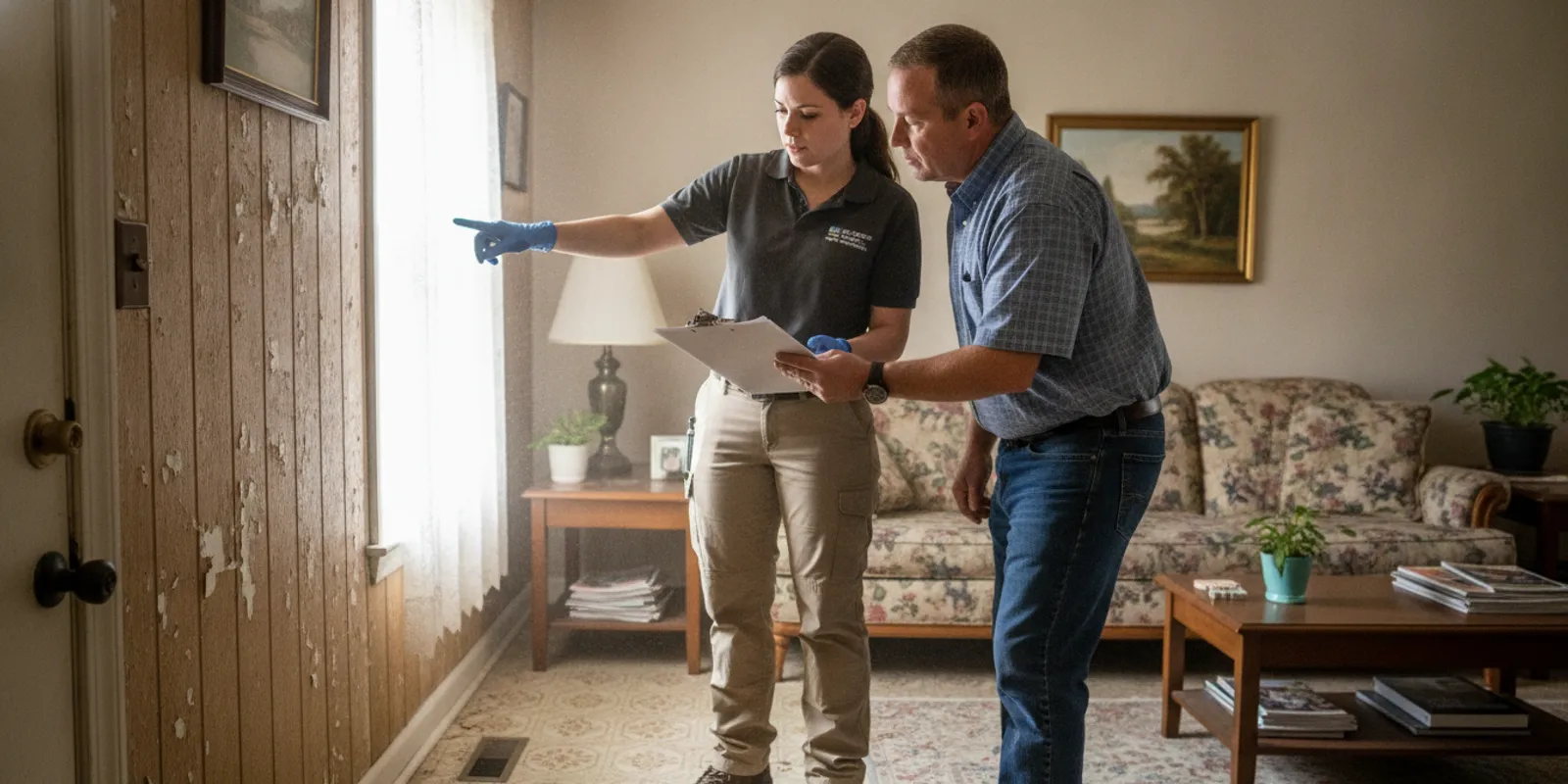
An asbestos survey is most useful when a rental property owner needs clear information about possible asbestos-containing materials, their locations, and whether planned work could disturb them. A survey is not automatically required for every rental. The right scope depends on the property, its condition, and the planned work. For North Carolina owners and managers, a careful plan can help protect occupants, contractors, and the project schedule without guesswork or alarm.
What question should an asbestos survey answer?
Start with the decision you need to make. Are you planning a kitchen update, replacing flooring, opening a ceiling, repairing damaged pipe insulation, or evaluating a property before a change in tenancy? The answer helps determine whether the assessment should focus on a defined work area or consider a broader part of the building.
People use the word "survey" in different ways. Some mean a visual review of building materials. Others mean a professional assessment that includes sampling and laboratory analysis. Before scheduling, clarify what is included, what the report will identify, and whether the proposed scope addresses the planned work. A survey intended to inform a limited repair may not answer questions about future renovation in other rooms.
A useful assessment is about information, not a predetermined outcome. It should help an owner understand what was observed, what was sampled if sampling was included, what areas were inaccessible, and what next steps may be appropriate. It should not turn uncertainty into an unsupported promise that every material in a building has been checked.
When should a rental property owner consider an asbestos survey?
Consider an assessment when the age or construction history of a building is uncertain and planned work could affect suspect materials. Asbestos was used in a variety of building products, and a material's appearance alone generally cannot confirm whether it contains asbestos. The presence of a material that could contain asbestos does not by itself tell you whether it is damaged or likely to be disturbed.
Common triggers for asking a qualified professional about an assessment include:
- Planned renovation: Work on floors, ceilings, walls, insulation, or other older building components may disturb materials that should be evaluated first.
- Repeated maintenance: A repair that seems small can involve cutting, drilling, scraping, or removing material. Ask what the work will touch before authorizing it.
- Visible deterioration: Damage, debris, or a change in a material's condition merits a measured response. Avoid touching or cleaning suspected debris while you arrange professional guidance.
- Purchase, turnover, or portfolio planning: An owner may want clearer building records to guide future maintenance. A survey should be matched to the purpose; it cannot automatically stand in for a project-specific assessment.
- Contractor questions: If a contractor cannot proceed without knowing what a surface or component contains, resolve that uncertainty before work starts.
Timing matters. If work is already scheduled, pause the affected activity until you understand what materials it may disturb and what assessment is appropriate. Do not ask a maintenance worker or tenant to take a sample. Sampling can disturb material, and a professional can explain the safest, most useful way to investigate.
Does every rental property need the same survey?
No single survey scope fits every building or project. A vacant unit undergoing a major renovation presents a different planning question from an occupied apartment where a contractor needs to make a small, defined repair. Property age, renovation history, visible condition, access, building type, and the planned work all affect what an assessment should cover.
For a targeted project, the owner may need information about the materials in the work zone and the route or adjacent components that the work could affect. For broader maintenance planning, the owner may ask about a wider area and a process for recording materials that were not sampled or could not be accessed. Neither approach should be described as comprehensive unless the professional's scope truly supports that description.
| Planning situation | Question to resolve | Possible assessment focus | Owner's next step |
|---|---|---|---|
| Defined repair or renovation | Which materials could this work disturb? | The work area and relevant adjacent components, as agreed with the assessor | Share plans and confirm the scope covers the contractor's tasks |
| Building maintenance planning | What information would help guide future work? | Specified areas or materials, with access limits clearly recorded | Keep the report with property records and update plans when conditions change |
| Damage or debris concern | What is the material and how should the area be handled? | Professional evaluation of the specific concern; avoid disturbing it while arranging help | Restrict access as appropriate and get qualified guidance before cleanup or repair |
| Tenant turnover or acquisition | What existing records are available and what gaps remain? | Review of documents and, if needed, assessment tailored to upcoming work | Do not treat an old or limited report as proof about unassessed areas |
The table is a planning aid, not a substitute for a project-specific professional recommendation or a statement of legal requirements. Ask the assessor to explain why the proposed boundaries fit the question you are trying to answer.
How can owners prepare before the assessment?
Good preparation saves time and helps the assessor focus on the right parts of the building. Gather the information you have, even if it is incomplete. Useful items may include building plans, prior inspection or abatement records, renovation dates, maintenance notes, and contractor descriptions of the work. Make a list of the rooms and components involved rather than relying on a general description such as "the whole unit."
- Define the planned work. Write down which materials will be removed, cut, drilled, covered, or repaired. Share the contractor's scope or drawings if available.
- Identify the property and access needs. Note the unit, common areas, utility spaces, and rooms where assessment may be necessary. Point out locked or inaccessible areas.
- Collect existing records. Provide previous reports and explain what work has taken place since they were prepared. A report's date and boundaries matter.
- Coordinate occupants. Tell tenants what areas may need access, when, and why. Follow the lease and applicable notice requirements; do not promise a particular conclusion before the assessment.
- Confirm deliverables. Ask whether the work includes visual assessment, sampling, laboratory analysis, a written report, marked locations, and recommendations. The proposal should make inclusions and limitations understandable.
If the building is occupied, a clear plan reduces confusion. Explain that the purpose is to gather information before work, not to create unnecessary alarm. Arrange access through the owner or property manager, and make sure the assessor knows about sensitive operating hours, pets, security procedures, or areas that cannot be entered. Do not ask occupants to move, scrape, or package suspect material to prepare the space.
What should the owner ask the assessor?
Ask direct questions before approving the scope. A qualified professional should be able to explain the process in plain language and distinguish observed facts from unknowns. Remtech's overview of asbestos can also help owners become familiar with the topic before a consultation.
- What decision is this assessment designed to support?
- Which rooms, materials, and work areas are included, and which are excluded?
- Will sampling be proposed? If so, how will locations be selected and documented?
- How will the report describe materials that were inaccessible or not sampled?
- What information do you need from the renovation contractor or property manager?
- What should occupants and maintenance staff do while the assessment is underway?
- How should we use the findings before repairs, renovation, or demolition?
- What records will we receive, and who should keep them?
Ask about qualifications and experience relevant to the work. For asbestos projects, Remtech Environmental uses EPA-accredited specialists; its team also includes IICRC-certified technicians. Ask the company to identify who will conduct the assessment, what credentials apply to the specific task, and what the deliverable will contain. Learn more about Remtech's asbestos services in Raleigh or its company background.
How should you coordinate a survey with tenants and contractors?
Property managers are often coordinating three groups at once: the owner, occupants, and the contractor. Make one person responsible for the schedule and the written updates. Give occupants a concise explanation of the access request and direct questions to the manager rather than asking tenants to interpret technical findings.
Before the assessment, confirm the appointment window, which areas need access, and whether the assessor needs the contractor's drawings or work description. Afterward, give the contractor the relevant report information before work begins. Do not assume that a report for one room or an earlier project covers new work in another location.
If the property is part of a larger portfolio, use consistent recordkeeping without assuming that every building has the same materials. Store reports with the property and unit identifiers, date, scope, locations assessed, findings, limitations, and any follow-up documents. When a renovation changes a space, note the work and retain updated project records. A simple index can help the next manager find documents without implying that the index itself is an asbestos management plan.
Owners may also need to consider current federal, state, local, and project-specific rules, depending on the building and the work. Requirements can vary by project and circumstance. Do not assume that a private rental follows the same process as a public, commercial, or demolition project; verify applicable obligations with the relevant authority or qualified professional. The American Public Health Association's comments on asbestos risk evaluation discuss the broader importance of assessing exposure risks, including how property owners respond to events. It is not a rental-property compliance checklist, so use it for that limited context rather than as a source of local legal advice.
How do you read the survey report?
Read the scope and limitations before focusing only on the results. Check the property address, unit or area, date, purpose, and the locations assessed. Confirm that the report corresponds to the planned work. If a contractor plans to open a ceiling but the report only addresses flooring, ask what additional information is needed.
Look for clear documentation of the materials observed, sample locations and results if samples were collected, areas that were inaccessible, and recommended next steps. Ask the assessor to explain technical terms and any uncertainty. A result applies to the material and location evaluated; it should not be casually extended to visually similar materials elsewhere in the property.
A report may identify a need for additional assessment, management, or abatement before a particular activity. It does not mean that every material must automatically be removed. The decision should consider the material's condition, likelihood of disturbance, planned work, and applicable requirements. If action is recommended, ask what the recommendation addresses and what needs to happen before the contractor proceeds.
Keep the report available to the people who plan and perform future work. If the property changes hands or the manager changes, transfer records through the appropriate process. Tell contractors about relevant findings before they disturb the affected area, and ask them to flag any scope mismatch rather than improvising in the field.
What if a survey identifies asbestos-containing material?
Take a measured next step. First, understand exactly what material was identified, where it is, and whether it is damaged or involved in the planned work. Do not disturb it while deciding what to do. The appropriate response may involve avoiding disturbance, managing the material, or arranging professional abatement based on the circumstances and applicable rules.
For work that may require removal, ask the professional to explain the work area, occupant protections, project sequence, and closeout documentation. Make sure the contractor's proposed work addresses the material and boundaries identified in the assessment. Remtech's guide to how asbestos abatement works offers a general introduction to the process. The actual plan should fit the property and the project rather than being copied from a generic description.
Owners should avoid two extremes: treating every suspected material as an emergency, or assuming that undisturbed-looking material can be ignored when construction is about to affect it. Get the facts, keep occupants informed, and base the next step on the assessment and professional advice. Remtech describes its approach as "Doing the right work the right way," with transparent explanations rather than high-pressure sales language.
How can North Carolina owners plan for the next step?
Rental buildings across North Carolina differ in age, construction, renovations, and intended use. A practical plan starts with the work area and the owner's real question. Whether a property is in the Triangle, Western North Carolina, or the coast, arrange an assessment early enough to inform the project schedule and tenant coordination.
Remtech serves residential and commercial properties across North Carolina. Owners can review its North Carolina service areas to understand regional coverage. Pricing is consultation-based and project-specific, so discuss the property, requested scope, and deliverables rather than relying on a generic rate.
Before authorizing work, verify that the contractor has the right information for the specific task. If the assessment identifies a gap, resolve it before the affected material is disturbed. If the report is clear for the planned work, keep it on file and share it with the people who need it. A well-scoped survey can make the next decision easier without promising more than the assessment actually establishes.
Get a Free Quote for Your Property
Frequently Asked Questions
Is an asbestos survey required for every rental property in North Carolina?
There is no one-size-fits-all answer for every rental and every type of work. Requirements depend on the building, project, and applicable rules. Owners should verify obligations for their specific circumstances with a qualified professional or relevant authority rather than assuming a survey is always required or never needed.
Can I use an old asbestos report for new renovation work?
Possibly, but first compare the report's date, assessed locations, purpose, and limitations with the new work. A report covering one area does not establish the condition of materials in a different area. Ask a qualified professional whether the existing information is sufficient for the current scope.
Should tenants collect a sample or clean up suspected asbestos?
No. Do not ask tenants or maintenance staff to disturb or sample suspected material. Keep people from disturbing the area and contact a qualified professional for guidance on assessment and handling.
Does a survey mean the owner must remove every identified material?
Not automatically. What to do depends on the material's condition, whether planned work could disturb it, and applicable requirements. Review the findings and recommendations with a qualified professional before deciding whether management, additional assessment, or abatement is appropriate.
What should I give an assessor before the visit?
Share the planned work description, available building and renovation records, prior reports, the areas involved, access limitations, and any known damage or concerns. This helps the assessor propose a scope suited to the decision you need to make.
Plan the assessment around the property and the work
A rental property owner does not need to guess from a building's age or appearance. Define the work, gather existing records, coordinate tenant access, and ask a qualified professional for a scope that clearly states what the assessment will and will not cover. Remtech can discuss the property and provide a project-specific consultation through its contact page.
With clear information in hand, owners and managers can make a more informed decision about maintenance, renovation, and the people who need to know before work begins.