
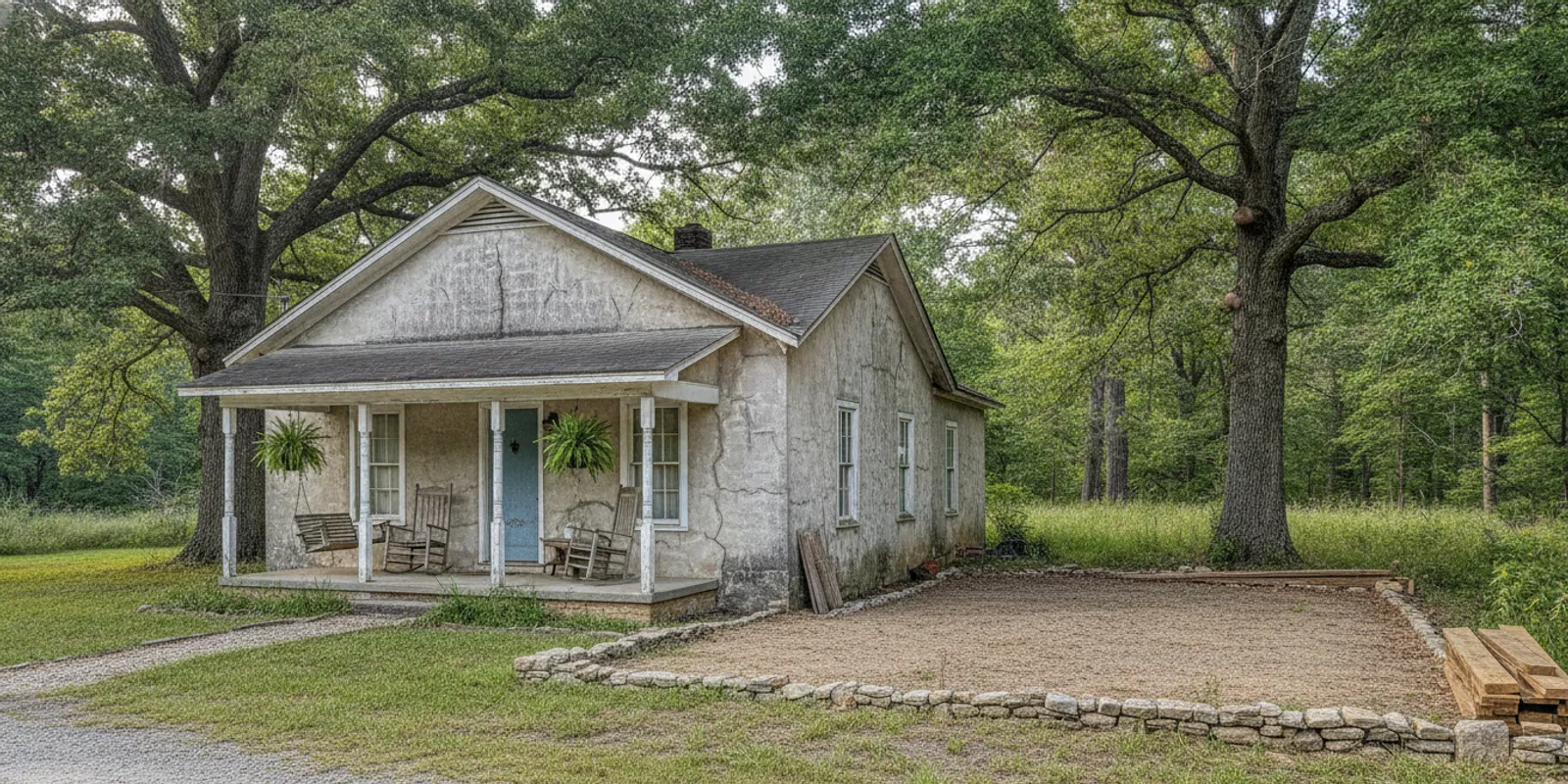
If you are planning a renovation or repairing an older exterior, asbestos siding removal may be one option to consider. The first step is not to pry off a panel or assume that every older siding product contains asbestos. Instead, establish what the material is, whether it is damaged, and what work the property actually needs. A careful plan can help you compare options before anyone disturbs the siding.
Why does siding material and condition matter?
Some older homes have cement-based siding that may contain asbestos. Appearance alone is not a reliable way to confirm its contents. Similar-looking products can have different compositions, and layers added during later renovations can make visual identification harder. Treat an uncertain material carefully until it has been assessed.
Asbestos-containing material is generally a greater concern when fibers can be released into the air. A panel that is intact and left undisturbed presents a different situation from one that is cracked, drilled, cut, sanded, or broken during demolition. That difference is why a good plan starts with the condition of the siding and the proposed work, rather than with a predetermined removal decision.
Look from a safe distance for obvious damage such as broken corners, loose sections, impact marks, or areas disturbed by earlier repairs. Do not scrape, snap, drill, or collect a piece to test it. If you need a closer assessment or a sample, ask a qualified professional how that should be handled. Remtech's overview of what property owners should know about asbestos can help you understand the basic issue before discussing the specific siding.
Condition is only one part of the decision. The planned work matters just as much. For example, repainting an undisturbed wall may have a different scope from replacing windows, adding insulation, repairing sheathing, or removing an entire exterior assembly. A plan should identify exactly where trades will work and whether their tasks could contact the siding. Ask the project lead to consider the sequence of work as well as the material itself.
Also consider what is nearby. Outdoor seating, walkways, gardens, vents, doors, and windows may affect access and how a work area is organized. These details do not establish whether siding contains asbestos, but they can help a professional understand the project and identify questions that should be answered before a start date is chosen.
How can you determine whether the siding contains asbestos?
Age and appearance can raise a question, but they do not confirm the material. A laboratory analysis of a properly collected sample is commonly used to identify whether a building material contains asbestos. Sampling itself can disturb the material, so do not make a sample by breaking off a piece or using a household tool. Ask a qualified professional whether testing is appropriate and who will arrange it.
Before testing, write down what you know about the exterior. Note the approximate age of the home if known, visible layers, prior exterior work, and the location of any damaged panels. Take ordinary photographs from a distance if they can be made without touching the siding or climbing to reach it. Share those observations with the professional. This background can help define what needs to be assessed, but it cannot replace a test when one is needed.
If a property has several claddings or repair areas, ask whether the proposed sampling scope represents the material that will actually be disturbed. A result from one section does not automatically describe every separate product or layer on a building. Have the professional explain which materials were evaluated, where samples came from, and what the findings do and do not establish.
It is useful to ask for a plain-language explanation of the findings. Which material was sampled? What area does the result apply to? Are there other layers or visually similar products that were not part of the assessment? What should happen if the renovation uncovers a different material behind the siding? These questions help prevent a narrow finding from being treated as an answer for every part of the exterior.
Keep the report or written findings with the property's renovation records. If you later request bids, share the relevant information with each contractor so they can base their scope on the same facts. Do not summarize a technical conclusion from memory when the original document is available. When a finding is unclear, ask the person who prepared it to explain the limits and implications for the planned work.
Should you leave, repair, cover, or remove the siding?
Removal is not automatically the best answer for every property. If suspect siding is in good condition and no work will disturb it, leaving it in place may be worth discussing. If exterior work is planned, a contractor can explain whether the work can be redesigned to avoid disturbing the material, whether a compatible covering or repair is suitable, or whether controlled removal is the more appropriate option.
These choices have different trade-offs. The right approach depends on material condition, the scope of renovation, the building assembly, local requirements, and the ability to protect occupants and workers. Use the table as a starting point for a project conversation, not as a substitute for a site-specific assessment.
| Option | When it may be considered | Planning questions |
|---|---|---|
| Leave in place | The material is intact and the planned work will not disturb it. | How will future repairs avoid damage? Should the material be documented for future owners or trades? |
| Repair or cover | Localized concerns or a renovation may be addressed without removing all siding, if the assembly and product allow it. | Will the work disturb the existing material? How will edges, penetrations, and later maintenance be managed? |
| Remove | The project requires access behind the siding, the material is damaged, or removal is selected after review. | What material is included, how will the work area be controlled, and what local or project requirements apply? |
Leaving material in place is not the same as ignoring it. If that option is selected, ask how to tell future contractors that the material may be present, what kinds of work could disturb it, and who should be contacted before later repairs. A short note in property records can help prevent a future trade from treating an uncertain panel like ordinary debris.
Repair or covering also needs a building-specific review. Added layers can affect trim, window details, moisture management, attachment points, and future access. Ask whether the proposed assembly is compatible with the existing wall and whether its installation requires cutting or fastening through the suspect siding. A covering that appears straightforward from the yard may create details that need careful planning at corners and openings.
For removal, define the boundaries before work begins. A proposal should make clear which elevations, panel types, and related materials are included. It should also explain how the team will respond if the actual conditions differ from what was visible during planning. For context on controlled project planning, see Remtech's explanation of how asbestos abatement works.
Ask the contractor to explain why the recommended option fits your particular siding and renovation. A clear proposal should separate what is known from what remains uncertain. If a proposal jumps directly to removal without explaining the material, work area, and alternatives, ask for that explanation before deciding.
What should you ask before scheduling asbestos siding removal?
Start by describing the planned work, not just the material. A siding project to expose a wall, replace windows, repair a small damaged area, or renovate an entire exterior may require different scopes. Ask the contractor to identify the area included and whether adjacent materials or surfaces could be affected.
Then ask for a walk-through of the sequence. What happens before the work area is set up? Which parts of the property need to remain clear? How will the crew reach each elevation? Who is responsible for coordinating any other trades? These questions reveal whether the proposal reflects the actual site instead of relying on a generic description.
- What do you know about the siding? Ask whether its composition has been confirmed, what evidence supports the conclusion, and whether additional assessment is needed.
- What work is included? Request a written description of the siding and areas covered, how access will be managed, and what is outside the scope.
- How will disturbance be limited? Ask how the team plans to handle the material, protect people and nearby areas, and manage debris under applicable requirements.
- Which rules apply to this property and project? Local requirements can depend on location, building type, amount and type of material, and the work planned. Ask who will verify them.
- What happens if conditions differ? Agree on how the contractor will pause, explain a changed condition, and obtain approval before expanding the work.
- What records will you receive? Ask what project documents, disposal information, or completion records will be provided and keep them with property files.
In North Carolina, do not assume one local permit process represents the whole state. For example, the Asheville-Buncombe Air Quality Agency asbestos permit information includes fields for removal contractor details. It is a local example, not a statewide rule. Ask the authority responsible for your project location or your contractor to confirm which requirements apply before work begins.
Ask the contractor to identify who will check applicable rules and when that check will happen. If a permit, notice, or other project-specific step applies, establish who will complete it and what information they need from you. Do not treat a form from another county as a complete checklist for your own address. The responsible agency can clarify current requirements for the exact work and location.
Remtech Environmental provides environmental remediation guidance for residential and commercial properties across North Carolina. Its team includes EPA-accredited specialists and IICRC-certified technicians. Learn more about the company's asbestos services in Raleigh or its broader North Carolina service areas.
For a project outside Raleigh, local service information can help you start a location-specific conversation. Remtech also shares information about asbestos services in Asheville and asbestos services in Apex. A service-area page is not a substitute for discussing the property's particular scope, but it can help you identify a relevant point of contact.
How do you prepare the property for the work?
Once the scope and schedule are clear, ask the contractor what occupants need to do before arrival. Avoid moving or handling suspect siding yourself to clear a work area. Confirm how the crew will reach the exterior, whether gates or parking need to be available, and which doors, windows, or outdoor areas should remain clear during the project.
Make a simple site list with the contractor. Include access points, locked gates, pets, outdoor furniture, planters, vehicles, and any areas that must remain available to residents or employees. Ask which items should be moved by the owner and which should be handled by the crew. Do not move an item by dragging it across a damaged or suspect area; ask for direction if access is not clear.
Tell the contractor about known damage, prior repairs, additions, and any plans by other trades to work nearby. Coordinate exterior renovation activities so that a painter, window installer, landscaper, or general contractor does not unknowingly disturb the same material. If tenants, employees, customers, or neighbors could be affected, agree in advance on who will communicate the schedule and access limits.
Scheduling coordination can matter as much as clearing the area. If window work and siding work are both planned, ask which should happen first and who will confirm that the material and boundaries are understood by both crews. Share the relevant written scope rather than relying on informal messages passed between contractors. That gives each trade a chance to identify conflicts before arriving.
Keep the proposal, assessment information, communications, and any project records together. If the work is part of a sale, insurance matter, or larger renovation, ask the relevant property professional what documentation they need. Requirements and expectations can vary, so avoid relying on a generic checklist as proof that a particular project is complete.
How can you compare project proposals?
Price alone cannot show whether two proposals cover the same work. Remtech describes pricing as consultation-based and project-specific, so the scope and property conditions should be discussed before comparing quotes. Ask each contractor to describe the area and material included, preparation, work practices, debris handling, exclusions, and steps for changed conditions.
To make the comparison practical, put each proposal side by side and mark whether it answers the same questions. Does it cover the same wall elevations and materials? Does it state how access will be arranged and what happens to nearby fixtures or landscaping? Does it describe who coordinates any required assessment and what is expected from you before the crew arrives? If one quote is shorter or leaves an item open, ask for clarification in writing rather than assuming the detail is included. That simple review helps you compare scope as well as the total project price.
Use a small comparison sheet if the documents are difficult to review at once. Give each bid a column and add rows for the material and surfaces included, assessment information, preparation, work area, debris handling, exclusions, schedule, and documentation. Write “not stated” wherever a proposal is silent. That label is a prompt to ask a question, not proof that the item is missing. Record the answer in writing so all decision-makers can compare the same details.
Look for a proposal that uses plain language and distinguishes confirmed facts from assumptions. Check that the contractor explains the recommended approach, identifies who is responsible for checking applicable requirements, and tells you what information will be supplied at completion. Ask how the project team will communicate if hidden conditions or additional suspect materials are found.
Insurance and qualifications also belong in the review. Ask for relevant documentation and make sure the names and scope on the proposal match the company you are engaging. Remtech's guide to the basics of asbestos abatement offers additional context for understanding a controlled project process. For another overview of the service, see asbestos removal information for Durham.
Do not compare an all-inclusive proposal with a partial scope as if they were identical. If one contractor includes assessment coordination or documentation and another does not describe those items, ask whether those tasks are included, excluded, or the owner's responsibility. A written clarification can make the differences visible without assuming that one scope is automatically better. Confirm any revisions before approving the project.
What should you do if the siding is damaged now?
If you find broken or deteriorating suspect siding, do not sweep, sand, power-wash, or cut it. Keep people and pets from contacting the damaged area, and avoid further work nearby until you have professional advice. Do not attempt to bag or transport pieces yourself. Contact a qualified professional to discuss the condition and the next step for the specific property.
When you make that call, describe what you can see without touching the material. Explain where the damage is, whether it appears to have happened recently, and whether any renovation work is underway. If you have a photograph taken from a safe distance, say so. The professional can then tell you whether additional information is needed and what to do while you wait for advice.
If work has already begun and unexpected material is uncovered, ask the crew to stop work in the affected area and follow its site procedures. The project lead should explain what was found, whether the original scope needs review, and how the next decision will be made. Do not assume that an unexpected finding means every surface is affected or that all work must be abandoned; let the professional assess the facts and relevant requirements.
Keep the discussion specific. Ask which task was underway, what material was encountered, what area is being held, and who will decide whether the written scope needs an update. Before work resumes in that area, make sure the appropriate assessment and project instructions have been addressed. For additional background, Remtech's asbestos project overview discusses the importance of understanding the material and the work being considered.
Frequently Asked Questions
Can I identify asbestos siding by looking at it?
No. Appearance and age may prompt further investigation, but they do not confirm composition. Ask a qualified professional whether testing is needed and how sampling can be arranged without unnecessary disturbance.
Does every older home need its siding removed?
No. The decision depends on the material's condition and the work planned. Leaving intact material undisturbed may be an option in some situations; repair, covering, or removal should be assessed for the particular building and project.
Can I remove one broken panel myself?
Do not break, cut, or handle a suspect panel to test or remove it. Rules can depend on the material and project, and improper disturbance can release fibers. Get advice from a qualified professional before taking action.
Are permit requirements the same throughout North Carolina?
Do not assume so. Requirements can differ by location and project details. Confirm the current rules with the responsible local or state authority, or ask your contractor to identify the requirements that apply to your property.
Should I get more than one proposal?
Comparing proposals can help you understand differences in scope, assumptions, and project coordination. Compare the written work areas and included tasks, not just the totals, and request clarification wherever an important detail is unclear.
Plan the next step around the siding and the work
For a siding project, useful decisions start with clear information: what material is present, what condition it is in, and what the renovation needs to accomplish. When you are ready to discuss the property, request a project consultation and share the location, planned work, and any known concerns.
A careful plan can help you compare options, coordinate trades, and make informed decisions without disturbing material before its status is understood.