
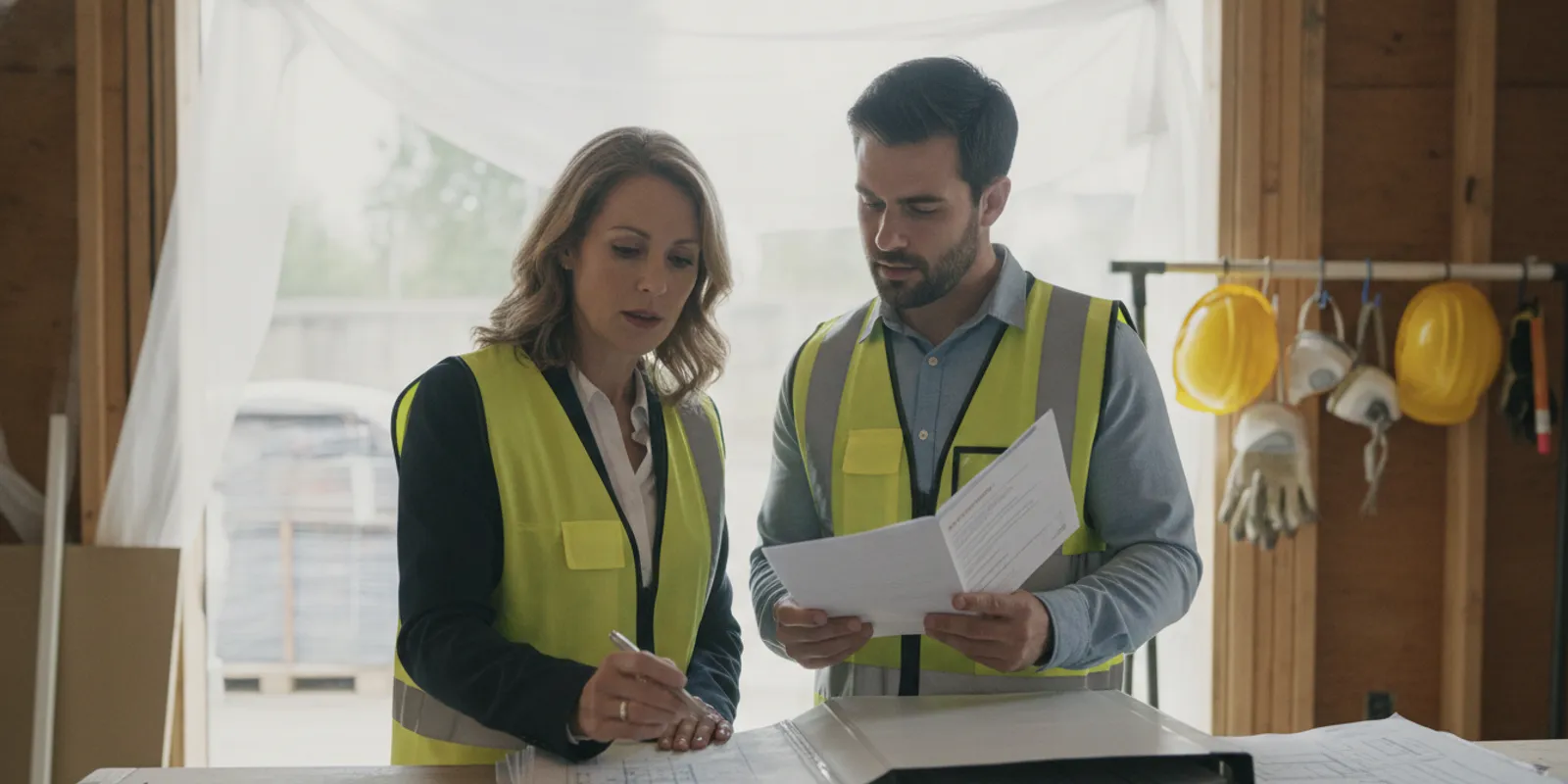
Before hiring a contractor for asbestos work, ask how the company’s insurance applies to the specific project, not just whether it is insured. This asbestos contractor insurance North Carolina guide covers the documents to request, the questions that clarify coverage, and how to compare answers without treating a certificate as a guarantee.
Why ask about insurance before asbestos work begins?
Asbestos work can involve specialized procedures, controlled work areas, waste handling, and coordination with other people at the property. Insurance is one part of evaluating a contractor’s readiness. It does not replace a suitable work plan, relevant experience, or clear communication about the project.
Ask about insurance early enough to review the answer before scheduling. This gives you time to clarify which company or entity is performing the work, what policies apply, and whether the proposed scope fits the contractor’s coverage. A verbal assurance such as “we are fully covered” is difficult to evaluate. Request current documents and ask your own insurer, attorney, or insurance professional about questions specific to your property when needed.
Coverage should be discussed in relation to the actual job. For example, a small, contained project and a larger renovation may involve different work areas, trades, schedules, and exposures. The contractor should be able to explain the work it proposes and identify any limits or exclusions that may be relevant. Do not assume one policy name or one certificate answers every question.
It can help to write down the work you expect before making calls. Note the building type, areas under consideration, whether the work is tied to a renovation, and the approximate schedule. You do not need to diagnose materials or decide how they should be handled. The point is to give each contractor the same basic project description so their answers can be compared on equal terms.
Which insurance documents should you request?
Start by asking for a current certificate of insurance (COI) and the name of the insurer or insurance contact who can confirm policy details. A COI is a summary document. It is useful for checking basic information, but it is not the insurance contract and should not be treated as proof that every possible loss or activity is covered. If an important question is not answered by the certificate, ask the contractor how it can be verified.
Request information for the business that will actually perform the work. A proposal may come from one company while field work is assigned to another entity or subcontractor. Ask who employs the crew, who controls the work, and whose policies apply to each part of the project. If subcontractors are involved, ask how their insurance is checked and whether you can review current documentation.
Depending on the work and the parties involved, useful coverage categories to discuss may include general liability, workers’ compensation, commercial automobile coverage, and pollution or environmental liability. These labels alone do not establish what a policy covers. The policy wording, limits, exclusions, named insured, and the activities insured all matter. The right questions depend on the project and your contractual requirements.
For an institutional example of documenting contractor qualifications, Western Kentucky University’s asbestos contractor qualification questionnaire calls for information from asbestos analytical, consultant, and removal contractors. It is an example of a qualification process, not a North Carolina insurance rule or a substitute for reviewing coverage documents.
Depending on the project and the owner’s process, you may also need contract language, endorsements, or other documentation reviewed by your adviser. Do not assume that a certificate holder is automatically an additional insured, or that either designation changes the underlying policy. If your organization has a standard insurance schedule, share it with the contractor early and ask which requirements it can document. Your broker or attorney can explain what the requested language means and whether it fits the agreement.
What should you check on a certificate of insurance?
Read the certificate with the project details in front of you. Check that the listed business name matches the contractor in the proposal and contract. Review the effective and expiration dates to make sure the coverage is current for the planned work period. Look at the insurer and the listed policy types, then note the stated limits and any certificate-holder information.
A certificate may contain language explaining that it is informational and does not amend, extend, or alter policy terms. That is why a certificate alone cannot resolve every question. If the work description, insured entity, dates, or coverage category is unclear, ask the contractor for clarification and, when appropriate, verification from its insurance representative.
- Business identity: Does the named insured match the company signing the agreement?
- Dates: Are the effective dates current and expected to cover the work period?
- Coverage categories: Are the types of insurance shown relevant to the work being proposed?
- Limits: Are the listed limits acceptable for your contract, lender, owner, or risk-management requirements?
- Other parties: If your organization asks to be named as a certificate holder or additional insured, has the contractor explained what is possible under the policy and contract?
- Changes: What happens if the schedule extends beyond a policy’s expiration date?
Do not edit a certificate or rely on a promise that a policy will cover an activity merely because the activity appears in a project description. Ask for the appropriate documentation and confirm uncertain terms with a qualified insurance professional. Contract language and policy wording can have important consequences, so get professional advice for legal or coverage decisions.
A practical way to review the certificate is to mark each question as confirmed, needs clarification, or not applicable. For example, if the proposal and certificate use slightly different business names, do not guess that they refer to the same entity. Ask the contractor to explain the relationship and provide documentation that resolves the mismatch. If the policy dates end before a delayed project is expected to finish, make a note to request updated evidence before work starts or resumes.
Which coverage questions are worth asking?
Ask open, specific questions and request written answers. You are not expected to interpret policy language on your own. Your goal is to understand who is insured, what the contractor says its policies address, and what still needs confirmation.
- Which legal business entity will perform and supervise the work? Ask whether employees, subcontractors, or another company will enter the work area, and whose insurance applies to them.
- Does the coverage apply to asbestos-related work of this type? Ask the contractor to describe any relevant limitations, exclusions, or conditions. If the answer is unclear, request clarification from the insurer or broker.
- What are the policy dates and limits? Compare them with the expected schedule and the requirements in your contract, lease, lender documents, or organizational policy.
- How is workers’ compensation handled for the crew? Ask who employs the workers and what documentation is available. Do not infer a worker’s status from a uniform or a subcontractor’s presence.
- How are subcontractors reviewed? If they will be used, ask whether current certificates are collected and which company is responsible for their work.
- What coverage addresses accidental property damage or pollution-related claims? Ask which policies may respond and what exclusions or limits could matter. Have your own adviser assess whether that response meets your needs.
- Can you provide updated documents if the project dates change? A project delay may cross a policy renewal date. Agree on how current documentation will be checked before work continues.
- Who should be contacted if a claim or incident occurs? Confirm the contractor’s reporting process and the appropriate contacts before the crew arrives.
Take notes on the answers and save the documents with the proposal and contract. If the contractor cannot answer a basic question, ask who can provide a reliable response and when you should expect it. A careful explanation is more useful than a broad assurance.
To make the conversation efficient, group questions by topic. First confirm the company and the people doing the work. Then discuss which documents are available and which items require a broker or insurer to answer. Finish by agreeing on when updated documents will be shared and who will follow up. This order keeps a basic identity issue from getting lost in a discussion about policy terminology.
For example, a property manager comparing proposals for work in an occupied building might record that one contractor uses employees only, while another expects a specialty subcontractor to perform part of the scope. That difference does not by itself determine which proposal is better. It does identify a follow-up: obtain the subcontractor’s current documentation and clarify who supervises the work and handles coordination.
How can you compare insurance answers from contractors?
Use the same questions for each company. Compare the completeness and clarity of the documentation, not just a single limit or the number of pages. The table below is a starting point; the appropriate requirements depend on the work, property, contract, and advice from your insurance or legal professionals.
| What to compare | Ask each contractor | What to record |
|---|---|---|
| Insured business | Which entity signs the contract and performs the work? | Legal business name and any subcontractors |
| Current documents | Can you provide a current certificate and clarify questions with your insurance contact? | Document date, policy dates, and unresolved questions |
| Work relevance | How do the policies apply to this scope of asbestos work? | Written explanation of applicable coverage and limitations |
| Workers and subcontractors | Who employs each crew member, and how are subcontractors documented? | Responsible company and documentation received |
| Limits and contract needs | Do the stated limits meet the property owner’s or contract’s requirements? | Requirements to confirm with your adviser |
| Schedule changes | How will updated dates or renewals be handled? | Who supplies updated evidence and when |
Keep the comparison factual. A higher stated limit does not automatically mean a policy is broader or better suited to the work. An insurance document also cannot tell you whether the proposed scope is appropriate, whether a survey is adequate, or how the work will be controlled. Review those issues separately.
You can make the comparison easier by using one row per topic and a short note for each contractor. Record the document date and the name of the person who answered follow-up questions. Avoid writing conclusions such as “fully covered” unless a qualified adviser has evaluated the policy and that conclusion is appropriate. Instead, note exactly what was supplied and what remains open. A simple record prevents the team from relying on memory when proposals arrive at different times.
Do not select a contractor based on a certificate comparison alone. Look at the written scope, schedule, responsible parties, communications, and qualifications as well. An insurance question that remains unresolved is a reason to ask for clarification before proceeding, not a reason to make an assumption in either direction. Your company’s procurement rules or contract may set additional review steps.
To understand how the company approaches environmental projects, you can read more about Remtech Environmental and its education-first approach. For property owners around the state, the North Carolina service-area overview provides location context. These pages can help you decide whether to begin a conversation, but they do not replace your own review of project documents.
Request a Free Project Consultation
What else belongs in a contractor review?
Insurance is one checkpoint in a wider selection process. Ask for a written scope that identifies the affected materials or areas, the work boundaries, the sequence, and what is excluded. Request a description of how the work area will be managed, how occupants and other trades will be coordinated, and how the contractor will communicate changes. Make sure the proposal says who is responsible for each step.
Ask about experience with projects of a similar type and scale. Find out what qualifications and training apply to the people assigned to the job, and who will supervise them. Remtech’s information about asbestos services in Raleigh describes the company’s service context. The company states that it has EPA-accredited specialists and IICRC-certified technicians; ask any prospective contractor to explain the qualifications relevant to your particular project.
Before work begins, coordinate access, schedule, occupant notices, and any building or contract requirements. Decide who can approve scope changes and how they will be documented. Ask what closeout information you will receive and who to contact with questions after the crew leaves. For more background, Remtech’s pages on what property owners should know about asbestos and how asbestos abatement works offer additional context.
For a planned project, you can also review Remtech’s planning information and its page about asbestos work in the Raleigh area. A consultation can help you explain the property and ask what information would be useful before a proposal is prepared. Pricing is project-specific, so a written scope and discussion of the site are important for understanding a quote.
Consider the project file as a set of connected records rather than a stack of certificates. It can include the proposal, scope, schedule, insurance documents, written answers, and any updates made after a change. For a commercial site, identify who maintains that file and who is allowed to authorize a revision. For a home project, decide where the records will be kept and which household member will be the main point of contact. A clear record helps everyone work from the same version of the plan.
How should North Carolina property owners prepare?
Gather the project information you already have: the property address, building use, planned renovation or maintenance, known assessment reports, and the areas under consideration. Do not disturb suspect material just to collect details. Share existing documents and ask the contractor what additional information is needed before defining the work.
If you manage a commercial property, rental, or shared building, identify who is authorized to approve work and who needs updates. Confirm whether leases, owner policies, lender terms, procurement procedures, or insurance requirements specify particular documents. Requirements can differ by project and agreement, so avoid assuming one checklist applies to every property.
When you receive a proposal, compare scope, schedule, contractor identity, qualifications, insurance documentation, and communication plan together. Ask the company to explain any unclear term in plain language. If a coverage or contract question needs a decision beyond the contractor’s role, bring it to your broker, insurer, attorney, or other appropriate adviser.
A useful preparation checklist is short: collect existing reports, write down the planned work and timing, identify the decision-maker, and list any documentation your organization already requires. Then ask each contractor to respond to the same description. If the scope changes after an inspection or discussion, update the comparison and ask whether the revised work affects the documents or approvals needed. This avoids comparing a proposal for one set of tasks with insurance answers based on another.
Remtech serves residential and commercial properties across North Carolina. You can use the contact page to raise a project question, or begin with the company’s free quote form. Sharing the scope and available records helps make the initial discussion more specific.
Frequently Asked Questions
Is a certificate of insurance enough to confirm coverage?
No. A certificate summarizes information but is not the policy contract. Use it to identify basic details, then ask the contractor or insurance contact to clarify any question about the insured entity, work, limits, exclusions, or dates.
Should I ask whether subcontractors are insured?
Yes. Ask whether subcontractors will perform any work, which business employs or supervises them, and how current insurance documentation is checked. Clarify which party is responsible for each part of the project.
Does every asbestos project need the same insurance limits?
Not necessarily. Relevant requirements may depend on the project, contract, property, and parties involved. Compare the documents with your organization’s requirements and consult an insurance or legal professional about whether the terms meet your needs.
What if a contractor cannot answer my insurance questions?
Ask who can provide a clear written answer, such as the contractor’s insurance representative, and pause the decision until material questions are resolved. Keep the answer with the proposal and compare it consistently with other contractors’ information.
Plan the next step around the project
A thoughtful review combines current insurance documents with a clear scope, relevant experience, and a written explanation of who will perform the work. If you are considering asbestos work at a North Carolina property, share the project details and ask questions before deciding how to proceed.
Take time to verify the details that matter to your property and choose a contractor whose answers are specific, transparent, and supported by documentation.