
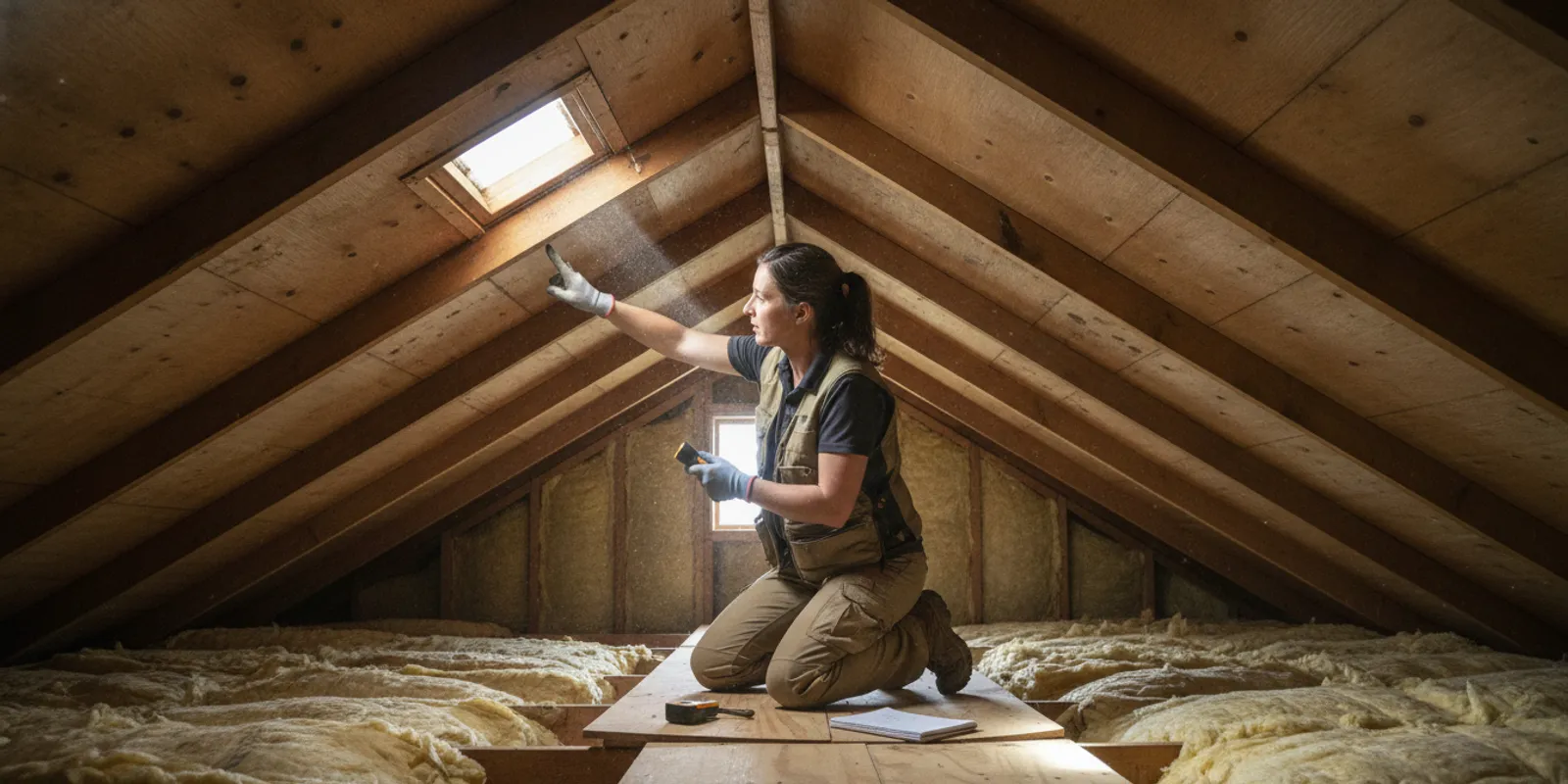
Planning a home sale can make a dark patch or musty odor in the attic feel urgent. Attic mold removal is not simply a matter of wiping visible growth before photographs or showings. First understand what is present, whether moisture is still affecting the space, and what work is appropriate. A careful, documented plan can help you address the condition without guesswork or pressure.
Request a consultation about your attic
Why assess attic conditions before listing?
An attic is easy to overlook during everyday use, yet it can reveal clues about ventilation, roof leaks, indoor humidity, or past repairs. Visible growth indicates that moisture conditions have supported it at some point; it does not, by itself, explain the source or show whether the condition is active. A seller should avoid assuming that a dark stain is mold, or that every mark requires the same response.
Timing matters because a rushed cosmetic cleanup can leave the underlying issue unresolved. If the area remains damp or the source of moisture continues, growth may return. Start by recording where the concern appears, when it was noticed, and any visible signs of moisture or recent repair. Avoid disturbing suspect material while arranging an appropriate assessment.
It helps to separate two questions: what is visible now, and what conditions could have contributed to it? The first is a description; the second is a hypothesis to investigate. Keeping them distinct reduces the risk of overstatement in conversations with a contractor, real estate professional, or potential buyer. It also helps you avoid authorizing work based only on a label attached to a stain.
Before you call, gather any information you already have about the property. Note the approximate age of the roof if known, previous roof or ventilation work, and whether the attic has had an odor or visible staining before. You do not need to diagnose the condition. A short, factual history simply gives the professional a better starting point and can make the first conversation more efficient.
What can you safely observe without disturbing the attic?
From a safe, accessible vantage point, note the location and approximate extent of the visible concern. Do not step onto ceiling drywall, move insulation unnecessarily, scrape surfaces, or use a household fan to spread dust. Attics can have low clearance, exposed nails, wiring, and unstable footing. If access is unsafe, leave the inspection to a qualified professional.
- Note whether the mark is on roof sheathing, framing, stored items, or another surface.
- Look for signs such as dampness, staining, or a musty odor without touching or sampling material.
- Record whether the concern is localized or appears in several areas.
- Gather information about known roof work, ventilation changes, or previous repairs.
- Take photographs from a safe position, noting the date and viewpoint.
Photographs are most useful when they provide context. Take one broad view to show where the affected area sits in the attic, then closer views from the same safe position. Avoid using filters or editing that changes color. A ruler or other scale should not be placed on suspect material; a description such as “approximately one section of sheathing” is safer than reaching into the space to measure.
These observations are useful context, not a diagnosis. A visual check cannot establish the full extent of concealed growth or determine the cause in every case. Remtech’s mold removal information explains how professional help can fit into a property-specific plan.
How can you distinguish mold concerns from other attic marks?
Dark or irregular discoloration can have more than one explanation, including dirt, old staining, or biological growth. Color alone is not a reliable identification method. Odor and visible patterns may help a professional decide what to examine, but they do not confirm a cause on their own. When the distinction affects a sale or repair decision, avoid presenting an uncertain observation as a confirmed finding.
For background on how mold can appear in different parts of a home, see the types of mold found in homes. The useful takeaway is not to identify a species by appearance; it is to focus on the conditions and the scope that need evaluation.
Consider a simple example: a seller sees dark marks near the eaves and assumes they all have one cause. A careful assessment may instead distinguish an old dry stain from a separate area with current moisture. Those observations can change what needs attention, the order of work, and what can be accurately stated afterward. This is why a specific description is more useful than a broad conclusion made from a photograph.
A second example involves insulation. A small visible mark on framing may look limited from the attic opening, while nearby insulation or an enclosed area could restrict what can be seen. That does not mean the entire attic is affected. It means the inspection has a boundary. A responsible provider should explain what was accessible, what was not reviewed, and what additional investigation would be needed before making a broader statement.
What does a responsible removal plan include?
A useful plan starts by clarifying the concern and the proposed work. The person assessing the attic should explain the observed conditions, any limits of the inspection, and what additional information may be needed. If mold is confirmed and remediation is recommended, ask how the work area will be managed, what materials are included, and how the plan addresses the moisture condition that contributed to the problem.
Ask for written scope before authorizing work. It should distinguish removal or cleaning from repairs, replacement, or other work that may be outside the remediation scope. Make sure the proposal describes what happens to affected materials, how dust and debris will be controlled, and what documentation you will receive when work is complete. Remtech’s mold cleanup guidance can help you prepare questions and avoid improvised cleanup.
Ask the provider to explain the sequence in plain language. What needs to happen before work begins? Which portions of the attic will be accessed? How will occupants know when the work area is in use? What happens if opening an assembly reveals a different condition than expected? The answers should help you understand the plan, not pressure you into a decision before you have had a chance to review it.
A complete conversation should also identify what the plan does not answer. For example, a remediation scope may address visible affected materials but not include roof repair, mechanical work, or reconstruction. Those tasks may require another professional. Knowing the boundary in advance helps you schedule the right work in the right order and prevents the closing file from suggesting that one invoice covered more than it did.
Remediation pricing is consultation-based and project-specific. Attic access, the materials involved, the extent of the affected area, and the scope all affect the plan. A quote should explain the recommended work rather than rely on a generic per-room or per-square-foot promise. If the scope changes after work begins, ask that the change and its reason be explained before approving additional work.
How can you compare options before approving work?
Compare written scopes, not just totals. Ask each provider to explain what has been observed, what remains uncertain, and what is and is not included. A low figure may cover only a narrow task, while another proposal may include additional controls or documentation. Neither is comparable until you understand the difference.
| Decision point | What to clarify | Why it matters before listing |
|---|---|---|
| Assessment | What areas were reviewed, and what limits apply? | Helps distinguish observed facts from assumptions. |
| Work scope | Which materials and tasks are included or excluded? | Reduces confusion about what will be addressed. |
| Moisture condition | What moisture source may need separate attention? | Cleaning alone may not resolve the contributing condition. |
| Work controls | How will access, debris, and the work area be managed? | Sets expectations for occupants and the property. |
| Closeout | What records or completion information will be provided? | Supports an organized conversation with buyers and advisers. |
For a fair comparison, make a short checklist and apply it to every proposal. First, identify whether each proposal is based on the same observed area. Second, check whether removal, cleaning, disposal, and any proposed repairs are included or separately priced. Third, compare the stated controls and closeout information. Finally, note assumptions, exclusions, and conditions that could change the scope. A proposal that is clear about limits may be more useful than one that sounds comprehensive but leaves key details unstated.
Also compare the questions each provider asks you. A thoughtful conversation may cover the property history, access, visible conditions, previous repairs, and the timing of the sale. That does not guarantee that the recommendation will be identical to another provider’s recommendation, but it can show whether the proposal was developed for your attic rather than copied from a generic template.
Ask whether the provider has relevant experience and qualifications for the work. Remtech uses EPA-accredited specialists and IICRC-certified technicians. A provider should explain its process in plain language, without alarming claims or promises that a quick surface treatment solves every attic concern. For broader company information, visit About Remtech Environmental.
If you are in the Triangle, the Raleigh service area page offers regional information. You can also review North Carolina service areas to understand the broader coverage information available. These pages are context, not a substitute for a project-specific assessment.
How should you plan the work around a sale timeline?
Work backward from the date you expect to list, but leave room for uncertainty. A practical sequence is to document the concern, arrange an assessment, review the written scope, coordinate any separate repair, and collect completion records. The actual schedule depends on access, the condition found, and the work proposed. Do not assume that a visual cleanup can be completed safely or appropriately on a same-day deadline.
If a showing or photography appointment is near, tell the professional about the timing when you first make contact. That information may help with scheduling and coordination, but it should not be used to skip necessary assessment or to promise an outcome in advance. If the recommended work cannot be completed before a planned milestone, ask your real estate professional how to handle the calendar and communication honestly.
Coordinate trades carefully if roof, ventilation, or other building repairs may be needed. Ask who is responsible for each task and in what order. For example, if one provider addresses a mold concern and a separate contractor handles a roof repair, clarify when each person will access the attic and what documentation each will provide. A simple written timeline can prevent duplicated visits or confusion about what has actually been completed.
Build in a review point after the physical work. Look over the completion information, compare it with the approved scope, and ask about open items before scheduling final photographs. This is not the same as making a broad claim about the whole property. It is a practical check that the agreed work was documented and that any separate repair has a clear owner.
Keep decisions in writing. If a recommendation changes after a new condition is observed, request an explanation and updated scope. This creates a useful record of why the plan changed and helps you avoid relying on memory later. It also gives your real estate adviser a more accurate summary than a hurried recollection during a transaction conversation.
What records help you discuss the condition during a sale?
Keep records together so you can answer questions consistently. Useful documents may include dated photographs, assessment notes, proposals, invoices, descriptions of work completed, and any closeout information supplied by the provider. If repairs to a roof or ventilation system are handled separately, retain those records too. Do not imply that a document proves more than it actually does; describe the work and findings accurately.
A one-page timeline can make the file easier to use. List when you noticed the concern, when the assessment occurred, what the written recommendation said, when any work took place, and what follow-up information was provided. Attach source documents rather than replacing them with your own summary. This gives you a concise reference while preserving the original records.
Share relevant information with your real estate professional and follow the disclosure guidance that applies to your transaction. Requirements and forms can vary by circumstance, so consult the appropriate real estate or legal professional when unsure what must be disclosed. The North Carolina Bar Association’s environmental law fact sheet is a general reference, not a substitute for advice about your specific transaction. A remediation contractor can explain its scope and records, but should not be treated as your legal adviser.
When describing the issue, use precise, limited language. For instance, “A professional assessed the attic on this date and recommended these tasks” is different from claiming that the entire home is free of mold. Report what the records actually say, identify what work was done, and avoid conclusions beyond the documented scope. This is clearer for everyone involved and helps keep a repair conversation grounded in facts.
What should you ask before the assessment?
Preparing questions can make the consultation more productive. You might ask what information would help the provider understand the concern, which areas can be reviewed safely, and how the provider will communicate uncertainty. Ask whether the written recommendation will separate observed conditions from proposed actions. You can also ask what records will be supplied after the work and who should handle any building repair outside the remediation scope.
Do not feel obligated to use technical terms. Explain what you saw, where you saw it, and why the timing matters. If the property is under contract, say so and identify important dates. An education-first conversation should leave you better able to compare choices, even when the appropriate next step is additional evaluation rather than immediate removal.
Remtech describes its approach as “Doing the right work the right way,” which fits this decision process: understand the condition, define the work, and communicate the limits. You can use the company’s abatement planning information as another place to organize questions before contacting a provider.
Frequently Asked Questions
Should I remove visible attic mold myself before photos?
Do not rush into scraping, sanding, or applying a household product. Disturbing material can spread debris and will not address a continuing moisture condition. Document what you can safely see and arrange an appropriate assessment before deciding on work.
Does a dark attic stain prove that mold is present?
No. Appearance alone cannot reliably identify mold or explain the cause of a stain. A qualified assessment can help clarify what is visible and whether further evaluation or remediation is appropriate.
Will removal guarantee that the attic stays clear?
No. Building conditions can change, and no single cleanup prevents all future moisture or growth. A sound plan addresses the observed condition and explains any moisture-related issue that may require separate correction.
How soon should I arrange an assessment before listing?
Allow time for evaluation, written scope, any recommended work, and coordination with other repairs. The schedule depends on access and project conditions, so contact a provider once you identify a concern rather than waiting until showings are imminent.
What if the attic concern is outside the planned scope?
Ask for the finding and the proposed next step in writing. The provider may recommend a revised scope, a separate building professional, or additional evaluation. Keep the original proposal and any update together so your records show what changed and why.
Plan the next step around documented conditions
Before listing, treat an attic concern as a question to investigate, not a reason to panic or cover it up. Clear observations, a defined work scope, and organized records help you make decisions and explain what was done. Remtech Environmental serves North Carolina property owners with an education-first approach and can discuss a project-specific consultation.
Contact Remtech Environmental to discuss the attic concern.
Taking time to understand the condition can make the next decision more straightforward. If questions about property obligations arise, seek guidance from the professionals who advise you on the transaction.