
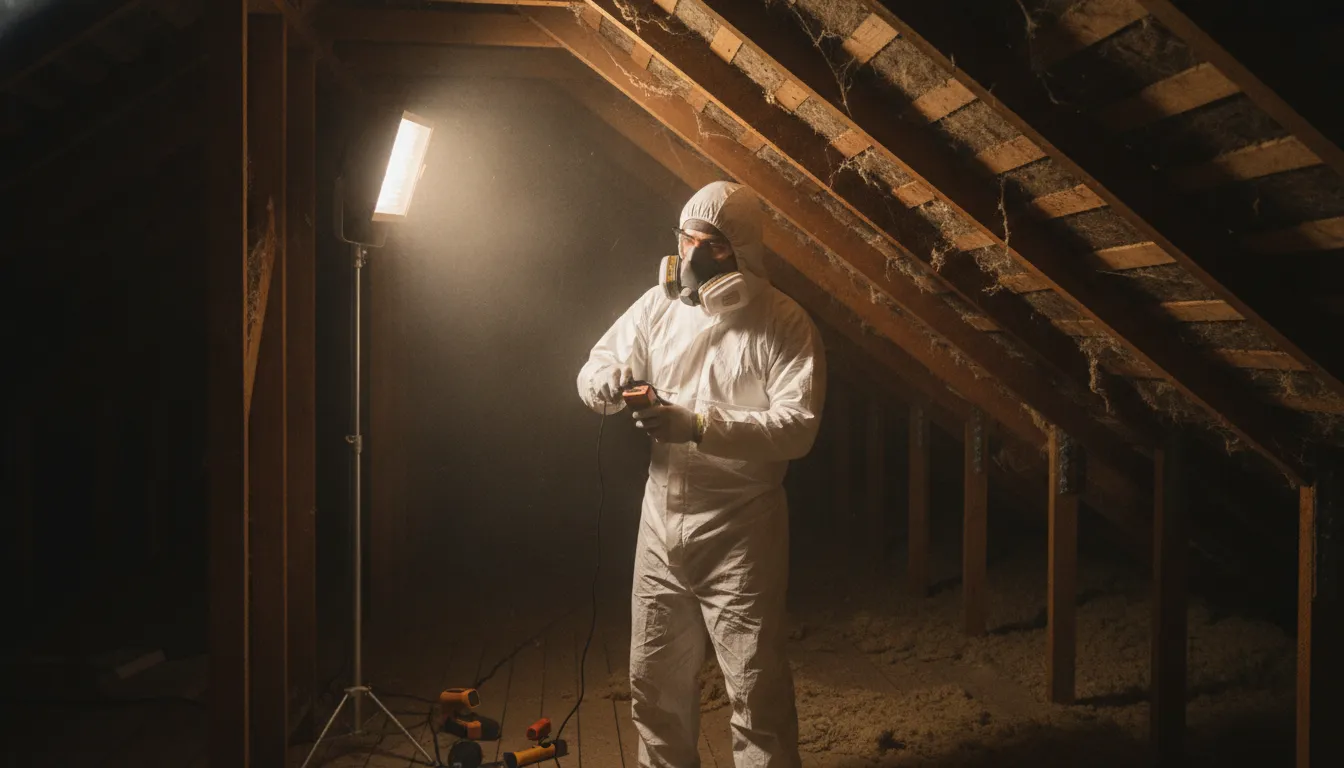
Attic mold is rarely an isolated attic problem. It usually signals that moisture is entering, collecting, or moving through the home without a reliable way to escape. In Raleigh, that can involve inadequate ventilation, a roof leak, or moisture migration from the living space.
Attic mold remediation Raleigh NC should address both the visible growth and the moisture source behind it. The U.S. Environmental Protection Agency explains that mold cannot grow without water or moisture, and identifies ventilation and moisture problems as common contributors. A professional assessment can help determine whether the right solution involves correcting airflow, repairing the source, removing affected materials, or a combination of steps. EPA mold and moisture guidance
Understanding why mold develops overhead is the first step toward preventing it from returning. The conditions inside a Raleigh attic, along with the way air and moisture move through the home, can make certain warning signs especially important to recognize.
Why Attic Mold Is Common in Raleigh Homes
Raleigh's warm, humid climate can make attic moisture harder to control, especially when ventilation and roof maintenance are not working together. Mold is not caused by humidity alone, however. The central issue is moisture that remains on or inside building materials long enough to support growth. The U.S. Environmental Protection Agency explains that mold cannot grow without water or moisture, which makes moisture control the foundation of attic mold prevention.
Attics are particularly vulnerable because they sit between the roof and the living space. Small changes in temperature, airflow, and indoor humidity can create conditions where wood sheathing, roof framing, or insulation stays damp. Once moisture has a path into the attic, mold may develop without being immediately visible from the rooms below.
Poor ventilation traps humid air
Attic ventilation helps move warm, humid air out and supports a more balanced environment beneath the roof. When soffit vents, ridge vents, gable vents, or air pathways are blocked, undersized, or improperly configured, humid air can linger. In Raleigh, that problem may become more noticeable during long stretches of muggy weather. The EPA identifies ventilation problems as one possible source of moisture issues that contribute to mold growth.
Insulation can also affect airflow. Insulation that blocks intended vent channels may prevent air from moving as designed, while gaps around fixtures or access points can allow conditioned indoor air to escape upward. Improving ventilation may be part of the solution, but it should follow a careful assessment of the attic's layout and moisture sources rather than a one-size-fits-all change.
Roof leaks introduce recurring moisture
A missing or damaged shingle, worn flashing, failed seal, or other roof defect can allow moisture into the attic. Even a small leak may affect roof decking or framing repeatedly before it becomes obvious indoors. If the source is not corrected, cleaning visible mold alone will not resolve the underlying condition. A complete evaluation should connect any suspected mold growth with the roof area above it and the path moisture may be taking.
Moisture migrates from the living space
Warm air from the home can rise into the attic through gaps around recessed lights, plumbing penetrations, ductwork, attic hatches, and other openings. Everyday activities such as bathing, cooking, and drying clothes can add humidity to indoor air. If that air reaches colder roof materials, condensation may form. The EPA notes that attic moisture problems can result from moisture migration from the living space, along with humidity and ventilation issues.
Finding the cause is as important as identifying the growth. Remtech Environmental can help Raleigh-area homeowners understand whether ventilation, a roof issue, air leakage, or a combination of factors is contributing to the problem. That education-first approach supports doing the right work the right way, without relying on scare tactics.
How to Spot Attic Mold: What to Look For
Attic mold is not always immediately obvious from the living areas below. A careful visual check can help you notice changes early, especially after a roof repair, ventilation issue, or period of persistent humidity. Look from a safe, stable location and use a bright flashlight. Do not step between joists or disturb insulation unless the attic has a suitable walking surface.
Check the roof sheathing and rafters
Start with the underside of the roof. Discolored rafters or roof sheathing may appear as gray, brown, or darkened patches. While active or recurring moisture can leave staining around fasteners, joints, or areas beneath roof penetrations. Pay particular attention near roof vents, valleys, flashing, and places where the roof changes direction. A stain does not prove that mold is present, but it is a useful reason to investigate the moisture conditions in that area.
Look for spots on wood and insulation
Small black, green, gray, or mottled spots on wood may be a sign of mold growth. Insulation can also show discoloration, clumping, or isolated patches. The U.S. Environmental Protection Agency identifies wood and insulation among the attic materials where mold can grow when moisture is available: EPA F003. Avoid scraping, brushing, or vacuuming a suspicious area during a casual inspection. Disturbing material can spread particles and may make it harder to identify the original pattern of growth.
Pay attention to odor and location
A persistent musty odor in the attic or in rooms directly below it can provide another clue, even when visible growth is limited. Trace the smell rather than relying on one small area. Compare it with the rest of the attic and note whether it is strongest near vents, roof penetrations, insulation, or a particular section of sheathing. Keep a simple record of what you see, including the approximate location and whether the area looks damp or recently stained. Photographs taken from a safe distance can also help a professional understand what prompted the inspection.
Homeowners can make useful observations, but appearance and odor alone cannot confirm the type, extent, or source of mold. If you see widespread discoloration, recurring stains, significant odor, or growth on insulation, arrange an attic mold inspection. A qualified professional can assess moisture conditions, determine whether testing is appropriate, and explain practical next steps without relying on guesswork. In Raleigh, Durham, Cary, and the surrounding Triangle, that evaluation can help separate a small, addressable concern from a moisture problem that needs a more complete plan.
Health and Structural Risks of Untreated Attic Mold
Attic mold is not a reason to panic, but it is a reason to understand the conditions involved and act early. A small, localized area may be easier to assess and address before moisture and mold affect more of the attic assembly. Prompt attention also helps you distinguish a surface concern from a larger ventilation, roofing, or moisture-migration problem.
How attic mold can affect health
People respond to mold differently. According to the U.S. Environmental Protection Agency, mold exposure can cause allergic reactions and asthma attacks in people who are allergic to mold. The EPA also notes that mold can irritate the eyes, skin, nose, throat, and lungs of both mold-allergic and non-allergic people. These effects can vary based on the individual, the amount and duration of exposure, and the conditions in the home. The EPA's guidance on mold, moisture, and health provides additional context.
Because attic mold is often found above the living space, it may not always be immediately obvious. Air movement, HVAC pathways, maintenance activity, or access through an attic hatch can connect the attic environment with occupied areas. That does not mean every attic mold discovery creates an immediate health emergency. It does mean the finding deserves a careful evaluation, especially when household members notice recurring irritation, allergy symptoms, or asthma concerns.
How mold can affect attic materials
Mold also matters because an attic contains materials that can support growth when moisture and oxygen are present. The EPA explains that mold can grow on virtually any organic material, including wood and insulation. In an attic, that can include wood framing, rafters, roof sheathing, and sections of insulation. EPA's mold course explains how moisture affects building materials.
Growth on these materials may signal that the underlying moisture condition has continued long enough to affect more than the visible surface. Mold does not automatically mean that framing has lost its structural capacity, and a visual spot alone cannot establish the extent of damage. However, prolonged dampness can contribute to material deterioration, reduced insulation performance, and more complicated remediation. The right next step is to identify the moisture source, determine how far the affected area extends. And evaluate the condition of the materials rather than simply covering the visible growth.
When you need help evaluating an attic concern, Remtech can explain the findings and available next steps without scare tactics. If the issue extends beyond a small, isolated area, review the company's mold removal services to understand how a professional assessment may fit your situation.
How to Prevent Attic Mold with Better Ventilation
Good attic mold prevention starts with moisture control. The goal is to move humid air out, keep rainwater out, and prevent warm air from the living space from condensing on cooler roof surfaces. The U.S. Environmental Protection Agency identifies ventilation problems, roof leaks, and moisture migration as common sources of attic moisture. So prevention needs to address the whole system rather than one isolated symptom.
Keep air moving through the attic
A balanced ventilation system usually combines intake vents, such as soffit vents, with exhaust vents, such as a ridge vent. Intake vents allow fresh air to enter at the lower edge of the roof, while exhaust vents let warm, humid air escape near the ridge. Insulation should not cover or obstruct the soffit vents. Vent baffles can help preserve the airflow channel between the insulation and the roof deck.
More ventilation is not always better if it is poorly designed. A roofing professional can check whether intake and exhaust capacity are balanced and whether existing fans are sending moisture in the wrong direction. The EPA's guidance on mold and moisture explains why ventilation and humidity management matter when preventing indoor mold growth: mold cannot grow without water or moisture. Read the EPA's ventilation and moisture guidance for additional background.
Stop moisture at its source
Inspect the roof and flashing after severe weather and repair leaks promptly. Even a small, recurring leak can keep sheathing or insulation damp enough to support mold. Bathroom and kitchen exhaust fans should vent outdoors, not into the attic. Check the duct connections for gaps, disconnected sections, or condensation, and seal them with the appropriate materials.
Insulation helps regulate temperature, but it should be installed without blocking soffit airflow or trapping moisture against the roof deck. In homes with persistently high indoor humidity, use air conditioning or a properly sized dehumidifier and address the reason humidity remains elevated.
- Keep soffit vents clear and confirm that ridge or other exhaust vents are functioning.
- Repair roof leaks and damaged flashing as soon as they are found.
- Route bathroom and kitchen exhaust ducts outdoors, then inspect and seal their connections.
- Install insulation and baffles so insulation does not block the ventilation channel.
- Use humidity control when indoor moisture remains high, especially during warm, humid weather.
- Dry wet materials and affected areas within 24 to 48 hours whenever possible. The EPA recommends this timeframe to help prevent mold growth: EPA mold and moisture guidance.
If musty odors, staining, or visible growth continue after the moisture source is corrected, an attic mold inspection can help determine whether materials need professional evaluation and remediation.
When to Call for Professional Attic Mold Remediation in Raleigh, NC
Some attic mold problems may appear limited at first, but deciding whether to clean them yourself depends on more than what is visible. Contact a professional when mold covers a large area, appears across roof sheathing or structural wood, returns after cleaning, or has an unclear source. Professional guidance is also appropriate when someone in the home has asthma, allergies, or another sensitivity that may be affected by mold exposure.
In Raleigh homes, attic mold can be connected to ventilation problems, roof leaks, or moisture moving through the building. If the source is not identified and corrected, surface cleaning may only provide a temporary improvement. An attic mold inspection can help clarify the extent of the problem and what work the space needs.
Signs that professional help is the right next step
- The affected area is extensive: A broad spread is harder to contain and clean without distributing spores into other parts of the home.
- Mold is on structural wood: Growth on roof sheathing, rafters, or other structural materials deserves careful evaluation rather than a quick surface treatment.
- The source is uncertain: If you cannot determine whether ventilation, a roof issue, or another moisture condition is involved, professional assessment can prevent the problem from recurring.
- Cleaning did not last: Returning growth is a sign that the moisture source or affected materials may not have been fully addressed.
- Health sensitivities are present: A qualified team can plan containment and work practices that reduce unnecessary exposure during remediation.
What Remtech's six-step remediation process includes
Remtech Environmental takes an education-first approach to attic mold remediation in Raleigh and the surrounding Triangle. Its process is designed to address both the visible growth and the conditions that allowed it to develop. The steps are outlined below.
- Strategy: The team evaluates the attic, defines the scope, and develops a plan suited to the property and the affected materials.
- Containment: Work areas and access routes are controlled to limit cross-contamination, with the team and equipment selected for the project.
- Removal: Mold-affected materials are removed or treated using appropriate methods for the attic environment.
- Source resolution: The team identifies contributing moisture conditions, such as inadequate ventilation or roof-related issues, so the problem can be addressed at its source.
- Cleaning and drying: Remaining surfaces are cleaned, and the area is dried as part of restoring a healthier attic environment.
- Material disposal: Removed materials are handled and disposed of appropriately, rather than left to create another exposure or moisture concern.
Remtech's IICRC-certified specialists and EPA-accredited professionals bring established procedures to a problem that is easy to underestimate. The goal is not to use alarming language or sell unnecessary work. It is to explain what is present, why it happened, and which solution fits the property. That is the company's commitment to doing the right work the right way.
How Much Should Attic Mold Remediation Cost in Raleigh?
There is no responsible one-size-fits-all price for attic mold remediation in Raleigh. The project cost depends on what an inspection finds, how much of the attic is affected, and what work is needed to correct the underlying moisture conditions. A small, contained area with sound materials requires a different plan from widespread growth involving damaged wood, insulation, or difficult access.
A professional evaluation should produce a project-specific recommendation rather than a standardized rate. The assessment helps identify the source of moisture, define the affected area, determine whether materials can be cleaned, and establish the containment and disposal requirements. That information gives you a clearer basis for comparing proposals and deciding what work is actually necessary.
What affects the cost?
- Size of the affected area: More attic surface, insulation, and framing to inspect and treat generally means more labor, equipment, and disposal.
- Severity and spread: Visible growth in one localized area may require a narrower response than mold that has spread across multiple sections of the attic.
- Condition of structural wood: Cleaning may be appropriate for some materials. If wood has sustained significant damage, repair or replacement may be necessary and should be evaluated separately from the remediation itself.
- Access difficulty: Tight entry points, limited working room, steep rooflines, and other access constraints can affect setup time, containment, and safe movement through the space.
- Moisture-source correction: The plan may need to address ventilation problems or a roof-related moisture source so the conditions supporting growth do not continue.
Remediation is more than wiping visible mold from a surface. A qualified team should plan the strategy, establish containment, remove affected materials, resolve the source, clean and dry the area, and dispose of materials appropriately. The scope of those steps depends on the findings at your property.
For that reason, the best answer to "How much should attic mold remediation cost?" is the cost of the documented. Necessary work for your attic, not an advertised package price. Remtech Environmental provides consultation-based recommendations for Raleigh-area properties and explains the reasoning behind the proposed scope. You can learn more about professional mold remediation or request a project-specific evaluation before work begins.
What's the Difference Between Mold Removal and Mold Remediation?
Mold removal and mold remediation are related, but they describe different levels of work. Mold removal usually means physically taking visible mold off a surface or removing a mold-affected material. That may address what can be seen, but it does not necessarily explain why mold developed or reduce the chance that it will return.
Mold remediation is the broader, documented process. It combines removal with moisture-source resolution, work-area containment, cleaning, drying, and appropriate disposal. In an attic, the underlying issue may involve inadequate ventilation, a roof leak, or moisture migration from the living space. If that source is left unresolved, cleaning visible growth alone may provide only a temporary result.
| Consideration | Mold removal | Mold remediation |
|---|---|---|
| Scope | Focuses on physically removing visible mold or affected materials. | Addresses assessment, removal, cleaning, drying, and the conditions that allowed mold to grow. |
| Source handling | May not investigate or correct the moisture source. | Identifies and resolves contributing conditions, such as ventilation problems or roof-related moisture. |
| Containment | May be limited or absent, depending on the size and method of the work. | Uses a planned containment approach to manage dust, debris, and potential spread during the project. |
| Outcome | A cleaner-looking surface or removal of a damaged material. | A more complete plan for removing growth, restoring affected areas, and reducing recurrence risk. |
Why the broader process matters
Remtech approaches attic mold remediation as a six-step process: strategy, containment, removal, source resolution, cleaning and drying, and material disposal. Each step has a purpose. Strategy establishes the work plan. Containment helps control the work area. Removal addresses mold-affected materials, while source resolution focuses on the moisture conditions behind the problem. Cleaning and drying support a prepared, stable space, and disposal removes materials that cannot be appropriately restored.
This distinction is useful when comparing services for attic mold remediation in Raleigh, NC. A professional evaluation should explain what will be removed, how the moisture source will be addressed, what containment is needed, and how the completed work will be documented. The goal is not to use a more complicated term. It is to make sure the work addresses the whole problem rather than only its most visible symptom.
Frequently Asked Questions
How hard is it to get rid of mold in an attic?
The difficulty depends on how much material is affected, how accessible the attic is, and whether the moisture source has been corrected. Small surface growth may look simple to clean, but attic mold can affect wood or insulation when moisture and oxygen are present. A proper remediation plan addresses the source, contains the work area, removes affected materials, and cleans the remaining surfaces rather than relying on a quick wipe-down. The EPA explains that mold can grow on organic materials such as wood and insulation.
How much should attic mold remediation cost?
There is no reliable standard price because each project depends on the affected area, materials involved, access, moisture source, containment needs, and disposal requirements. A professional evaluation should identify the scope before pricing is discussed. Remtech provides consultation-based, project-specific recommendations instead of quoting a one-size-fits-all rate.
How serious is black mold in the attic?
Color alone does not determine the risk or the correct response. Any visible mold indicates a moisture problem that should be investigated, especially when growth is extensive, recurring, or near occupied areas. Mold exposure can cause allergic reactions, asthma attacks in allergic individuals, and irritation of the eyes, skin, nose, throat, and lungs, according to the EPA. The priority is identifying and correcting the moisture source, then remediating the affected materials.
What is the difference between mold removal and mold remediation?
Mold removal describes taking away visible or contaminated material. Mold remediation is the broader process: evaluating the problem, controlling the work area, removing affected materials. Resolving the moisture source, cleaning and drying the space, and disposing of materials appropriately. That distinction matters because removing visible growth without correcting ventilation, a roof leak, or moisture migration can allow the problem to return.
Take the Next Step Toward a Cleaner, Healthier Attic
Attic mold can grow where moisture is left unchecked, and catching it early protects both your home and your family. Whether you have spotted discoloration on roof sheathing, noticed a musty smell, or simply want peace of mind before the humid months arrive. A professional assessment gives you a clear picture of what is happening overhead.
Remtech Environmental has served North Carolina homeowners for more than 25 years, with IICRC-certified technicians and EPA-accredited specialists who follow a careful, six-step remediation process. We explain what we find, address the moisture source, and help keep the problem from returning. Every project starts with a consultation and a plan built around your specific attic.