
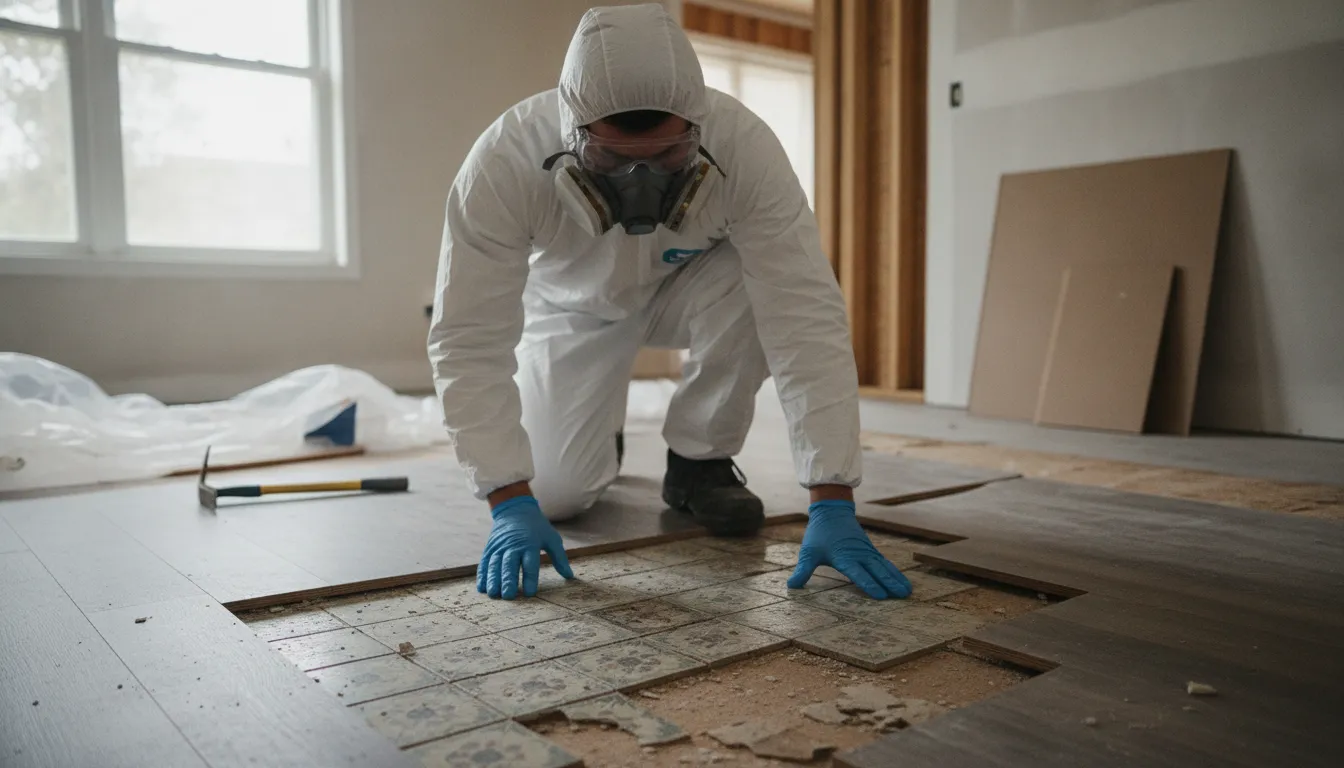
Pulling back old carpets in a vintage Raleigh bungalow often reveals a hidden layer of tough vinyl. This vinyl flooring may seem like a simple vintage feature, but it often hides a quiet health hazard.
Asbestos floor tiles Raleigh NC pose a real health hazard if you crack, sand, or disturb them during a home project. The North Carolina Department of Health and Human Services states that this harmful mineral was common in older building products. It was often mixed into vinyl sheet backings and floor glues. These materials are mostly safe when they remain intact, but they become dangerous if they break and release tiny fibers into the air. Homeowners should never attempt to sand, cut, or tear up vintage tiles on their own. Instead, the safest path is to have an expert inspect your home and collect samples for lab testing before any work begins.
If you own an older home, you may wonder why this flooring was used so widely in North Carolina. To help you plan your next home project, we will cover everything you need to know about identifying asbestos floor tiles. The first step is to learn why asbestos floor tiles are so common in old Raleigh homes.
Get a free asbestos floor tile consultation in Raleigh today and find out whether your flooring needs testing before your next renovation.
Why Are Asbestos Floor Tiles Common in Old Raleigh NC Homes?
Many older homes in North Carolina, mainly in old parts of Raleigh, were built during big housing booms. In these homes, builders often chose floors that were strong and cheap. But these standard choices often had mineral fibers that we now know are unsafe. Knowing why asbestos removal services in Raleigh are still in high demand starts with learning how these products were used. For decades, local builders put these products in thousands of houses across the region.
A popular material in local home building
Asbestos is a natural mineral that builders used for many years. It was popular because it resists heat, fire, and wear. State health records from the NC DHHS show that asbestos was used in more than 3,000 building products. This list includes roof shingles, pipe wrap, wall plaster, and floor tiles. Because it was so cheap and strong, it became a standard part of home design across the country. Raleigh saw a lot of growth during this time, so many local homes still have these products today.
The types of old flooring products
Finding asbestos floor tiles in Raleigh, NC is common in homes built before 1985. Raleigh homeowners often find this mineral in three common spots. First, vinyl floor tiles that measure nine inches by nine inches are likely to contain asbestos. Next, old sheet vinyl often used a felt backing made of these fibers. Third, the black glue or mastic used to stick the tiles to the subfloor also had the mineral. Even if the tiles look safe, the black mastic underneath can still pose a risk if you scrape it.
How building booms shaped Raleigh homes
Many older buildings in North Carolina, mainly in urban areas like Raleigh, had asbestos floors put in when they were built. During the mid-twentieth century, Raleigh grew fast, and new neighborhoods sprang up across the city. To save money and prevent fires, builders used these strong products in local homes and schools. So, older houses built before 1985 often have these floors today. These old floor tiles in Raleigh homes may contain chrysotile or other types of asbestos fibers.
If these old floors are in good shape and left alone, they are not a threat. But when you start a home remodel, you may break or tear them. This can release tiny fibers that are unsafe to breathe. You should learn about your flooring before you start any work. If you suspect your home has these products, getting an expert test is the safest way to protect your family.
How Can You Spot Asbestos Floor Tiles in Old Raleigh Homes?
If you are planning to fix up an older house, finding asbestos floor tiles Raleigh NC owners often worry about is a key step. Many houses built before 1985 still have these old floors. While you cannot tell for sure just by looking, some clear clues can help you spot them.
Tile Size and Age
The age of your home is the first big clue. If your house was built before 1985, the chance of finding them is high. During this era, builders often used asbestos in floor materials for Raleigh kitchens, basements, and playrooms. These older tiles often have chrysotile or other types of asbestos fibers.
When identifying asbestos floor tiles, look closely at their size. Most modern floor tiles are twelve inches square, but older ones are mostly nine inches square. Nine-by-nine inch vinyl tiles are highly likely to have asbestos.
You should also look for signs of wear and dark spots. Over the years, asbestos tiles can become brittle and lose their shine. They may look dull, stained, or oily as the tiles age over time. If the floor looks dirty even after a deep clean, it could be a sign of aging asbestos.
Adhesive and Backing Clues
You should also check the back of the flooring if a piece is loose. Older vinyl tiles and sheet linoleum often have a thick backing. Underneath them, builders used a dark glue called black mastic. This glue was often mixed with asbestos to make it last longer and resist water.
According to the EPA, asbestos floor tiles are mostly non-friable tiles. This means the fibers are bound in place and will not easily escape into the air. Cracked or worn tiles can break and release harmful dust. You must never sand, scrape, or cut these tiles during a home remodel.
The Importance of Testing
Visual clues can give you helpful hints, but they are never sure proof. Only a professional lab test can confirm if your flooring contains asbestos. If you think your home has these tiles, you should avoid touching them and seek expert help.
A trained specialist can safely collect a small sample of the flooring and send it to a lab. They will use a microscope to look for tiny mineral fibers. This lab testing prevents you from breathing in harmful dust. If the test shows asbestos, a certified team can help you decide whether to cover the floor or remove it safely.
What Happens When Asbestos Floor Tiles Are Disturbed?
Old floor tiles in your home may seem safe when they are intact. But disturbing them during a home remodel can create a serious health hazard. If you have asbestos floor tiles in Raleigh NC, you need to know how they behave when damaged.
Friable vs. non-friable asbestos flooring
The U.S. Environmental Protection Agency (EPA) defines friable materials as those that can be crumbled or reduced to powder by hand when dry. Asbestos floor tiles are mostly non-friable. This means they do not release fibers easily when they are in good shape. The dangerous fibers stay locked deep in the vinyl.
But this safety zone goes away if you break, crack, or damage the tiles. When you rip up old flooring during a home remodel, you can turn a non-friable material into a friable hazard. If you are planning a remodel, identifying asbestos floor tiles before you start is key to keeping your home safe. Knowing the condition of your floor helps you avoid breathing in fibers.
Risks when sanding or cutting tiles
You must never sand, cut, drill, or scrape asbestos flooring. Power tools grind the vinyl and its backing into a fine dust. This dust can hang in the air for hours and spread through your heating and cooling system. It is hard to clean up asbestos dust once it spreads.
Even breaking a tile by hand can release small amounts of dust. In an old house, the black glue under the tiles often contains asbestos too. If you suspect your subfloor has this issue, look for signs of asbestos floor tiles before starting your project. Removing these materials without proper tools and containment puts your household at risk.
Health hazards of inhaled fibers
The main danger of asbestos comes from inhaling the invisible fibers. When these fibers get into the air, you can breathe them deep into your lungs. Your body cannot easily break down or get rid of these tiny mineral needles. Over time, they cause irritation, scarring, and lasting damage inside your chest.
This irritation can lead to severe health problems many years later. According to the EPA, inhaling asbestos fibers can cause lung cancer, mesothelioma, and asbestosis. Mesothelioma is a rare cancer of the lung lining, while asbestosis is a chronic lung disease that makes breathing hard. These risks are why you must treat old floor tiles with great care.
How Do You Test Asbestos Floor Tiles Before Renovating?
Before you tear up old flooring in your home, you must find out if it contains asbestos. Floor tiles made before 1985 often have this fiber. If you plan to update your home, testing your flooring is the only way to stay safe.
Check for signs your home may need asbestos removal before you start. This step is key if you suspect you have old asbestos floor tiles Raleigh NC. Testing must happen before any sanding, cutting, or pulling begins so you do not release toxic dust.
Many old homes in the Triangle area, mostly those built before 1985, still have these old floors. They often hide under layers of newer carpet or wood. If you do not test them first, you might break them by mistake during your project.
The professional testing process
To test flooring, an expert follows a strict three-step process. First, they inspect the site to locate any suspect materials. Next, they collect small samples using wet methods to prevent dust. Finally, a lab checks the samples under a microscope to confirm if fibers are present.
A trained inspector knows which spots to test. They also write a clear report on the state of the material. This report helps you decide if you need to remove or seal the tiles.
Why DIY sampling is risky
You should never collect samples on your own. Taking samples requires cutting or scraping the tile, which can release harmful dust into the air. This dust is invisible and hard to clean.
According to the U.S. Environmental Protection Agency, breathing these fibers can cause serious diseases like lung cancer, mesothelioma, and asbestosis. You should get an expert check to avoid breathing the dust. A trained specialist has the right safety gear and knows how to keep the work area sealed.
North Carolina rules and recommendations
In North Carolina, the rules for home projects are a bit different. State guidelines from the North Carolina Department of Health and Human Services explain what to know before renovating.
If you work on your own house, you do not have to test the floor by law before you start. But the state strongly suggests an expert check for your safety. If you hire help for the job, federal rules require an inspection first.
If you remove tiles without breaking them, federal rules might not require certified pros. Yet, doing this work yourself still poses big health risks. It is always best to let trained pros handle these materials to protect your indoor air.
How Should You Handle Asbestos Flooring During a Remodel?
Home repairs can reveal hidden hazards. If you plan to remodel an older house, you might find old asbestos floor tiles Raleigh NC. These tiles are common in houses built before 1985. Knowing how to handle this flooring keeps your home safe and ensures you follow local safety laws.
Remodel Risks
When you remodel, you must handle asbestos floor tiles by following state and federal rules. You can hire asbestos removal services in Raleigh to ensure your project meets safety codes. If you break or sand old flooring, you can create dangerous airborne dust. For this reason, asbestos-related remediation should be handled by specialists to avoid creating friable conditions that increase exposure risk. These experts know how to handle the work without letting harmful fibers escape into the air. If you breathe in these fibers, they can damage your lungs over time.
Professional Step-by-Step Abatement
Handling old floors requires a clear, safe plan. You should follow these steps during your project:
- Stop and do not disturb: If you suspect your flooring has asbestos, stop work immediately. Do not scrape, sand, or cut the tiles. Stirring up the dust is the main source of risk.
- Call a certified expert: Hire a licensed specialist to inspect the area. They will collect samples safely and send them to a lab for testing. This is the only way to know for sure if asbestos is present.
- Schedule regulated abatement: If the lab finds asbestos, you must plan for expert removal. Specialists will build a custom plan for your home to ensure total safety.
- Isolate the work area: Trained teams use EPA-approved methods and containment barriers to seal off the work zone. They set up plastic sheets and seal vents to keep dust from spreading.
- Follow disposal rules: Proper disposal of asbestos-containing waste is required to adhere to EPA disposal regulations under NESHAP laws. The waste must go to a licensed landfill that accepts asbestos.
- Re-test the air: Before you resume your remodel, a final air test must show the space is clean and safe to enter. Only then can you safely put down new floors.
Specialized Safety Standards
Safe removal requires more than just masking tape and plastic sheets. Certified experts use EPA-approved methods, specialized containment equipment, and licensed specialists to ensure safe asbestos removal. Teams use specialized equipment to minimize fiber release during the asbestos removal process. These tools include negative air machines with HEPA filters. Proper training for workers handling asbestos is a foundational requirement to ensuring health and safety standards are met on remediation projects. When you hire licensed specialists, you protect your family and your property from long-term health risks.
Removal vs. Encapsulation: What's the Safest Option?
When you find asbestos floor tiles in an older home, you have two safe choices. You can either remove the tiles or cover them up. Covering them is called encapsulation. The best choice depends on the condition of the floor and your renovation plans. Environmental agencies offer clear guidance to help you make this choice.
Understanding encapsulation
As stated by the Environmental Protection Agency (EPA), materials in good condition are often best left in place. Sealing or covering them is safer than disturbing them. You can encapsulate the tiles by laying down new, safe flooring. This stops the tiles from breaking and keeps harmful fibers out of your air.
But encapsulation is only a short-term fix. The old tiles will still be under your floor. If you plan to tear up the subfloor or do major plumbing work, you must remove them first. Also, if the tiles are already crumbling or lifting, sealing them will not work. In those cases, you must choose safe removal to prevent harmful dust from filling your home.
When professional removal is necessary
When identifying asbestos floor tiles in your house, professional removal is the best path if the tiles are badly damaged. If you need to cut, sand, or drill into the floor during a remodel, removal is the only safe option. These actions make the tiles friable, which means they can crumble and release dust. In Raleigh homes, you should have experts handle this task to keep your family safe.
Checking the black mastic glue
The floor tiles are not the only concern in old Raleigh homes. The black mastic glue used to stick the tiles down often contains asbestos too. The EPA provides guidance on how regulations apply to both floor tiles and mastic. This helps home owners see which materials need professional removal and which can be left alone. Even if the tiles are safe to cover, the old glue underneath must be part of your renovation plan.
| Approach | Best Tile Condition | Future Floor Work | Safety Risk | Black Mastic Glue |
|---|---|---|---|---|
| Professional Removal | Damaged, loose, or cracked tiles | No limits on future changes | Risk is gone once tiles are out | Fully cleaned from subfloor |
| Encapsulation | Flat tiles in good shape | No drilling or sanding allowed | Low, but remains if floor is cut | Left in place and sealed |
Why Is Remtech the Trusted Choice for Asbestos Floor Tile Removal in Raleigh?
Finding old tiles in your home can be stressful. But you do not need to face this task alone. At Remtech Environmental, we make the process of removing asbestos floor tiles Raleigh NC safe and clear. Our team helps you handle these hazards with little stress or delay.
Decades of local experience
We are a pioneering environmental company based in North Carolina. For more than 25 years, our team has served local homeowners and businesses. We specialize in safe asbestos abatement. Our deep roots in Raleigh mean we know how to handle old flooring in local homes.
Our long-standing work in the Triangle area makes us a reliable partner. Real estate agents, adjusters, and managers trust us for expert referrals. We understand how to guide you through each step of the work. If you need help identifying asbestos floor tiles, our professional resources can give you clear advice.
An education-first approach
We believe in a transparent, education-first approach to home health. We never use high-pressure sales or scare tactics to win your business. Our goal is to empower you to make the best choice for your family. We want you to feel safe in your home, not rushed or scared.
We give you the facts about your flooring so you can act with confidence. Our experts will explain the testing process and your options. Professional remediation helps you manage asbestos hazards with minimal disruption to your daily life.
Customized safety plans
Every home is different, so we do not use a one-size-fits-all approach. We build site-specific abatement plans based on your test results. Our team follows all safety standards set by the Environmental Protection Agency (EPA) and OSHA. This ensures we protect your family and our workers at all times.
Our licensed specialists use professional containment equipment to seal off the work area. This stops harmful fibers from spreading through your home. We guide you through the entire asbestos flooring removal process with clear steps. You will always know what we are doing and why we are doing it.
Request your free asbestos floor tile assessment in Raleigh and let our licensed specialists handle the testing and removal safely.
Frequently Asked Questions
How do I find asbestos floor tiles in an older Raleigh home?
Many homes built before 1985 in North Carolina contain these tiles. You can often spot them by their size, as nine-inch by nine-inch squares are very common. Some older sheet flooring also has a gray or white paper backing that contains asbestos. However, you cannot tell if they have asbestos just by looking at them. According to the EPA-accredited team at Remtech, only lab testing of a small piece can give you a sure answer.
Do nine-inch floor tiles always contain asbestos?
No, but they are highly likely to have it if they were put in before 1980. During those years, most nine-inch floor tiles were made with asbestos. The dark glue or black mastic used under them also often contains asbestos. Even if you are almost sure, you should not guess. It is always best to treat them as harmful until an expert test proves otherwise.
What is the danger of disturbing asbestos floor tiles?
Breathing in or swallowing the tiny mineral fibers can lead to serious lung diseases over time. When these tiles are in good shape, they are safe because the fibers are locked in the vinyl. But if you sand, cut, or grind them, you release toxic dust into the air. According to the EPA, breathing in these fibers can cause lung cancer, mesothelioma, or other serious health issues years down the road.
Is it safe to cover over asbestos floor tiles instead of removing them?
Yes, if the tiles are in good shape and you do not plan to drill or cut into them. This is often called sealing them in place. You can cover them under new flooring like sheet vinyl, laminate, or carpet. This keeps the fibers safely trapped so they cannot get into the air. However, if the tiles are already broken, loose, or crumbling, you must have them safely removed.
Do North Carolina homeowners have to test for asbestos before renovating?
No. Homeowners in North Carolina do not have to test their own homes before a remodel. However, state officials strongly advise it for your safety. According to the North Carolina Department of Health and Human Services, asbestos was used in more than 3,000 building products. Testing is the only way to protect your family from breathing in harmful dust.
Ready to Safely Address Asbestos Floor Tiles?
Leaving old vinyl floor tiles alone might seem safe, but simple wear or home remodels can release harmful fibers into your indoor air. Waiting to test your floors can lead to health risks and costly cleanup bills later. It is always much safer to deal with the problem before you begin any construction work on your home. Taking care of these old floors now keeps your family safe and helps you start your projects on time. Our local team in Raleigh is ready to help you inspect and handle this work safely without any scare tactics. Our trained experts will check your home and provide a clear, simple plan.
Ready to protect your Raleigh home? Get a free consultation about safely handling your asbestos flooring.