
Remtech has been a professional mold removal company for over 20 years, treating and restoring homes and commercial properties in Winston-Salem and all across North Carolina. Mold is a common fungus found nearly everywhere, both inside and outside your home.
But it grows, multiplies, and spreads very quickly — becoming a legitimate problem (and health concern) fast.
While most people think you can just kill mold, the truth is dead mold can have the same health effects as live mold.
Here are signs you may have a mold problem in your home or business:
If you answered yes to any of those questions, chances are you may have a mold problem in your home or property.
1. EXPERIENCE: Our team has decades of combined experience handling every type of mold situation – from small residential jobs to large commercial remediation projects.
2. INSURANCE: We pay for the best insurance coverage to back our work and protect our customers: including general liability, worker’s compensation, and specific environmental pollution liability insurance.
3. CERTIFICATIONS: Our mold removal experts not only go through continual training on mold remediation procedures and mold mitigation, but they’re also certified by the Institute of Inspection, Cleaning and Restoration (IICRC).
4. EQUIPMENT: We invest in professional-grade dehumidifiers, air scrubbers, and HEPA vacuums to deliver safe, thorough mold remediation.
If you have or suspect you have mold in your home don’t wait to act. Let us equip you with the information to make the right decision for your family and property. Contact us to receive a free consultation or schedule an inspection.
We serve all types of properties in North Carolina, including commercial buildings, distribution centers, industrial plants, malls, retail spaces, government facilities, transportation centers, condominiums, supermarkets, research facilities, hospitals and medical facilities, military bases, warehouse facilities, school, hotels and motels, restaurants, and churches.
Identifying the cause and determining the source of the moisture problem is critical. Even if you can see mold with your own eyes, oftentimes there’s more to be found deeper down, in subflooring or behind wallpaper, for example.
We’ve travelled as far as Nebraska, Texas, and the Cayman Islands to assist with large-scale disaster relief, but our main service areas since we started are North Carolina, South Carolina, and Virginia.
At Remtech Environmental, we offer mold removal services for customers in Raleigh, Durham, Cary, Asheville, Morrisville, Wake Forest, Wendell, Winston-Salem, Apex, Chapel Hill, and Greensboro, North Carolina.
![Our Proven Mold Removal Process in 6 Steps [infographic]](/images/scraped/295759-Remtech-Environmental_Approved.jpg)
Winston-Salem sits in the heart of North Carolina's Triad region, where humid subtropical summers, mild damp winters, and frequent thunderstorms create year-round conditions that allow mold to take hold inside homes and businesses. The city's housing stock makes the problem especially common: older mill houses near the former R.J. Reynolds tobacco district often have unconditioned crawlspaces that trap moisture under wood subfloors, while newer downtown loft conversions in former tobacco warehouses frequently struggle with vapor migration through brick walls and inadequate HVAC zoning. Add Forsyth County's red-clay soils that hold water against foundations, and you have an ideal environment for hidden mold growth behind drywall, under flooring, and in attic decking. Remtech Environmental has provided certified mold removal across Winston-Salem and the wider Triad for more than 20 years. We identify the moisture source, contain the affected areas, remove contaminated materials, and verify clearance so the problem does not return.
The mold species we encounter most often in Winston-Salem properties reflect the region's humidity, older construction, and frequent water intrusion events. Knowing what you are dealing with helps determine the proper remediation approach.
Stachybotrys is the toxic black mold most homeowners fear, and we find it routinely in Winston-Salem properties that have suffered prolonged water leaks. It thrives on cellulose materials such as drywall paper, wood framing, and ceiling tile when moisture is present for more than a few days. We commonly find it behind bathroom walls, under kitchen sinks, and in basements after sump pump failures. Removal requires full containment, negative air pressure, and disposal of porous materials per IICRC S520 protocols.
Aspergillus is one of the most widespread indoor molds in the Triad and appears in nearly every Winston-Salem mold inspection we perform. It grows on HVAC components, insulation, dust, and damp drywall, often producing a fine green or gray coating. While many strains are common allergens, certain species release mycotoxins that pose serious risks to people with asthma, COPD, or compromised immune systems. We remediate Aspergillus by removing affected materials, HEPA-vacuuming surfaces, and sanitizing duct systems.
Cladosporium is the olive-green to brown mold most often spotted on bathroom tile grout, around window frames, and on the back of fabric furniture in humid Winston-Salem homes. Unlike many molds, it can grow at cooler temperatures, so it appears in basements, crawlspaces, and refrigerator drip pans as well. It is a leading trigger of seasonal allergy symptoms and asthma flare-ups. We treat Cladosporium with antimicrobial cleaning, replacement of affected porous materials, and humidity control to prevent regrowth.
Penicillium produces the fuzzy blue-green colonies that homeowners often discover on water-damaged carpets, wallpaper, insulation, and wood subfloors. It is one of the fastest-spreading molds and can colonize a damp surface within 24 to 48 hours of water intrusion, which makes it extremely common after Triad thunderstorms or appliance leaks. Inhalation can trigger sinusitis, asthma, and hypersensitivity pneumonitis. Our team removes contaminated materials, dries the structure to industry standards, and verifies post-remediation air quality.
Alternaria is a dark green or black mold that thrives in damp areas with intermittent wetting, such as showers, around tubs, behind washing machines, and along window sills throughout Winston-Salem. It is one of the most common causes of mold-related allergic rhinitis and a known asthma trigger in children. Outdoors it lives on plants and in soil, so it easily enters homes on clothing and shoes. Remediation focuses on source moisture correction, surface sanitation, and replacement of contaminated caulk, grout, and gypsum.
Every Winston-Salem mold project follows the same disciplined, IICRC S520-aligned process. The goal is not just to clean what you can see, but to address the moisture source and confirm the air is safe before we leave.
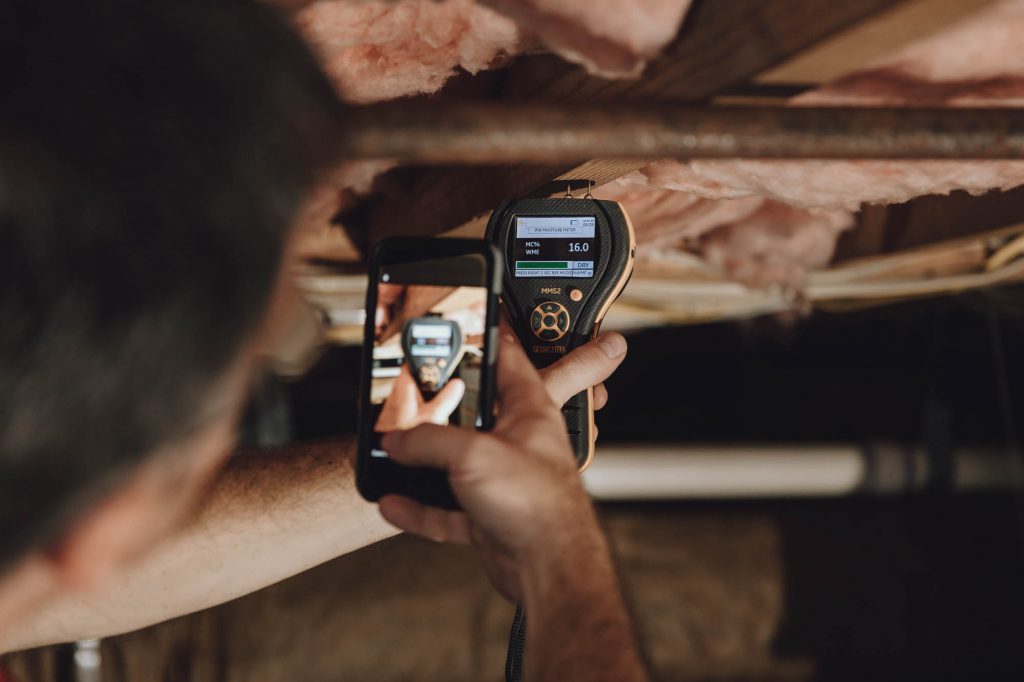
We begin every Winston-Salem mold job with a thorough walk-through using moisture meters, infrared cameras, and hygrometers to find both visible and hidden growth. Crawlspaces, attics, behind drywall, under flooring, and inside HVAC plenums all get checked. We document elevated moisture readings, take photographs, and identify the water source feeding the mold. Without finding and stopping the moisture source, any remediation will fail. We share the findings with you and walk through the scope before any work begins.
Before disturbing any mold, we build full containment around the work area using six-mil polyethylene sheeting, zipper doors, and HEPA-filtered negative air machines. This prevents spores from migrating into clean areas of your Winston-Salem home or business during demolition. HVAC supply and return vents inside the containment are sealed off so contamination cannot travel through ductwork. Critical-barrier containment is required by IICRC S520 anytime visible mold exceeds 10 square feet, and we use it on smaller jobs as well when conditions warrant.
Porous materials with active mold growth, such as drywall, insulation, carpet pad, and damaged wood trim, cannot be cleaned to a safe condition and are removed and bagged for disposal. Semi-porous materials like framing lumber and subfloor are HEPA-vacuumed, treated with EPA-registered antimicrobials, and in some cases media-blasted to remove staining and surface mycelium. All waste leaves your Winston-Salem property double-bagged through the containment. Workers wear full PPE including respirators throughout this phase.
Once contaminated materials are out, every surface inside the containment is HEPA-vacuumed and damp-wiped with antimicrobial solution from ceiling to floor. Air scrubbers with HEPA filtration run continuously to capture airborne spores released during demolition. We typically run scrubbers for 24 to 48 hours after physical cleaning, depending on the size of the contaminated area, to bring spore counts back down to normal background levels before clearance testing.
Before we tear down containment, an independent third-party industrial hygienist collects post-remediation air samples and surface samples to verify the work area is back to normal background conditions. Only after we receive a passing clearance report do we remove containment and begin reconstruction. Drywall, insulation, flooring, and trim are restored to pre-loss condition. You receive a complete remediation report documenting the scope, photos, moisture readings, and clearance results for your records and any insurance claim.
Winston-Salem's housing stock is uniquely vulnerable to mold because of its age, construction style, and the climate it sits in. Historic Old Salem, founded by Moravian settlers in 1766, contains some of the oldest standing wood-framed structures in North Carolina, and these 18th-century buildings often have hand-hewn timber, lime-mortar masonry, and dirt or rubble crawlspaces that wick groundwater year-round. The R.J. Reynolds tobacco-era neighborhoods that grew up around the factories from the 1890s through the 1940s, including West End, Ardmore, and Washington Park, are full of bungalows, four-squares, and mill cottages with original wood siding, plaster walls, and unvented crawlspaces that trap humidity against wood structural members. Buena Vista's grand 1920s homes and the Reynolda estate area feature deep basements and complex roof lines that develop ice damming and gutter overflow problems. Throughout Forsyth County, summer dewpoints regularly sit in the upper 60s and 70s, and the red-clay soil holds water against foundations long after rain stops. When you combine aging building envelopes, original galvanized plumbing nearing end of life, and a humid subtropical climate with 45 inches of annual rainfall, hidden mold growth becomes one of the most common indoor environmental problems in the city.
Long-term mold exposure in your Winston-Salem home can cause a wide range of health problems, and the effects compound the longer the contamination is allowed to grow. The most common symptoms are upper respiratory: chronic coughing, sneezing, runny nose, sinus congestion, sore throat, and watery eyes that mimic seasonal allergies but never fully resolve. People with asthma often experience more frequent and more severe attacks, and children exposed to indoor mold during early development face elevated risk of developing asthma in the first place. Mycotoxin-producing species such as Stachybotrys and certain Aspergillus strains can cause headaches, persistent fatigue, skin rashes, memory problems, and in severe cases neurological symptoms. Immunocompromised individuals, infants, the elderly, and pregnant women are at the highest risk and can develop serious systemic infections from species the average healthy adult would tolerate. Because dead mold spores are still allergenic and toxic, simply killing visible mold is not sufficient. Professional remediation that physically removes contaminated materials and clears the air is the only way to fully eliminate the health risk.
Mold can begin growing on damp organic materials in as little as 24 to 48 hours, and in Winston-Salem's humid climate it often appears even faster. Drywall paper, carpet pad, and wood subfloor are especially vulnerable because they hold moisture and provide cellulose for spores to feed on. After any water intrusion, including roof leaks, plumbing failures, dishwasher overflows, or storm flooding, the safest course is to dry the structure to below 16 percent moisture content within 72 hours. If that window is missed, you should assume mold is present and have a professional moisture inspection performed before closing the wall back up. Acting quickly almost always saves you from a much larger and more expensive remediation later.
It depends on the cause. Most North Carolina homeowners policies cover mold remediation when it results from a sudden, accidental, covered water loss such as a burst pipe, an appliance hose failure, or a wind-driven roof leak. Mold caused by long-term neglected leaks, gradual humidity, deferred maintenance, or flooding from rising surface water is typically excluded or limited to a small mold-specific cap, often $5,000 to $10,000. Many Winston-Salem policies also have separate mold riders that increase coverage. Remtech works directly with adjusters, provides full documentation including photos and moisture readings, and coordinates the claim so you do not have to navigate it alone.
For small isolated jobs of less than 10 square feet contained to one room, most Winston-Salem homeowners can stay in unaffected areas without issue. For larger projects, particularly those involving HVAC contamination, attic-wide growth, or multiple rooms, we usually recommend temporary relocation while containment is up and air scrubbers are running. Households with infants, elderly residents, immunocompromised members, or anyone with asthma should plan to relocate even for smaller jobs out of caution. We discuss your specific situation during the inspection and let you know up front what to expect, so you can make travel arrangements before work begins.
Pricing varies widely based on the size of the affected area, the type of materials involved, accessibility, and whether reconstruction is needed afterward. A small isolated bathroom or closet remediation in Winston-Salem typically runs $1,500 to $3,500. Larger jobs involving HVAC systems, crawlspaces, or multiple rooms with reconstruction commonly fall between $6,000 and $20,000. Attic-wide remediation in older Reynolda or Buena Vista homes can run higher. We always provide a free written inspection and detailed scope of work before starting, so there are no surprises. If insurance is involved, we coordinate directly with your adjuster on pricing.
Bleach is not an effective mold remediation tool, and the EPA specifically advises against relying on it. Bleach surface-cleans the visible black staining but does not penetrate porous materials such as drywall, wood, or grout where the mold roots, called hyphae, are anchored. The mold regrows within days, and the chlorine fumes can pose their own respiratory hazard. More importantly, scrubbing visible mold without containment releases millions of spores into the rest of your home, spreading the problem to clean areas. Professional remediation removes the contaminated materials, addresses the moisture source, and verifies clearance so the issue is truly resolved.
Beyond Winston-Salem proper, our certified mold remediation team serves the entire Triad and Forsyth County region, including Clemmons, Lewisville, Kernersville, Walkertown, Rural Hall, Pfafftown, Tobaccoville, and King. We also routinely handle projects in surrounding counties including Davidson, Davie, Stokes, Yadkin, and Surry. Whether you are in a historic Old Salem cottage, a Reynolda-area estate, an Ardmore bungalow, or a downtown loft conversion, Remtech Environmental responds quickly with the same IICRC-certified process and full insurance coordination. Call us 24/7 for emergency mold and water damage response anywhere in the Winston-Salem metro area.
Contact us today to schedule an inspection or receive a free quote for our services.
Get a Free QuoteReady to get started? Fill out the form below and we'll get back to you right away.
We believe that a job done right is the only way to sleep well at night.
Contact Us Today