
Remtech has been a professional mold removal company for over 20 years, treating and restoring homes and commercial properties in Asheville and all across North Carolina.
Mold is a common fungus found nearly everywhere, both inside and outside your home.
But it grows, multiplies, and spreads very quickly — becoming a legitimate problem (and health concern) fast.
While most people think you can just kill mold, the truth is dead mold can have the same health effects as live mold.
Plus, excessive humidity and moisture in southern climates like ours here in North Carolina make you even more prone to a mold issue.
Here are signs you may have a mold problem in your home or business:
If you answered yes to any of those questions, chances are you may have a mold problem in your home or property.
1. EXPERIENCE: We have decades of experience cleaning and restoring homes from every type of moldy situation. You can rest assured that we will know how to restore your home as well.
1. EXPERIENCE: Our team has decades of combined experience handling every type of mold situation – from small residential jobs to large commercial remediation projects.
2. INSURANCE: We pay for the best insurance coverage to back our work and protect our customers: including general liability, worker’s compensation, and specific environmental pollution liability insurance.
3. CERTIFICATIONS: Our mold removal experts not only go through continual training on mold remediation procedures and mold mitigation, but they’re also certified by the Institute of Inspection, Cleaning and Restoration (IICRC).
4. EQUIPMENT: We invest in professional-grade dehumidifiers, air scrubbers, and HEPA vacuums to deliver safe, thorough mold remediation.
4. EQUIPMENT: Simply put, a professional uses professional-grade equipment, from dehumidifiers and air scrubbers to High-Efficiency Particulate Air (HEPA) vacuums.
If you have or suspect you have mold in your home don’t wait to act. Let us equip you with the information to make the right decision for your family and property. Contact us to receive a free consultation or schedule an inspection.
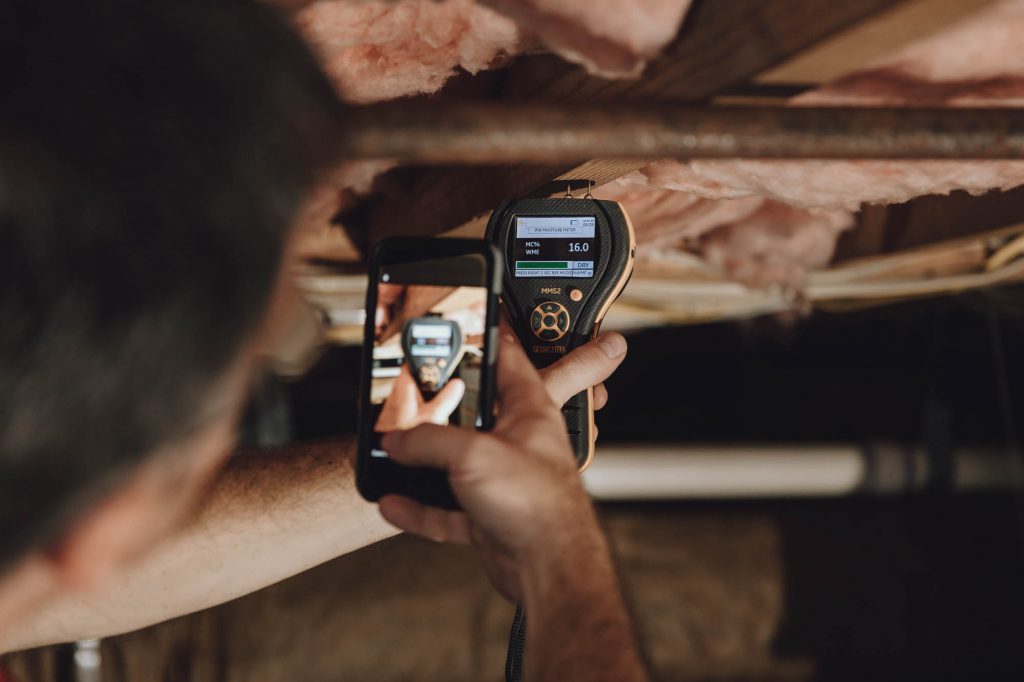
Identifying the cause and determining the source of the moisture problem is critical. Even if you can see mold with your own eyes, oftentimes there’s more to be found deeper down, in subflooring or behind wallpaper, for example.
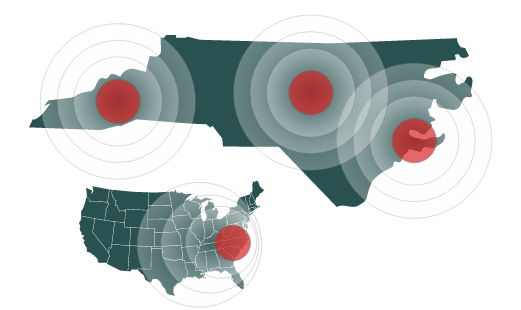
We’ve travelled as far as Nebraska, Texas, and the Cayman Islands to assist with large-scale disaster relief, but our main service areas since we started are North Carolina, South Carolina, and Virginia.
At Remtech Environmental, we offer mold removal services for customers in Raleigh, Durham, Cary, Asheville, Morrisville, Wake Forest, Wendell, Winston-Salem, Apex, Chapel Hill, and Greensboro, North Carolina.
We start with an extensive mold inspection that allows us to plan the remediation strategy. Read More →
Mold damage is one of the most common problems we address at homes and businesses in Asheville and throughout the Triangle area. Read More →
Our mold remediation services are handled by skilled and certified technicians who will resolve this concerning issue. Read More →
Asheville sits in a Blue Ridge mountain valley at roughly 2,100 feet of elevation, and the climate that shapes its mold profile is fundamentally different from the Piedmont conditions that define our other service areas. The Asheville basin acts as a moisture catch, with prevailing winds pushing humidity up the French Broad River corridor and the surrounding ridges trapping it overnight. The result is some of the highest annual rainfall totals in the eastern United States, with the Asheville-area stations regularly recording over 50 inches a year and the Pisgah and Black Mountain ranges nearby pushing past 80 inches. Add the dramatic temperature swings between day and night that drive condensation, the older building stock in Montford, Kenilworth, West Asheville, and Biltmore Village dating to the early twentieth century, and the catastrophic flooding from Hurricane Helene in September 2024 that displaced thousands and saturated tens of thousands of structures, and Asheville faces a mold reality that is both chronic and acute. Remtech Environmental brings IICRC-certified protocols to Western North Carolina mold remediation.
Asheville's combination of mountain humidity, older housing, and post-Helene flood remediation produces a distinct mix of mold genera in lab work.
Stachybotrys exploded across Asheville and the surrounding Buncombe County watershed after Hurricane Helene's September 2024 flooding left homes, businesses, and entire neighborhoods saturated for weeks. The genus colonizes cellulose-rich materials that stay wet for seven days or longer, exactly the conditions that followed Helene in the River Arts District, Biltmore Village, Swannanoa, and along the Swannanoa and French Broad floodplains. We continue to find it on subfloor, drywall paper, and wood framing in homes whose initial drying was incomplete. Containment and clearance testing are mandatory.
Aspergillus is endemic to Asheville's older housing stock. The early-twentieth-century homes in Montford, Kenilworth, and Grove Park feature original framing, knob-and-tube wiring, and ventilation patterns that hold moisture differently than modern construction. North-facing roof decks shaded by hardwoods stay wet through Asheville's frequent fog and overnight dew, and we find heavy Aspergillus growth on attic sheathing across the city's pre-1950 neighborhoods. Several Aspergillus species produce mycotoxins, and remediation routinely pairs colony removal with ventilation correction or HVAC sanitization.
Penicillium colonies appear in nearly every Asheville water-damage project. The blue-green growth establishes within days on damp drywall, behind kitchen and bathroom fixtures, and on the cellulose-rich storage materials that fill basement crawlspaces in Asheville's older homes. Vacation rentals and short-term properties in West Asheville and East Asheville frequently develop Penicillium between guests when leak detection is delayed. Spores aerosolize quickly and elevate indoor counts faster than most genera, so containment must precede demolition.
Cladosporium is the dominant outdoor mold in the Western North Carolina mountains, and it migrates indoors through every door, window, and HVAC return. The genus colonizes the cool surfaces of Asheville bathrooms, window frames, and basement walls. Original wood sashes in Montford and Kenilworth Victorians grow heavy Cladosporium during winter when interior condensation pools at the glass. Cladosporium tolerates the cool temperatures of mountain basements and continues growing through Asheville's longer winter than the Piedmont sees, so source reduction is a year-round project.
Alternaria thrives in Asheville bathrooms, around plumbing fixtures, on washing-machine gaskets, and in HVAC drain pans. The genus is a major allergen, and Asheville's pollen calendar, while shorter than the Piedmont's, still produces significant oak and ragweed loads that compound indoor mold exposure. Older Asheville bathrooms frequently lack adequate exhaust fans, particularly in homes whose plumbing predates the upgrades that came with mid-century renovations. Sustained humidity above 60 percent in those rooms allows Alternaria to persist and reseed throughout the year.
Asheville projects follow the same five-stage IICRC S520 protocol Remtech applies statewide, calibrated for mountain climate and the older construction common in Buncombe County.
Our certified inspector documents the property with thermal imaging, moisture meters, and borescopes adapted for the plaster-and-lath assemblies common in Asheville's pre-war homes. Air samples and tape lifts are pulled from each affected zone plus an outdoor reference and submitted to an accredited lab. The resulting report identifies the dominant genera, compares indoor counts to the outdoor control, and traces the moisture source. Post-Helene projects often involve flood-line documentation that FEMA and SBA loan officers later request when families pursue federal assistance.
Polyethylene barriers and zippered entries isolate the work zone before any porous material is disturbed. Negative air machines with HEPA-rated final filters maintain pressure differential. Asheville's older homes feature balloon framing, continuous chases, and stone foundations whose air paths require extra attention to seal properly; a single unaddressed top-plate gap can let spores reach the attic. HVAC registers in unaffected rooms are sealed so the air handler does not redistribute contaminants during the project.
Technicians work in P100 respirators, Tyvek suits, and gloves. Saturated drywall, salvageable plaster, batt insulation, carpet pad, and affected subfloor are removed and double-bagged for disposal under North Carolina solid-waste rules. Salvageable wood framing and masonry are HEPA-vacuumed, wire-brushed where needed, and treated with antimicrobials matched to the lab-identified species. Heavy contamination from Helene flood saturation often requires dry-ice or soda blasting to lift colonies from porous mountain framing without introducing new moisture.
Asheville mold returns whenever the moisture source is left untreated, and the city's climate gives the genus more starting moisture than the Piedmont. Our scope routinely covers crawlspace encapsulation, dehumidifier installation, French drain or sump-pump correction, downspout extension along steep mountain lots, regrading recommendations, plumbing-leak coordination, roof-flashing repair, and HVAC condensate fixes. Helene-impacted properties often need foundation repair coordination with structural engineers before remediation can complete responsibly.
Independent third-party clearance testing closes every Asheville project. New air samples and ATP swabs are pulled and compared against the outdoor reference. Reconstruction does not begin until clearance counts confirm acceptable indoor air quality and the moisture source is verified dry. The homeowner receives a complete documentation packet, including inspection notes, remediation logs, photography, lab reports, and warranty terms. Asheville adjusters, FEMA caseworkers, and real-estate attorneys cite the packet during claim approvals and property transactions.
Asheville's mold reality is shaped by mountain microclimate, building age, and the watershed catastrophe of Hurricane Helene. The city sits in a basin where overnight cool air settles and morning fog lingers across the French Broad and Swannanoa river valleys, producing relative humidity well above the Piedmont average even during dry periods. Asheville Regional Airport climate data shows average annual precipitation above 50 inches, with the surrounding mountains receiving substantially more, and that water funnels through the same valleys where the city's housing concentrates. The pre-1940 housing stock, including the Montford historic district, Kenilworth, the Grove Park area near the Inn, Biltmore Village, West Asheville, and Chestnut Hill, predates modern vapor barriers, continuous insulation, and proper flashing details. Stone foundations, plaster walls, original windows, and limited mechanical ventilation all let moisture move through the building in ways that newer construction does not. Hurricane Helene's September 2024 flood was the defining mold event in Western North Carolina history. The Swannanoa, French Broad, and Mills river systems crested at record heights, inundating the River Arts District, Biltmore Village, the Swannanoa community, Black Mountain, Marshall, and Chimney Rock with flood depths the region had not seen in over a century. The mold workload from that event continues into 2026, with thousands of structures still in remediation or reconstruction. Beyond Helene, the city's normal rainfall patterns, persistent fog, and older buildings produce a steady baseline of mold work that we expect to continue as long as Asheville exists.
Indoor mold exposure produces a documented progression of illness across a spectrum of severity. Asheville residents typically first notice congestion, sinus pressure, sore throat, headaches, and itching eyes, often blaming mountain pollen seasons or seasonal viral activity. Sustained exposure escalates to new-onset or worsening asthma, recurrent bronchitis, eczema, and the chronic fatigue that mold-driven illness produces. Following the Helene flooding, regional public health agencies documented elevated respiratory complaints across Buncombe County for months as displaced residents returned to mold-contaminated homes. Higher-risk residents include infants, elderly people, pregnant women, and anyone immunocompromised through chemotherapy, transplant medication, or autoimmune therapy. Asheville pulmonologists and allergists routinely confirm measurable symptom improvement within weeks of professional remediation, especially in flood-impacted families.
Asheville residential projects generally run between 2,800 and 9,500 dollars under normal conditions. A single-bathroom or single-room scope in a Montford bungalow might total 1,800 to 3,000 dollars. Crawlspace encapsulation with mold removal commonly lands between 6,500 and 11,000 dollars on Asheville's complex mountain lots. Helene-related whole-house remediation projects regularly exceed 25,000 dollars when subfloor replacement, drywall reconstruction, and HVAC sanitization are factored in. Mountain access and steep driveways add labor cost compared to flat Piedmont lots. Remtech provides a written itemized estimate after inspection.
Standard North Carolina homeowner policies cover mold caused by a sudden, accidental, covered water loss up to the mold sublimit, typically 5,000 or 10,000 dollars without a higher endorsement. Hurricane Helene presented a complicated coverage picture in Asheville because most flood damage falls under the National Flood Insurance Program rather than standard homeowner policies, and many affected homes were not in mapped flood zones and lacked NFIP coverage. We work with both standard carriers and NFIP adjusters and document moisture origin in the format each requires. FEMA Individual Assistance has covered some remediation costs for uninsured Helene survivors.
Asheville single-room remediation typically runs three to five days from containment setup through clearance testing, slightly longer than Piedmont equivalents because mountain humidity slows the drying phase. Crawlspace remediation paired with encapsulation usually takes five to eight days. Helene-related whole-house projects often extend to four to eight weeks once reconstruction is included, particularly when foundation repair or structural engineering review is required. Drying time controls the schedule and Asheville's persistent ambient humidity makes drying slower than at lower elevations regardless of season.
Most Asheville families remain home through the project. Containment, HEPA-filtered negative air, and HVAC-zone isolation keep spore counts safe in unaffected areas. We recommend that infants, asthmatic family members, pregnant residents, and immunocompromised occupants stay elsewhere during active demolition, which usually lasts one or two days. Helene-impacted families are often already displaced, in which case we coordinate access through their temporary housing arrangements. Whole-house contamination or severe HVAC colonization may require additional relocation, and we call that during the scoping visit.
Returning mold almost always traces to an unaddressed moisture source, not failed remediation. Watch for the original musty odor, fresh staining at the failure point, peeling paint, or returning respiratory symptoms in family members. A digital hygrometer placed in the crawlspace, basement, or a typically affected room is the cheapest early-warning tool; sustained readings above 60 percent mean moisture controls are slipping. In Asheville's climate that monitoring is even more important than in the Piedmont. Remtech provides a written warranty against regrowth when our scope addressed the moisture source and recommended controls have been maintained.
Remtech Environmental serves Asheville and the surrounding Buncombe County mountain communities. Our crews work properties in Montford, Kenilworth, Grove Park, Chestnut Hill, North Asheville, West Asheville, Haw Creek, Biltmore Village, Biltmore Forest, Beverly Hills, Oakley, Shiloh, Kenilworth Park, and the River Arts District. We also cover Black Mountain, Swannanoa, Weaverville, Fairview, Candler, Arden, Fletcher, and Mills River. Helene-impacted properties across the Swannanoa Valley and the French Broad floodplain remain a major focus, and we continue to bring IICRC-certified remediation to Western North Carolina families and businesses still recovering from the storm.
Contact us today to schedule an inspection or receive a free quote for our services.
Get a Free QuoteReady to get started? Fill out the form below and we'll get back to you right away.
We believe that a job done right is the only way to sleep well at night.
Contact Us Today