
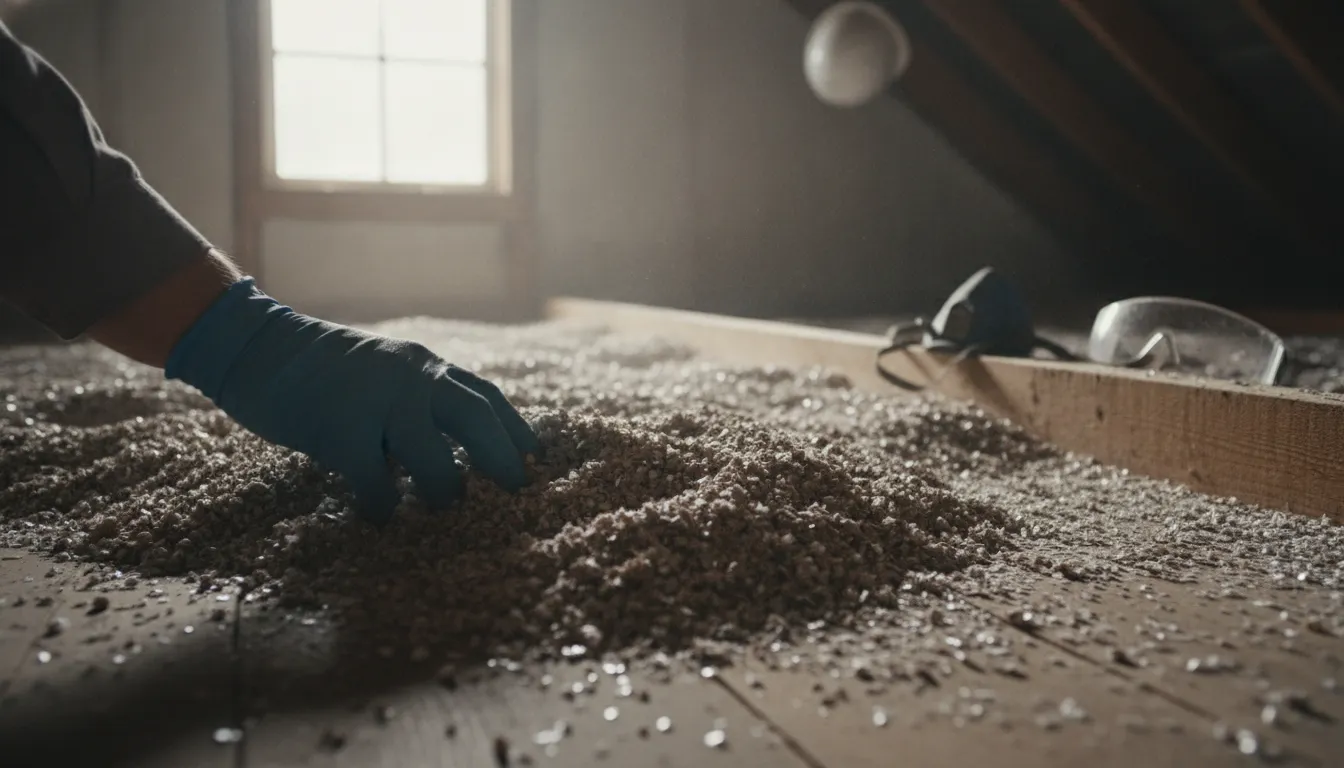
Finding loose, pebble-like insulation in an older Raleigh attic can raise an important question: is it vermiculite, and could it contain asbestos? The material cannot be confirmed by appearance alone, so the safest first step is to avoid disturbing it while you arrange qualified guidance.
Vermiculite insulation asbestos removal Raleigh NC projects should begin with professional assessment and testing, not attic cleanup or do-it-yourself removal. If asbestos is present, trained specialists can plan containment and removal around the material's condition and the home's needs.
That measured approach helps protect your household and gives you clearer information before insulation, electrical, roofing, or HVAC work takes place. It also makes it easier to understand why some older homes are more likely to have vermiculite insulation and what its pebble-like appearance can, and cannot, tell you.
Vermiculite Insulation Asbestos Removal Raleigh Nc: What Is Vermiculite Insulation and Why Is It a Concern?
Vermiculite is a naturally occurring mineral that was expanded into a lightweight, fire-resistant insulation product. It was used in attics and walls in many U.S. homes from the 1940s through the 1990s. Unlike batt insulation, it was typically poured or blown into attic spaces, where it settled around joists and other building components.
The material often has a distinctive pebble-like appearance. Vermiculite insulation is usually gray-brown or silver-gold, although color can vary with the source and age of the product. This appearance may help a homeowner recognize a possible concern, but it cannot determine whether asbestos is present. Asbestos fibers are microscopic and are not reliably visible in insulation or household dust.
The concern comes from the source of much of the vermiculite sold in the United States. The U.S. Environmental Protection Agency reports that more than 70 percent of the vermiculite sold in the country from 1919 to 1990 came from a mine near Libby, Montana. That mine contained an asbestos deposit, and vermiculite from Libby was contaminated with asbestos. The EPA also explains that asbestos is not intrinsic to vermiculite itself. Only certain ore bodies were found to contain more than trace amounts, so the material's appearance alone cannot confirm contamination.
This history matters for homeowners in Raleigh and surrounding communities, particularly those living in older homes built before 1985. An attic renovation, insulation upgrade, electrical project, or HVAC installation can disturb material that has remained in place for decades. If you suspect vermiculite insulation, avoid walking through it, moving it, sweeping it, or attempting to remove it. The EPA recommends treating it as though it may contain asbestos until a qualified professional evaluates the situation.
Remtech Environmental provides asbestos abatement services for Raleigh-area properties, with an education-first approach that helps homeowners understand their options before work begins. A professional assessment can determine the appropriate next step without relying on visual guesses.
How to Identify Vermiculite Insulation in Your Attic
Vermiculite insulation is usually easy to distinguish from fiberglass batts or blown cellulose once you know what to look for. It is a loose, pour-in material made up of small, pebble-like granules. The color may range from gray-brown to silver-gold, and the pieces can have a layered or flaky appearance. These characteristics are consistent with the U.S. Environmental Protection Agency's description of vermiculite insulation.
Look without disturbing the material
If you can see the insulation from an attic access point, observe it from a safe distance. Do not rake it aside, scoop up a sample, walk through it, or dig into it to see what is underneath. Avoid opening walls or ceilings to look for additional insulation. Moving the granules can release dust and may increase the chance of disturbing asbestos fibers if the material is contaminated.
Why the age of your Raleigh home matters
Homes built before 1985 in Raleigh and surrounding communities are more likely to contain older insulation materials, including vermiculite. The home's construction date is not proof that vermiculite is present, and visual characteristics alone cannot confirm whether asbestos is in the material. They can, however, help you recognize when professional guidance is appropriate.
The EPA recommends that homeowners with vermiculite insulation assume it may contain asbestos and avoid disturbing it. That does not mean every piece of vermiculite contains asbestos. It does mean the material should be treated cautiously until a qualified professional assesses the situation. If you notice pebble-like, gray-brown or silver-gold insulation in your attic, keep the access area closed and let household members know not to handle it. Do not sweep, vacuum, or remove it yourself.
For Raleigh homeowners who need a clear next step, Remtech's asbestos abatement specialists can help evaluate the concern and explain appropriate options. The goal is to make an informed decision without unnecessary disturbance or pressure.
Why Professional Testing Is Essential Before Any Attic Work
Vermiculite insulation can look harmless, but appearance alone cannot establish whether asbestos is present. The EPA recommends treating vermiculite insulation as though it may contain asbestos and avoiding disturbance. Only laboratory testing can confirm asbestos presence. Before repairing, rewiring, insulating, or cleaning an attic, follow these steps.
-
Do not disturb the insulation
Do not rake, sweep, vacuum, bag, or move the material to examine what is underneath. Avoid entering the attic unless necessary, and keep children and pets away from the area. Disturbing the insulation can release particles into the air. If work must be planned around the attic, pause and arrange a professional assessment instead of taking samples yourself.
-
Contact a certified asbestos inspector
Choose a qualified asbestos professional who understands North Carolina requirements and can evaluate the material without creating unnecessary exposure. A trained professional can also explain whether the planned work could disturb suspect insulation and what notifications or controls may apply. Schedule a free consultation with Remtech Environmental to discuss the property and the right next step.
-
Allow professional sample collection and laboratory analysis
The inspector should collect representative samples using appropriate precautions and submit them to a qualified laboratory. Industry sources commonly cite testing costs of approximately $250 to $850, depending on the property and scope. The testing fee is project-specific, so request a clear explanation of what the assessment includes rather than relying on a standard price.
-
Interpret the results carefully
A laboratory report can confirm whether asbestos was detected in the submitted sample. A negative result does not authorize unplanned disturbance of other materials that were not sampled. Ask the inspector to explain the findings, sample locations, limitations, and whether additional testing is appropriate before work begins.
-
Plan the next steps based on the findings
If asbestos is identified, removal or other corrective work should be handled by trained professionals following applicable EPA and OSHA requirements, including containment and specialized equipment. In North Carolina, asbestos projects subject to NESHAP require 10-day advance notice. Your professional should account for that timing, define the work area, and outline the safety procedures before anyone begins attic work.
The Vermiculite Insulation Asbestos Removal Process
Professional removal is a controlled process designed to keep potentially contaminated material from becoming airborne and to protect the people inside the home. If vermiculite insulation needs to be removed, the EPA recommends using trained professionals rather than disturbing it yourself. In some reported situations, disturbing vermiculite has released airborne fiber levels up to 8,000 times the permissible exposure limit. That is why this is never a DIY project. (Source)
-
Site assessment and testing
The project begins with an inspection of the attic and surrounding areas. Certified professionals evaluate the insulation, identify access points, and determine whether sampling is appropriate. Testing helps establish the correct plan instead of relying on appearance alone. Until the material is assessed, homeowners should avoid walking through it, moving it, or storing items in the attic. Remtech's EPA-accredited specialists can explain the findings and outline project-specific next steps.
-
Containment setup
Before removal begins, the work area is isolated from the rest of the home. The attic access and other openings are sealed with durable plastic sheeting. The crew establishes negative air pressure so air flows into the contained area rather than carrying dust into occupied spaces. This containment approach is part of the strict safety procedures used in professional asbestos work.
-
Continuous HEPA air filtration
HEPA-filtered air scrubbers operate throughout the work. They continuously pull air through high-efficiency filters to help capture fine particles generated during the controlled removal. The crew also uses specialized equipment and follows established EPA and OSHA requirements, rather than treating the job like ordinary insulation replacement.
-
Careful removal and bagging
Technicians remove the vermiculite methodically, limiting disturbance and avoiding unnecessary handling. The material is placed into properly managed bags while it remains within the containment area. Certified technicians use appropriate protective equipment and procedures for the material and the property. For more information about Remtech's approach, visit the asbestos removal process page.
-
Final air clearance testing
After the material and work-area controls are addressed, the project is not simply finished when the attic looks clean. Final air clearance testing verifies that the area meets the required conditions before containment is removed and the space is returned to normal use. In North Carolina, applicable asbestos projects may also require advance NESHAP notification, so a qualified contractor should address compliance requirements as part of planning.
Remtech follows an education-first process focused on doing the right work the right way. A consultation can help Raleigh homeowners understand their options without disturbing the insulation or committing to work before the property has been evaluated.
Vermiculite Insulation Removal Costs and Considerations for Raleigh Homeowners
There is no standard price for vermiculite insulation removal in Raleigh. A responsible estimate is based on the specific attic and the work it requires. Key factors include the attic's size, how easily technicians can access the space, the amount of insulation present, and the concentration of asbestos identified through testing. Testing alone may cost approximately $250 to $850, depending on the scope of work, according to the Asbestos Institute. Learn more about asbestos testing considerations.
Project pricing can also reflect containment, specialized equipment, disposal requirements, and any preparation needed before other attic work. Remtech Environmental uses a consultation-based approach rather than publishing a one-size-fits-all rate. That gives Raleigh homeowners an opportunity to understand what is needed, what is not, and why a proposed scope is appropriate before making a decision.
Plan around North Carolina requirements
Asbestos work in North Carolina may require advance regulatory planning. Under the National Emission Standards for Hazardous Air Pollutants (NESHAP), the state requires 10-day advance notice for applicable asbestos projects. A qualified professional can help determine whether the planned work falls within that requirement and account for the notice period when scheduling.
Consider timing, home sales, and future work
Vermiculite that is undisturbed and properly encapsulated may not require urgent removal in every situation. Avoiding unnecessary disturbance is important, while planning ahead can reduce stress if you later need electrical, insulation, roofing, or HVAC work in the attic. It can also help you make informed decisions before listing your home. Sellers may need to disclose known vermiculite insulation or asbestos-related conditions, depending on the circumstances and applicable disclosure requirements. Discuss questions about disclosure with your real estate professional.
For clear next steps, Raleigh homeowners can request a free quote from Remtech. With an education-first approach and more than 25 years serving North Carolina, the team focuses on transparent recommendations and doing the right work the right way.
Frequently Asked Questions
Is vermiculite insulation always dangerous?
No. Asbestos is not present in every vermiculite deposit, but some vermiculite insulation may be contaminated. Because visual inspection cannot confirm its source or contents, homeowners should avoid disturbing the material and treat it as potentially asbestos-containing until it has been professionally evaluated. This approach follows guidance from the U.S. Environmental Protection Agency.
How can I tell whether my insulation contains asbestos?
You cannot reliably determine asbestos content by color, texture, age, or appearance. A professional must collect an appropriate sample and arrange laboratory analysis. Do not rake, sweep, vacuum, or move loose insulation to inspect the attic yourself. If the material is in an area scheduled for renovation, arrange an assessment before work begins.
Should I remove vermiculite insulation if it has not been disturbed?
Not necessarily. If it is intact and will remain undisturbed, leaving it in place may be appropriate after a professional assessment. Removal becomes an important consideration before attic repairs, electrical work, insulation replacement, or other renovations that could disturb it. A qualified asbestos professional can explain the safest project-specific option.
Can I remove asbestos-containing vermiculite insulation myself?
No. Do-it-yourself removal can disturb the insulation and create airborne fibers. The EPA recommends using a trained professional when vermiculite insulation needs to be removed. Professional crews use containment, specialized equipment, and required safety procedures to control the work area and protect occupants.
How much does vermiculite insulation removal cost in Raleigh?
There is no reliable standard price. Project costs depend on the attic size, insulation depth, access, testing needs, containment requirements, disposal, and any preparation or restoration work. A site-specific consultation is the best way to understand the recommended scope and receive a transparent quote for your Raleigh home.
Schedule a Free Consultation
If vermiculite insulation may be present in your Raleigh attic, a professional evaluation can help you understand the next appropriate step without disturbing the material. Remtech Environmental provides clear, project-specific guidance for testing and asbestos removal, following an education-first approach. Schedule a free consultation to discuss your property and receive recommendations tailored to your situation.