
A renovation can uncover more than outdated finishes in a Raleigh home built before 1980. Flooring, insulation, siding, ceiling materials, and heating-system components may look ordinary while requiring careful handling. That does not mean every older material is dangerous, but it does mean demolition should begin with identification, not guesswork.
The most reliable way to confirm signs of asbestos in older homes is testing by a qualified laboratory. Because asbestos is mainly a concern when fibers become airborne, avoid scraping, sanding, cutting, or removing a suspect material until it has been evaluated.
Age can provide an important clue, since many home-building products used before the 1970s contained asbestos. Next, we will look at the materials and construction details homeowners most often encounter before a renovation.
The Most Common Signs of Asbestos in Older Homes
The strongest clues are not a particular color, texture, or visible fiber. They are the age of the home, the age of its materials, and the type of construction product used. Asbestos is a naturally occurring mineral fiber that was added to many products because it could strengthen materials and provide heat insulation and fire resistance. That history is why a pre-1970s home, or a home with original materials from that period, deserves closer attention before renovation.
Building products and insulation used in homes before the 1970s commonly contained asbestos. Use declined afterward, with many products phased out by the late 1970s and early 1980s, but the material can remain in place decades later. A Raleigh home does not need to look unusual to contain suspect materials. An older floor, ceiling, wall finish, or insulation system may simply be original or may have been covered by newer construction.
Age is a clue, not proof
When homeowners search for the signs of asbestos in older homes, they often expect a visual checklist that will provide a definite answer. No visual checklist can do that. Asbestos fibers are too small to identify safely or reliably by sight, and similar-looking products may have different compositions. The EPA explains that only testing by a qualified laboratory can definitively determine whether a suspect material contains asbestos. See our guide to asbestos basics for homeowners for more background before you begin investigating.
Renovation changes the decision
Undisturbed material in good condition may not require immediate testing. The question changes when a project could cut, drill, sand, scrape, remove, or otherwise disturb it. Opening a wall, replacing flooring, repairing a ceiling, or accessing insulation can turn an age-related clue into a reason to pause and arrange an appropriate evaluation. The EPA recommends testing suspect materials when they are damaged, crumbling, or fraying, or when planned renovation could disturb them.
Do not collect a sample based only on appearance. Leave the material alone, keep people away from any damaged area, and obtain professional guidance when testing is warranted. Treating the home's age and planned work as warning signs, rather than trying to diagnose asbestos visually, is the more reliable way to plan a safe renovation.
Where Asbestos Hides: A Room-by-Room Guide
Older homes can contain suspect materials in places homeowners rarely examine closely. These visual clues do not prove that asbestos is present, but they can tell you where to pause before drilling, scraping, sanding, or removing anything. The U.S. Consumer Product Safety Commission lists several common building products that may have contained asbestos, including insulation, flooring, siding, and ceiling materials.
Attic insulation
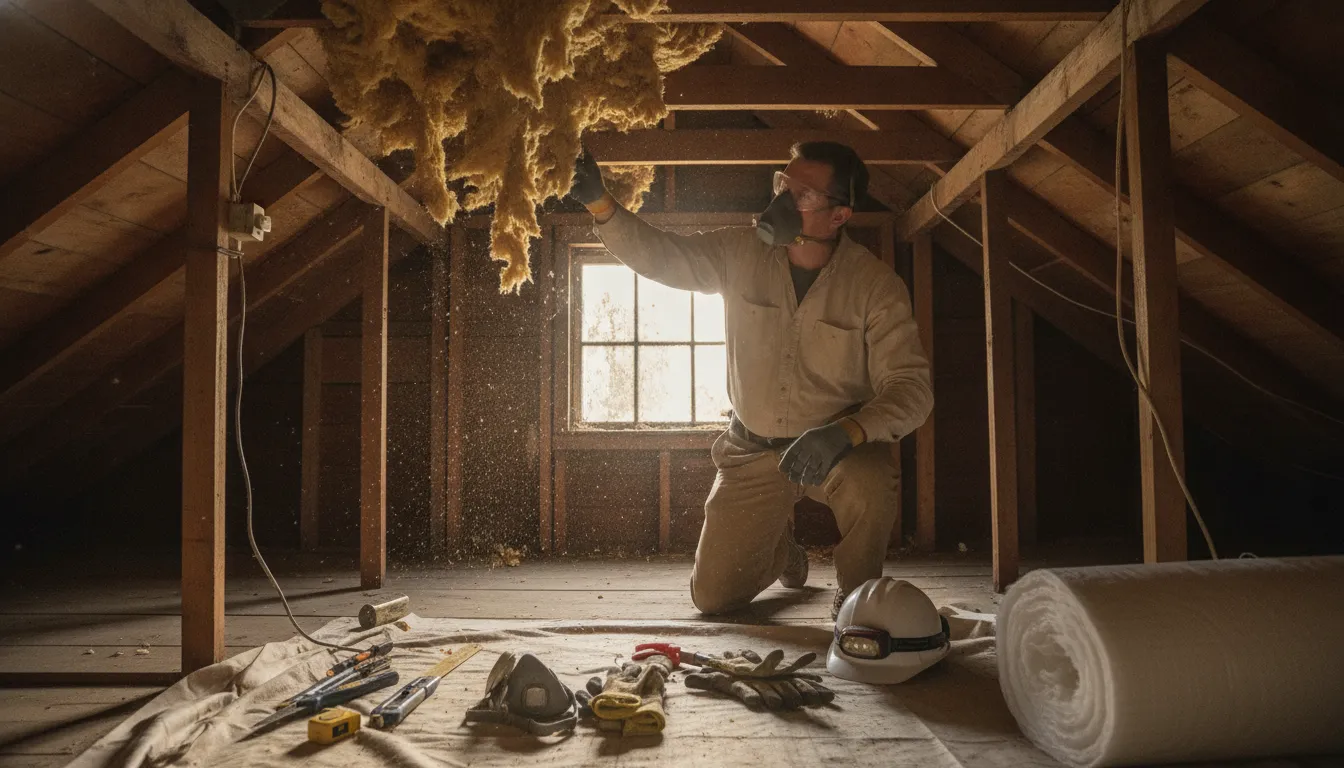
Loose-fill insulation is one warning sign in an attic, especially when it looks like small, lightweight, pebble-like particles. Vermiculite insulation may contain asbestos, and it should not be stirred, swept, vacuumed, or moved casually. Avoid entering the area if doing so will disturb the material, and keep renovation crews away until the insulation has been evaluated. Learn more about common asbestos locations in older homes.
Basements, utility rooms, and mechanical spaces
Look carefully, without touching, at insulation around steam pipes, boilers, furnace ducts, and other heating equipment. Asbestos insulation may appear as an off-white or gray, powdery wrapping, an insulating blanket, or paper tape around joints and ductwork. Fraying edges, tears, water-worn surfaces, or crumbling sections are especially important warning signs because damaged material can release fibers more readily. Do not brush or peel the wrapping to get a better look.
Floors and exterior siding
Older vinyl floor tiles are another possible source, particularly in kitchens, hallways, utility rooms, and finished basements. The tile pattern alone cannot identify asbestos, and the adhesive beneath it may also require evaluation. A more unusual exterior clue is cement siding shingles. Asbestos-containing cement siding was common in homes built during the 1920s through the 1960s. Cracked, broken, or weathered shingles should not be cut, drilled, or pressure-washed before a professional assessment.
Ceilings and textured surfaces
Acoustic or drop-ceiling tiles in older homes may contain asbestos-based components. Check for damaged tiles, exposed edges, or planned light-fixture and ventilation work that could disturb them. Popcorn or other textured ceiling finishes, textured paint, and patching compounds are also suspect materials when applied before the late 1970s. A repair, recessed light installation, or ceiling removal can turn a previously undisturbed surface into a dust-producing project.
None of these appearances is a reliable visual diagnosis. Asbestos can only be definitively identified through testing by a qualified laboratory. If a Raleigh-area renovation involves one of these materials, stop work and arrange an evaluation before disturbing it.
How Old Is the Clue? Age-Based Signs in Your Home
One of the clearest warning signs is the age of the home itself. If your Raleigh house was built before the 1970s, its original building products and insulation are more likely to contain asbestos than materials used in newer construction. The U.S. Consumer Product Safety Commission notes that many types of home building products contained asbestos until the 1970s. When the material began to be phased out of many consumer products.
That history does not mean every older home contains asbestos, and it does not mean an older material is automatically dangerous. It does mean the construction date should influence how you plan repairs. A home built in the 1940s, 1950s, or 1960s may still have original flooring, insulation, siding, ceiling materials, or heating-system components. Even homes from the 1970s and early 1980s deserve a closer look because products were phased out over time rather than disappearing from every property at once.
Why asbestos was used in older building products
Asbestos was added to construction materials for practical performance reasons. It could increase strength, provide heat insulation, and improve fire resistance. Those qualities made it useful in products installed throughout a home, including materials that may be hidden behind walls, above ceilings, around pipes, or beneath finished floors. The original purpose of the material does not tell you whether it is present today, however. A visual inspection alone cannot confirm asbestos.
Age is therefore a screening clue, not a diagnosis. Remodeling history matters too. A newer-looking surface may cover an older material, while a previous renovation may have left original components in place elsewhere. Before removing flooring, cutting into walls, sanding textured surfaces, or opening ceilings, document the home's construction date and identify which materials the project will disturb.
When the home's age calls for testing
The EPA recommends testing suspect materials when they are damaged, fraying, or crumbling, or when a planned renovation could disturb them. If an older material is intact and will remain undisturbed, leaving it alone may be the safest approach. If your project will affect it, do not scrape, drill, sand, or remove a sample yourself. A properly trained and accredited asbestos professional can collect appropriate samples and arrange qualified laboratory testing.
Use the home's age to decide when to pause and investigate, not to make assumptions. That measured step can help you protect the project, the people in the home, and the material's condition before renovation begins.
Friable vs. Non-Friable Asbestos: What the Difference Means
Asbestos-containing materials are often described as either friable or non-friable. The distinction relates to how easily the material can release fibers, not simply how old or unattractive it looks. Friable materials can crumble under ordinary hand pressure, making them more likely to create a health hazard. Non-friable materials are typically bound within a stronger product and may present less immediate risk when intact.
| Characteristic | Friable asbestos | Non-friable asbestos |
|---|---|---|
| How it behaves | Can crumble, break apart, or become powdery with relatively little pressure. | Is generally bound or cemented into a more durable product, so it does not easily crumble when intact. |
| Why it matters | Its fragile condition makes fiber release more likely, especially when handled or damaged. | It usually presents a lower immediate risk while in good condition and left undisturbed. |
| Common concern | Disturbance can release airborne fibers that may be inhaled. | Cutting, drilling, scraping, sanding, or breaking the product can still release fibers. |
The label "non-friable" does not mean "safe to remodel without precautions." A bound material can become hazardous when a renovation tool changes its condition. The Consumer Product Safety Commission explains that asbestos materials that have been sawed, scraped, or sanded into a powder are more likely to create a health hazard: CPSC asbestos safety guidance. Even a product that appears solid can release fibers when it is cut or fractured.
That is why a planned renovation deserves the same caution as visible crumbling. Disturbing suspect material may create a health hazard where none existed before. In a Raleigh home, pause before removing old flooring, opening a wall, replacing siding, or modifying insulation if the work could affect an older building product. Do not scrape, sand, break, or collect a sample yourself.
If a suspect material is in good condition and no work will disturb it, leaving it alone is generally the safest approach. The CPSC recommends leaving asbestos material in good condition undisturbed: read the CPSC's homeowner guidance. When damage or renovation makes evaluation necessary, a trained professional can help determine the appropriate next step without turning an uncertain situation into unnecessary exposure.
Health Risks of Asbestos Exposure and Why Testing Matters First
Seeing possible signs of asbestos in older homes does not mean you should assume the material is dangerous or begin removing it. The concern is whether asbestos fibers become airborne and are inhaled. Damage, scraping, sawing, sanding, or other renovation work can disturb materials that may have been stable for years. A calm assessment before work begins gives you a safer way to decide what happens next.
What health risks are associated with asbestos?
Breathing asbestos fibers can increase the risk of serious diseases, including lung cancer, mesothelioma, and asbestosis. The level of risk is influenced by the amount of asbestos inhaled. The risk of lung cancer from asbestos exposure is also higher for people who smoke, according to the U.S. Consumer Product Safety Commission. These are important facts, but they are not a reason to panic over every older building material. They are a reason to avoid creating dust and to handle uncertainty responsibly.
Asbestos-related illnesses may not produce immediate warning signs. Symptoms of conditions such as lung cancer or asbestosis often do not appear until about 20 to 30 years after the first exposure. That long delay means a person cannot use the absence of symptoms to determine whether a current renovation plan is safe. If you are concerned about past exposure or have respiratory symptoms, discuss your history with a qualified medical professional.
Why testing should happen before renovation
The U.S. Environmental Protection Agency recommends testing suspect materials when they are damaged, fraying, or crumbling, and when planned renovation could disturb them. This is especially relevant before drilling, cutting, sanding, demolition, or other work in an older Raleigh home. Testing can identify materials that need to remain undisturbed, be managed in place, or be addressed before construction continues.
Visual inspection alone cannot confirm asbestos. The only definitive way to identify it is laboratory testing of an appropriate sample. Because collecting a sample can disturb the material, the EPA recommends that suspected asbestos samples be taken by a properly trained and accredited asbestos professional. Do not scrape a ceiling texture, pull up flooring, break insulation, or send a piece to a lab yourself simply because it looks suspicious.
If testing confirms asbestos, the next decision depends on the material's condition, location, and the planned work. Materials in good condition may be safest left alone. If renovation will disturb them, qualified professionals can explain the appropriate controls and next steps. Learn more about when asbestos requires professional removal before scheduling work that could release fibers.
What to Do If You Find Suspect Materials in Your Home
Finding a material that may contain asbestos does not automatically mean your home is unsafe or that removal is required. The priority is to avoid creating dust, preserve the material's condition, and get reliable information before continuing a renovation. If you are investigating signs of asbestos in older homes, use this calm, practical sequence.
-
Do not touch, scrape, or move the material
Leave the material where you found it, especially if it is intact and in good condition. Do not pick up pieces, take a sample, sweep around it, or try to determine what it is by feel. The U.S. Consumer Product Safety Commission advises that asbestos-containing material in good condition is best left alone because disturbing it may create a hazard that did not previously exist. Keep children and pets away from the immediate area, and avoid storing tools or belongings against the material. Read the CPSC's asbestos safety guidance for additional homeowner precautions.
-
Stop work and isolate the area
Pause demolition and any activity that could disturb the suspect surface. That includes drilling, cutting, sanding, scraping, grinding, or pulling apart attached materials. These actions can damage the product and release fibers into the air, particularly during work in an older home. Close the door if possible, limit foot traffic, and do not use a household vacuum or fan to clean up dust. If work has already started, do not continue simply because the material looks ordinary. Stop, keep people out, and arrange professional guidance.
-
Arrange testing by a trained, accredited professional
Appearance and age can identify a reason for caution, but they cannot confirm asbestos. The only way to definitively identify it is laboratory testing. A properly trained and accredited asbestos professional should collect the sample safely and submit it for analysis. The EPA recommends testing when a suspect material is damaged or when a planned renovation could disturb it. This step helps you make a proportionate decision instead of guessing or paying to remove material that does not require abatement.
-
Use qualified abatement professionals if removal is needed
If testing confirms asbestos and the project requires removal, hire a properly trained and accredited abatement contractor. Professional crews establish containment, control dust, and use specialized equipment and methods, such as wet techniques and HEPA-filtered vacuums, to reduce the chance of fibers becoming airborne. Do not ask a general handyman or untrained crew to treat it like ordinary demolition. You can learn more about asbestos abatement services and the safeguards to discuss before work begins.
In many cases, the safest next step is not immediate removal. It is a controlled pause, professional assessment, and a decision based on the material's condition and your renovation plan.
Frequently Asked Questions
How can I tell if my home has asbestos?
You cannot confirm asbestos by appearance, age, or texture alone. A properly trained and accredited asbestos professional should collect a sample, which a qualified laboratory can test for a reliable answer. The EPA recommends testing when suspect material is damaged or a renovation could disturb it. (EPA)
What are common signs of asbestos in older homes?
Potential locations include popcorn ceilings or patching compounds, vinyl floor tiles, acoustic ceiling tiles, loose-fill attic insulation, and off-white or powdery insulation around pipes, boilers, or furnace ducts. These features are clues, not proof. Homes built before the 1970s are more likely to contain older asbestos-containing products. (CPSC)
Is asbestos dangerous if it is still in the home?
Not necessarily. Material in good condition may not present an immediate hazard when it remains undisturbed. The concern increases when suspect material crumbles, frays, is scraped, sanded, drilled, or cut, because fibers may become airborne. Do not handle or disturb it while deciding what to do next. (CPSC)
What should I do if I find damaged suspect material?
Stop work, keep people away from the area, and avoid sweeping, vacuuming, scraping, or collecting your own sample. Contact an accredited asbestos professional for an evaluation and testing plan. If asbestos is confirmed, qualified professionals can recommend the safest management or abatement approach for the material and project.
Should I test before remodeling an older Raleigh home?
Yes, if the planned work could disturb suspect materials. Pause demolition until the materials have been assessed, especially in a pre-1980 home. Testing before renovation helps you make an informed plan instead of unexpectedly cutting into flooring, ceilings, insulation, or other building materials that may contain asbestos.
Test Before You Renovate
Planning a renovation in an older Raleigh home? Identifying signs of asbestos in older homes early protects your project, your budget, and everyone in the space. Remtech Environmental is a trusted, EPA-accredited asbestos inspection and abatement partner serving Raleigh and the surrounding North Carolina area. We explain your options clearly, without scare tactics or pressure, so you can make an informed decision before any demolition begins.
Start with a free quote and let a qualified professional help you plan a safer renovation.