
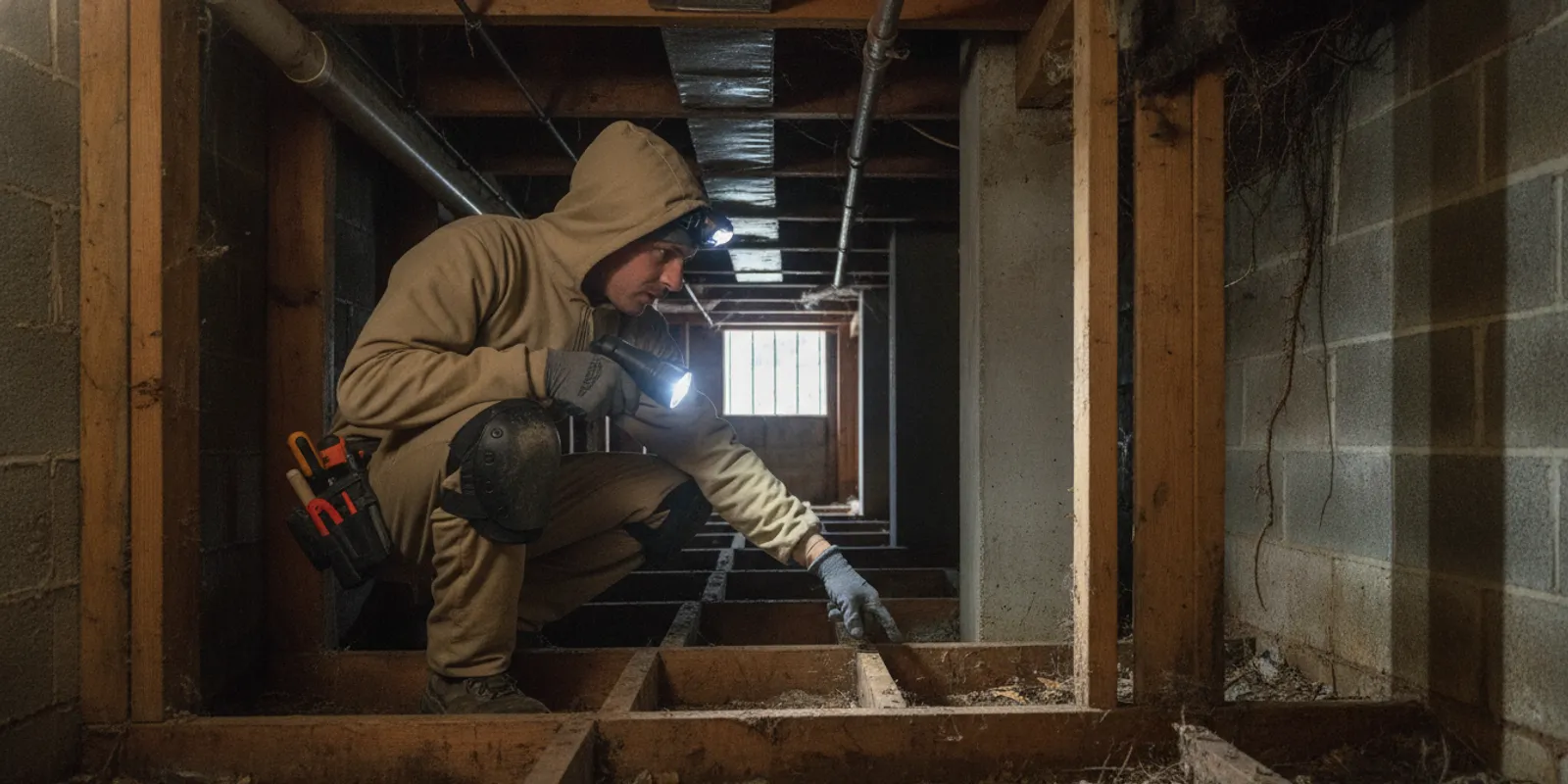
A crawl space inspection raleigh nc homeowners arrange can help explain what is happening below the home before they decide whether any work is needed. A useful visit considers visible conditions, moisture clues, access, and the reason for the evaluation. It should make clear what was observed, what could not be reached, and which questions remain open.
Why inspect before deciding on a repair?
A musty odor, damp-looking material, staining, or a change noticed during a renovation can all prompt questions. None of those clues, by itself, identifies a cause or proves how far a condition extends. Looking at the accessible parts of the crawl space helps put the clues in context and can help you decide what additional information, if any, would be useful.
This distinction matters because a moisture concern, visible mold, and an encapsulation proposal are not interchangeable issues. One property might need a closer look at a moisture source. Another might have visibly affected materials that call for a defined remediation scope. A third may be considering an encapsulation system for a particular moisture-management goal. A written explanation should connect the observations to the recommended tasks, instead of treating one solution as automatic.
In the Raleigh area, a property-specific conversation can also account for the building's age, use, access, and planned projects. Remtech Environmental describes its approach as education-first: explain the findings and options transparently, without scare tactics or pressure. For a broader overview of local services, see the Raleigh service area information.
What can a crawl space inspection look at?
The scope depends on the reason for the visit, the property, and what can be safely accessed. A professional may review visible conditions and ask when you first noticed them, whether they vary over time, and whether repairs or renovations have occurred. The purpose is to document what can actually be seen and to identify where access limits the review.
- Moisture clues: Visible dampness, condensation, staining, or other conditions that deserve a conversation about possible sources and patterns. An observation is not, by itself, a full diagnosis.
- Material condition: Discoloration, deterioration, or areas that appear potentially affected by mold. A visual observation should not be described as a laboratory result if no sample was collected and analyzed.
- Ground and foundation edges: The visible ground surface, exposed foundation areas, and coverings or stored items that may affect what can be viewed.
- Air movement and openings: Openings, obstructions, and practical constraints that may affect access and the way a proposed project is planned.
- Nearby building components: Relevant visible conditions near framing, insulation, utilities, or entry points, without assuming that an unexamined area has the same condition.
Ask what the visit includes and whether it is visual only or involves a specific test. An inspection is not automatically a laboratory analysis, a complete evaluation of every part of a building, or a promise that concealed conditions are absent. Remtech's Raleigh mold remediation information provides related background, but a recommendation for your home should still be based on its own conditions.
How should you prepare for the visit?
You do not need to diagnose the problem before the appointment. A short, factual history can help focus the discussion. Write down what you have noticed, where you noticed it, and when it began. If the odor or visible condition seems to change after weather, seasonal shifts, or a repair, record that too. The timing may help the evaluator understand what you have observed, even though it does not establish the cause.
- Describe the reason for the visit in plain terms: for example, a recurring odor, visible staining, a planned renovation, or a question about the crawl space's condition.
- Note dates or approximate timing. Include whether you have seen the same clue more than once and whether its location changed.
- Gather relevant repair, maintenance, or renovation notes if they are easy to find. Do not delay an evaluation to assemble a complete history.
- Identify the entrance and mention known obstructions, stored items, or access limits. Ask what needs to be moved rather than entering a difficult area yourself.
- Make a short list of questions about the inspection scope, what the findings mean, and what options may follow.
Do not disturb suspect materials or enter an area that feels unsafe just to prepare. Tell the evaluator about occupants, tenants, pets, business schedules, or renovation dates that could affect access and coordination. If the concern arose while planning another project, share the proposed work area and schedule so the discussion can identify any sequencing questions.
What should the findings explain?
A useful explanation should be understandable to someone who has not been inside the crawl space. It should identify the portions reviewed, describe the observations in specific terms, and state the limits of the visit. It should also distinguish direct observations from possible explanations and recommendations. If an area was blocked or unsafe to reach, that limitation belongs in the discussion rather than being left implicit.
Ask for answers to practical questions such as these:
- Which areas and materials were actually viewed, and what could not be accessed?
- What condition was observed, and where? Is the description based on a visual review, a test, or another source of information?
- What is known, and what remains uncertain about the possible source or extent?
- Would additional testing or a further evaluation answer a specific question? How could the answer change the proposed work?
- What work is recommended, what goal is it intended to meet, and what is outside the proposed scope?
- How will the work area, access, occupant coordination, and closeout be addressed?
Plain language is especially important when a report uses broad labels. Ask the evaluator to point to the observation that supports each recommendation. If more than one approach is possible, ask what the options accomplish and what remains outside each option. Remtech's crawl space mold background and overview of mold types can help with general reading, but neither substitutes for a property-specific explanation.
How do moisture work, remediation, and encapsulation differ?
These terms can appear together in a proposal, but they describe different activities or goals. The appropriate scope depends on observed conditions, the property, and the outcome being considered. Ask the provider to explain why each task appears in the proposal and how it relates to the findings.
| Activity or option | Main focus | Questions to ask |
|---|---|---|
| Inspection or evaluation | Document accessible conditions and identify concerns or unanswered questions | Which areas were reviewed? What are the limits? Is any further evaluation proposed? |
| Moisture management | Understand and address relevant moisture conditions | What condition or source is the task intended to address? What observation supports it? |
| Mold remediation | Work associated with identified mold-affected areas or materials | What locations and materials are included? How are preparation, handling, cleanup, and closeout described? |
| Crawl space encapsulation | Install a system intended to separate the space from ground moisture and surrounding conditions | What preparation and components are included? What must be completed first, and what is excluded? |
The table is a way to organize questions, not a rule for selecting work. An inspection does not guarantee that remediation or encapsulation is necessary, and encapsulation is not another name for mold remediation. If a proposal includes multiple kinds of work, request an explanation of the sequence and the purpose of each one. For additional context on moisture and mold prevention, see Remtech's mold prevention guidance.
Discuss your crawl space concerns
How can you compare proposals fairly?
Compare the work described, not just the short label or total at the top of an estimate. Two proposals may use similar terms but cover different areas, materials, preparation, or closeout. Put them side by side and check whether they answer the same questions. If a detail is missing, ask for clarification in writing before you decide.
- Locations and materials: Are the areas and materials included identified clearly? Does each proposal state how inaccessible portions are treated?
- Work steps: Are setup, access, any applicable containment, removal or treatment tasks, and cleanup described in enough detail to understand the work?
- Assumptions and exclusions: Are testing, concealed conditions, related repairs, and work by others addressed? Is it clear what could change the scope?
- Coordination: Does the plan consider occupants, tenants, business operations, and the timing of a renovation?
- Closeout: What explanation or documentation will you receive when the stated work is complete?
- Price basis: Is the price tied to the specific property and listed scope? How will any proposed change be explained and approved?
Remediation pricing is consultation-based and project-specific; a general article cannot establish a standard rate for a particular crawl space. If a condition changes or additional work is proposed after a project begins, ask how the change will be documented and approved before proceeding. That keeps the decision connected to the revised scope instead of relying on an unclear verbal description.
For owners comparing options, a simple worksheet can help. List each proposed task in one column and mark whether each proposal includes it, excludes it, or does not explain it. Then note the question you need answered. For instance, if one estimate identifies the affected area and another uses a general description, ask both providers to explain the area covered. If one proposal includes preparation and closeout details and another does not, ask for those details rather than assuming they are the same. This approach helps homeowners, property managers, real estate professionals, and insurance adjusters discuss the same scope.
How can you make sense of a sample proposal?
Consider a homeowner who notices a musty odor near one side of a house and receives two proposals. One says “crawl space treatment” without naming locations or steps. The other identifies the area reviewed, describes visible observations, states which portions were inaccessible, and lists preparation, work, and closeout details. The second document is easier to evaluate because the owner can connect the proposed tasks to the observations and ask about specific gaps. That does not automatically make it the right choice; it gives the owner a clearer basis for a follow-up conversation.
Before comparing totals, rewrite each proposal as a short list of questions. Which area is included? What condition is the work meant to address? Are materials being removed, treated, or left in place? What preparation and cleanup are included? What assumptions affect access? What will happen if concealed conditions differ from what was visible? If the proposals do not answer the same questions, ask for clarification before treating the totals as comparable.
For example, suppose one scope includes only a defined section near an access opening, while another describes the entire crawl space. The larger scope may cover more area, but the difference should be clear and supported by an explanation. Ask whether both providers observed the same locations and whether their recommendations address the same goal. If one includes a proposed moisture-related task and the other does not, ask what finding supports that difference. Avoid assuming that a longer list is automatically more complete or that a shorter list is automatically inadequate.
Keep a record of the answers, the revised scope, and any exclusions that matter to your decision. For a rental or commercial property, share the same clarification with everyone responsible for approving access, scheduling, and payment. A consistent written record reduces confusion if the project schedule changes or a question arises during the work. It also helps you distinguish the original recommendation from any later change that needs a separate explanation.
What changes between homes, rentals, and commercial properties?
The basic questions remain similar, but access and coordination can differ. A homeowner may be able to arrange a single visit and provide a short history. A rental property may require coordination with a tenant, a property manager, and the owner. A commercial building may have operating hours, restricted areas, maintenance records, or multiple decision-makers to account for. These details do not change what was observed, but they can affect how a visit or proposed project is organized.
Before a visit to a rental or commercial property, decide who can authorize access and who should receive the findings. Identify relevant areas and operational constraints, such as times when access is available or rooms that cannot be taken out of use. If more than one person will review the proposal, ask for a clear scope that everyone can compare. For local coverage details, consult Remtech's North Carolina service area page and its company information.
For a home purchase or sale, keep observations separate from assumptions about what they mean. A visible condition can be recorded, while the cause, extent, and appropriate response may need further review. If a property transaction or repair schedule is involved, share the relevant timing and ask what information the inspection can provide within that schedule.
What should you ask before approving work?
Before you approve a project, confirm that you understand its objective and its boundaries. Ask the evaluator to connect each proposed task with a finding or stated goal. If the work is intended to address one specific area, make sure the scope does not imply that unexamined areas are included. If a proposal uses words such as “complete” or “all,” ask what those words mean for this property.
Useful questions include: What did you observe directly? What remains uncertain? Which portions of the crawl space are included? What should be moved or made accessible? Are there related repairs that are not part of this scope? Who coordinates any work by others? How will a changed condition be communicated? What will I receive when the work is finished? These questions encourage a clear discussion without presuming that every concern requires the same solution.
You can also ask how the proposed approach fits the reason you requested an inspection. If your concern is an odor, ask whether the findings identify a condition related to it or whether the source remains uncertain. If you noticed visible discoloration, ask what was examined and whether the proposed work concerns that specific area. If you are planning renovation, ask whether the proposed sequence addresses access and the materials that may be disturbed. A precise answer helps you judge whether the recommendation responds to your question.
The U.S. Environmental Protection Agency provides public environmental information through its official website. General agency resources can be useful background, while decisions about a particular crawl space still depend on the conditions observed and the scope of the evaluation.
Remtech Environmental serves residential and commercial properties across North Carolina and emphasizes transparent explanations and doing the right work the right way. To learn when a mold-related evaluation may be useful, read its guide to scheduling a mold inspection. A measured review should explain what is known, where the limits are, and what choices are available rather than using alarming language.
Request a property-specific consultation
Frequently Asked Questions
Does a crawl space inspection always include mold testing?
No. The scope can vary, and a visual review is not the same as collecting and analyzing a sample. Ask whether testing is included, what question it is intended to answer, and how the result could affect the next step.
Can an inspection find every hidden condition?
No inspection can promise that every concealed condition has been identified. Access limits and the nature of building materials affect what can be reviewed. Ask the evaluator to state what was not accessible and whether a further step could address a specific uncertainty.
Is encapsulation the same as mold remediation?
No. They have different objectives. A proposal may include one, both, or neither depending on the observed conditions and the requested goals. Ask why each task is included and what it is intended to accomplish.
How much does an inspection or project cost?
The cost depends on the property and the services being considered. Remtech discusses pricing through a consultation and project-specific scope rather than a universal rate. Ask which work is included and how a scope change would be handled.
Plan the next step around your property
Talk through your inspection questions
Start with a clear account of what you noticed, then ask for findings and recommendations tied to the accessible areas of your crawl space. A careful explanation can help you decide what to address now, what needs more review, and which questions to resolve before approving work.