
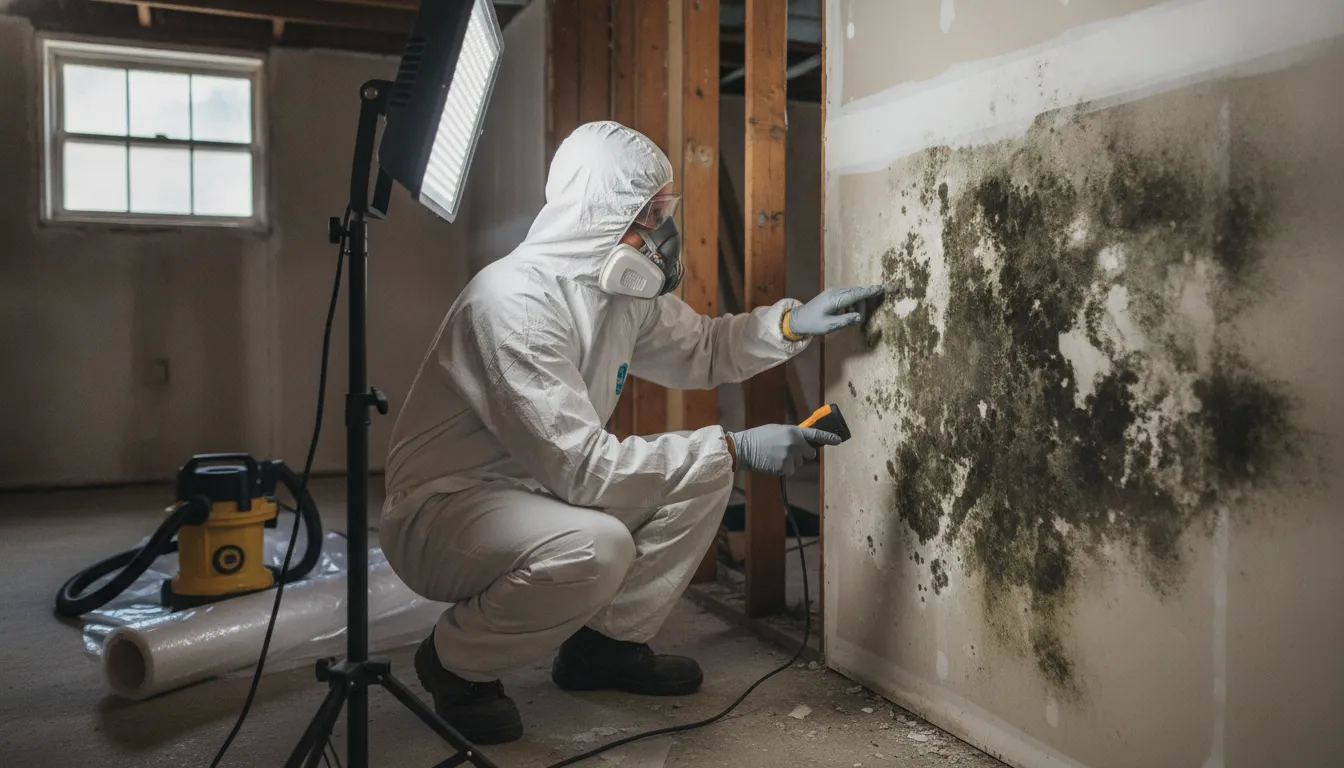
Black mold removal starts with understanding where moisture is coming from, how far growth may extend. And whether the affected materials can be cleaned safely or must be removed.
Get a Free Quote Today for a clear, project-specific mold remediation plan.
Finding a dark patch on drywall, wood, or a ceiling can be unsettling. But color alone does not reveal the mold species or tell you how extensive the problem is. A calm, practical response is more useful than assuming the worst. First, avoid disturbing the area. Then look for signs of active moisture, consider the size and location of the growth. And decide whether the situation is appropriate for careful household cleaning or professional remediation.
Remtech Environmental helps North Carolina homeowners make that decision without scare tactics or high-pressure sales language. The goal is to explain what is visible, identify the conditions supporting growth, and recommend work that fits the property. This guide covers the signs that matter, the professional process, cost factors, and the steps that can reduce the chance of mold returning.
Understanding Dark Mold Growth in a Home
Dark-colored mold is evidence of a moisture problem, but its appearance does not reliably identify the species or determine the correct cleanup method.
Many molds can appear black, deep green, brown, or gray depending on their age, the surface, moisture levels, and lighting. Stachybotrys chartarum is commonly called black mold, but other indoor molds can look similar. That is why a visual guess should not drive the entire response. The more useful questions are how much material is affected, whether the growth is active, what caused the moisture, and whether mold may be hidden nearby.
Mold spores are common in indoor and outdoor environments. They become a building problem when they settle on a suitable material and receive enough moisture to grow. Paper-faced drywall, wood, insulation, carpet backing, and dust can all provide a food source. A plumbing leak, roof leak, condensation, poor ventilation, or persistently high humidity can provide the moisture.
The CDC explains that indoor mold indicates a water or moisture issue that should be addressed. Removing visible growth without correcting that issue often leads to regrowth. Conversely, correcting moisture without removing contaminated porous material can leave damaged material in place. Effective remediation considers both sides of the problem.
When Is Professional Black Mold Removal Necessary?
Professional help is appropriate when growth is extensive, hidden, recurring, connected to contaminated water, or located where cleanup could spread spores through the home.
The affected area is large or difficult to define
A small patch on a nonporous bathroom surface is different from growth extending across drywall, framing, or a crawl space. As the affected area grows, safe isolation, material removal, and debris handling become more complicated. The visible patch may also be only one part of the affected area. Moisture meters can help technicians identify damp materials and decide where closer investigation is justified.
Growth is inside porous building materials
Porous materials can hold moisture and mold growth below the surface. Drywall, insulation, ceiling tile, and some carpet components often cannot be restored by wiping the face. Attempting to scrub or sand them without containment can release dust and spores. Professional remediation may involve controlled porous material removal, bagging waste within the work area, and cleaning the remaining structural surfaces.
The problem keeps returning
Recurring spots suggest that the moisture source or affected material has not been fully addressed. Condensation on a cold surface, a slow plumbing leak, damp crawl-space air, or a roof defect may continue feeding growth. A professional assessment focuses on the pattern and contributing conditions rather than repeatedly treating the visible stain.
The location raises the risk of spread
Growth near an HVAC return, inside a wall cavity, above a ceiling, or in a frequently used living area deserves added care. Disturbing material in these locations can move particles beyond the original area. Residents with asthma, allergies, respiratory conditions, or weakened immune systems should avoid participating in cleanup and may wish to consult a medical professional about individual health concerns.
Homeowners deciding whether a small project is manageable can review the practical risks of DIY black mold removal. When the boundaries are unclear or removal requires demolition, a professional evaluation is the responsible next step.
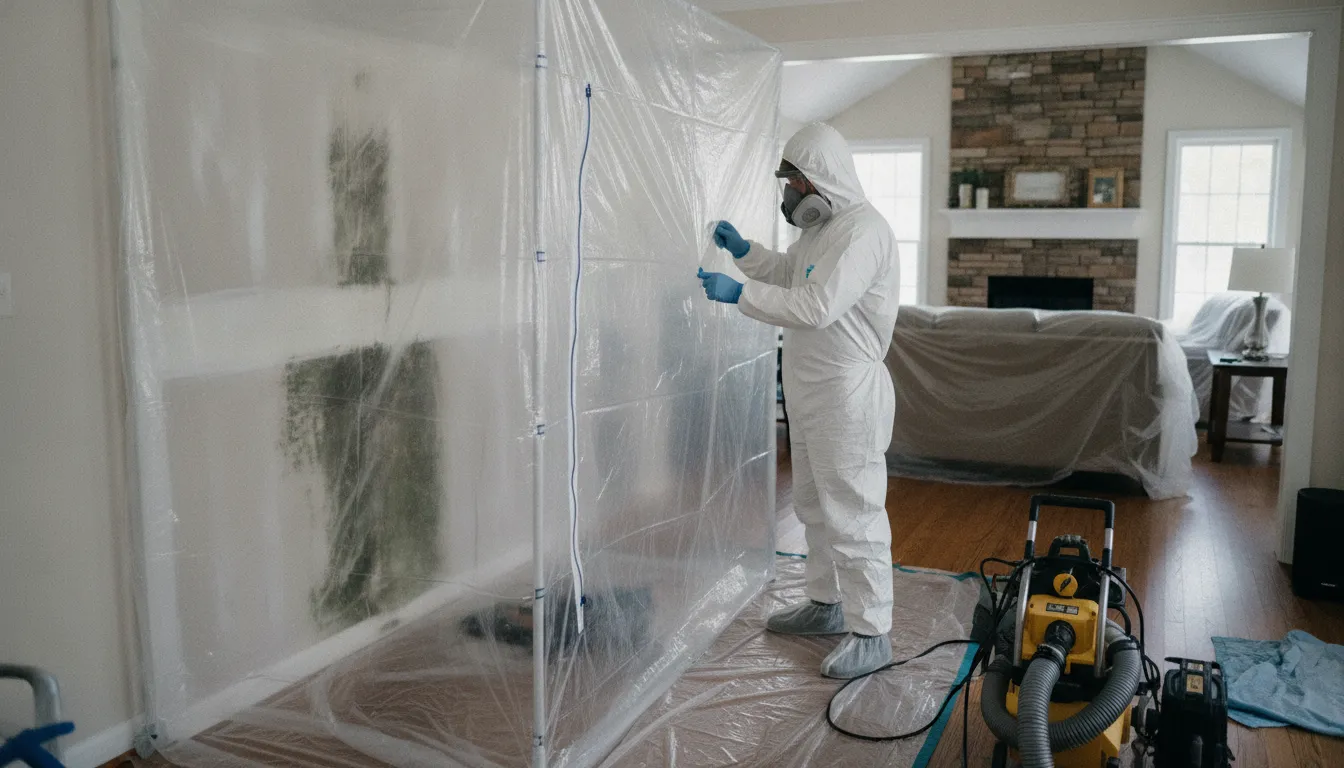
Containment helps isolate the work area before affected materials are disturbed.
DIY Cleaning Versus Professional Remediation
DIY cleaning may be reasonable for limited growth on a hard, accessible surface, while professional remediation is designed for larger, hidden, porous, or complex conditions.
Before cleaning anything, stop the moisture source and consider who will be exposed. The CDC mold cleanup guidance recommends protective equipment and extra caution for people with certain health conditions. If a homeowner proceeds with a minor cleanup, gloves, eye protection, and an appropriate respirator help reduce direct exposure. The area should not be aggressively brushed, sanded, or blown with a fan.
Bleach is not a universal answer. It may discolor a surface without resolving growth within porous material, and it must never be mixed with ammonia or other cleaners. For a small amount of growth on a hard surface, detergent and water may be appropriate. Materials that remain damp, softened, swollen, or visibly affected below the surface need a different plan.
| Decision factor | Limited DIY cleaning | Professional remediation |
|---|---|---|
| Typical condition | Small, accessible patch on a hard surface | Large, hidden, recurring, or porous-material growth |
| Moisture review | Visible source can be corrected | Moisture meters support a broader investigation |
| Work-area control | Careful local cleaning | Containment and negative air pressure as needed |
| Air and surface cleaning | Household cleaning tools | HEPA air scrubbers and HEPA vacuums |
| Affected porous materials | Often difficult to address safely | Controlled removal and disposal when necessary |
The choice is not a judgment about a homeowner's ability. It is a scope and exposure decision. A project that requires opening walls, removing insulation, or controlling airborne dust benefits from trained technicians and purpose-built equipment. Remtech's mold remediation team serving the Raleigh area can explain which conditions justify professional work and which may not.
What Happens During Professional Mold Remediation?
Professional remediation follows a controlled sequence: assess moisture and scope, isolate the work area, remove affected material, clean remaining surfaces, and document the completed work.
A responsible plan is tailored to the building rather than copied from a standard checklist. The size and layout of containment, number of air scrubbers, removal methods, and cleaning approach depend on what technicians find. IICRC-certified technicians use established standards and professional judgment to protect unaffected areas while work is underway.
A typical remediation process
- Review the property and moisture conditions. Technicians discuss the history of the issue, inspect visible growth, and use moisture meters where useful to identify damp materials or patterns that need investigation.
- Define the scope and correct the moisture source. The plan identifies affected materials and the source that allowed growth. A plumbing, roofing, ventilation, or other qualified trade may need to complete a separate repair.
- Set up containment. Plastic sheeting and sealed openings separate the work zone from occupied areas. Negative air pressure may be used to keep air moving into, rather than out of, the contained space.
- Operate HEPA filtration. HEPA air scrubbers capture fine airborne particles generated during controlled removal and cleaning. Equipment placement and operation are adjusted to the work area.
- Remove materials that cannot be restored. Affected porous materials such as drywall or insulation may be carefully removed, bagged inside containment, and carried out without spreading debris through the home.
- Clean remaining surfaces. Technicians use methods appropriate to the material, including HEPA vacuums and detailed surface cleaning, rather than relying on a quick cosmetic treatment.
- Complete a final visual review. The team checks that the defined work has been completed and explains moisture-control recommendations. If a homeowner or project requires post-remediation testing, independent verification should be arranged with a qualified third party.
Testing is not automatically required for every visible mold condition, and remediation contractors should not present their own testing as independent proof. A third-party environmental professional can provide independent sampling or clearance criteria when the project, property transaction, insurer, or homeowner calls for it.
Learn how Remtech approaches professional black mold removal in North Carolina.
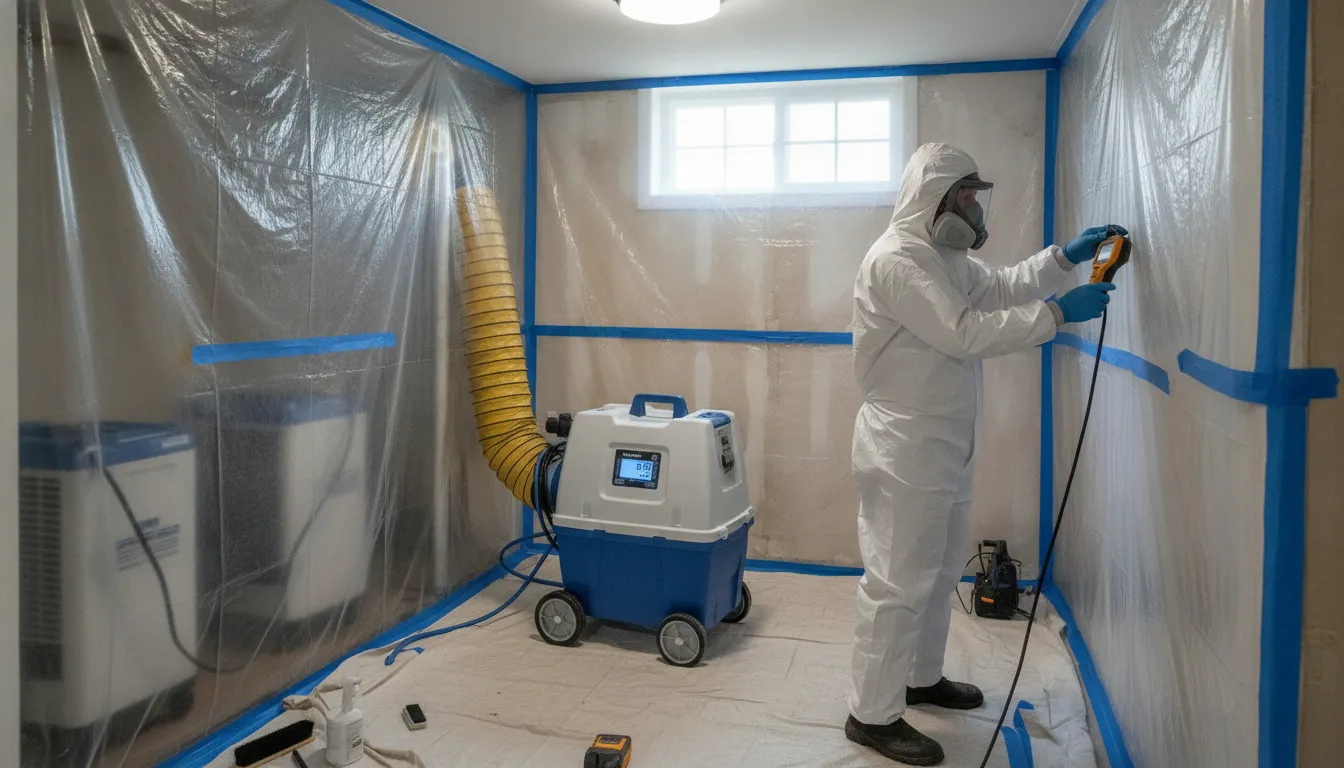
Professional equipment supports moisture investigation, containment, and airborne-particle control.
Protecting Your Household During the Project
A clear access and occupancy plan helps keep residents, pets, belongings, and unaffected rooms separated from remediation activity.
Before work begins, ask which rooms will be contained, how technicians will enter and exit, and whether anyone should stay elsewhere during particular stages. The answer depends on the work location, scope, household health needs, and access route. Do not enter containment or move sealed materials without speaking with the project team.
Remove or protect belongings before containment is established, following the contractor's instructions. Clean items should not be carried through an active work zone. Pets need a secure location away from equipment, open doors, and the technicians' path. Children should not play near containment barriers or remediation equipment.
Homeowners should also understand what the project does and does not include. Mold remediation addresses affected materials and conditions within an agreed scope. Repairs such as replacing finished drywall, repainting, fixing a roof, or correcting a plumbing defect may require separate work. Asking for these boundaries in writing makes the sequence easier to plan.
In North Carolina, the state does not require a specific mold-remediation license. Remtech voluntarily exceeds the state's requirements by following professional certifications and standards, including work by IICRC-certified technicians. Homeowners can still evaluate any contractor by asking about training, insurance, containment practices, equipment, written scope, and how unexpected conditions will be communicated.
Preventing Mold From Returning
The most reliable way to reduce regrowth is to keep materials dry, correct leaks promptly, and manage humidity and ventilation throughout the home.
Track moisture, not just stains
A stain may remain after a leak is repaired, while an apparently clean surface may still be damp. Watch for peeling paint, softened drywall, warped trim, condensation, and persistent musty odors. Periodically inspect under sinks, around toilets, near water heaters, below roof penetrations, and around windows. If a spot changes after rain or HVAC use, note the timing because that pattern can help identify the source.
Manage North Carolina humidity
Warm, humid conditions can support mold growth in crawl spaces, attics, closets, and poorly ventilated rooms. Use bathroom and kitchen exhaust fans that vent outdoors. Keep supply and return vents open unless an HVAC professional directs otherwise. A properly sized dehumidifier may help in persistently damp areas, but it should not substitute for repairing a leak or correcting drainage.
Dry damp materials promptly
Respond quickly to minor plumbing leaks, condensation, and spills. The longer porous materials stay damp, the greater the chance that removal rather than drying will be necessary. If moisture extends into a wall cavity, insulation, or multiple rooms, get qualified guidance before opening materials or placing fans that could move contamination.
Homeowners in western North Carolina can learn about mold remediation options near Asheville, while coastal and eastern homeowners can contact Remtech to discuss local property conditions. Prevention is an ongoing property-maintenance practice, not a one-time product application.
Project Scope, Pricing, and Contractor Questions
Black mold removal pricing is project-specific because labor, containment, equipment, access, and material removal vary from one home to another.
A small accessible area and a multi-room project do not require the same plan. Cost can change based on the affected square footage, whether growth is hidden, the amount of porous material that must be removed. How easily technicians can reach the area, and whether the work zone needs more complex containment. HEPA air scrubbers, negative air pressure, waste handling, and detailed cleaning also affect the scope.
A written proposal should explain the areas included, materials expected to be removed, containment plan, equipment, cleaning steps, and known exclusions. It should also explain how the contractor will handle concealed conditions discovered after work starts. Pricing should be based on that property-specific scope rather than a generalized rate or an estimate made from a single photo.
Questions to ask before authorizing work
- What evidence defines the current work area, and what could change the scope?
- How will containment and negative air pressure protect adjacent rooms?
- Which porous materials are expected to be removed, and why?
- Where will HEPA air scrubbers and HEPA vacuums be used?
- Who is responsible for correcting the moisture source and rebuilding removed finishes?
- What training, certifications, and insurance does the contractor maintain?
- If independent post-remediation verification is desired, when should it be scheduled?
A good contractor should answer these questions in plain language. Remtech's education-first approach is built around explaining the findings and recommending the right work, not the largest possible project. For a property-specific conversation, use the Remtech Environmental contact page to reach the appropriate North Carolina office.
Frequently Asked Questions
These concise answers address the questions homeowners most often ask before deciding how to respond to dark mold growth.
Is every black-colored mold Stachybotrys?
No. Several indoor molds can appear black or very dark, and visual appearance alone cannot identify a species. Focus first on the moisture source, affected materials, location, and extent of growth. If species identification is important for a medical, legal, or property-related reason, consult an independent qualified professional about testing.
Can I remain at home during mold remediation?
Sometimes, but the answer depends on the work area, project size, access route, and household health considerations. The remediation contractor should explain containment and equipment placement before work begins. People with asthma, allergies, respiratory conditions, or weakened immune systems should discuss personal precautions with a medical professional.
Does North Carolina require a mold-remediation license?
No. North Carolina does not require a specific mold-remediation license. Remtech voluntarily exceeds state requirements through professional certifications and established standards, including IICRC-certified technicians. Homeowners should still review a contractor's training, insurance, written scope, and work practices.
How do I know whether remediation was completed properly?
Start with the agreed written scope, a final visual review, and confirmation that the moisture source has been addressed by the appropriate party. If independent confirmation is required, hire a qualified third party to define and perform post-remediation verification. A remediation contractor should not claim that its own testing is independent proof.
Dark mold deserves a measured response: avoid disturbing it, identify moisture, assess the scope, and choose a cleanup method that protects the rest of the home. When the condition involves porous materials, hidden growth, recurring moisture, or a large area. Trained remediation professionals can provide the containment, negative air pressure, HEPA equipment, and controlled removal that the project requires.
Get a Free Quote Today and speak with Remtech about your home's mold concerns.