
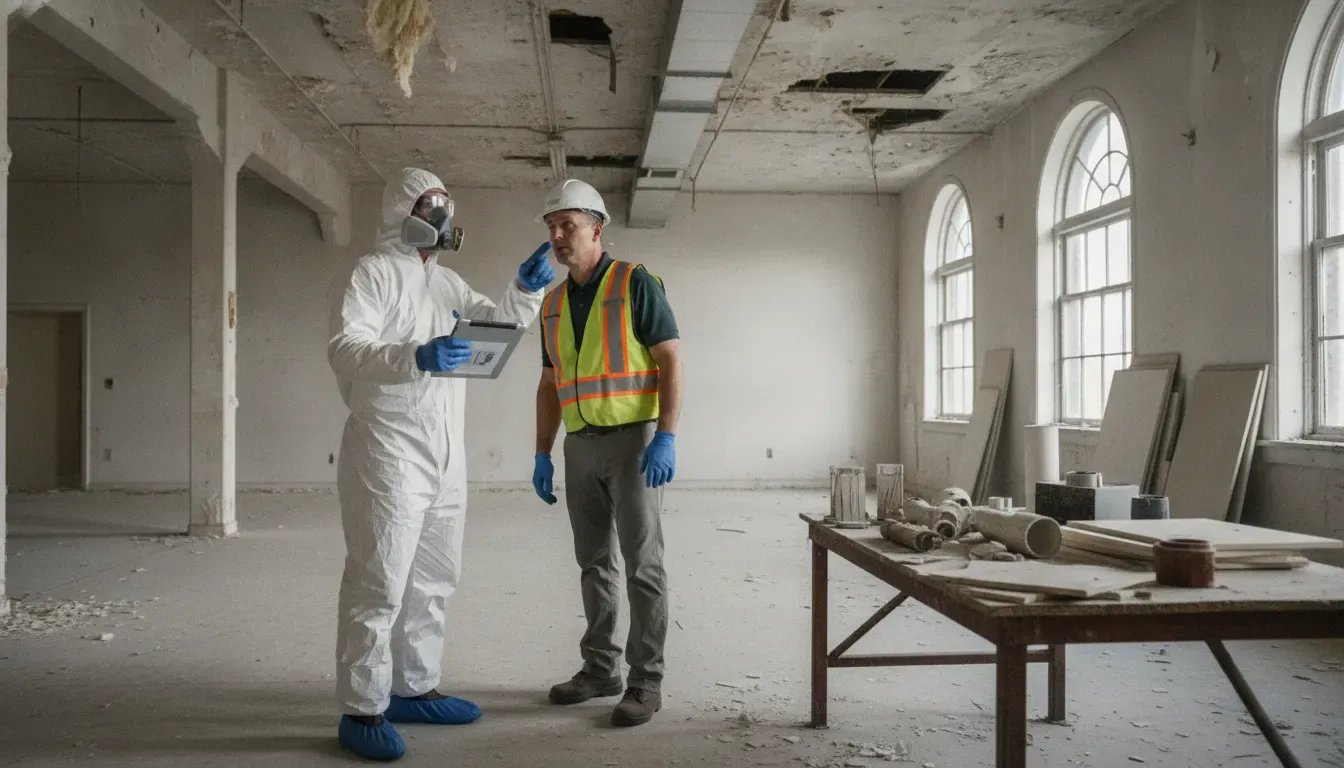
An asbestos management plan gives a property owner a practical way to track suspect or confirmed asbestos-containing materials, their condition, and the steps needed to protect people during maintenance or renovation. In North Carolina, the right record depends on the type of property, the planned work, and whether school-specific rules apply.
An asbestos management plan is a maintained record of where asbestos-containing materials are located, what condition they are in, what response or maintenance actions have occurred, and who is responsible for future inspections and communication. AHERA requires formal management plans for covered schools, while other property owners may use an operations and maintenance plan and project records suited to the building.
This guide explains what North Carolina property owners should know before treating the phrase "asbestos management plan" as a one-size-fits-all legal form. It is educational information, not a substitute for a project-specific evaluation or regulatory advice.
What Is an Asbestos Management Plan?
An asbestos management plan is a written record that helps an owner manage asbestos-containing material over time instead of making decisions from memory. It connects inspection and laboratory information with material locations, condition, maintenance controls, response actions, responsible contacts, and future work triggers.
The plan is best understood as a living property record. It should be updated when materials are inspected, repaired, removed, encapsulated, disturbed, or reclassified after better information becomes available. A useful plan helps the owner answer four basic questions:
- Where could asbestos-containing material be located?
- What evidence supports that conclusion?
- What condition is each material in today?
- What must happen before a worker performs maintenance, renovation, or demolition?
Terminology varies by setting. The U.S. Environmental Protection Agency describes a formal asbestos management plan for schools under the Asbestos Hazard Emergency Response Act, or AHERA. For offices, healthcare facilities, apartment buildings, and similar non-school properties, EPA discusses operations and maintenance programs that manage asbestos-containing materials in place when appropriate. North Carolina's Asbestos Hazard Management Program also uses the broader term asbestos management for activities such as inspections, management plans, project design, abatement, project oversight, and sampling. Owners who need background on the evaluation step can review Remtech Environmental's guide to when to consider professional asbestos testing.
That distinction matters because an owner should not assume that finding intact material automatically means immediate removal. The condition of the material, the likelihood of disturbance, the building's use, and the scope of planned work all affect the appropriate response.
Does Every North Carolina Property Owner Need a Formal Plan?
No. North Carolina does not use one identical asbestos management plan requirement for every house, business, and public building. Covered schools have AHERA-related inspection and management-plan duties. Other owners still need to manage asbestos hazards responsibly, follow applicable state and federal renovation or demolition rules, and keep reliable records for work that could disturb the material.
North Carolina General Statutes section 130A-445 addresses the management of asbestos-containing material in schools. It requires school buildings subject to AHERA to be inspected and to prepare and submit management plans to the Department. The plan rules cover content, review, implementation, and periodic inspection requirements. Read the North Carolina Asbestos Hazard Management statutes for the current statutory language.
North Carolina also regulates the people and projects involved in asbestos management. Section 130A-447 establishes accreditation requirements for people performing asbestos management activities, including inspectors, management planners, abatement designers, supervisors, workers, and air monitors. Section 130A-449 addresses permits for certain asbestos removal projects above specified quantities. The exact requirement depends on the work scope and material involved, so owners should confirm the current rule before work begins.
For non-school buildings, EPA recommends operations and maintenance planning when asbestos-containing materials can be managed in place. EPA's guidance is directed to owners, managers, workers, and building staff in settings such as offices, shopping centers, apartment buildings, hospitals, and similar facilities. It is not a blanket instruction to remove every material, and it does not replace project-specific controls when planned work could disturb asbestos.
For a typical homeowner, the most useful record may be a property asbestos file rather than a school-style AHERA submission. That file can contain inspection findings, laboratory reports, photographs or location notes, repair or removal records, contractor documentation, and a clear instruction to stop and obtain qualified guidance before disturbing suspect material.
Learn how Remtech Environmental approaches asbestos assessment and abatement
What Should an Asbestos Management Plan Include?
A practical asbestos management plan should identify the property and responsible contacts, document inspection and laboratory findings, map the location and condition of asbestos-containing materials, describe maintenance controls, record past response actions, and set a process for review before renovation or demolition.
The content will vary by property, but a strong plan normally addresses the following items:
- Property profile: Record the address, building use, construction or renovation history when known, occupied areas, and the people responsible for the file.
- Inspection and sampling records: Keep the scope of inspection, sample identifiers, laboratory reports, inspector information, limitations, and any areas that were not assessed.
- Material inventory: Identify each known or presumed asbestos-containing material by location, material type, condition, accessibility, and whether it is friable or nonfriable when that classification has been professionally determined.
- Location information: Use clear room descriptions, photographs, diagrams, or building plans so a future contractor can locate the material without guesswork.
- Risk and work triggers: Note damaged areas, planned maintenance, tenant changes, equipment work, remodeling, demolition, or other events that could disturb the material.
- Operations and maintenance procedures: Explain how workers receive information, what activities are restricted, how minor maintenance is controlled, and when an accredited professional must be contacted.
- Response-action history: Record repairs, enclosure, encapsulation, removal, cleaning, clearance activities, and the dates and professionals involved.
- Communication plan: Identify how relevant findings are shared with facility staff, tenants, contractors, occupants, or school communities when applicable.
- Review schedule: Set a recurring review process and update the file after new inspection results, response actions, building changes, or changes in planned work.
For schools subject to AHERA, EPA lists additional plan records, including the name and address of each school building, original and subsequent re-inspection dates, re-inspection and operations-and-maintenance plans, a blueprint identifying remaining material, response actions, laboratory information, the designated person's contact information, and communication steps for workers, teachers, students, and guardians.
For other properties, the same categories can make the record easier to use, but the plan should be tailored to the building and reviewed by an appropriately accredited professional when the project or material warrants it.

How Do Plans Differ for Schools, Commercial Buildings, and Homes?
The main difference is the governing context. Schools covered by AHERA have formal management-plan duties. Commercial and public buildings may use an operations and maintenance program to manage material in place, while homes need project records and professional evaluation when maintenance or renovation could disturb suspect materials.
| Property setting | Main planning focus | Owner's practical next step |
|---|---|---|
| School subject to AHERA | Formal inspection, management plan, designated person, response actions, periodic inspections, and communication | Maintain the plan and follow the applicable North Carolina and federal school requirements |
| Commercial or public building | Inventory, operations and maintenance controls, accredited professionals, worker communication, and renovation or demolition planning | Document known or presumed materials and review the scope before maintenance or construction |
| Residential property | Inspection or sampling when needed, clear records, disturbance prevention, and project-specific controls | Do not disturb suspect materials based on appearance alone; obtain qualified guidance before work |
EPA separates school requirements from the guidance for other building owners. It also notes that federal renovation and demolition requirements generally exclude residential buildings with four or fewer dwelling units from the asbestos NESHAP provisions described on its owner and manager page. That does not mean every residential project is risk-free or outside all safety requirements. It means the owner should identify which rules apply to the property and planned work rather than relying on a generic checklist.
North Carolina and local programs can add requirements. The North Carolina Division of Public Health explains that the state program adopts federal NESHAP provisions for asbestos demolition and renovation and AHERA provisions for asbestos-containing materials in schools. Some counties also have asbestos-related ordinances. An owner in Raleigh, Durham, Cary, Asheville, or another North Carolina community should check the current requirements for the property's location and project type. If a property transaction is part of the decision, Remtech's guide to asbestos disclosure in North Carolina real estate covers a related planning question without replacing an inspection or legal review.
What Should Owners Do Before Renovation or Demolition?
Before renovation or demolition, pause work that could disturb suspect material, review existing records, arrange a qualified inspection or sampling process when needed, confirm notifications and permits, choose appropriately accredited professionals, and preserve documentation. Planning early is safer than discovering an asbestos issue after construction has started.
- Define the work: Write down the rooms, systems, surfaces, and materials that the project may disturb. Include demolition, drilling, cutting, sanding, removal, and access work.
- Review the property file: Look for prior surveys, laboratory reports, management plans, response records, and areas that were not previously assessed.
- Stop assumptions: Do not identify asbestos from color, texture, age, or a photograph alone. If composition matters to the work, use a qualified sampling and analysis process.
- Confirm the regulatory path: North Carolina guidance addresses notification for demolitions whether or not asbestos is present and for renovations when asbestos is present. Project-specific thresholds, exceptions, permits, and local requirements should be confirmed before work.
- Select qualified help: Ask for the professional's relevant North Carolina accreditation, experience with the property type, insurance information, written scope, and documentation process.
- Communicate before mobilization: Give the contractor the relevant records, identify restricted areas, coordinate occupant or tenant notices, and document who can approve changes to the work plan.
A management plan does not replace an asbestos abatement design or a project-specific work plan. If the project calls for removal, enclosure, encapsulation, or another response action, the professionals involved should identify the correct documents and controls for that scope. Commercial owners can also review Remtech's commercial asbestos abatement planning guide when the property will remain occupied or active during the project.
Remtech Environmental serves residential and commercial property owners in North Carolina with asbestos assessment and abatement services. Its education-first process is designed to explain what is known, what still needs to be evaluated, and what next step fits the property rather than relying on scare tactics.
Get a Free Consultation for Your Property
How Should an Owner Maintain the Plan Over Time?
Maintain an asbestos management plan by keeping inspection and laboratory records together, reviewing material condition on a defined schedule, updating the file after repairs or removal, communicating changes to affected people, and checking the plan before any maintenance or construction begins.
- Keep one controlled record: Store the current plan, drawings, reports, photographs, and response documents where the responsible person and contractors can find them.
- Review condition: Check known or presumed materials for damage, access changes, or new conditions that could increase the chance of disturbance.
- Update after work: Add the final scope, dates, professionals, waste or closeout documents, and any remaining material after a project.
- Train and communicate: Make sure people who may maintain, clean, occupy, or work near the material know what the plan says and who to contact.
- Recheck before new work: Compare each new maintenance or renovation scope with the material inventory before a contractor starts.
Records become more valuable when they are specific. Instead of writing "asbestos in ceiling," identify the building area, material, evidence, condition, restrictions, date reviewed, and action required. A clear record can reduce duplicate sampling, prevent accidental disturbance, and help a property owner make decisions with less uncertainty. When a response action is completed, keep the closeout and disposal records with the plan rather than storing them separately; Remtech's North Carolina asbestos disposal guidance addresses a related documentation need.
Frequently Asked Questions
Is an asbestos management plan required for every property in North Carolina?
No. Formal AHERA management-plan duties apply to covered school buildings. Other property owners still need to manage asbestos-containing materials responsibly, comply with applicable North Carolina and federal requirements, and keep records that support maintenance, renovation, demolition, and contractor communication.
Who can prepare an asbestos management plan?
The right professional depends on the building and the work. North Carolina recognizes accredited categories that include inspectors and management planners. Ask a prospective professional which accreditation applies to the requested service and what records, limitations, and updates the plan will include.
Is an asbestos management plan the same as an abatement work plan?
No. A management plan is an ongoing record for tracking material, condition, maintenance, communication, and past actions. An abatement design or work plan is project-specific and explains how a defined response action will be performed. A property may need both.
Does intact asbestos-containing material always need to be removed?
Not always. If material is in good condition and will not be disturbed, an operations and maintenance approach may be appropriate in some buildings. The decision should follow a qualified evaluation of the material, its condition, building use, and planned work. Do not disturb suspect material to inspect it yourself.
What records should an owner give an asbestos contractor?
Provide relevant inspection reports, laboratory results, maps or location notes, photographs, material-condition records, previous response documents, planned work details, access restrictions, and the contact information for the person responsible for the property file. The contractor can then identify gaps before work begins.
Need Help Building a Clear Asbestos Plan?
A qualified assessment can help a North Carolina property owner replace uncertainty with a documented next step. Remtech Environmental can discuss the property, planned work, and available records so the appropriate evaluation or abatement path is easier to understand.
For general regulatory information, review the EPA explanation of asbestos management plans, the EPA guidance for owners and managers, and the North Carolina Asbestos Hazard Management rules. Rules and project requirements can change, so confirm the current requirements for your property and scope before work begins.