
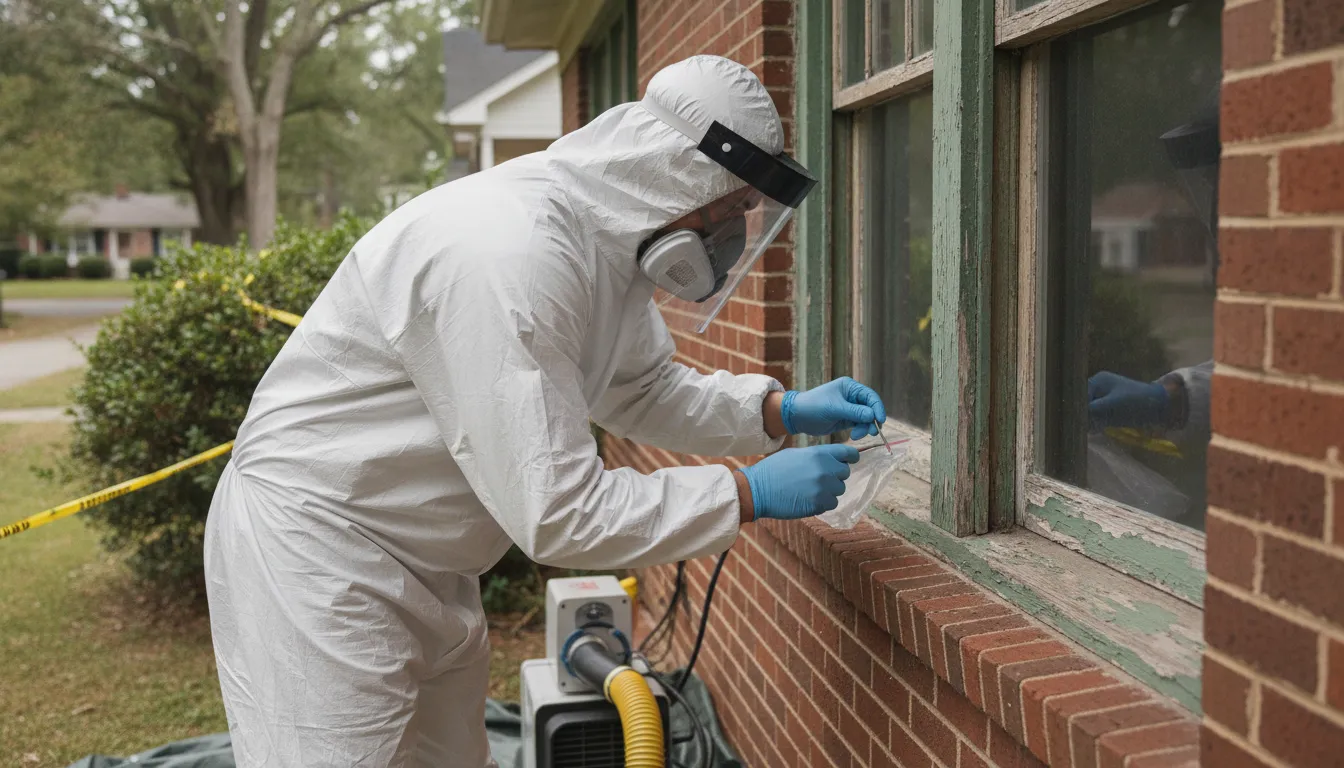
Window replacement can turn a routine renovation into an important asbestos question, especially in older North Carolina homes. Glazing compound and exterior caulking may be disturbed during removal, scraping, drilling, or other preparation, so guessing from age or appearance is not enough.
Asbestos in window glazing caulking cannot be confirmed by visual inspection. A qualified professional should collect an appropriate sample for laboratory analysis before renovation disturbs the material. Until it is evaluated, leave suspect glazing or caulking alone and avoid sanding, scraping, cutting, or drilling. EPA guidance specifically addresses asbestos concerns involving window caulk and glazing compound: EPA window caulk and glazing guidance.
Understanding what these materials do, where they may occur, and why they require different terms helps homeowners make a calm, informed plan before work begins.
What Is Asbestos in Window Glazing Caulking?
Window glazing is the material that seals a pane of glass into its frame. It is often called glazing compound or window putty. In older wood windows, the compound may sit between the glass and the frame, helping create a weather-resistant seal. Exterior caulking serves a related but broader purpose. It seals joints and gaps around the outside of a window assembly, such as the perimeter where the frame meets siding, masonry, or another building material.
These materials can look similar after years of weathering, but they are not automatically the same product. Glazing compound is typically associated with securing the pane itself, while caulking is used to seal transitions between building components. A window may also have more than one generation of sealant from past repairs. That is why a visual inspection should describe where a material is located and how it is being used. Rather than treating every pale, brittle, or darkened compound as a single substance.
The phrase asbestos in window glazing caulking refers to the possibility that asbestos was incorporated into some older glazing compounds, window putties, or caulking products. Asbestos was used in many construction materials because of properties such as strength and resistance to heat. However, the age of a window does not prove that its glazing or caulking contains asbestos. Older construction can include materials from different manufacturers, renovations, and replacement periods, so assumptions based on a home's construction date can be misleading.
The U.S. Environmental Protection Agency specifically addresses window caulk and glazing compound in guidance about how the Asbestos National Emission Standards for Hazardous Air Pollutants may apply to these materials. EPA also identifies guidance concerning nonfriable asbestos-containing material and window putty. This does not mean that every window-related sealant is regulated asbestos material or that every older window presents an immediate hazard. It means these components deserve thoughtful consideration when a project could disturb them. EPA's guidance on window caulk and glazing provides useful regulatory context.
Appearance alone cannot confirm what is inside a compound. A material that appears intact may still require evaluation before planned window replacement, scraping, sanding, or other renovation work. Conversely, an older window is not a reason to panic or begin removing putty. When the material's composition matters to the project, the dependable answer comes from sampling by a qualified asbestos professional and analysis by a qualified laboratory. Until that process is complete, the safest approach is to avoid disturbing suspect glazing or caulking and plan the next step based on documented findings.
Can You Tell If Older Window Glazing Contains Asbestos?
Age can help explain why a window glazing compound or exterior caulking deserves a closer look, but it cannot identify asbestos. Color, texture, cracking, and the apparent age of a window are not reliable tests. The U.S. Environmental Protection Agency explains that asbestos generally cannot be confirmed simply by looking at a material. A qualified laboratory analysis is needed to determine whether asbestos is present.
That distinction matters in older North Carolina homes. Window glazing may look like ordinary putty, while caulking may resemble many other weatherproofing products. Even if a material appears consistent with an older product, that observation is only a reason to plan carefully, not a diagnosis. Avoid assuming that every older window contains asbestos, and avoid assuming that a clean-looking window is free of it.
Condition changes the decision, but not the identification
An intact material that is not being disturbed generally presents less immediate concern than material that is crumbling, damaged, or being removed. EPA guidance notes that asbestos-containing materials in good condition and left undisturbed are not likely to pose a health risk. Homeowners can visually monitor suspect areas for wear or damage without touching, scraping, or testing them personally.
Weathered glazing or caulking may need attention as part of normal maintenance, but visible deterioration still does not prove asbestos. If the material is breaking down, separating from the frame, or likely to be affected by window replacement. Treat the situation as a reason to pause the work and arrange a qualified evaluation. This approach avoids both unnecessary alarm and avoidable disturbance.
Why disturbance is the key risk factor
Cutting, drilling, sanding, scraping, sawing, tearing, or improper removal can release asbestos fibers when asbestos is present. Those fibers may be too small to see, so the absence of visible dust does not confirm that work was safe. For that reason, do not try to scrape a small sample from window glazing or caulking, and do not remove deteriorated material as a do-it-yourself repair.
When the material's status is uncertain, EPA recommends leaving it alone until it can be evaluated. Testing is especially relevant when the material is damaged or a renovation will disturb it. A trained, accredited asbestos professional can determine the appropriate sampling and laboratory process before window work begins.
How Is Asbestos in Window Glazing Caulking Tested?
Testing is the way to move from a concern about older window glazing or exterior caulking to a project-specific answer. Age, color, texture, and weathering may explain why a material deserves attention, but none of those details can confirm asbestos. The EPA states that suspect materials should be evaluated through qualified laboratory testing, with samples collected by a properly trained and accredited asbestos professional.
This is especially important before window replacement, exterior renovation, or repairs that could scrape, cut, drill, sand, or otherwise disturb the glazing compound or caulking. EPA guidance specifically addresses window caulk and glazing compound in its asbestos NESHAP resources. You can also review the broader guide to where asbestos is found in homes for context about other materials that may require professional evaluation.
- Evaluate the material and the planned work. A qualified professional considers where the glazing or caulking is located, its current condition, and whether upcoming work is likely to disturb it. Testing may be appropriate when the material is damaged or when a renovation, window replacement, or repair will affect it. If the material is intact and will remain undisturbed, testing may not be necessary immediately. That decision should be based on the project, not a visual guess.
- Arrange professional sampling. A trained and accredited asbestos inspector determines how the material should be represented in the evaluation and collects the sample using appropriate controls. The goal is to obtain reliable information while limiting unnecessary disturbance. Homeowners should not scrape, chip, or remove a piece of glazing or caulking themselves. The EPA cautions that incorrect DIY sampling can create more risk than leaving the material alone.
- Send the sample to a qualified laboratory. Laboratory analysis, rather than naked-eye inspection, is what can confirm whether asbestos is present. The result should be interpreted alongside the material's condition and the scope of the planned work. A positive result does not automatically mean every window component must be removed. And a negative result for one material or location does not answer questions about unrelated materials.
- Use the findings to plan the next decision. If asbestos is identified and work will disturb the material, the project may require a controlled abatement plan, appropriate notifications, and qualified personnel. If the material will remain in place, the recommendation may instead focus on avoiding disturbance and monitoring its condition. Inspection, sampling, abatement, and final clearance are separate steps, so ask for clear documentation of which service the evaluation covers.
For a Raleigh or Triangle home, a documented assessment can help coordinate the homeowner, window contractor, and environmental professional before work begins. The right process keeps the decision grounded in evidence and supports Remtech's approach of doing the right work the right way.
What Should Homeowners Do Before Replacing an Older Window?
Window replacement can involve more than removing the sash and frame. Older glazing compound or exterior caulking may be attached to materials that have not been evaluated, and the safest plan is to resolve that uncertainty before renovation begins. You do not need to diagnose the material yourself. In fact, appearance alone generally cannot confirm whether a building material contains asbestos, according to the EPA's homeowner guidance.
Use the following steps to keep the work area stable while you arrange a qualified evaluation. This is a pause-and-coordinate process, not a DIY removal or sampling project.
- Pause the replacement work. Tell the window contractor that the glazing, putty, or caulking has not been cleared for disturbance. If removal, demolition, or preparation has already started, stop the activity and avoid creating additional dust until the material can be evaluated. EPA recommends testing suspect materials when they are damaged or when planned renovation would disturb them: learn more about EPA testing guidance.
- Do not scrape, cut, drill, sand, pry, or pull at the material. These actions can damage glazing or caulking and may release fibers if asbestos is present. Do not try to speed up the project by removing loose-looking putty, cleaning the edge with a power tool, or opening the joint to inspect underneath. The EPA advises leaving uncertain material alone, and notes that asbestos-containing materials can release fibers when they are cut, sanded, drilled, scraped, or removed improperly.
- Document what you can without touching it. From a safe distance, record the window location, the planned replacement area, and any visible damage using written notes or photographs. Do not collect a piece, brush away debris, handle flaking material, or move furniture against the window. Share the project history and images with the evaluator and contractor, while treating photos as documentation rather than proof of what the material contains.
- Coordinate a qualified evaluation before rescheduling. Arrange for a properly trained and accredited asbestos professional to determine whether sampling is appropriate. A qualified laboratory is needed to confirm the material's status. Do not take a sample yourself. EPA cautions that improper sampling can be more hazardous than leaving the material undisturbed. So the evaluation should account for the planned window work and the condition of the glazing or caulking.
- Keep the area undisturbed while you wait. Limit access around the window and ask everyone working in the home to avoid maintenance or cleanup that could disturb the material. Continue to observe the area from a distance for changes such as additional damage, but do not test your observations by touching it. If the evaluation identifies asbestos-containing material, the window contractor and qualified abatement professional can coordinate the work plan, controls, disposal, and any required clearance before replacement continues.
Taking a deliberate pause protects the project from an avoidable change in scope and gives the homeowner a documented basis for the next decision. The goal is simple: identify what requires attention, then do the right work the right way.
What Does Professional Abatement Involve in North Carolina?
When testing identifies asbestos in window glazing or exterior caulking, professional abatement is a controlled process rather than ordinary window maintenance. The exact work plan depends on the material's condition, the planned renovation, the size and location of the affected area, and current regulatory requirements. A qualified team begins by reviewing the assessment and defining what must be contained, removed, or otherwise managed.
Assessment and project preparation
The first stage is a documented evaluation of the work area. This may include material sampling, air monitoring, photographs, and a written explanation of the findings. The contractor should coordinate the scope with the window or renovation contractor so that suspect glazing and caulking are not disturbed before the asbestos plan is established. Remtech describes its assessment process as including property evaluation, education about findings, photo documentation, and detailed reporting.
Before work begins, the crew prepares the area and establishes boundaries. Warning signs and access controls help keep occupants and unauthorized workers away from the work zone. Depending on the project, furnishings or other nearby surfaces may be protected, and containment may be installed to control the movement of dust and debris. These steps are part of how asbestos abatement works, not optional cleanup details.
Controlled removal, PPE, and decontamination
Workers use appropriate personal protective equipment and follow procedures for entering and leaving the contained area. Decontamination practices help prevent asbestos residue from being carried beyond the work zone. Where removal is appropriate, wet methods are used to reduce the potential for fiber release. This is especially important when glazing compound or caulking must be scraped, cut, or otherwise detached as part of a window project. Homeowners should not try to reproduce these steps themselves, since the correct controls depend on the material and site conditions.
Waste handling and clearance
Removed material is handled as regulated asbestos waste. It must be contained, labeled, transported, and disposed of through approved channels under the applicable requirements. The work area is then cleaned and evaluated before it is returned to the project team or occupants. Final air-clearance testing can provide documented evidence that the area meets the applicable clearance criteria for the project.
North Carolina asbestos projects can involve state licensing, approved training, project-specific requirements, and notification to the North Carolina Department of Health and Human Services. Those obligations vary with the work and should be confirmed against current state guidance rather than assumed from a general checklist. When comparing North Carolina asbestos abatement contractors, ask how the company will document the assessment, manage containment and waste, coordinate with other trades, and verify the area after abatement.
| Project stage | What it answers | What to expect |
|---|---|---|
| Inspection | Where suspect materials are and what work may affect them | Property evaluation, photos, and written findings |
| Testing | Whether a sampled material contains asbestos | Professional sampling and qualified laboratory analysis |
| Abatement | How confirmed material will be managed or removed | Containment, controlled work, waste handling, and documentation |
| Clearance | Whether the work area is ready for the next phase | Cleaning and final air-clearance testing when appropriate |
The goal is clear communication and doing the right work the right way.
How Does Window Replacement Change the Asbestos Work Plan?
Replacing an older window is more than removing the frame and installing new glass. The work may disturb glazing compound, exterior caulking, window putty, or adjacent materials that have remained in place for decades. Because asbestos in window glazing caulking cannot be confirmed by age, color, texture, or condition, the renovation plan should address suspect materials before demolition begins.
Window glazing seals glass into its frame. Depending on the window design, related caulking may also be present around the frame or exterior joints. If a suspect material is scraped, cut, drilled, pried, or broken during removal, the activity can change an otherwise contained material into a potential fiber-release concern. The practical response is not to guess whether the material is hazardous. It is to pause the disturbance and arrange an appropriate evaluation.
Plan testing before the contractor starts
EPA recommends testing suspect building materials when they are damaged or when a planned renovation will disturb them. Samples should be collected by a trained and accredited asbestos professional and analyzed by a qualified laboratory. Homeowners should not remove a piece of putty or caulk themselves for testing. Improper sampling can create more disturbance than leaving the material alone. See the EPA guidance on testing suspect materials before renovation for the basic decision framework.
Testing early gives the property owner and window contractor time to coordinate the work. The result can help determine whether the window replacement should proceed as ordinary construction. Whether certain components need controlled handling, or whether professional abatement should occur before the replacement crew arrives. It also helps avoid an unexpected stop after materials have been removed or damaged.
Account for EPA guidance on window caulk and glazing
Window materials deserve specific attention in the planning process. EPA maintains asbestos NESHAP applicability guidance that addresses window caulk and glazing compound, including published guidance concerning nonfriable asbestos-containing material and a letter concerning asbestos-containing window putty. These resources show why window replacement should not be treated as a generic repair when suspect glazing or caulking is present. The applicable requirements depend on the material, project scope, location, and work methods. So the project team should verify current requirements rather than rely on a general online rule.
A professional work plan can identify the materials to be evaluated, define the controlled work area. Coordinate sequencing with the window installer, and address containment, disposal, and any needed clearance process. For a plain-language overview of the broader process, review Remtech's asbestos abatement basics. The goal is straightforward: make the material-specific decision before demolition, so the replacement proceeds with clear responsibilities and the right controls.
EPA's window caulk and glazing guidance is available at How EPA's asbestos regulations apply to window caulk and glazing. If the status of a window component is uncertain, leave it undisturbed until a qualified professional can evaluate the planned work.
How Can Raleigh Homeowners Plan the Next Step?
If you are planning window replacement, exterior repairs, or renovation in an older Raleigh or Triangle home. Start with a project-specific assessment rather than a guess based on age or appearance. A qualified professional can document the location and condition of suspect glazing or caulking. Explain what work may disturb it, and identify the information your window contractor will need.
Keep the decision stages separate. An inspection is the broader evaluation of the property and the materials that may be affected. Testing involves collecting representative material samples through an appropriately trained professional and sending them for laboratory analysis. Testing is the path to determining whether a suspect material contains asbestos. EPA advises testing materials that are damaged or likely to be disturbed by renovation, and it does not recommend do-it-yourself sampling. See Remtech's guidance on asbestos abatement in Raleigh for a local starting point.
Abatement is controlled work to remove, repair, or otherwise manage confirmed asbestos-containing material. It is not the same as ordinary window maintenance. Depending on the project, qualified workers may prepare the area, post warning signs, use appropriate protective equipment and decontamination procedures, contain regulated waste, and follow applicable work practices. The right scope depends on the laboratory results, material condition, planned disturbance, and current North Carolina requirements.
Final clearance is a post-abatement verification step, not another name for the initial inspection. Remtech's documented process includes final air-clearance testing when appropriate to the work. Ask prospective contractors how they will document the assessment, sampling, laboratory results, work plan, waste handling, and clearance. You can also review guidance for evaluating environmental services in Raleigh and the Triangle.
Choose help that can explain each stage in plain language, show relevant credentials and insurance, and provide written findings instead of pressure to authorize unnecessary work. Remtech has served North Carolina for more than 25 years and emphasizes photo documentation, detailed reporting, and project-specific recommendations. That approach supports doing the right work the right way while keeping your renovation plans moving responsibly.
Frequently Asked Questions
What does asbestos window glazing or caulking look like?
It cannot be identified reliably by color, texture, age, or appearance alone. If glazing compound or exterior caulking is damaged or planned for disturbance. Arrange sampling by a trained asbestos professional and laboratory analysis rather than scraping or testing it yourself. EPA guidance explains that visual inspection cannot confirm asbestos.
When can window glazing become a concern?
Concern increases when suspect material is deteriorating or when window replacement, repair, sanding, drilling, or scraping could disturb it. Intact material that will remain undisturbed is generally less likely to pose a health risk, but its status still cannot be confirmed from appearance. Pause planned work and seek an evaluation if the material is damaged or uncertain.
Should I test window glazing before replacing an older window?
Yes, testing is an appropriate planning step when renovation will disturb suspect glazing or caulking. EPA recommends that samples be collected by a properly trained and accredited asbestos professional and analyzed by a qualified laboratory. DIY sampling is not recommended because improper sampling can disturb the material.
Can I remove asbestos window glazing or caulking myself?
No. Do not scrape, sand, cut, drill, or otherwise remove suspect material yourself. Professional abatement planning can address containment, controlled removal, waste handling, and final clearance testing based on the project conditions and applicable requirements.
What should I do if a window contractor finds suspect material?
Ask the contractor to pause work around the material and keep the area undisturbed while you arrange qualified asbestos evaluation. Share the planned scope with the inspector so sampling and any abatement plan address the actual window replacement or renovation work.
Talk With Remtech About Suspect Window Glazing or Caulking
If testing identifies asbestos in window glazing or exterior caulking, the next step should be based on the material, its condition, and the planned work. Remtech can help Raleigh-area homeowners understand the evaluation and abatement options for a specific project, with clear documentation and no pressure to authorize work that is not needed.