
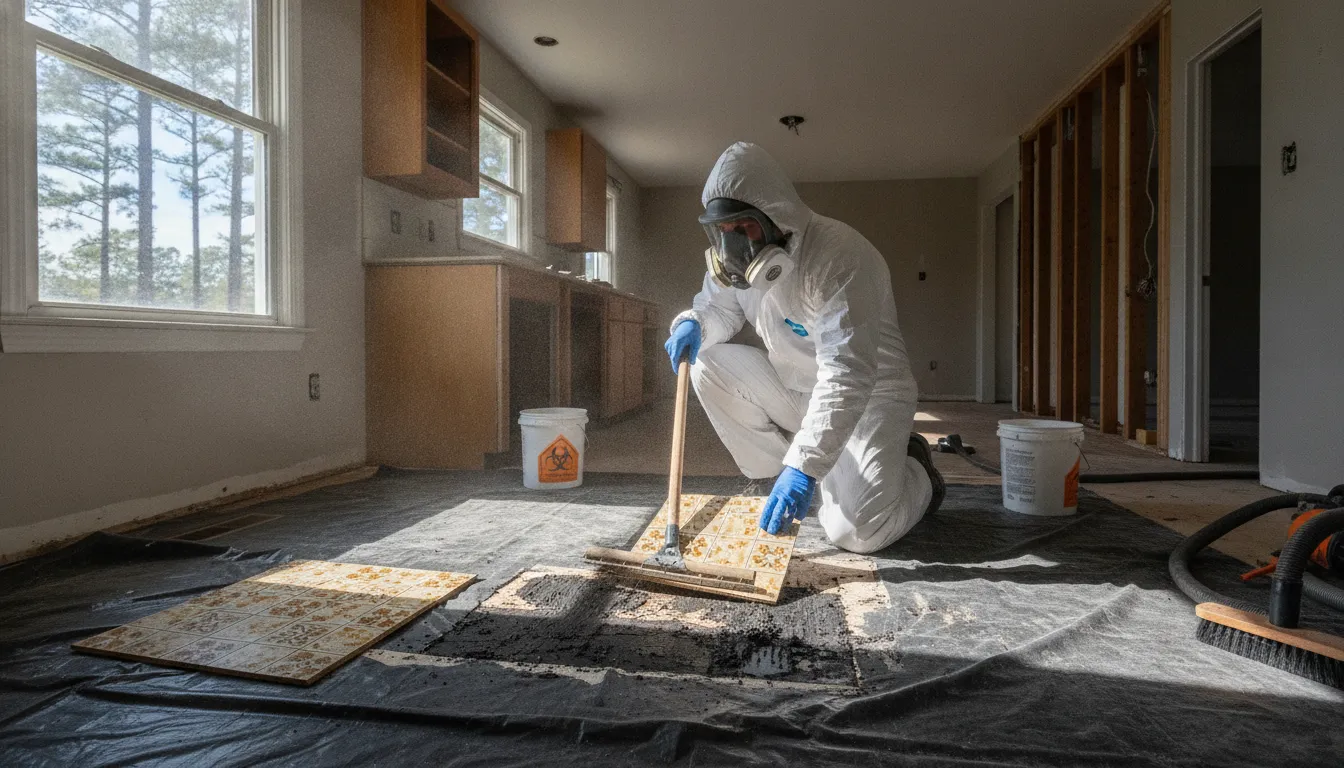
Renovating an older Raleigh-area home can reveal a dark, tar-like adhesive beneath vinyl or linoleum flooring. Its appearance may be a useful warning sign, but it cannot confirm whether asbestos is present. The safest next step is to pause work and arrange professional evaluation before the mastic is scraped, sanded, or otherwise disturbed.
Get a free quote from Remtech Environmental for asbestos floor tile mastic testing and removal in North Carolina.
Asbestos floor tile mastic removal should begin with professional inspection and testing, followed by a controlled abatement or containment plan suited to the material and renovation goals. Intact mastic may not require removal, while damaged material or planned flooring work can require regulated methods that prevent dust and fiber release.
Understanding where this adhesive was used and why older flooring deserves careful attention can help homeowners make a measured decision. Start by looking at what mastic is, which tiles commonly had it beneath them, and why visual clues are only the beginning of a safe assessment.
What Is Asbestos Floor Tile Mastic and Where Was It Used?
Asbestos floor tile mastic is an adhesive layer that was used beneath resilient flooring, especially vinyl and linoleum tiles. Often called black mastic, it usually appears as a dark, tar-like material between the underside of the tile and the subfloor. It was widely used before the 1980s, so it may be present beneath flooring in older North Carolina homes, offices, schools, and other commercial buildings.
What black mastic was made of
Traditional black mastic commonly contained asphalt or tar. Some formulations also used styrene-butadiene rubber to improve the adhesive's performance. Manufacturers added asbestos fibers for strength and heat resistance. The result was a durable bonding material that could hold floor tiles in place for decades.
The presence of dark adhesive can be a useful clue during a renovation, but appearance alone cannot confirm whether asbestos is present. Mastic may look black or dark brown, and similar-looking adhesives were made with different formulations over time. A qualified professional should evaluate and test suspect material before removal or other work that could disturb it.
Where it was commonly used
Black mastic was most often found under vinyl composition tile and linoleum flooring. In older homes, it is especially associated with the 9-inch and 12-inch floor tiles that were common through much of the 20th century. Commercial buildings also used these materials in corridors, offices, classrooms, utility areas, and other spaces where economical, hard-wearing flooring was practical.
The mastic is separate from the tile itself, which matters when planning a renovation. Removing visible tiles may leave adhesive bonded to the floor below. That remaining layer can require its own assessment and work plan. For an overview of the tile portion of the project, see asbestos floor tile removal. The article covers the tiles, while this section focuses on the adhesive beneath them.
If you uncover dark mastic during flooring work, pause before sanding, grinding, or scraping it. Treat the material as a question to investigate, not a reason to panic. Testing and a clear work plan help determine the appropriate next step while protecting the people using the space.
How to Identify Asbestos Mastic Before You Renovate
Black mastic is often recognizable by its color and texture. It typically appears black or dark brown and has a tar-like look, especially after a tile is lifted or a flooring edge is exposed. During renovation, you may also see what is sometimes called "black-cut" mastic: dark adhesive showing through at seams or along the cut edges between tiles. That pattern is a classic visual flag in older flooring projects.
Appearance can help you decide whether to pause work, but it cannot tell you whether asbestos is present. Similar-looking adhesives may not contain asbestos, and asbestos-containing mastic may vary in color, condition, and visibility. Treat the material as suspect rather than trying to identify it by sight, smell, texture, or a do-it-yourself test.
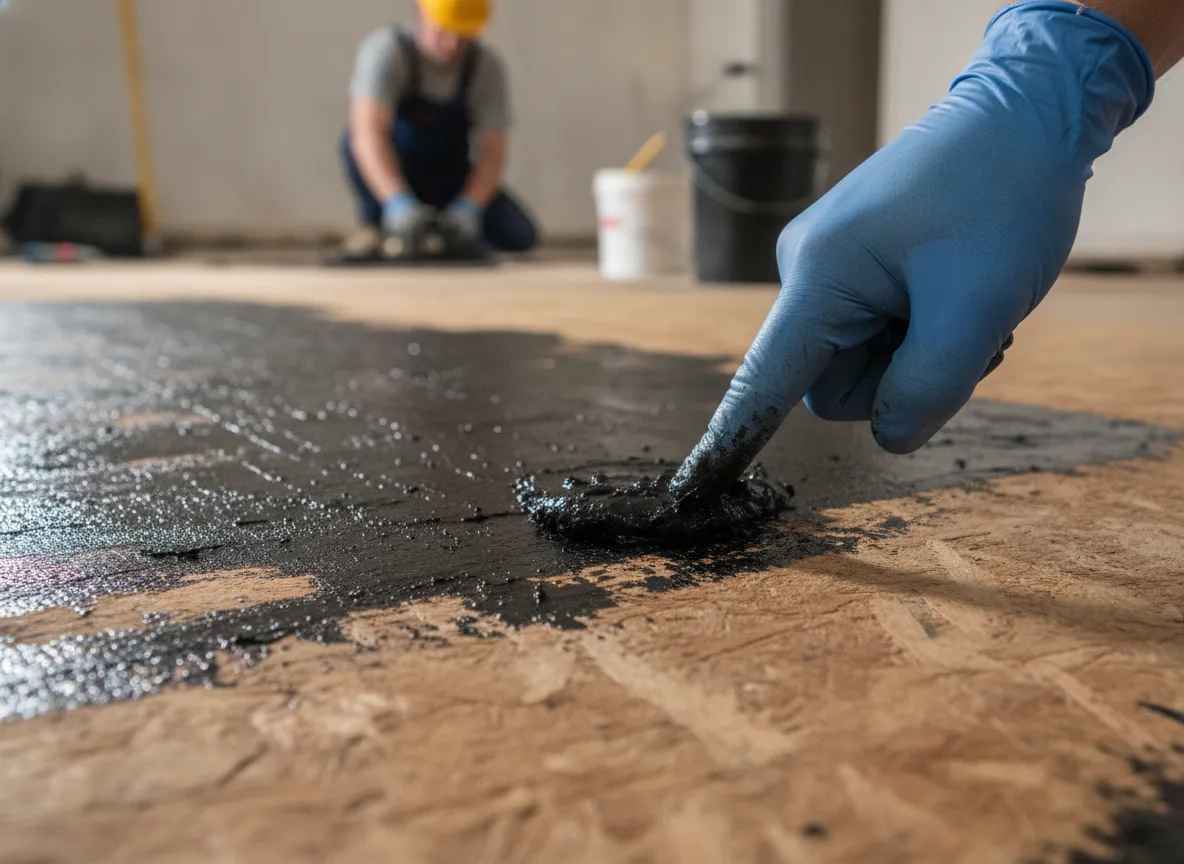
Black mastic exposed under lifting tile: a visual warning, but only laboratory testing can confirm asbestos.
Why the installation date is not enough
Flooring adhesives containing asbestos were phased out around the late 1970s, but there was no comprehensive federal ban that makes every product after that date automatically safe. The EPA's 1989 rule banning most asbestos products was also largely overturned in court in 1991. As a result, a home's construction or renovation date can provide useful context, but it does not replace material testing.
Tile size and the age of the building can raise or lower suspicion, yet neither proves what is in the adhesive. Renovations may also involve several flooring layers installed at different times, leaving older mastic beneath newer tile or sheet flooring.
Testing is the only way to confirm asbestos
Do not sand, grind, scrape aggressively, or pull up additional flooring just to get a better look. Disturbing the adhesive can create dust and spread material beyond the original work area. If the appearance or age of the flooring raises a question, stop before continuing and arrange professional sampling. Learn more about asbestos testing in Raleigh to understand when a trained professional should evaluate a suspected material.
Until testing is complete, keep the flooring intact and limit disturbance. For practical guidance on minimizing exposure during a renovation, review Remtech's asbestos tile safety information. A visual warning is a reason to investigate carefully, not a reason to assume the adhesive is asbestos or to begin removal yourself.
Why Sanding or Scraping Mastic Is Dangerous
The concern with old flooring mastic is not its appearance or the fact that it is beneath a finished floor. The concern is what can happen when the adhesive is disturbed in a way that creates dust. Some flooring adhesives were manufactured with asbestos fibers added for strength and heat resistance. When asbestos-containing mastic is aggressively disturbed, those fibers can become airborne and be inhaled.
That is why a renovation method that seems practical, such as sanding away a stubborn adhesive layer, can create a materially different hazard from leaving intact mastic alone. Asbestos exposure is proven to cause mesothelioma and other serious diseases. The risk is related to exposure to released fibers, not to a homeowner simply seeing dark adhesive under a tile.
How aggressive methods release fibers
Sanding and grinding break the surface into fine dust. Power scraping can also abrade the adhesive and spread contaminated debris beyond the immediate work area. Dry scraping may appear less forceful, but it can still disturb the material and release fibers, especially when the mastic is brittle or bonded tightly to the subfloor. Dust can settle on nearby surfaces, tools, clothing, and other materials, making cleanup more complicated.
For this material class, OSHA prohibits aggressive removal methods because they generate dust. Appropriate asbestos work practices are designed to control the material and avoid releasing fibers rather than simply removing the adhesive as quickly as possible.
Methods to avoid when asbestos is possible
- Power sanding or sanding with abrasive tools.
- Grinding the mastic or the subfloor beneath it.
- Abrasive blasting.
- Dry scraping or other methods that create visible dust.
If old mastic is exposed during a flooring project, pause before choosing a removal method. Do not sweep or vacuum suspected debris with ordinary household equipment. A qualified professional can assess the material, arrange testing when appropriate, and determine whether removal or controlled containment is the right next step. Taking that pause is a practical way to protect workers, occupants, and the rest of the property while keeping the renovation on a sound footing.
Should You Remove or Contain Asbestos Floor Tile Mastic?
The right response depends less on the color of the adhesive than on its condition and what you plan to do next. A professional inspection and laboratory testing can confirm whether old floor tile mastic contains asbestos before renovation begins. If the material is intact and will remain undisturbed, leaving it in place may be reasonable. If remodeling will disturb the adhesive or the material is already damaged, professional abatement is the safer path.
| Option | What it involves | Best for | Key considerations |
|---|---|---|---|
| Professional abatement | Licensed asbestos abatement contractors isolate the work area, use regulated work practices, remove or manage the affected material, and complete cleanup and verification. | Renovations that will remove flooring or disturb mastic, as well as broken, peeling, or deteriorating materials. | Requires planning around containment, safe removal, waste handling, and clearance procedures. The project scope is determined after inspection. |
| Leave in place and contain | Intact mastic remains undisturbed and is covered with a suitable flooring system or other approved protective layer. | Stable flooring where no dust-generating work or adhesive disturbance is planned. | Future owners and contractors should know the material is present. New work must avoid cutting, grinding, sanding, or scraping into it. |
| Encapsulate or seal | A compatible coating or bonding method may be used to help keep an intact surface from releasing fibers, when appropriate for the assembly. | Limited situations where the material can remain stable and a qualified professional approves the approach. | Sealing does not make the mastic safe to disturb later. The method must be compatible with the planned flooring and documented for future work. |
When containment can be appropriate
Containment is not a shortcut or a way to avoid testing. It is a management choice for material that is in good condition and can remain covered without being disturbed. For example, a homeowner may install an appropriate new floor over an intact layer instead of removing the mastic. That decision should account for floor height, bonding requirements, moisture conditions, and future renovation plans. A contractor should also document what remains below the new surface.
When removal becomes necessary
Abatement is generally the better option when a planned remodel requires removing tiles, scraping adhesive, altering the subfloor, or performing other dust-generating work. Broken or peeling tiles can also change the risk profile because deterioration makes disturbance more likely. Licensed abatement contractors follow EPA and OSHA-regulated work practices designed to control asbestos fibers during the work.
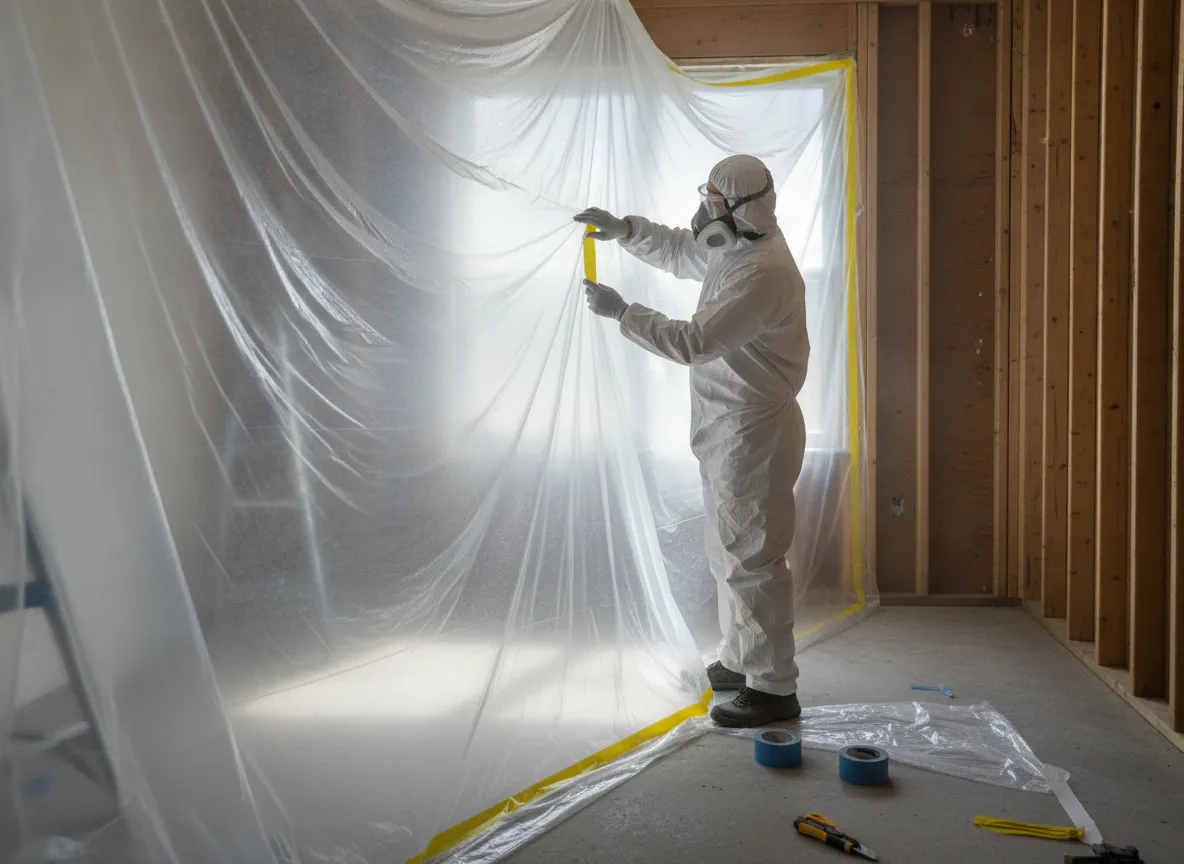
Regulated containment during professional abatement keeps fibers from spreading beyond the work area.
For background, see our guide to asbestos abatement vs. removal. If your project is in the Raleigh area, Remtech can also explain options for asbestos flooring removal in Raleigh after testing and scope review.
What to Do If You Suspect Asbestos Mastic in Your Home
If older flooring may contain asbestos mastic, the safest response is to pause and get clear information before deciding how the project should proceed. These steps help protect occupants, workers, and the condition of the material.
- Stop renovation work immediately. Do not continue pulling up flooring, scraping adhesive, sanding, grinding, or using power tools. Put the renovation on hold until the material has been evaluated. Disturbing suspected asbestos-containing material can release fibers into the air, particularly when dry methods create dust.
- Leave the mastic and tiles intact. Do not test a piece yourself or sweep up debris from the work area. If the flooring is still in place and undisturbed, avoid unnecessary foot traffic and keep children, pets, and other occupants away from the affected area. Covering, scraping, or cleaning the surface without a plan can make the situation more difficult.
- Arrange professional sampling and laboratory testing. Appearance alone cannot confirm whether mastic contains asbestos. A qualified professional can select representative samples, use appropriate safety procedures, and submit them to an accredited laboratory. Learn more about asbestos testing in Raleigh before restarting work.
- Review the result and project conditions. If testing confirms asbestos, discuss the flooring, the planned renovation, its condition, and the potential for future disturbance with a licensed abatement contractor. In some projects, professional containment or leaving intact material in place may be appropriate. In others, removal is the better fit. The right choice depends on the site, not on a one-size-fits-all rule.
- Hire qualified professionals if abatement is needed. Choose licensed, insured asbestos removal specialists in Raleigh who explain the work plan and follow applicable EPA and OSHA work practices. Ask how the area will be controlled, how dust will be prevented, and how waste will be handled. Do not hire a general flooring crew to perform asbestos abatement unless it has the required qualifications.
- Verify the completed work. Request post-abatement clearance or other documented verification appropriate to the project before normal renovation resumes. This final check helps confirm that the work area has been properly addressed and gives future contractors useful records about what was done.
Request a free quote today to have your flooring and adhesive evaluated by a qualified asbestos professional before you continue renovating.
Frequently Asked Questions
What does asbestos tile mastic look like?
It is often a black or dark brown adhesive with a tar-like appearance beneath vinyl, linoleum, or other floor tiles. You may also see black adhesive at seams or along broken tile edges. Appearance alone cannot confirm asbestos, so do not scrape a sample or rely on a visual inspection before renovation.
How can I remove asbestos floor tile glue?
Do not sand, grind, power-scrape, or dry-scrape suspected asbestos mastic. A qualified asbestos professional should inspect and test the material, then determine whether controlled removal or containment is appropriate. If removal is necessary, regulated work practices and wet methods help prevent dust and fiber release.
Is asbestos mastic safe to walk on?
Intact mastic that remains covered and undisturbed generally presents less risk than damaged material being scraped or ground. Normal renovation activity can change that situation by breaking tiles or disturbing the adhesive. Keep the area intact, avoid generating dust, and arrange professional guidance before altering the flooring.
What percentage of asbestos is in black mastic?
The percentage can vary substantially between products and locations, so a color or age estimate cannot establish the content. Historical samples have tested in different ranges, but only laboratory analysis of a properly collected sample can determine whether asbestos is present and guide the work plan.
What should I do before renovating over suspected mastic?
Pause the flooring work and avoid disturbing the adhesive. Arrange professional asbestos testing, share the test results with your contractor, and ask whether the material should remain covered or be removed under controlled conditions. The safest next step depends on its condition, the planned renovation, and the test results.
Get started with a clear next step
If you suspect asbestos-containing mastic, a professional evaluation can help you understand your options before renovation continues. Remtech Environmental takes an education-first approach to asbestos work across North Carolina, with experienced, accredited specialists who explain the process clearly. To discuss testing or abatement for your Raleigh-area property, get a free quote and talk with the team about the right next step.