
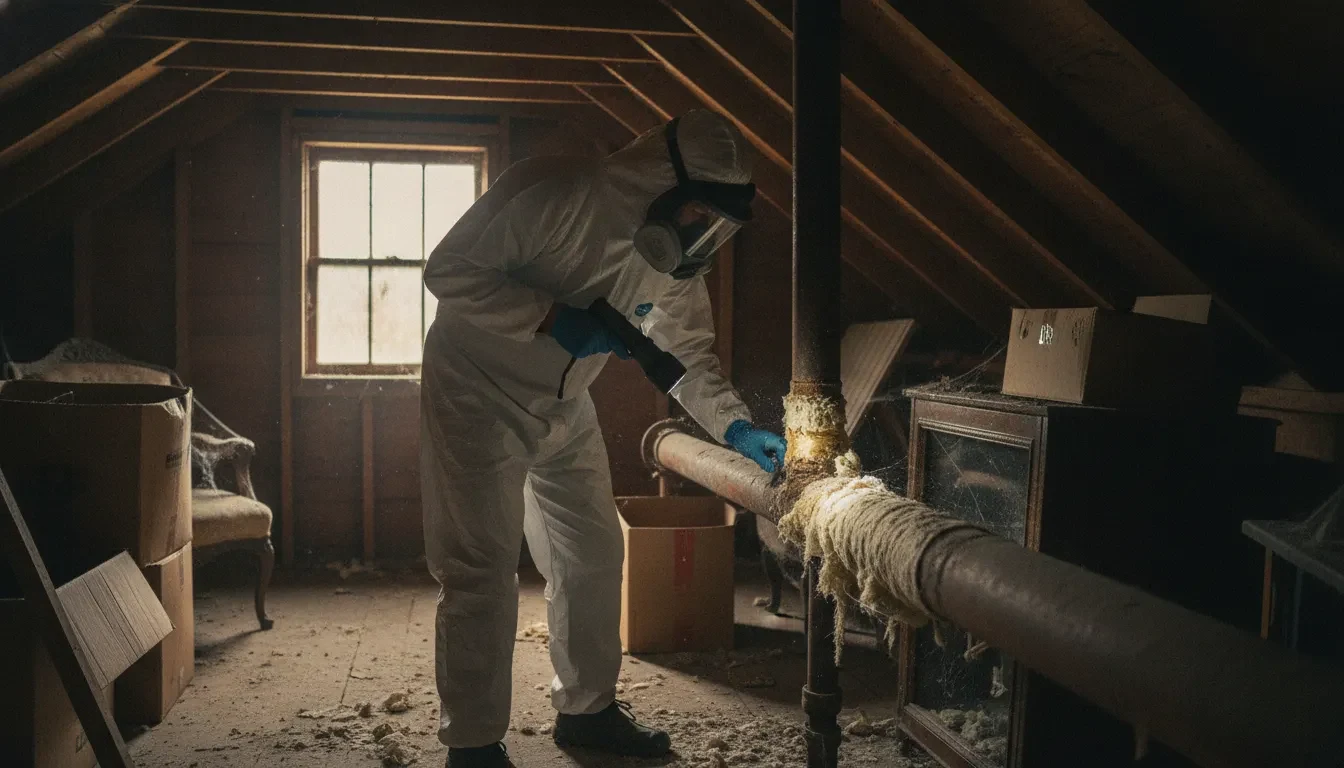
Asbestos abatement vs encapsulation is a decision about the material's condition, location, potential for disturbance, and the property's future plans. A professional assessment should guide the choice rather than an automatic decision to remove everything.
In many cases, asbestos abatement vs encapsulation comes down to removal versus control. Abatement removes asbestos-containing material, while encapsulation seals it in place to prevent fiber release. Encapsulation suits material that stays intact and undisturbed. Removal is better when material is damaged, deteriorating, or in the path of renovation work.
Because asbestos fibers can become airborne when materials are cut, drilled, scraped, or otherwise disturbed, a professional assessment should come before sampling, remodeling, or choosing a treatment. Understanding what abatement involves is the first step toward making a safe, informed decision.
What Is Asbestos Abatement?
Asbestos abatement is the controlled process of addressing asbestos-containing material by removing it from a property, disposing of it properly, and decontaminating the work area. Unlike encapsulation, which leaves the material in place beneath a protective coating, abatement is intended to eliminate the asbestos-containing material so it no longer remains in the building.
The scope and method depend on the material, its condition, and the building itself. Removal is one of the primary ways to address asbestos in an older property, with encapsulation being the other recognized approach. When removal is selected, the work must follow applicable federal, state, and local requirements for containment, handling, transportation, and disposal. These rules are designed to protect occupants, workers, and the surrounding environment during the project. The U.S. Environmental Protection Agency explains that asbestos removal should be handled according to established safety requirements.
What does the abatement process include?
A professional abatement project typically involves more than taking out a visible building material. The work area must be planned and controlled so fibers are not carried into clean parts of the property. Depending on the project, that can include specialized containment, controlled access, protective barriers, and decontamination procedures. Trained and accredited professionals also use appropriate personal protective equipment, or PPE, while performing the work. These measures help limit exposure for both the crew and building occupants.
Because asbestos materials can release fibers when damaged or disturbed, cutting, sanding, drilling, scraping, or attempting removal without the right controls can create unnecessary risk. The EPA recommends using a trained and accredited asbestos professional rather than taking samples or handling suspect material yourself. A professional can evaluate the material, confirm what is present through appropriate testing, and explain whether removal or another management approach fits the property's condition and future plans.
For property owners comparing licensed asbestos abatement services, the goal should be a clearly documented plan, careful containment, compliant disposal, and a work area returned to a safe condition. Abatement is not automatically the right answer for every intact material. But it may be appropriate when removal supports renovation plans or when the material's condition makes leaving it in place impractical.
What Is Asbestos Encapsulation?
Asbestos encapsulation is a method of controlling asbestos-containing material without removing it. A professional applies a coating or covering that seals the material and helps prevent asbestos fibers from becoming airborne. The asbestos remains in place, so encapsulation is a control strategy rather than complete removal.
Removal and encapsulation are two of the recognized ways to manage asbestos in a property, and the EPA provides guidance on the options available to property owners. The appropriate approach depends on the material's condition and location, as well as the property's future use and the owner's plans. Encapsulation may be considered when the asbestos is stable and removal would create unnecessary disturbance. It is not a universal solution, however. Material that is significantly damaged or deteriorating may not be suitable for encapsulation, because the coating might not adequately contain it.
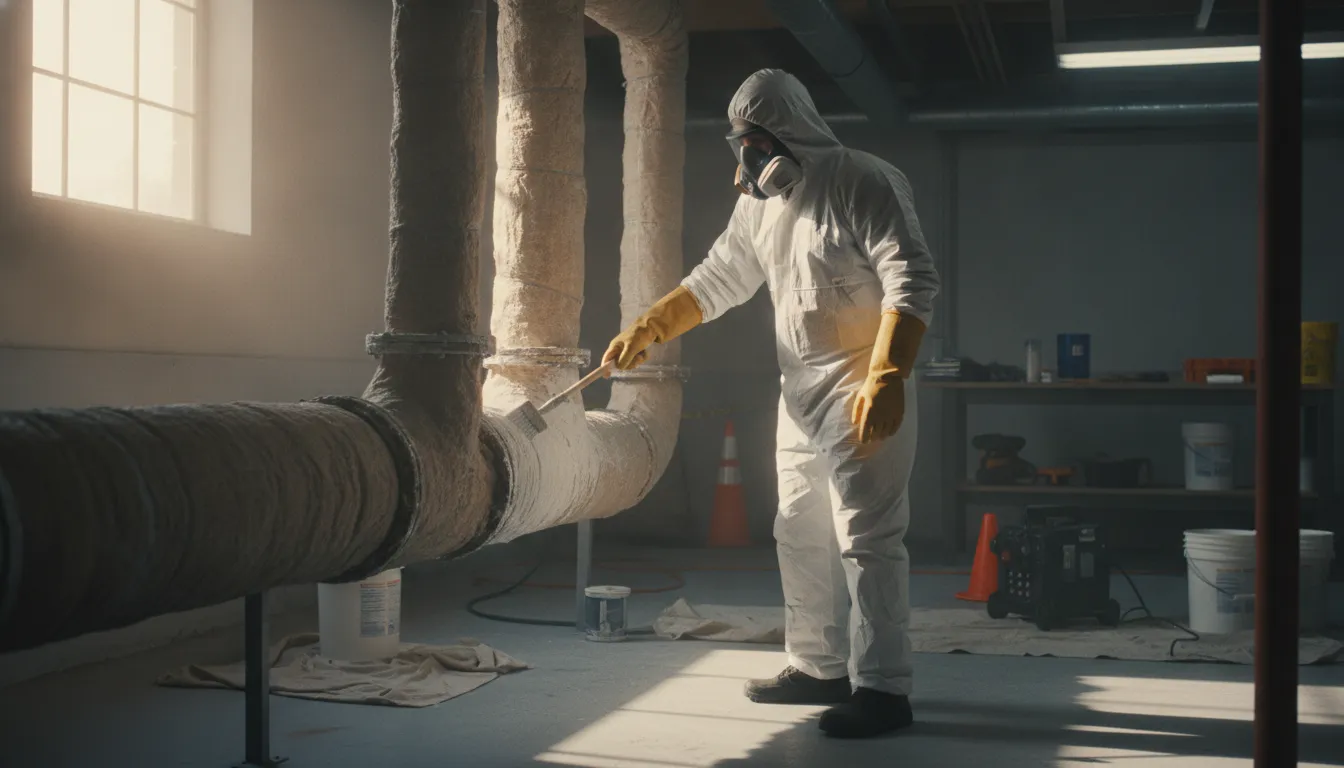
How encapsulants work
Encapsulants are generally selected based on the material and the condition being addressed. A bridging encapsulant forms a tough, flexible membrane over the surface. A penetrating encapsulant soaks into the material and helps bind asbestos fibers together. These products serve different purposes, so selecting and applying the right system requires an assessment by a trained asbestos professional, per EPA technical guidance on encapsulants.
What happens after encapsulation?
Encapsulation does not make the asbestos disappear or remove the need for future planning. The property should have an operations-and-maintenance program that helps keep the material in good condition, controls work practices, and limits the possibility of further fiber release. The program should include regular inspections and clear procedures for maintenance or renovation work. The EPA asbestos resource library explains the importance of managing asbestos safely over time.
Because the asbestos remains in the building, its location and treatment must be recorded in an asbestos management plan. That documentation alerts maintenance personnel, future owners, and contractors before work is performed near the material. In practical terms, choosing between asbestos abatement vs encapsulation means comparing removal with a managed, documented control measure. A professional evaluation can explain which option fits the property's condition and future plans.
Comparing Asbestos Abatement vs Encapsulation for Your Home
Both approaches can be appropriate, but they manage asbestos in fundamentally different ways. Abatement through removal takes the asbestos-containing material out of the property. Encapsulation leaves the material where it is and applies a specialized coating or covering to help prevent fiber release. The right choice depends on the material's condition, location, and the property's future use.
For a broader overview of local asbestos services, see Remtech Environmental's Raleigh asbestos resource.
There is no one-size-fits-all rule. The decision should reflect site-specific factors rather than a default to the most aggressive option. Abatement is generally the stronger choice when material is damaged, deteriorating, friable, or likely to be disturbed. Encapsulation can serve well when material is stable, remains intact, and can be managed safely in place with ongoing inspection.
| Method | What it does | Best when | Removes the hazard permanently? | Ongoing management needed | Disruption |
|---|---|---|---|---|---|
| Abatement by removal | Removes asbestos-containing materials, followed by controlled disposal and decontamination. | Material is significantly damaged, deteriorating, friable, or likely to be disturbed by planned work. | Yes. Removal eliminates the asbestos-containing material from the property when completed correctly. | Normal building maintenance still applies, but the removed material is no longer present to manage. | Usually greater. Containment, removal, disposal, and decontamination can affect access and building activity. |
| Encapsulation | Seals or covers the existing material to help prevent asbestos fibers from becoming airborne. | Material is stable enough to remain in place, and removal would be unnecessarily invasive or impractical. | No. The asbestos remains in the building and must be documented for future occupants and contractors. | Yes. An operations and maintenance program, inspections, and condition records help confirm the seal remains intact. | Generally less disruptive because it avoids the extensive removal and decontamination work associated with abatement. |
Encapsulation is not a shortcut for every situation. If asbestos-containing material is too damaged or deteriorated, the encapsulating layer may not adequately contain it, and removal may be required. Conversely, stable material that is unlikely to be disturbed may not need immediate removal. The EPA notes that asbestos in good condition and left undisturbed generally does not pose a health risk, so unnecessary disturbance should be avoided.
Regardless of the method, this work should be planned and performed by a trained, accredited asbestos professional using appropriate containment and protective equipment. A professional assessment can identify the material's condition and help property owners compare long-term management needs with the disruption of removal.
When Is Encapsulation the Right Choice for Your Home?
Encapsulation may be appropriate when asbestos-containing material, or ACM, is in good condition, remains intact, and is unlikely to be disturbed. Intact pipe insulation in an area with no planned access or renovation, for example, may be managed in place rather than removed immediately. The EPA explains that undamaged, undisturbed ACM generally does not pose a health risk.
That risk profile makes leaving such material alone a reasonable option when it remains in good condition, according to the EPA guidance on protecting your family from asbestos exposure. The decision is not based on the material alone, however. Its condition, location, accessibility, and your plans for the home all matter. Encapsulation can make sense when removal would be unnecessarily disruptive, or when a property owner needs an interim control while a larger project is planned. It is not a shortcut around professional evaluation, containment, or documentation.
When removal may not be practical
A trained and accredited asbestos professional should assess the material before recommending either approach. Slightly damaged ACM may sometimes be managed by limiting access and leaving it undisturbed. In other cases, an approved encapsulant can seal or bind the material and reduce the likelihood of fiber release. Encapsulants may be bridging products that form a protective membrane or penetrating products that bind fibers within the material. The right product depends on the ACM and its condition, not simply on the homeowner's preference.
Encapsulation still requires a plan
Encapsulation does not remove asbestos from the home. It can be an interim control that requires regular inspections and possible removal later, particularly when the encapsulant reaches the end of its functional life or the property's plans change. The remaining ACM should be recorded in an asbestos management plan so future occupants, maintenance workers, and contractors know where it is and how to avoid disturbing it. An operations and maintenance program can help keep the material in good condition over time. If the ACM is significantly damaged, deteriorating, friable, or likely to be cut, drilled, scraped, or otherwise disturbed, encapsulation may not be sufficient and removal may be the safer course.
A careful assessment creates a clearer choice between asbestos abatement vs encapsulation. The goal is not to select the most aggressive option by default. It is to choose a method that controls the material responsibly and fits the home's condition and future use.
When Should You Choose Asbestos Removal?
Removal is generally the stronger option when asbestos-containing material is damaged, deteriorating, or likely to be disturbed. Encapsulation can control fibers while leaving the material in place, but it is not a dependable solution for every condition. The right decision depends on the material's condition, its location, and what you plan to do with the property.
Planned remodeling and unstable material are the two most common reasons to pursue removal rather than encapsulation. When a project will open walls, replace flooring, or otherwise disturb building materials, eliminating the affected material first can create a clearer and safer work area.
When the material is damaged or friable
Removal deserves serious consideration when the material is breaking apart, shedding debris, or showing substantial deterioration. Friable asbestos-containing material can crumble by hand and is more likely to release fibers into the air if disturbed. The EPA explains that asbestos fibers may be released when materials are damaged or disturbed, including through sanding, sawing, drilling, scraping, or improper handling.
In this situation, applying a coating over an unstable surface may not provide reliable control. Encapsulation is not considered suitable for material that is significantly damaged because the encapsulant may not adequately contain it. A trained and accredited asbestos professional should assess the material before anyone touches, cleans, paints, or repairs it.
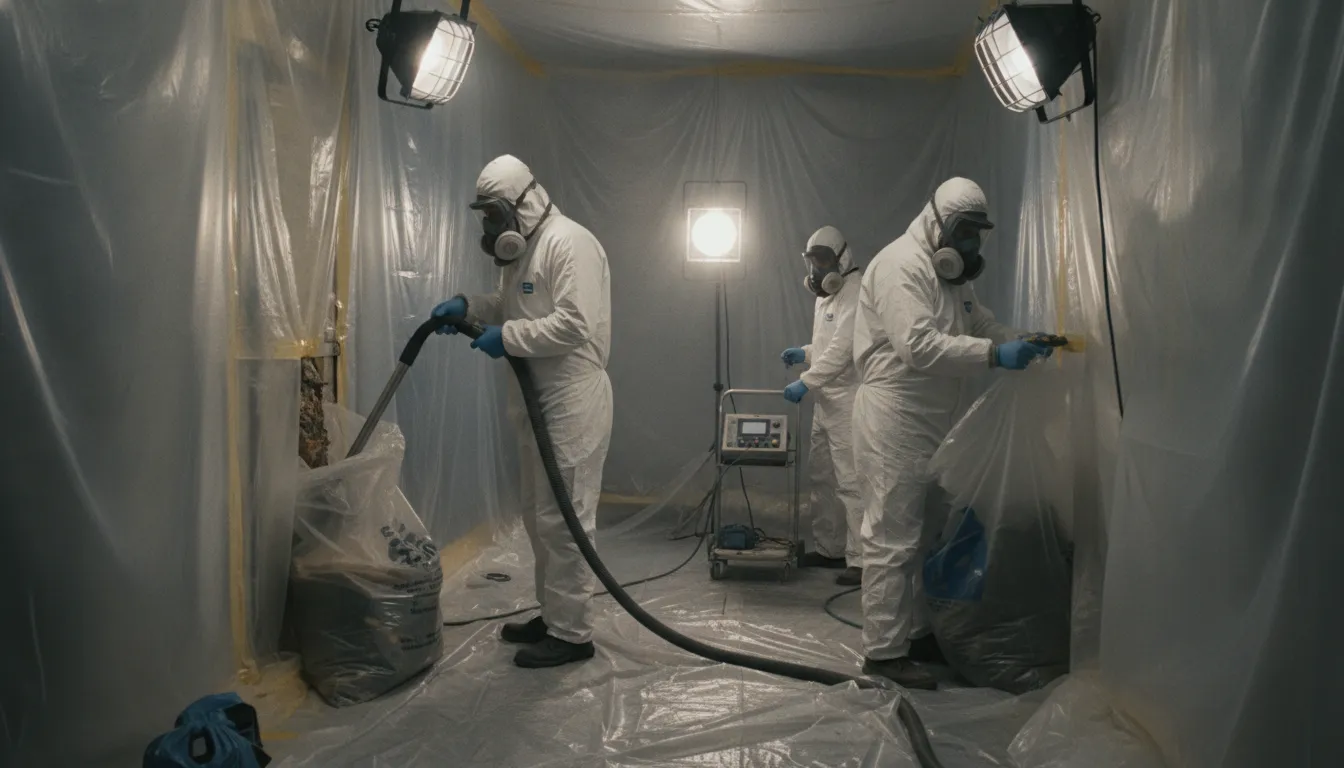
When renovation will disturb the material
Planned remodeling is another common reason to choose removal. Work such as opening walls, replacing flooring, drilling, or altering ceilings can disturb asbestos that otherwise might have remained intact. If a property was built before the late 1980s, arrange an asbestos inspection before renovation begins. The EPA specifically recommends professional inspection when remodeling could disturb building materials.
Removing the affected material before construction can create a clearer work area and reduce the chance that another contractor will accidentally cut into it. Do not collect samples yourself. Instead, work with an accredited professional to identify suspect materials, determine their condition, and plan containment and disposal in accordance with applicable regulations.
When you want the hazard eliminated from the property
Some owners choose removal because they do not want asbestos left in place for future occupants, maintenance teams, or contractors to manage. Encapsulation does not eliminate asbestos. The material remains part of the building and should be documented in an asbestos management plan. Removal may therefore make sense when long-term property plans, frequent maintenance, or a change in use would make ongoing monitoring impractical.
For help choosing asbestos abatement contractors, look for professionals who explain both options and use appropriate containment and protective equipment. They should base their recommendation on the property's actual conditions rather than assuming removal is always necessary.
How Much Does Asbestos Abatement vs Encapsulation Cost?
There is no responsible one-size-fits-all price for asbestos work. In many projects, complete removal costs more than encapsulation because removal involves containment, specialized handling, disposal, and decontamination. Encapsulation is generally less disruptive and less expensive upfront, but it does not eliminate the asbestos from the property.
While removal can interrupt normal use of the affected rooms or building for longer, encapsulation still requires careful preparation and professional controls. Published per-square-foot figures can be misleading. The actual scope depends on several project-specific conditions.
- Material type: Different asbestos-containing materials require different work methods, controls, and disposal procedures.
- Condition: Damaged, deteriorating, or friable material may require more extensive containment and handling than material that is intact.
- Location: A difficult-to-access area, occupied property, or space connected to active building systems can increase planning and disruption.
- Extent: The quantity and distribution of the material affect crew time, containment requirements, waste handling, and project sequencing.
- Future plans: Remodeling or demolition may make removal more practical, while stable material in an area that will remain undisturbed may be manageable through encapsulation.
Encapsulation should not be viewed simply as the cheaper option. It does not remove asbestos from the property, so the location and condition of the material should remain documented for future occupants, maintenance workers, and contractors. An operations and maintenance program, including regular inspections, may also be needed to help keep the encapsulated material in good condition. The EPA notes that the best approach depends on the material's condition and location, as well as the building owner's goals.
For that reason, Remtech Environmental provides consultation-based, project-specific recommendations rather than standardized rates. An accredited professional can evaluate the material and building conditions, explain whether removal or encapsulation is appropriate, and outline the expected work, controls, timeline, and documentation before you commit. That transparent process helps you compare options based on safety and long-term property plans, rather than pressure or an oversimplified price estimate.
What Should Raleigh Homeowners Know About Asbestos Regulations?
North Carolina homeowners should have suspect asbestos evaluated before renovation or disturbance. The professional plan should address the material's condition, containment, handling, disposal, and required documentation. Ask the contractor to explain the proposed controls and qualifications instead of relying on a generic price or a do-it-yourself solution.
Asbestos regulations exist to control fiber release, protect occupants and workers, and ensure that contaminated materials are handled responsibly. Asbestos was widely used in construction before the EPA banned or strictly regulated most asbestos-containing materials by the late 1980s. That history is why the age of a building alone does not confirm asbestos, but it does make professional evaluation important.
North Carolina projects must be planned around the material's condition, location, and the property's intended use. Removal and encapsulation are different controls, but neither should be treated as a do-it-yourself project. A trained, accredited asbestos professional should assess the material and recommend an approach that fits the building and the work planned. Homeowners can review Remtech's guide to the basics of asbestos abatement before deciding how to manage a suspected material.
Containment and protective equipment are essential
Whether the project involves removing asbestos or applying an encapsulant, trained professionals use appropriate containment and personal protective equipment. These controls help prevent fibers from spreading beyond the work area and reduce exposure for workers and occupants. The work plan should also address access, cleanup, waste handling, and the condition of surrounding materials. When removal is selected, the material must be contained and disposed of in accordance with applicable federal, state, and local requirements. The EPA advises property owners to hire a trained and accredited asbestos professional rather than sampling or disturbing the material independently.
Choosing a qualified North Carolina contractor
Compliance is only one part of responsible asbestos work. Remtech Environmental's team takes a careful, documented approach backed by EPA-accredited specialists and IICRC-certified technicians. That commitment supports clear communication and thorough records without turning the decision into a high-pressure sales conversation. A qualified contractor should explain what was found, why removal or encapsulation is being considered, what containment will be used, and what records the property owner should retain. Clear answers make it easier for homeowners, businesses, property managers, and future contractors to manage the building safely over time.
Frequently Asked Questions
What is the difference between asbestos abatement and encapsulation?
Abatement removes asbestos-containing material from the property, followed by controlled disposal and decontamination. Encapsulation leaves the material in place but seals or covers it to help prevent fiber release. The appropriate option depends on the material's condition, location, and your plans for the home.
When should you choose encapsulation over removal?
Encapsulation may be appropriate when the material is in stable condition, is unlikely to be disturbed, and can be managed safely in place. It may reduce disruption compared with removal, but it does not eliminate the asbestos. The material should remain documented, and the property needs an operations and maintenance plan with periodic inspections. Encapsulation is not a suitable fix for material that is significantly damaged or deteriorating.
Is asbestos encapsulation as safe as abatement?
Neither method should be selected without a professional assessment. Removal eliminates the identified material, while encapsulation controls it in place and requires continued monitoring. If asbestos-containing material is left undisturbed and in good condition, it generally does not pose a health risk. Cutting, drilling, sanding, scraping, or other disturbance can release fibers. The EPA recommends using a trained and accredited asbestos professional for both approaches.
Does asbestos encapsulation require special maintenance?
Yes. Encapsulated material should be visually inspected for damage, kept out of the path of future work, and recorded in an asbestos management plan. Regular inspections help confirm that the seal remains intact and identify changes that may require professional attention. Do not drill, scrape, sand, or paint over suspected asbestos yourself. Arrange an inspection before remodeling or disturbing older building materials.
Is it expensive to encapsulate asbestos?
There is no reliable one-size-fits-all price. Project cost depends on the material, its condition and location, the preparation required, access, and whether removal or encapsulation is appropriate. Encapsulation can be less disruptive than removal, but a professional should evaluate the property before pricing or recommending either approach. A consultation provides a project-specific scope instead of a standardized rate.
Get a Free Consultation for Your Asbestos Decision
Choosing between asbestos abatement and encapsulation is a health and property decision that deserves an honest, thorough assessment. The right choice depends on what the material is, its condition, whether it could be disturbed, and your plans for the home. That is exactly the kind of guidance Remtech Environmental provides.
Our team brings years of North Carolina experience, EPA-accredited specialists, and IICRC-certified technicians who treat every project as its own job. We explain your options clearly, answer your questions, and help you understand what each approach involves so you can decide with confidence. We never pressure a purchase; we educate first and let the facts guide the plan.
Request a free quote and start with a professional assessment of the asbestos in your home. Our team will help you weigh abatement versus encapsulation and build a safe, code-compliant plan that fits your situation.